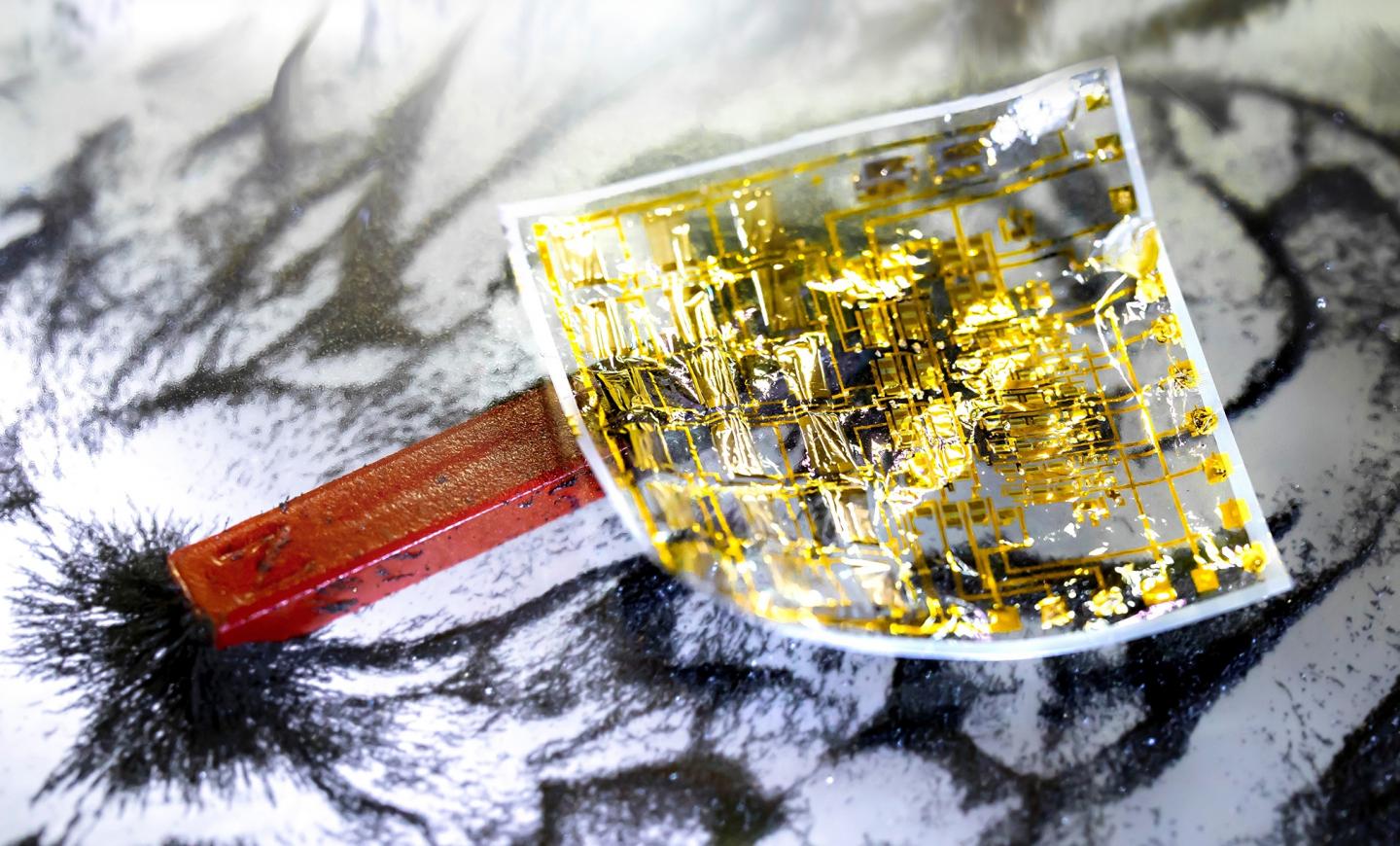
Human skin is a fascinating and multifunctional organ with unique properties originating from its flexible and compliant nature. It allows for interfacing with external physical environment through numerous receptors interconnected with the nervous system. Scientists have been trying to transfer these features to artificial skin for a long time, aiming at robotic applications. Operation of robotic systems heavily rely on electronic and magnetic field sensing functionalities required for positioning and orientation in space. A lot of research and development have been devoted into implementation of these functionalities in a flexible and compliant form. The recent advancements in flexible sensors and organic electronics provided important prerequisites. These devices can operate on soft and elastic surfaces, whereas sensors perceive various physical properties and transmit them via readout circuits.
To closely replicate natural skin, it is however necessary to interconnect a big number of individual sensors. This challenging task became a major obstacle in realizing electronic skin. First demonstrations were based on an array of individual sensors addressed separately, which unavoidably resulted into a tremendous number of electronic connections. In order to reduce the necessary wiring, an important technology step had to be done. Namely, complex electronic circuits, such as shift registers, amplifiers, current sources and switches must be combined with individual magnetic sensors to achieve fully integrated devices.
Researchers from Dresden, Chemnitz and Osaka could overcome this obstacle in a pioneering active matrix magnetic sensor system presented in a recent article of the journal Science Advances. The sensor system consists of a 2 x 4 array of magnetic sensors, an organic bootstrap shift register, required for controlling the sensor matrix, and organic signal amplifiers. The special feature is that all electronic components are based on organic thin-film transistors and are integrated within a single platform. The researchers demonstrate that the system has a high magnetic sensitivity and can acquire the two-dimensional magnetic field distribution in real time. It is also very robust against mechanical deformation, such as bending, creasing or kinking. In addition to full system integration, the use of organic bootstrap shift registers is a very important development step towards active matrix electronic skin for robotic and wearable applications.
Prof. Dr. Oliver G. Schmidt, Director at the Leibniz Institute for Solid State and Materials Research Dresden and Dr. Daniil Karnaushenko on the next steps: "Our first integrated magnetic functionalities prove that thin-film flexible magnetic sensors can be integrated within complex organic circuits. Ultra-compliant and flexible nature of these devices is indispensable feature for modern and future applications such as soft-robotics, implants and prosthetics. The next step is to increase the number of sensors per surface area as well as to expand the electronic skin to fit larger surfaces."
Imperceptible magnetic sensor matrix system integrated with organic driver and amplifier circuits
M. Kondo, M. Melzer, D. Karnaushenko, T. Uemura, S. Yoshimoto, M. Akiyama, Y. Noda, T. Araki, O. G. Schmidt and T. Sekitani
Science Advances 22 Jan 2020: Vol. 6, no. 4, eaay6094
Contact information:
Senior Researcher of Institute for Integrative Nanosciences (IIN), IFW Dresden
d.karnaushenko@ifw-dresden.de
Phone: +49-351-4659-766
Director of Institute for Integrative Nanosciences (IIN), IFW Dresden
o.schmidt@ifw-dresden.de
Phone: +49-351-4659-810
Leibniz Institute for Solid State and Materials Research (IFW Dresden)
Learn more about the Nanotechnology World Association (NWA):
Who we are | Founding Members | Board of Directors | Memberships |
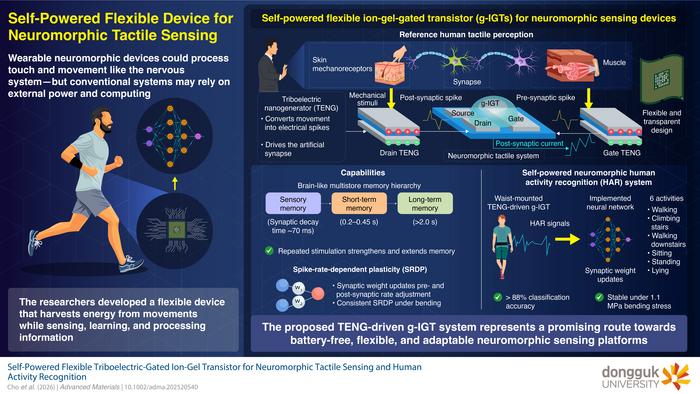
The proposed TENG-driven g-IGT is a flexible, self-powered neuromorphic device capable of reproducing multiple memory states and spike-rate-dependent learning Neuromorphic devices, which are designed to emulate aspects of biological neural networks, are promising candidates for developing low-power and intelligent sensing technologies, including wearable applications. Among the device architectures explored for neuromorphic computing, graphene-channel ion-gel-gated transistors (g-IGTs) are...
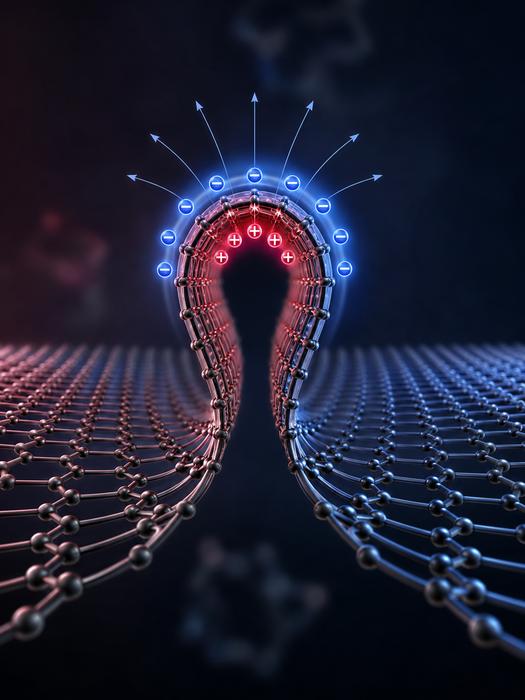
Rice University researchers have shown that sub-nanometer wrinkles in graphene generate flexoelectric charge separation, reshaping local electrical behavior through curvature alone. Extreme bending produces polarization far stronger than in larger systems and may enable geometry-controlled electronics without chemical doping. Published in Advanced Materials.
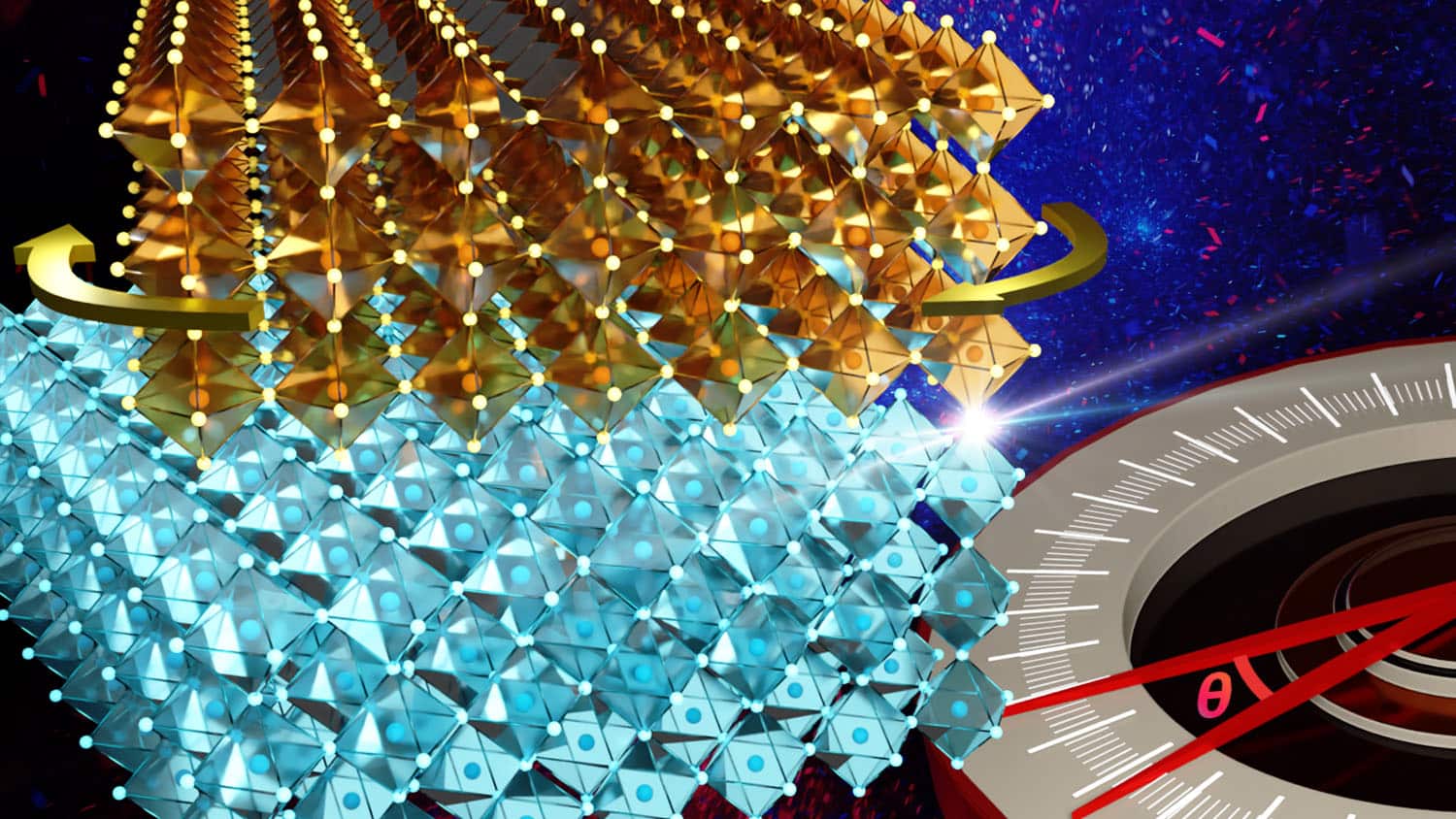
Researchers at NC State have extended twistronics beyond van der Waals materials into strongly bonded crystalline oxides. By stacking sodium niobate membranes with twist angles controlled down to 0.1 degrees, and confirming results via synchrotron X-ray diffraction, the team found interlayer bonds distort the atomic lattice, shifting phase structure and domain configuration. The technique works at near-millimeter scale, far larger than typical twistronic devices, marking a real step toward pract
