Tohoku University
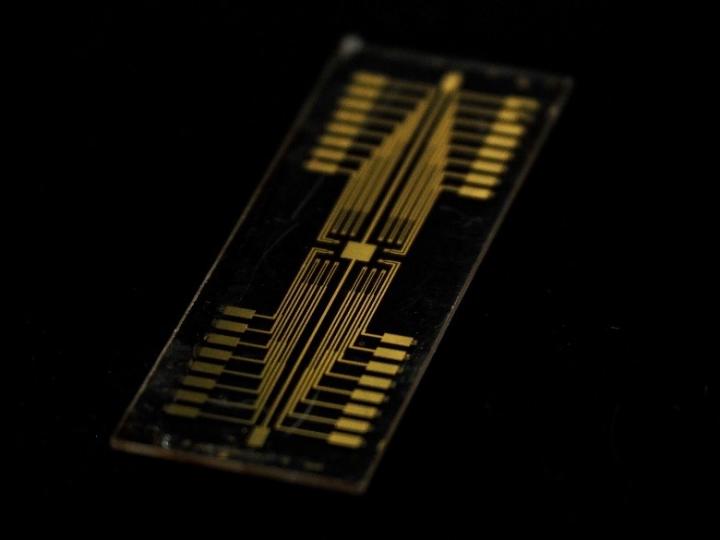
"Neuromorphic" refers to mimicking the behavior of brain neural cells. When one speaks of neuromorphic computers, they are talking about making computers think and process more like human brains-operating at high-speed with low energy consumption.
Despite a growing interest in polymer-based neuromorphic devices, researchers have yet to establish an effective method for controlling the response speed of devices. Researchers from Tohoku University and the University of Cambridge, however, have overcome this obstacle through mixing the polymers PSS-Na and PEDOT:PSS, discovering that adding an ion conducting polymer enhances neuromorphic device response time.
Polymers are materials composed of long molecular chains and play a fundamental aspect in modern life from the rubber in tires, to water bottles, to polystyrene. Mixing polymers together results in the creation of new materials with their own distinct physical properties.
Most studies on neuromorphic devices based on polymer focus exclusively on the application of PEDOT: PSS, a mixed conductor that transports both electrons and ions. PSS-Na, on the other hand, transports ions only. By blending these two polymers, the researchers could enhance the ion diffusivity in the active layer of the device. Their measurements confirmed an increase in device response time, achieving a 5-time shorting at maximum. The results also proved how closely related response time is to the diffusivity of ions in the active layer.
"Our study paves the way for a deeper understanding behind the science of conducting polymers." explains co-author Shunsuke Yamamoto from the Department of Biomolecular Engineering at Tohoku University's Graduate School of Engineering. "Moving forward, it may be possible to create artificial neural networks composed of multiple neuromorphic devices," he adds.
Controlling neuromorphic behavior of organic electrochemical yransistors by blending mixed and ion conductors
Shunsuke Yamamoto and George G. Malliaras
ACS Applied Electronic Materials (2020)
Contact information:
Assistant Professor, Department of Biomolecular Engineering, Tohoku University
syama@tohoku.ac.jp
Kopin Corporation has secured an $18.6 million sole source award from the Office of the Secretary of War through the U.S. Army Contracting Command under the IBAS program. The award brings Kopin's total IBAS funding to $34 million.
Emerson has integrated NevadaNano's MPS 6.0 technology into the Rosemount 628MP Combustible Gas Sensor for use with the Rosemount 928 Wireless Gas Monitor. MPS 6.0 consumes 1.35 mW and needs no field calibration.
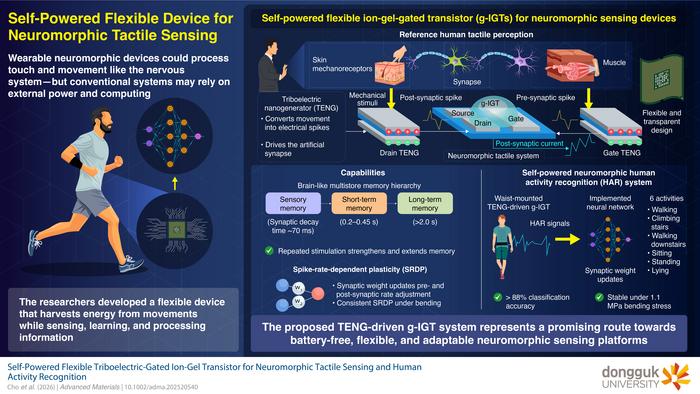
The proposed TENG-driven g-IGT is a flexible, self-powered neuromorphic device capable of reproducing multiple memory states and spike-rate-dependent learning Neuromorphic devices, which are designed to emulate aspects of biological neural networks, are promising candidates for developing low-power and intelligent sensing technologies, including wearable applications. Among the device architectures explored for neuromorphic computing, graphene-channel ion-gel-gated transistors (g-IGTs) are...
This week in nanotech
$108.5M raised
8 funding rounds · 46 deals tracked
New products
 Ti-WCMBN Nanomaterialia Featured
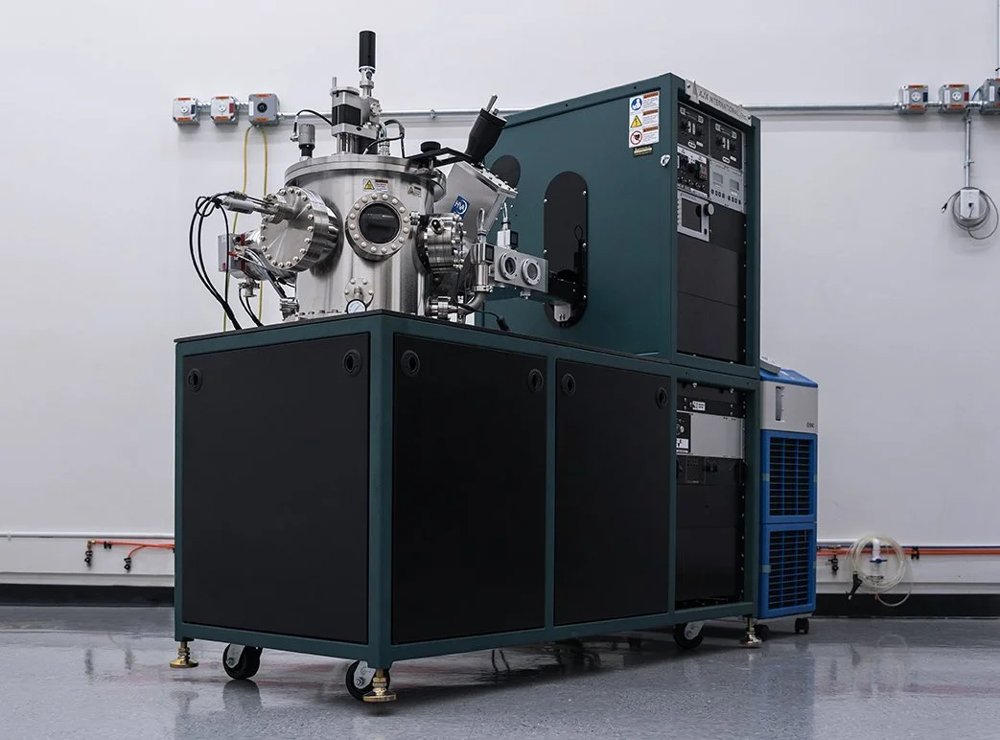 Orion Sputtering Deposition SystemsAJA International Featured
 GiiiGii
Market insights
Last 30 days: Quantum Technologies drew the most money: $3.17B.
Money raised per month