Centre for Future Low-Energy Electronics Technologies (FLEET)
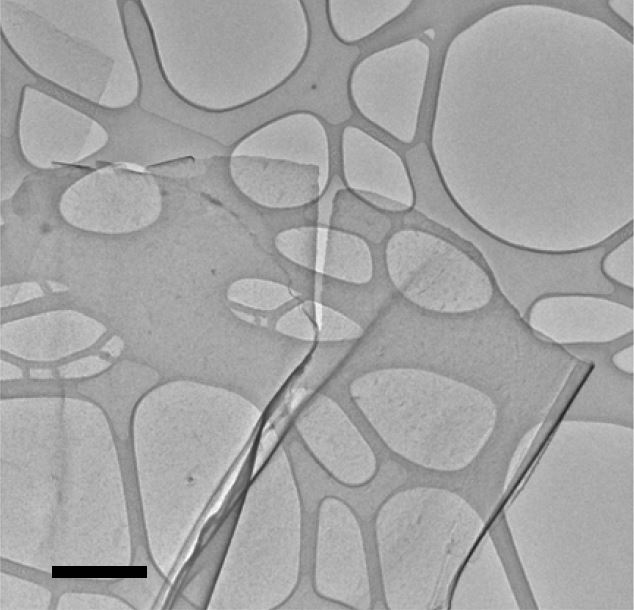
RMIT-UNSW collaboration applies liquid-metal synthesis to piezoelectrics, advancing future flexible, wearable electronics, and biosensors drawing their power from the body's movements.
Materials such as atomically-thin tin-monosulfide (SnS) are predicted to exhibit strong piezoelectric properties, converting mechanical forces or movement into electrical energy.
This property, along with their inherent flexibility, makes them likely candidates for developing flexible nanogenerators that could be used in wearable electronics or internal, self-powered biosensors.
However to date, this potential has been held back by limitations in synthesising large, highly crystalline monolayer tin-monosulfide (and other group IV monochalcogenides), with difficulties caused by strong interlayer coupling.
The new study resolves this issue by applying a new liquid-metal technique, developed at RMIT, to synthesise the materials.
Subsequent measurements confirm that tin-monosulfide synthesised using the new method displays excellent electronic and piezoelectric properties.
The resulting stable, flexible monolayer tin-monosulfide can be incorporated in a variety of devices for efficient energy harvesting.
The work started over two and a half years ago and strong collaborative work between RMIT and UNSW allowed its fruition. Ms Hareem Khan, the first author of the paper, showed remarkable perseverance to surmount many technical challenges to demonstrate the viability of the concept, with Prof Yongxiang Li.
Liquid Metal Synthesis
The unprecedented technique of synthesis used involves the van der Waals exfoliation of a tin sulphide (SnS), that is formed on the surface of tin when it is melted, while being exposed to the ambient of hydrogen sulfide (H2S) gas. H2S breaks down on the interface and sulfurises the surface of the melt to form SnS.
The technique is equally applicable to other monolayer group IV monochalcogenide, which are predicted to exhibit the same strong piezoelectricity.
This liquid metal based method allows us to extract homogenous and large scale monolayers of SnS with minimal grain boundaries.
Measurements confirm the material has high carrier mobility and piezoelectric coefficient, which translates into exceptional peak values of generated voltage and loading power for a particular applied strain, impressively higher than that any previously reported 2D nanogenerator.
High durability and flexibility of the devices are also demonstrated. This is evidence that the very stable as-synthesised monolayer SnS can be commercially implemented into power-generating nanodevices.
They can also be used for developing transducers for harvesting mechanical human movements, in accordance to the current technological inclinations towards smart, portable and flexible electronics.
The results are a step towards piezoelectric-based, flexible, wearable energy-scavenging devices.
It also presents an unprecedented synthesis technique for large (wafer) scale tin-monosulfide monolayers.
Piezoelectric Materials
Piezoelectric materials can convert applied mechanical force or strain into electrical energy.
Best known by name in the simple 'piezo' lighter used for gas BBQs and stovetops, piezo-electric devices sensing sudden changes in acceleration are used to trigger vehicle air bags, and more-sensitive devices recognise orientation changes in mobile phones, or form the basis of sound and pressure sensors.
Even more sensitive piezoelectric materials can take advantage of the small voltages generated by extremely small mechanical displacement, vibration, bending or stretching to power miniaturised devices, for example biosensors embedded in the human body, removing the need for an external power source.
Liquid metal-based synthesis of high performance monolayer SnS piezoelectric nanogenerators
Hareem Khan, Nasir Mahmood, Ali Zavabeti, Aaron Elbourne, Md. Ataur Rahman, Bao Yue Zhang, Vaishnavi Krishnamurthi, Paul Atkin, Mohammad B. Ghasemian, Jiong Yang, Guolin Zheng, Anil R. Ravindran, Sumeet Walia, Lan Wang, Salvy P. Russo, Torben Daeneke, Yongxiang Li & Kourosh Kalantar-Zadeh
Nature Communications volume 11, Article number: 3449 (2020)
DOI: 10.1038/s41467-020-17296-0
Contact information:
RMIT Graduate researcher in Sensor Technology Lab
s3574282@student.rmit.edu.au
Phone: 0426436489
IMB-CNM-CSIC is a partner in POLARIS, an EIC Pathfinder Open 2026 project led by ICN2 to develop graphene-based brain implants. Researcher Anton Guimerà leads the institute's contribution.

A computational method developed at TU Dresden and HZDR predicts separable atomic layers in any crystal, not just classic van der Waals stacks. Screening more than 24,000 structures, the team flagged 2,531 promising candidates for 2D materials, many with low exfoliation energies and favourable stability.
California Nanotechnologies Corp. has received purchase orders totaling US$147,000 from a Texas-based aerospace company for components used in commercial satellite systems, following about US$170,000 in R&D orders in 2026.
This week in nanotech
$271M raised
6 funding rounds · 27 deals tracked
New products
 Ti-WCMBN Nanomaterialia Featured
 Orion Sputtering Deposition SystemsAJA International Featured
 Ionic® Purification SystemBionano Genomics, Inc.
Market insights
Last 30 days: Quantum Technologies drew the most money: $3.17B.
Money raised per month
Behind the deal
Who invested in Photon Bridge’s $11.2M Series A?
See the investors with Insights Pro →