Science China Press
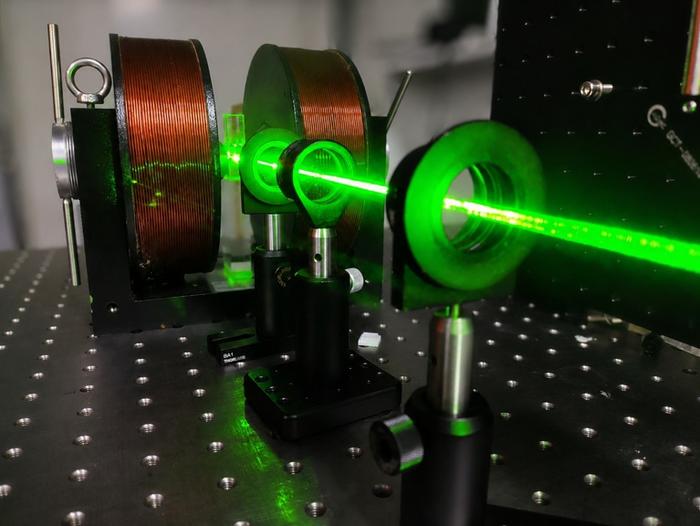
The first controlled SSPM
Spatial self‑phase modulation (SSPM) has been extensively investigated in 2D quantum materials, enabling demonstrations of numerous photonics devices. Among these, all‑optical switches with “weak‑light‑control‑strong‑light” functionality constitute a landmark advance and have drawn substantial research interest. Nevertheless, all observed SSPM effects to date remain intrinsic to the host materials. “To date, no viable approach has been reported to actively tune or enhance this effect,” states Prof. Jimin Zhao, whose group first discovered SSPM in 2D materials and set the world record for the largest third‑order nonlinear optical coefficient χ;(3) using graphene‑based SSPM fifteen years ago. “Now, for the first time, SSPM is tuned by an external magnetic field instead of being only measured,” Zhao adds.
Magnetic-field-controlled and -enhanced SSPM
By applying an external magnetic field to dispersions of 2D flakes, the team has demonstrated the first magnetic‑field‑tunable SSPM, in which χ;(3) can be either enhanced or suppressed on demand. For ferromagnetic VSe2, χ;(3) increases by 58%, reaching 1.44×10⁻⁴ e.s.u. at 1000 mT; for diamagnetic graphene, it is enhanced by 32% to a record value of 2.0×10⁻⁷ e.s.u. at 600 mT, surpassing the 15‑year‑old world record. Under the applied magnetic field, the optical response becomes anisotropic: χ;(3) exhibits a dependence on laser polarization. The magnetic field also induces optical birefringence. This anisotropy renders laser polarization an additional, independent tuning knob.
Mechanism: Magnetic-field-driven collective flake alignment
Magnetic‑field‑tunable SSPM arises from collective field‑induced orientational ordering of suspended nanoflakes. Upon application of a magnetic field, ferromagnetic VSe2 nanoflakes orient their c‑axes parallel to the applied field, whereas diamagnetic graphene nanoflakes align their basal planes along the field. This collective orientational ordering modulates the orientation‑averaged intrinsic anisotropic nonlinearity of the nanoflakes, rendering the magnetic field a macroscopic tunable handle for light‑matter interactions.
Magnetic-field-controlled all-optical switch
Building upon this tunability, the team has demonstrated the first magnetic‑field‑tunable all‑optical switch based on SSPM in VSe2. The signal‑to‑control intensity ratio, which quantifies the “weak‑light‑control‑strong‑light” functionality, is enhanced by up to 340 %. Even moderate magnetic fields below 0.3 T yield a 100 % enhancement, indicating that conventional permanent magnets are sufficient for practical device implementation. These results open a promising route toward next‑generation all‑optical switches and photonic devices.
“This work establishes a new paradigm for quantum material nonlinear photonics: rather than only passively probing the intrinsic nonlinear optical responses of quantum materials, we achieve active, external magnetic-field modulation of such optical properties,” commented Yixuan Huang, the first author of this study. “Our magnetic-field-controlled all-optical switch and record-high nonlinearity pave a viable pathway toward the development of high-performance functional photonic devices.”
Reference
Magnetic-field-enhanced laser-induced electron coherence in 2D magnetic materials
Yixuan Huang, Sheng Meng, and Jimin Zhao

Rhombohedral hexalayer graphene, in which six carbon sheets are stacked with a slight lateral offset like staircase steps, hosts both superconductivity and electrically controllable orbital magnetism, researchers report in Nature Physics. The arrangement yields a rich collection of quantum states in a simple carbon-based material, positioning rhombohedral multilayer graphene as a platform for probing the fundamental mechanisms of superconductivity and magnetism and potentially for new ways of…
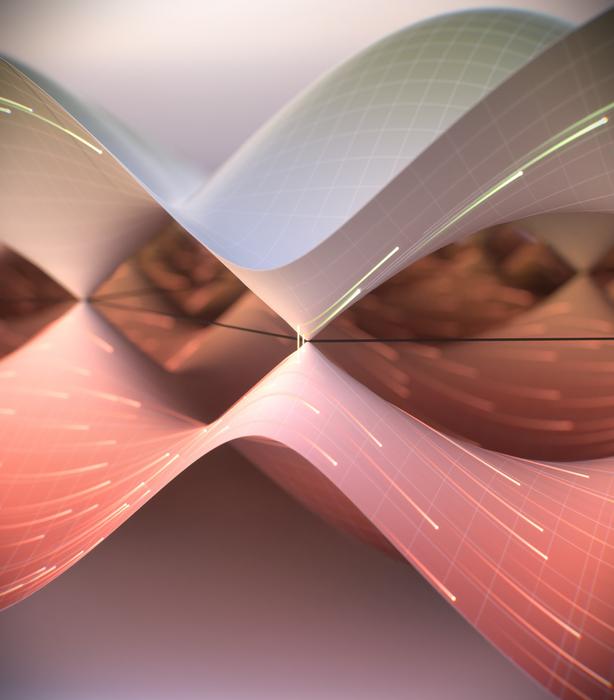
Physicists in Regensburg, Marburg and Jülich have directly imaged Landau-Zener-Majorana transitions in graphene, capturing electrons as they jump across energy band gaps under intense light fields. Their slow-motion electron camera pairs laser technology with a photoemission momentum microscope to track these ultrafast quantum dynamics in real time, with tunneling probabilities approaching 100 percent.
IMB-CNM-CSIC is a partner in POLARIS, an EIC Pathfinder Open 2026 project led by ICN2 to develop graphene-based brain implants. Researcher Anton Guimerà leads the institute's contribution.
This week in nanotech
$13.6M raised
3 funding rounds · 20 deals tracked
New products
 Ti-WCMBN Nanomaterialia Featured
 Nion-compatible In Situ STEM Holders for Electrical BiasingHummingbird Scientific Featured
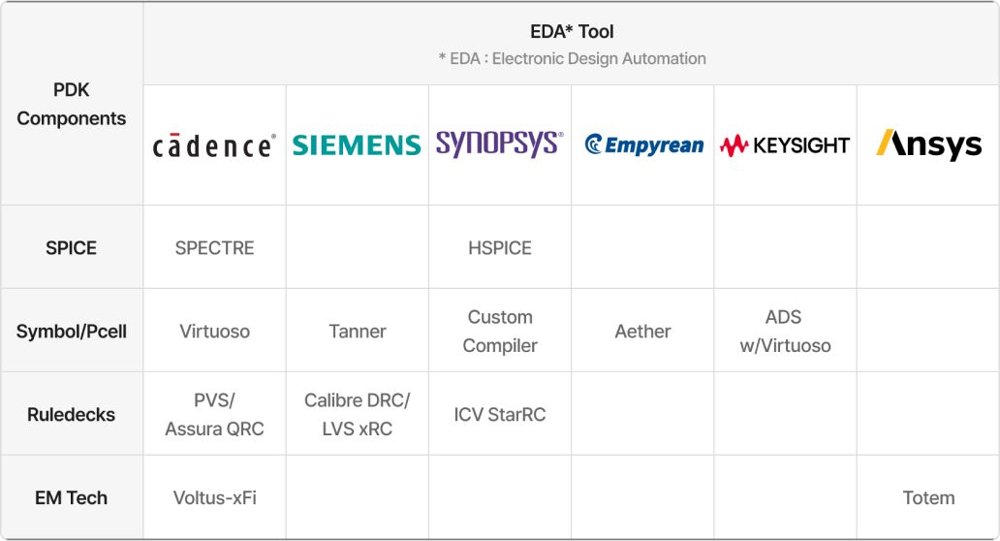 PDK (Process Design Kit)DB HiTek
Market insights
Last 30 days: Quantum Technologies was the busiest vertical: 61 of 192 events (32%).
Money raised per month