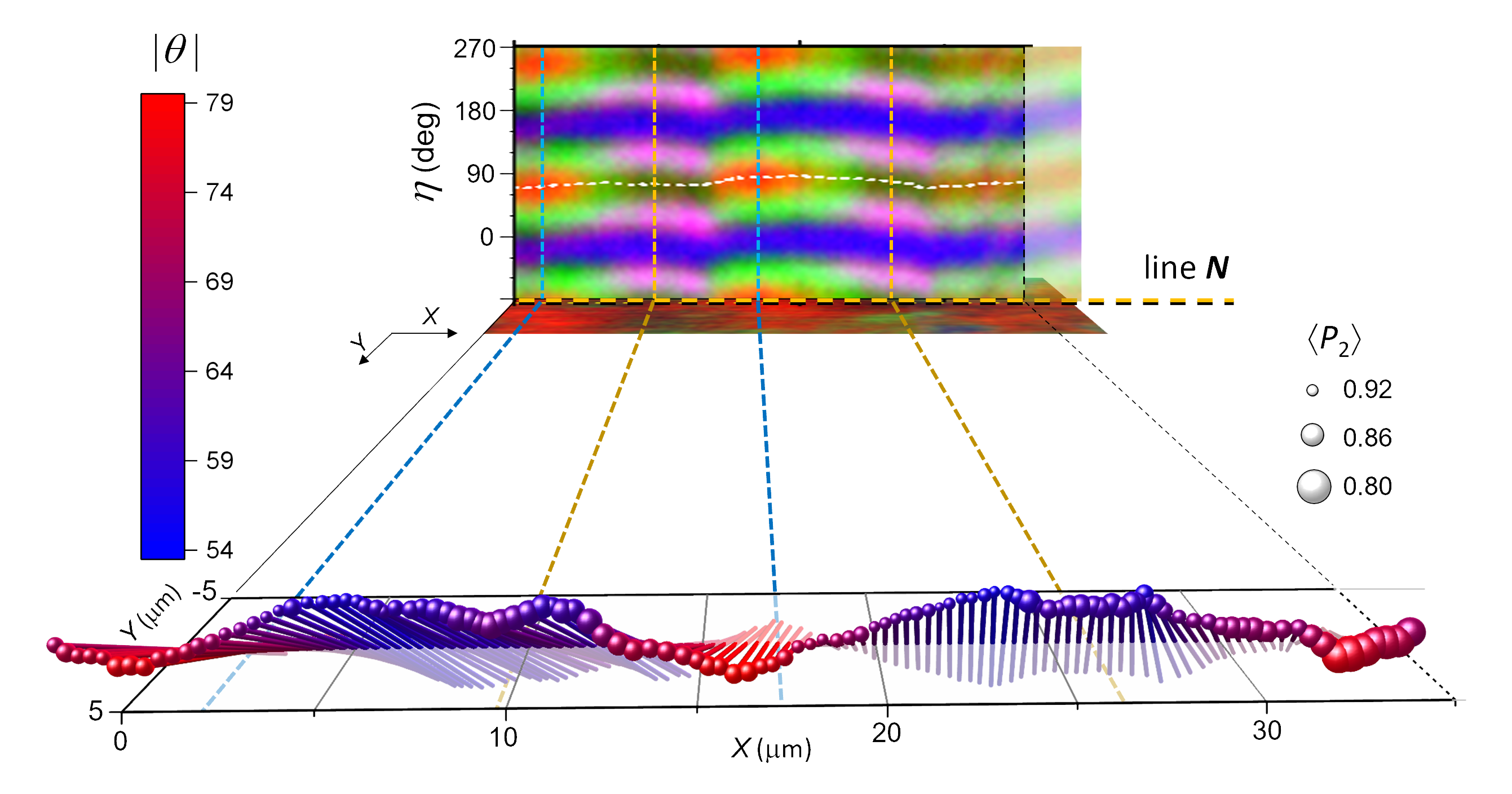
In some materials, the molecules line up in a regular, repeating pattern. In others, they all point in random directions. But in many advanced materials used in medicine, computer chip manufacturing and other industries, the molecules arrange themselves in complex patterns that dictate the material’s properties.
Scientists haven’t had good ways to measure molecular orientation in three dimensions at a microscopic scale, leaving them in the dark about why some materials behave the way they do. Now, researchers at the National Institute of Standards and Technology (NIST) have measured the 3D orientation of the molecular building blocks of plastics, called polymers, observing details as small as 400 nanometers, or billionths of a meter, in size.
The measurements, described in the Journal of the American Chemical Society, show polymer chains twisting and undulating in complex and unexpected ways. The new measurements were made using a souped-up version of a technique called broadband coherent anti-Stokes Raman scattering, or BCARS.
BCARS works by shining laser beams at a material, causing its molecules to vibrate and emit their own light in response. This technique, developed about a decade ago at NIST, is used to identify what a material is made of. To measure molecular orientation, NIST research chemist Young Jong Lee has added a system for controlling the polarization of the laser light and new mathematical methods for interpreting the BCARS signal.
Specifically, the new technique measures the average orientation of the polymer chains within 400-nanometer regions, along with the distribution of orientations around that average. These measurements will allow scientists to identify molecular orientation patterns that produce the mechanical, optical and electrical properties they seek.
“Understanding that structure/function relationship can really speed up the discovery process,” Lee said.
This will help researchers to optimize the materials used in medical devices such as arterial stents and artificial knees. The orientation of the molecules on the surface of those devices helps determine how well they bond with muscle, bone and other tissues.
It can also help with additive manufacturing, in which products are fabricated by 3D-printing them, layer upon layer — a technique that is transforming the electronics, automotive, aerospace and other industries. 3D printing often uses polymers, and researchers are constantly seeking new ones with better strength, flexibility, heat resistance and other properties.
The new measurement technique might also be used to optimize the polymer-based ultrathin films used in semiconductor manufacturing. As the components within computer chips get smaller and smaller — as Moore’s law predicts they will — the molecular orientations in those films become increasingly important.
Reference
3D Orientation Imaging of Polymer Chains with Polarization-Controlled Coherent Raman Microscopy
Shuyu Xu, Ying Jin, and Young Jong Lee
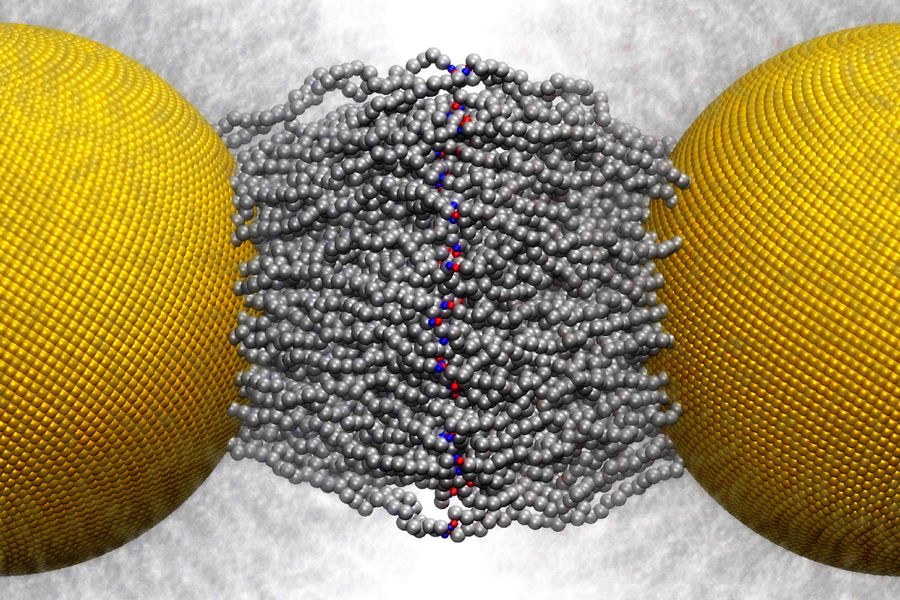
Researchers have shown that super-flexible connector molecules, rather than rigid ones, can tune how nanoparticles pack into larger structures. By varying ligand chain length, particle size and electric charge, the team assembled nanoparticles into crystal lattices never seen before and controlled the number of bonds each particle forms.

Researchers at Tohoku University have raised the power factor of chromium nitride thin films 250-fold by doping them with small amounts of titanium, reaching 5.26 µW cm⁻¹ K⁻². Titanium's stronger affinity for nitrogen suppresses nitrogen vacancies, cutting carrier concentration while boosting electron mobility by roughly two orders of magnitude.

Neutron diffraction at Oak Ridge National Laboratory has shown that a modest mechanical squeeze can substantially reshape the magnetic behavior of altermagnets, a class of materials under investigation for spintronics. Squeezing manganese telluride and iron sulfide crystals between titanium plates altered their magnetic domain populations and changed the anomalous Hall effect, which governs electron transport.
This week in nanotech
$548.4M raised
2 funding rounds · 19 deals tracked
New products
 Ti-WCMBN Nanomaterialia Featured
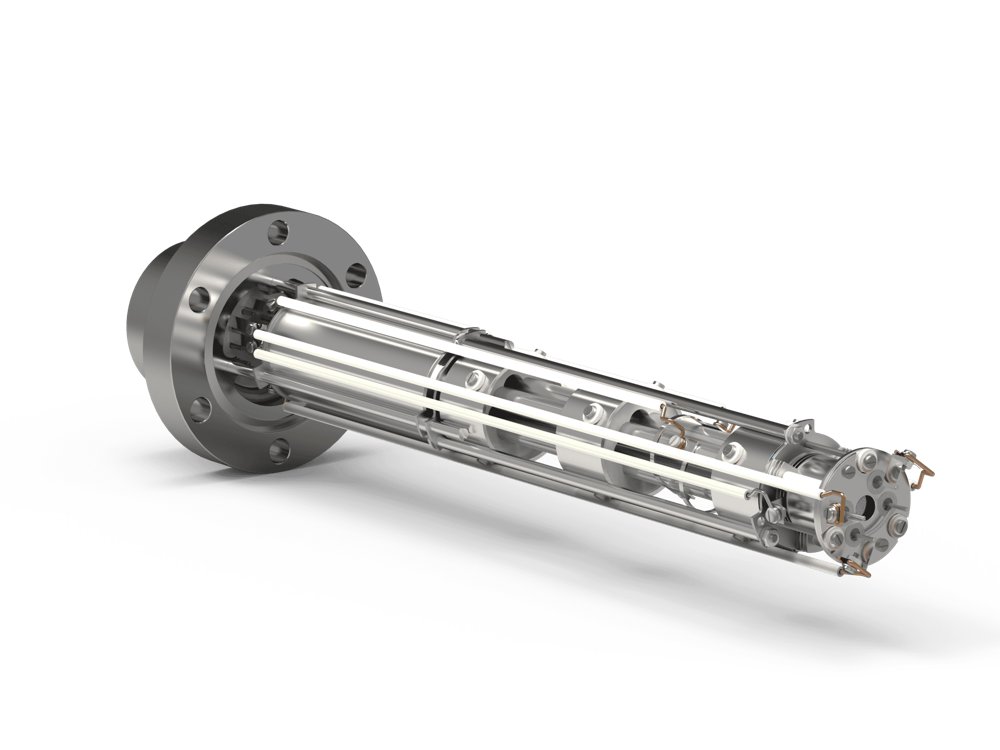 DLS-1 Mass Spectrometer for Fusion Gas AnalysisHiden Analytical Featured
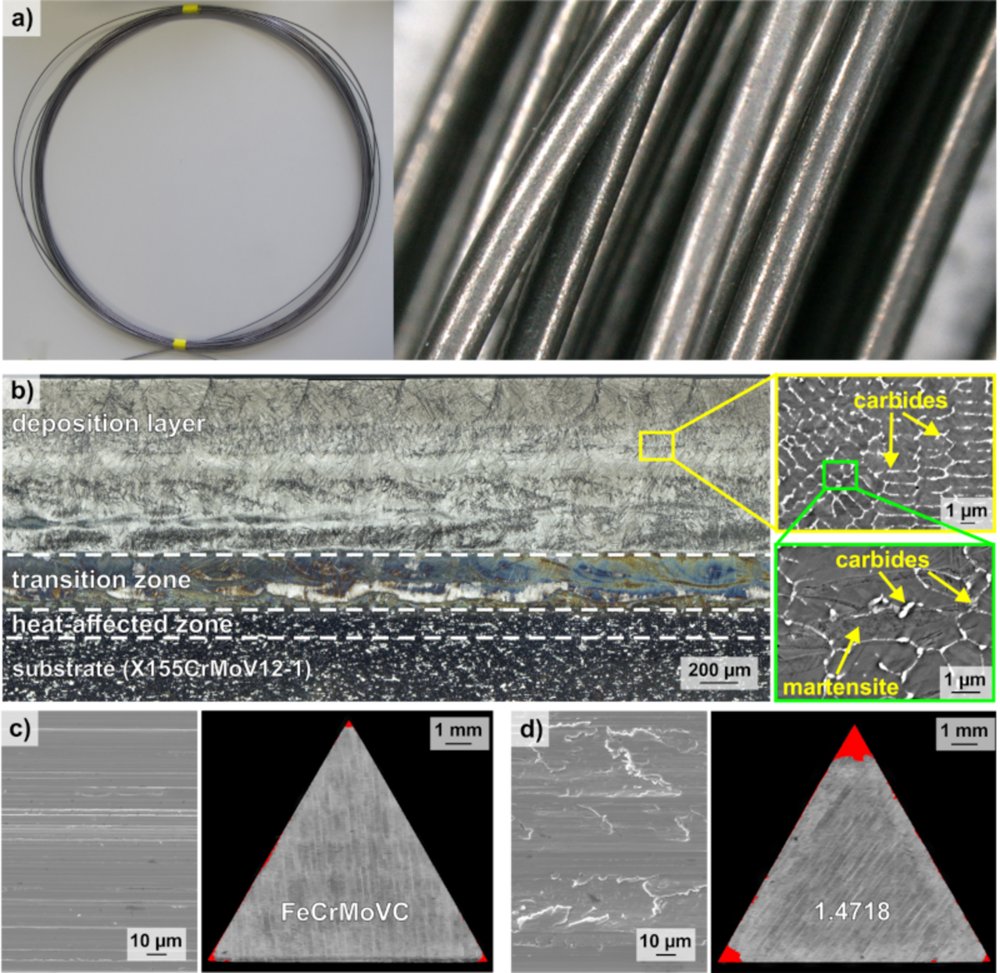 Fe85Cr4Mo8V2C1 wire filler materialLeibniz Institute for Solid State and Materials Research Dresden - IFW Dresden
Market insights
Last 30 days: Quantum Technologies drew the most money: $2.15B.
Money raised per month