
In the pursuit of efficient energy utilization, scientists are looking into materials, i.e., thermoelectric materials, that can efficiently turn heat into electricity. One specific type, called topological magnets, is getting a lot of attention because they exhibit the anomalous Nernst effect. In the anomalous Nernst effect, a voltage is generated perpendicular to both the temperature gradient and an applied magnetic field in a ferromagnetic material.
While some devices have shown improved performance by combining layers with different thermopower signs in thermopile devices, this approach generally requires the use of different materials and altering the manufacturing process.
In a significant breakthrough, a collaborative research group has demonstrated the ability to create both positive and negative polarities in generating electricity from heat using a special material called Co3Sn2S2, known for its topological magnet properties. This breakthrough was achieved by simply swapping out some elements in the magnetic compound.
The group was led by Associate Professor Kohei Fujiwara and Professor Atsushi Tsukazaki from Tohoku University's Institute for Materials Research (IMR); Researcher Takamasa Hirai and Distinguished Group Leader Ken-ichi Uchida from the National Institute for Materials Science (NIMS); and Associate Professor Yuki Yanagi from Toyama Prefectural University.
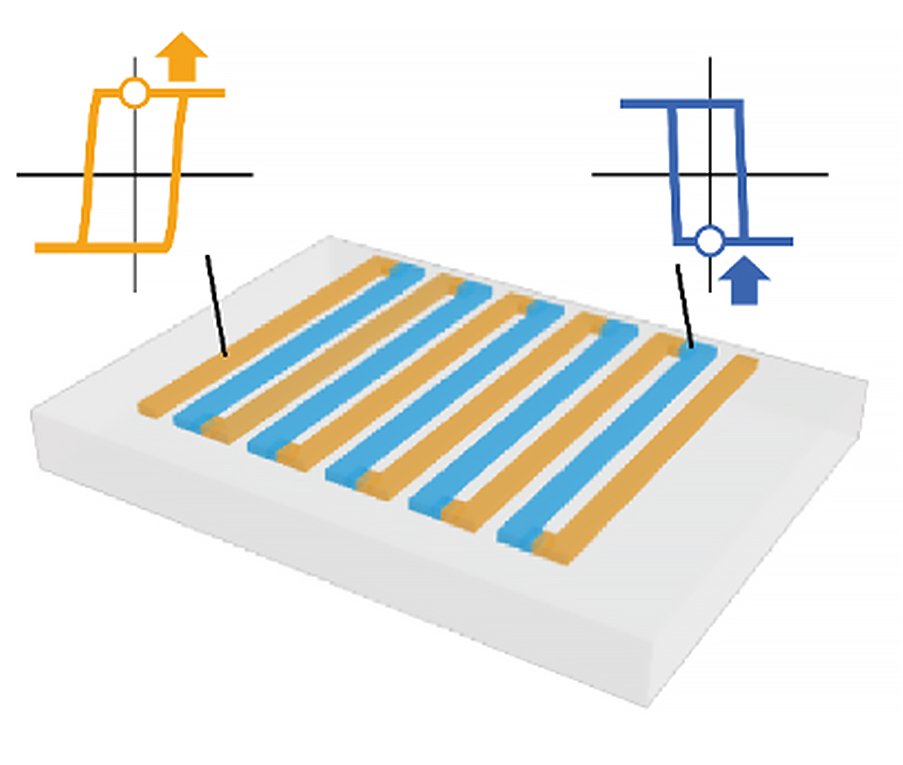
Details of their findings were reported in the journal Nature Physics on January 8, 2024
"We focused on a cobalt-tin-sulfur-based ferromagnet because its topological electronic state is suited to control the polarity of the anomalous Nernst effect according to our previous theoretical study," stated Fujiwara.
To validate their concept, the team conducted elemental substitution through the growth processes of the thin films, a technique widely employed in semiconductor technology. They discovered that the appropriate substitution of nickel and indium led to a reversal in the sign of thermoelectric voltage through the modulation of the topological electronic state.
"The availability of common base elements for the fabrication of thermopile devices will contribute to the reduction of resources and costs. Our concept will apply to other topological magnets and accelerate the development of superior magneto-thermoelectric materials," adds Fujiwara.
Reference
Bipolarity of large anomalous Nernst effect in Weyl magnet-based alloy films
Shun Noguchi, Kohei Fujiwara, Yuki Yanagi, Michi-To Suzuki, Takamasa Hirai, Takeshi Seki, Ken-ichi Uchida & Atsushi Tsukazaki
https://www.nature.com/articles/s41567-023-02293-z
Tohoku University
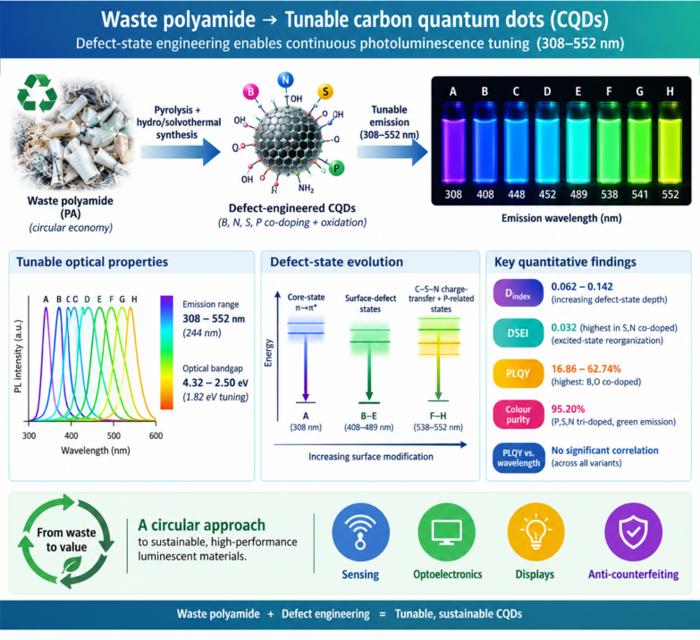
Waste polyamide-derived CQDs show continuous photoluminescence tuning from 308 to 552 nm through sequential defect-state engineering, with optical transition energies decreasing from 4.32 to 2.50 eV. @Christian Ebere Enyoh from Saitama University Carbon quantum dots (CQDs) are fluorescent carbon nanomaterials with potential applications in sensing, optoelectronics, displays, anti-counterfeiting, and environmental technologies. Their optical properties can be adjusted by modifying the carbon...
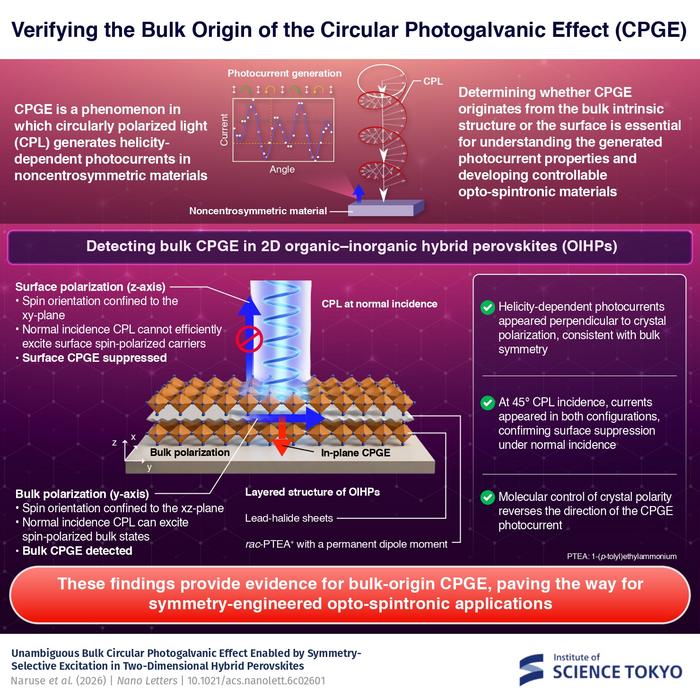
The researchers used circularly polarized light at normal incidence and found that helicity-dependent photocurrents appeared perpendicular to the crystal’s polarization but vanished when measured parallel to it, supporting a bulk origin of CPGE. @Institute of Science Tokyo The circular photogalvanic effect (CPGE), a phenomenon that generates helicity-dependent photocurrents in noncentrosymmetric materials, can originate purely from a crystal's internal structure without contribution from the...
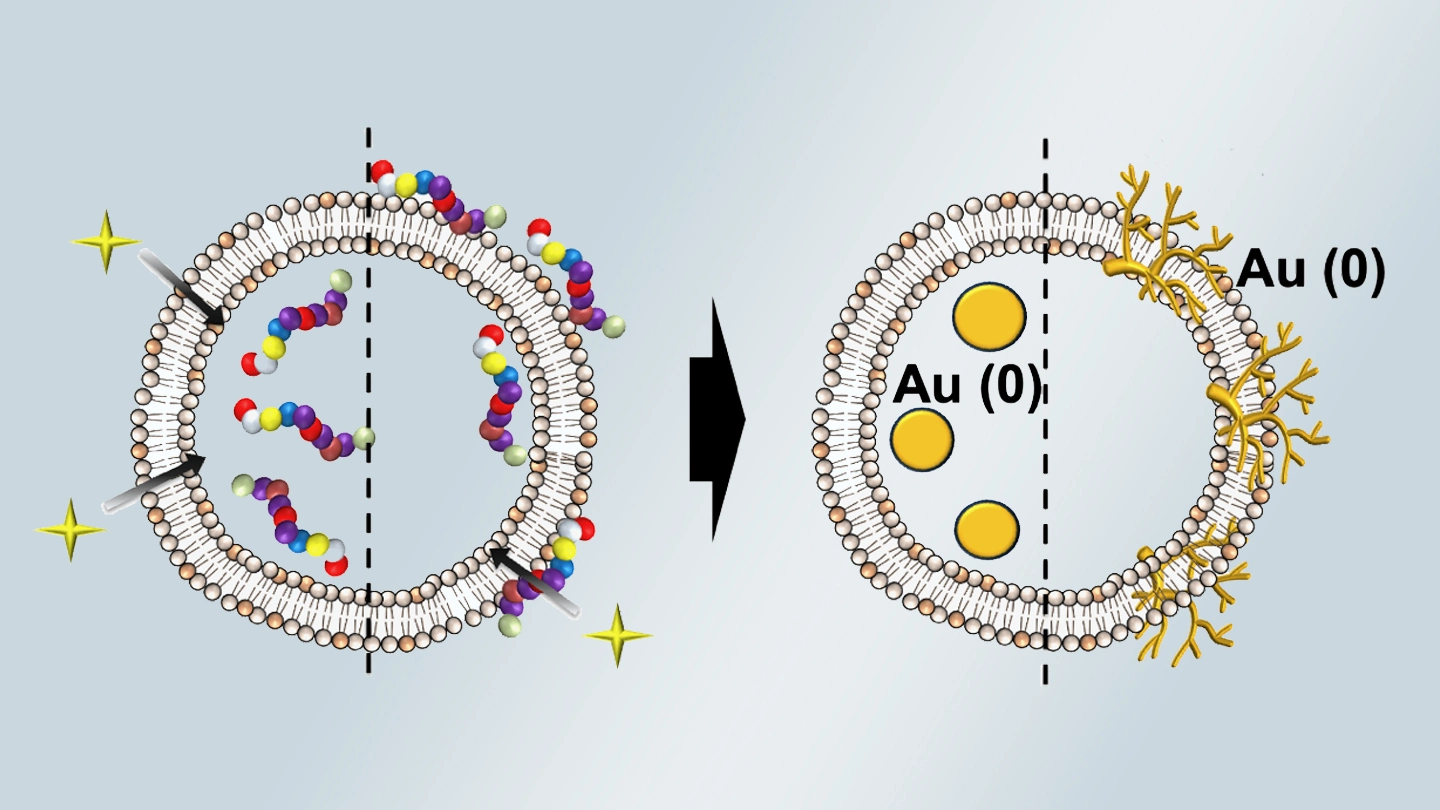
Summary of gold nanoparticle growth programming in liposome based on localization of biomineralization peptide The position of biomineralization peptides within liposomes can influence how gold nanoparticles grow, reports a research team from Institute of Science Tokyo. Peptides localized at the membrane interface promote branched structures, while those confined to the liposome interior favor spherical nanoparticles. The findings offer a new strategy for controlling nanoscale reaction...
