Tucson, 10 September 2026. A research team led by Gang Wu at Washington University in St. Louis, with collaborators from Brookhaven National Laboratory, Lawrence Berkeley National Laboratory, Northeastern University, and the University of Pittsburgh, has developed a radial nanochannel-array carbon sphere support for platinum-cobalt intermetallic fuel cell catalysts. The work was reported in Nature Nanotechnology and published by MSE Supplies on Sep 10, 2026.
The support is a hollow, porous structure built around open-through-grooved mesopores arranged radially from center to surface. Pore volume and size are tuned for nanoparticle confinement. The radial channels physically confine PtCo nanoparticles during annealing, preventing the coarsening that conventional supports allow.
The ordered L1₀ phase responsible for activity and stability gains does not complete below roughly 1,000°C. Conventional carbon supports lose their ability to hold nanoparticles in place once annealing temperatures climb past about 700°C, so particles sinter and coarsen before the transition finishes. The new support was annealed at 1,000°C and held particles under 5 nanometers with more than 80 percent L1₀ ordering and 40 weight percent platinum content.
"The radial nanochannel carbon didn't change the platinum-cobalt chemistry. It changed how much heat the support could take before the nanoparticles it was holding stopped behaving."
In membrane electrode assemblies, the catalyst delivered 2.12 A/cm² at 0.70 V under heavy-duty vehicle test conditions. After an accelerated stress test of 150,000 voltage cycles, roughly equivalent to 25,000 hours of operation, it retained 82.5 percent of its initial activity. The source states Washington University's own release cites 85 percent, and that the peer-reviewed figure is authoritative.
The open channel structure was also credited with improving ionomer distribution through the electrode, reducing oxygen, proton, and water transport resistance.
Source: MSE Supplies LLC news
NTT DOCOMO has expanded production use of D-Wave quantum technology to a second hybrid-quantum application that minimizes paging and location-registration signals together. Across a 333 base station segment, location-registration signals fell 65.3% and paging signals 7%.

An approximately 3 nm ALD aluminium oxide buffer protected perovskite-silicon tandem devices during ITO sputtering, allowing tandem efficiencies above 26%. The layers were deposited on a Kurt J. Lesker inert-atmosphere platform.
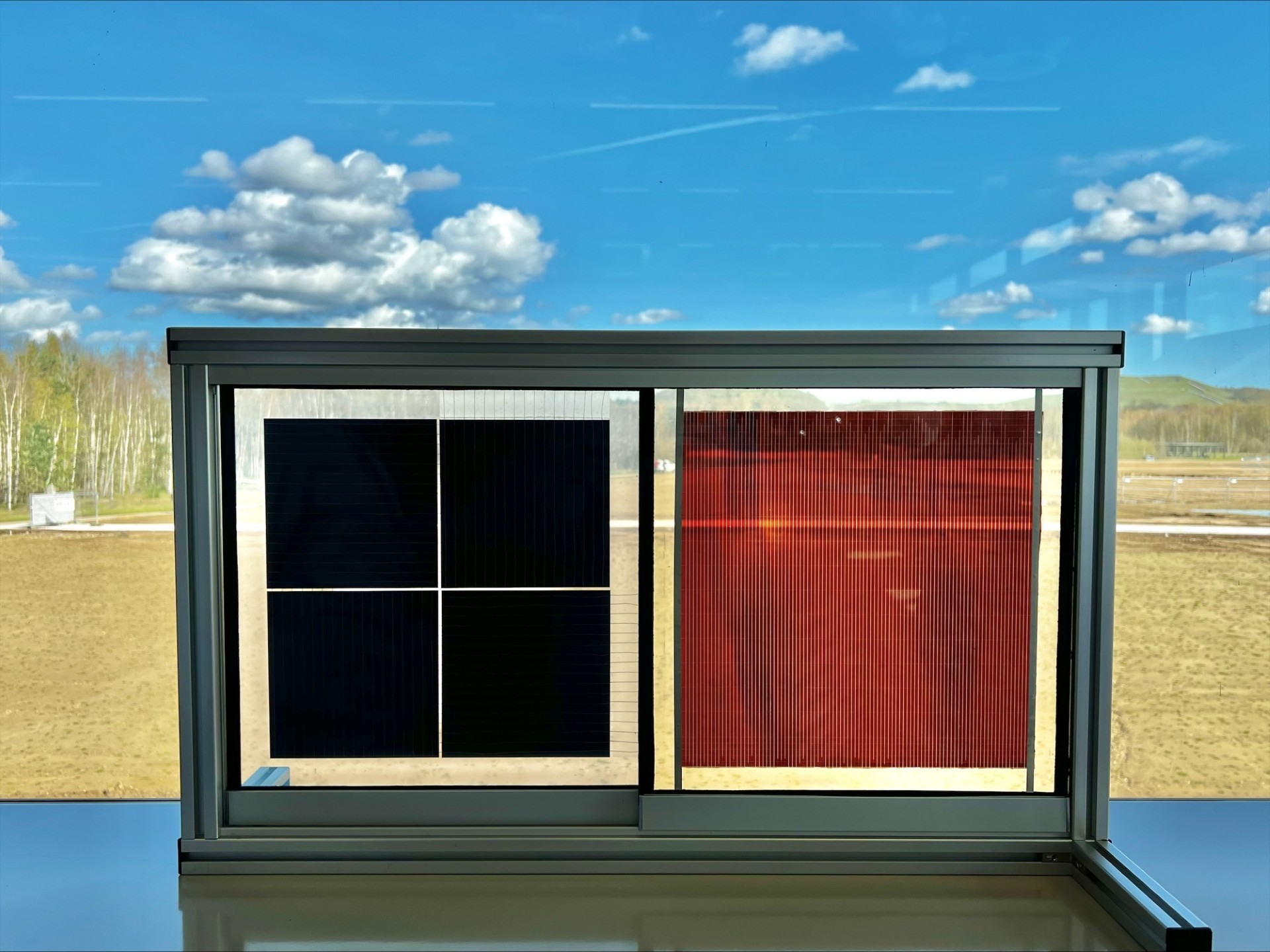
Noak, a spin-off of imec and Hasselt University, has secured €5 million in seed funding to industrialize perovskite-silicon tandem solar cells, which promise conversion efficiencies of 30 to 35 percent compared with the roughly 27 percent practical limit of conventional silicon. The technology rests on proprietary perovskite layer stacks and scalable deposition methods, backed by five years of outdoor testing at more than ten sites across three continents.
This week in nanotech
$555M raised
5 funding rounds · 34 deals tracked
New products
 Nion-compatible In Situ STEM Holders for Electrical BiasingHummingbird Scientific Featured
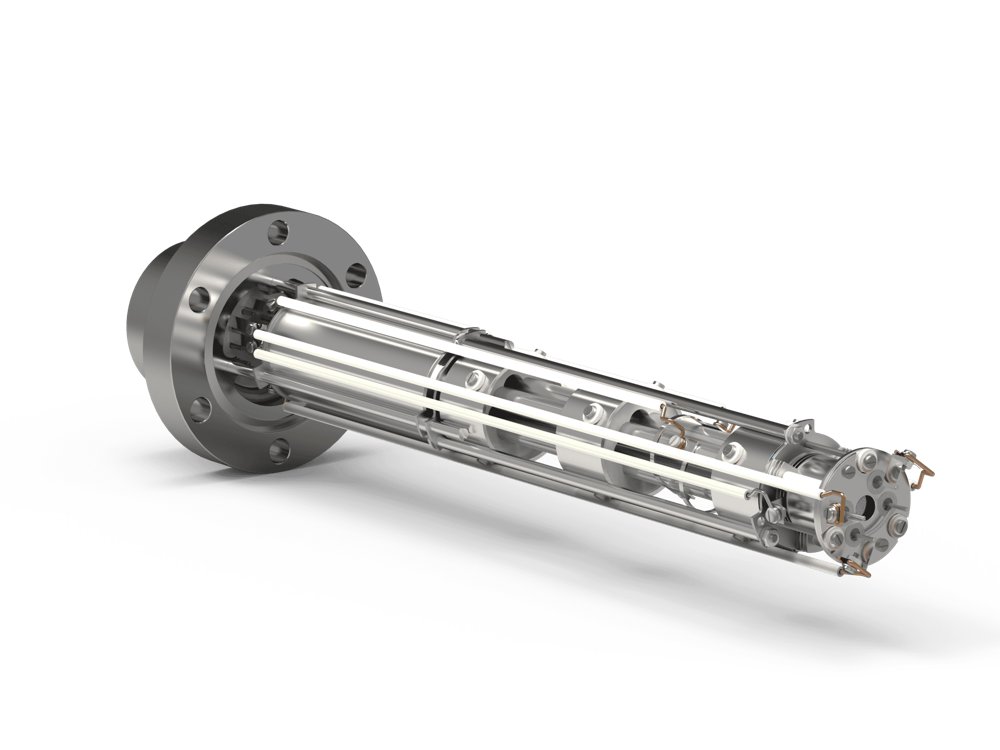 DLS-1 Mass Spectrometer for Fusion Gas AnalysisHiden Analytical Featured
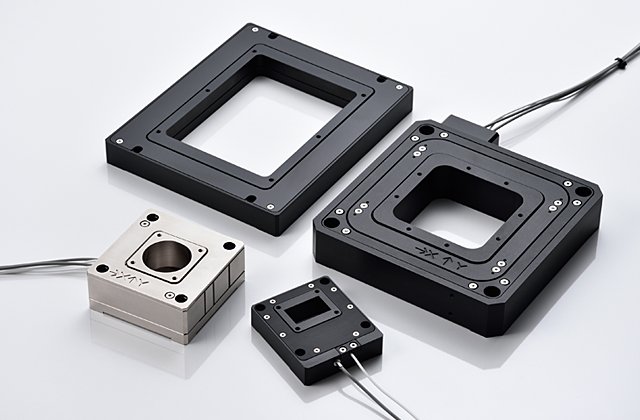 PKVH / PKVL ZAxis With an opening modelTHK PRECISION CO.,LTD.
Market insights
Last 30 days: Quantum Technologies drew the most money: $2.15B.
Money raised per month
Behind the deal
Who led Qilimanjaro Quantum Tech’s $21.9M Series A?
See the investors with Insights Pro →