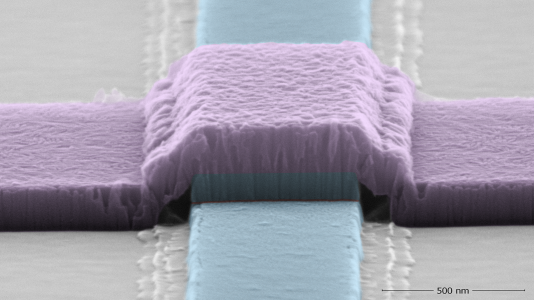
For years, niobium was considered an underperformer when it came to superconducting qubits. Now scientists supported by Q-NEXT have found a way to engineer a high-performing niobium-based qubit and so take advantage of niobium’s superior qualities.
When it comes to quantum technology, niobium is making a comeback.
For the past 15 years, niobium has been sitting on the bench after experiencing a few mediocre at-bats as a core qubit material.
Qubits are the fundamental components of quantum devices. One qubit type relies on superconductivity to process information.
Touted for its superior qualities as a superconductor, niobium was always a promising candidate for quantum technologies. But scientists found niobium difficult to engineer as a core qubit component, and so it was relegated to the second string on Team Superconducting Qubit.
Now, a group led by Stanford University’s David Schuster has demonstrated a way to create niobium-based qubits that rival the state-of-the-art for their class.
“We’ve shown that niobium is relevant again, expanding the possibilities of what we can do with qubits,” said Alexander Anferov of the University of Chicago’s Physical Science division, one of the lead scientists of the result.
The team’s work is published in Physical Review Applied and was supported in part by Q-NEXT, a U.S. Department of Energy (DOE) National Quantum Information Science Research Center led by DOE’s Argonne National Laboratory.
By harnessing niobium’s standout features, scientists will be able to expand the capabilities of quantum computers, networks and sensors. These quantum technologies draw on quantum physics to process information in ways that outclass their traditional counterparts and are expected to improve areas as varied as medicine, finance and communication.
The niobium advantage
When it comes to superconducting qubits, aluminum has ruled the roost. Aluminum-based superconducting qubits can store information for a relatively long time before the data inevitably disintegrates. These longer coherence times mean more time for processing information.
The longest coherence times for an aluminum-based superconducting qubit are a few hundred millionths of a second. By contrast, in recent years, the best niobium-based qubits yielded coherence times that are 1,000 times shorter — less than a millionth of a second.
Despite that short qubit lifetime, niobium held attractions. A niobium-based qubit can operate at higher temperatures than its aluminum counterpart and so would require less cooling. It can also operate across an eight-times-greater frequency range and a massive 18,000-times-wider magnetic field range compared to aluminum-based qubits, expanding the menu of uses for the superconducting-qubit family.
In one respect, there was no contest between the two materials: Niobium’s operating range trounced aluminum’s. But for years, the short coherence time made the niobium-based qubit a nonstarter.
“No one really made that many qubits out of niobium junctions because they were limited by their coherence,” Anferov said. “But our group wanted to make a qubit that could work at higher temperatures and a greater frequncy range — at 1 K and 100 gigahertz. And for both of those properties, aluminum is not sufficient. We needed something else.”
So, the team had another look at niobium.
Losing the lossiness
Specifically, they had a look at the niobium Josephson junction. The Josephson junction is the information-processing heart of the superconducting qubit.
In classical information processing, data comes in bits that are either 0s or 1s. In quantum information processing, a qubit is a mixture of 0 and 1. The superconducting qubit’s information “lives” as a mixture of 0 and 1 inside the junction. The longer the junction can sustain the information in that mixed state, the better the junction and the better the qubit.
The Josephson junction is structured like a sandwich, consisting of a layer of nonconducting material squeezed between two layers of superconducting metal. A conductor is a material that provides easy passage for electrical current. A superconductor kicks it up a notch: It carries electrical current with zero resistance. Electromagnetic energy flows between the junction’s outer layers in the mixed quantum state.
The typical, trusty aluminum Josephson junction is made of two layers of aluminum and a middle layer of aluminum oxide. A typical niobium junction is made of two layers of niobium and a middle layer of niobium oxide.
Schuster’s group found that the junction’s niobium oxide layer sapped the energy required to sustain quantum states. They also identified the niobium junctions’ supporting architecture as a big source of energy loss, causing the qubit’s quantum state to fizzle out.
The team’s breakthrough involved both a new junction arrangement and a new fabrication technique.
The new arrangement called on a familiar friend: aluminum. The design did away with the energy-sucking niobium oxide. And instead of two distinct materials, it used three. The result was a low-loss, trilayer junction — niobium, aluminum, aluminum oxide, aluminum, niobium.
“We did this best-of-both-worlds approach,” Anferov said. “The thin layer of aluminum can inherit the superconducting properties of the niobium nearby. This way, we can use the proven chemical properties of aluminum and still have the superconducting properties of niobium.”
The group’s fabrication technique involved removing scaffolding that supported the niobium junction in previous schemes. They found a way to maintain the junction’s structure while getting rid of the loss-inducing, extraneous material that hampered coherence in previous designs.
“It turns out just getting rid of the garbage helped,” Anferov said.
A new qubit is born
After incorporating their new junction into superconducting qubits, the Schuster group achieved a coherence time of 62 millionths of a second, 150 times longer than its best-performing niobium predecessors. The qubits also exhibited a quality factor — an index of how well a qubit stores energy — of 2.57 x 10^5, a 100-fold improvement over previous niobium-based qubits and competitive with aluminum-based qubit quality factors.
“We’ve made this junction that still has the nice properties of niobium, and we’ve improved the loss properties of the junction,” Anferov said. “We can directly outperform any aluminum qubit because aluminum is an inferior material in many ways. I now have a qubit that doesn’t die at higher temperatures, which is the big kicker.”
The results will likely elevate niobium’s place in the lineup of superconducting qubit materials.
“This was a promising first foray, having resurrected niobium junctions,” Schuster said. “With niobium-based qubits’ broad operational reach, we open up a whole new set of capabilities for future quantum technologies.”
Reference
Improved coherence in optically defined niobium trilayer-junction qubits
Alexander Anferov, Kan-Heng Lee, Fang Zhao, Jonathan Simon, and David I. Schuster
https://journals.aps.org/prapplied/abstract/10.1103/PhysRevApplied.21.024047
Argonne National Laboratory
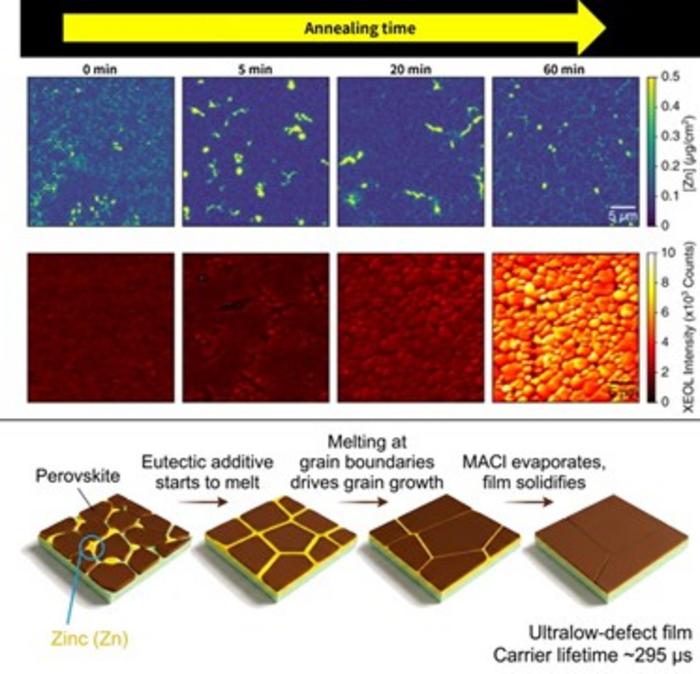
A eutectic mixture of methylammonium chloride and a zinc halide melts at about 100 degrees Celsius, forming a transient liquid layer at perovskite grain boundaries that lets crystals merge into larger, cleaner grains. The resulting films reached a carrier lifetime of roughly 295 microseconds and a surface recombination velocity of 0.3 cm/s, the lowest reported for lead halide perovskites.
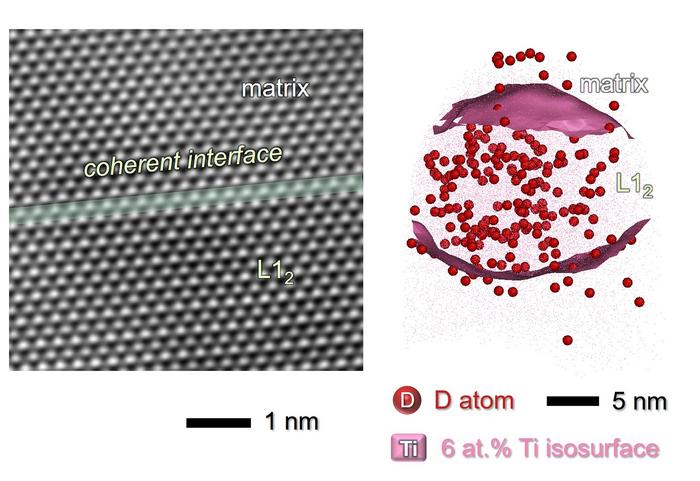
Researchers at the University of Sydney have directly observed hydrogen dissolved in the interstitial spaces between metal atoms in alloys, a world first. Using cryogenic atom probe tomography with deuterium tracers, electron microscopy and theoretical calculations, the team showed hydrogen occupies sites between atoms rather than only collecting at defects, and that local atomic arrangement and chemistry dictate where it prefers to reside.

Researchers have developed carbon dots whose fluorescence shifts across the visible spectrum, from blue to red, depending on concentration, liquid environment and acidity. By tuning the particles' surfaces, the team produced versions that change color reversibly as pH shifts, then incorporated them into polymer powders, molded shapes and flexible films.
This week in nanotech
$10.2M raised
1 funding round · 13 deals tracked
New products
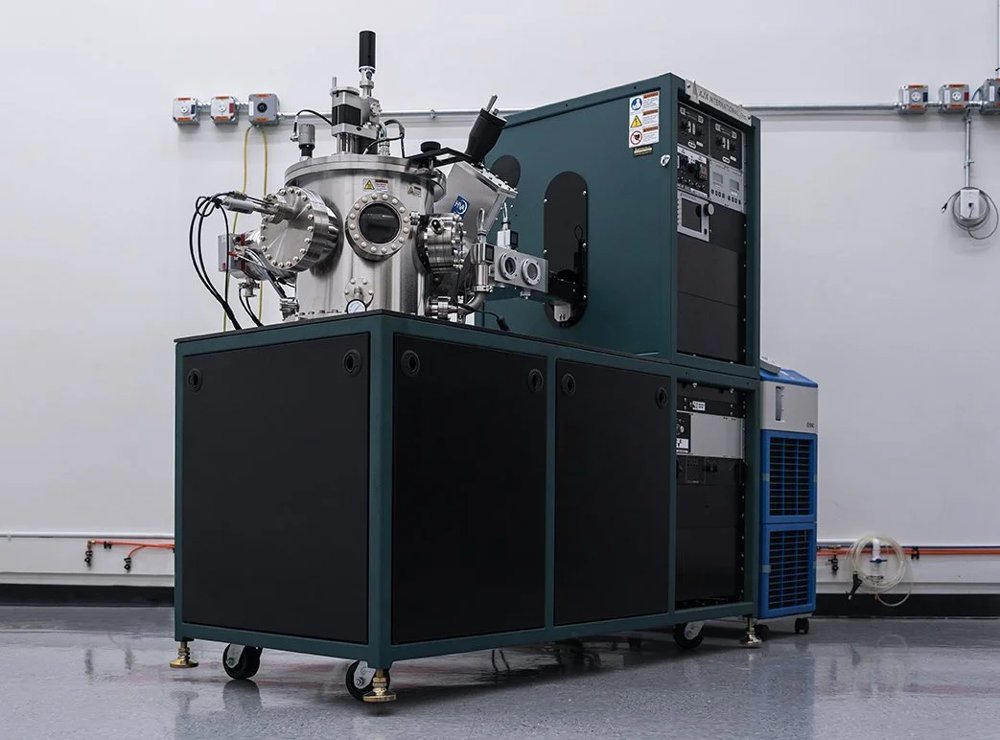 Orion Sputtering Deposition SystemsAJA International Featured
 Nion-compatible In Situ STEM Holders for Electrical BiasingHummingbird Scientific Featured
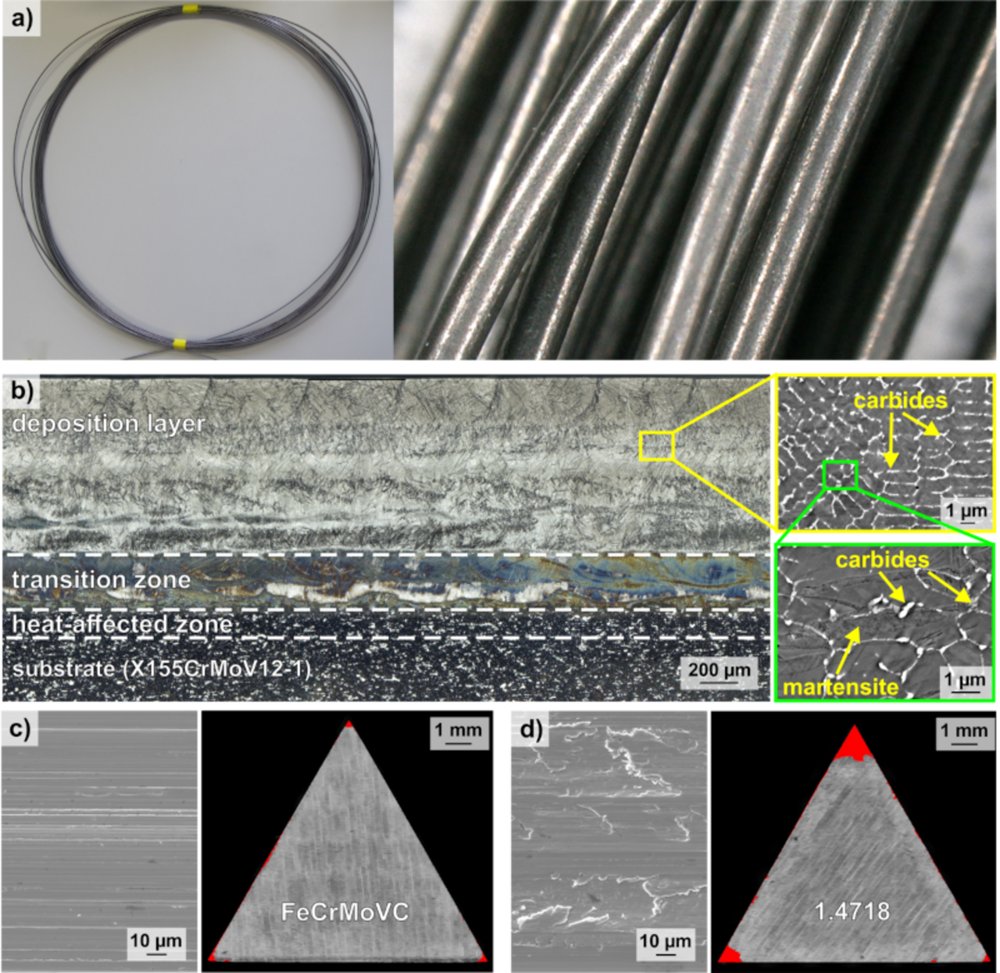 Fe85Cr4Mo8V2C1 wire filler materialLeibniz Institute for Solid State and Materials Research Dresden - IFW Dresden
Market insights
Last 30 days: Quantum Technologies was the busiest vertical: 52 of 174 events (30%).
Money raised per month
Behind the deal
Who led Sandia National Laboratories’s $3.4M Grant?
See the investors with Insights Pro →