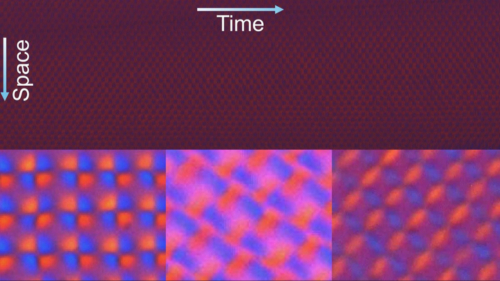
A research team from Hiroshima University, Hiroshima, Japan, the University of Colorado, Boulder, USA, and other collaborators has demonstrated that space-time crystals—exotic structures that, under external drive, loop endlessly through both space and time—can be created using everyday liquid-crystal materials.
For the past decade, physicists have been fascinated by time crystals. Unlike normal crystals (such as salt or diamonds), which have repeating molecular patterns in space, time crystals have patterns that repeat at regular intervals in time. Previously, scientists believed these bizarre structures could only exist in highly complex, fragile quantum systems at near-absolute zero temperatures, such as trapped ions or quantum simulators. However, in a collaborative study published in Nature Communications, researchers have successfully created them in a classical, room-temperature liquid-crystal system.
To achieve this, the team took a liquid-crystal material—similar to the fluid used in smartphones and television screens—and doped it with ionic substances. They then applied a rhythmic, repeating electrical signal to the fluid. Using advanced computer models and optical microscopes, the researchers observed a surprising phenomenon known as period-doubling. Even though the electrical drive pumped energy into the fluid at a set internal rhythm, the liquid crystals spontaneously locked into a pattern that repeated only every two cycles of the electricity.
The researchers discovered that this unique rhythm is driven by the motion of tiny, localized structures in the fluid, called topological solitons and disclinations. In liquid crystals, topological solitons are smooth, permanent twists that travel like stable wave-packets through the material, whereas disclinations are sharp lines of structural mismatch where the neat alignment of molecules completely breaks down.
As the voltage shifts, these microscopic features continuously transform, destroy, and recreate one another. These shifting states behave exactly like the particle-antiparticle pairs of Majorana particles, a famous, elusive class of quantum particles that are their own antiparticles. In this system, they serve as a classical, real-world analog of these quantum objects.
“Electrical switching of liquid crystals is at the heart of today's trillion-dollar liquid-crystal-enabled industries, and realizing time crystals in liquid crystals may likewise lead to practical applications that could benefit everyday life in the near future,” said first author Hanqing Zhao, a postdoctoral researcher at the International Institute for Sustainability with Knotted Chiral Meta Matter (WPI-SKCM2), a research institute headquartered at Hiroshima University in Japan whose mission is to create artificial forms of matter and contribute to sustainability.
Unlike their quantum counterparts, which easily collapse if disturbed, these classical space-time crystals are incredibly tough. The team found that the crystals remained perfectly stable even when they intentionally disrupted the electrical timing by up to 20%. Furthermore, they observed this synchronized, looping behavior continuing smoothly for over 24 hours.
This discovery suggests that complex space-time symmetries are not restricted to the quantum world; they can emerge in open, classical soft materials. The research naturally opens the door to a brand-new field that the scientists call time liquid crystallinity, where fluid-like materials can be organized over time rather than just in space. Because liquid crystals are already a staple of modern electronics, these durable, controlled space-time crystals could be used to design next-generation optical devices, such as reconfigurable laser elements, advanced beam deflectors, and ultra-precise light steerers.
Reference
Emergent discrete space-time crystal of Majorana-like quasiparticles in chiral liquid crystals
Hanqing Zhao, Rui Zhang & Ivan I. Smalyukh
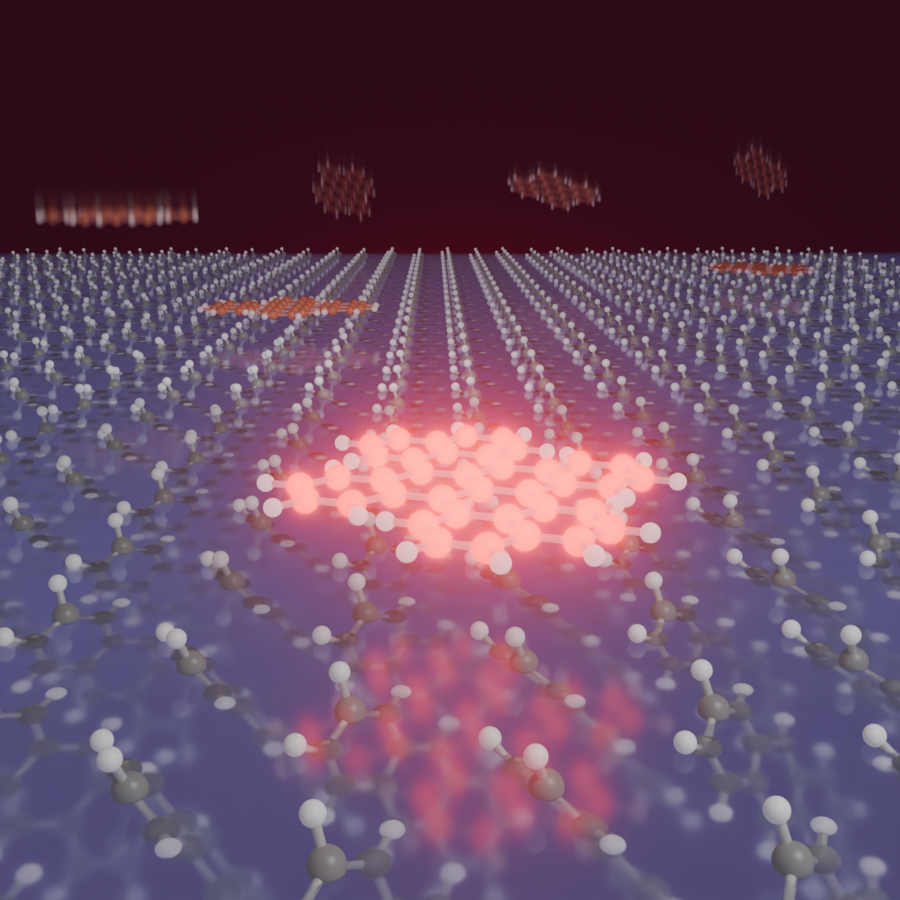
Scientists at the Max Planck Institute for the Science of Light (MPL) have developed a technique for interrogating molecules on surfaces with spectroscopic precision and thereby reaching the ultimate quantum limit for the first time. With their findings, published in Science, the researchers open new opportunities for the study of molecule-surface interactions and molecular quantum technologies.
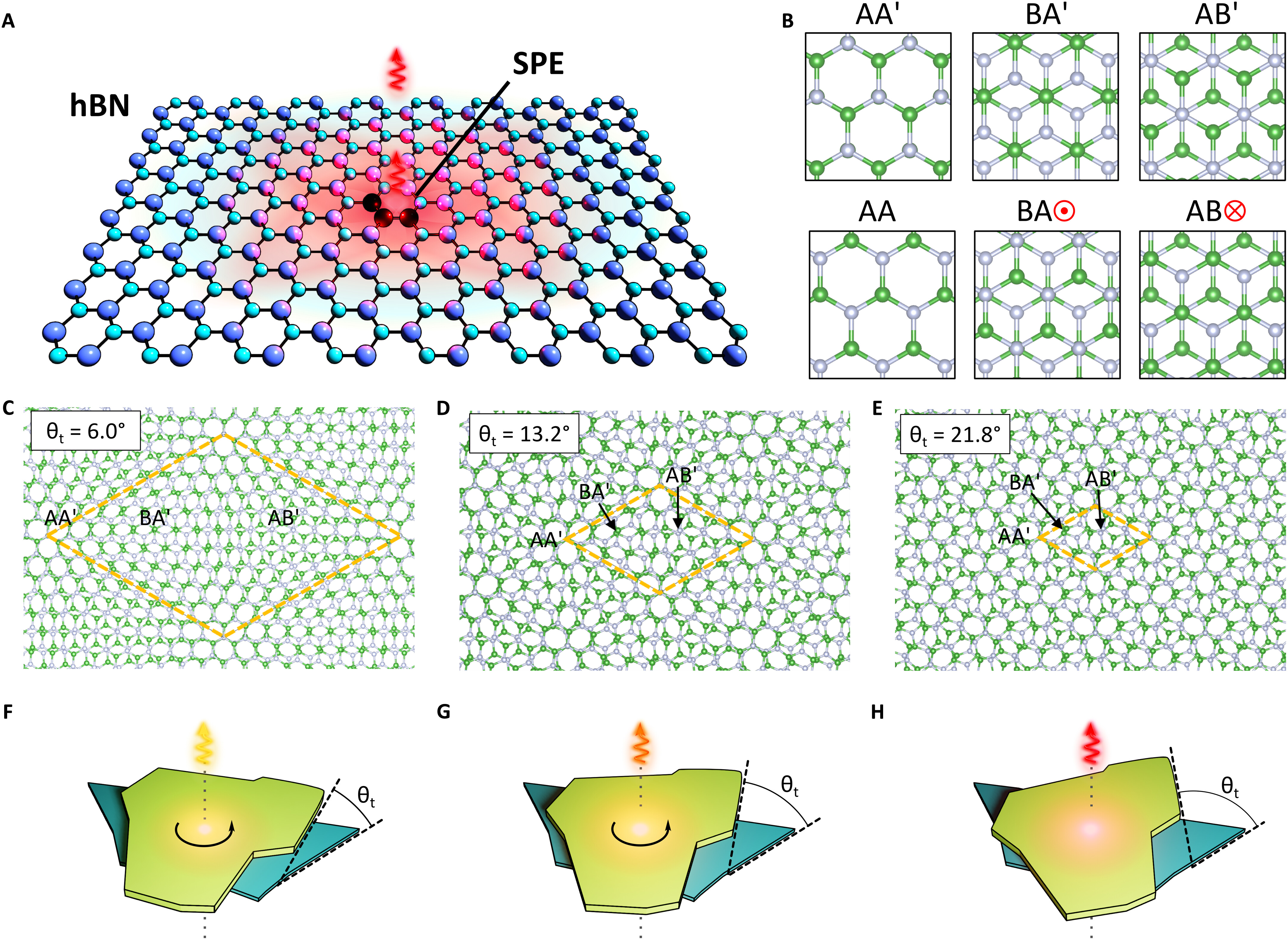
Researchers at the University of Technology Sydney (UTS), in collaboration with the University of Minnesota and Kyung Hee University, have discovered a powerful new way to control tiny quantum light sources by twisting atomically thin layers of hexagonal boron nitride (hBN). In a study published in Science Advances, the team demonstrated that by stacking and twisting hBN layers, they could significantly shift the color and wavelength of quantum emitters. This twistable platform offers far gre...
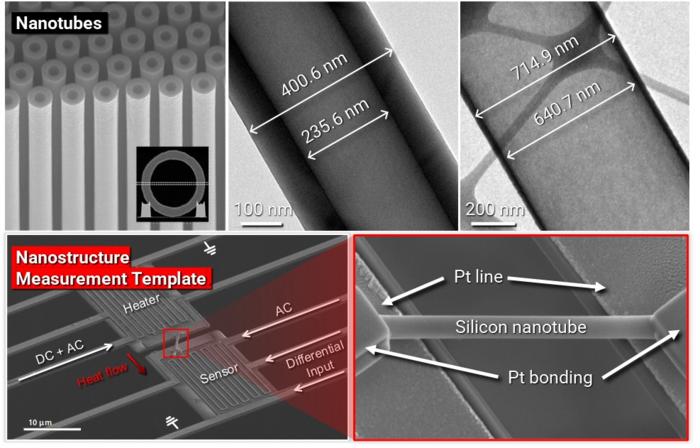
A research team has identified a mechanism that could help overcome the efficiency limitations of thermoelectric devices that convert waste heat into electricity using a “hollow silicon nanotube” structure. The findings were published in Nano Energy, a leading international academic journal in the field of energy and nanotechnology.
