Electrons spin even without an electric charge and this motion in condensed matter constitutes spin current, which is attracting a great deal of attention for next-generation technology such as memory devices. An Osaka Metropolitan University-led research group has been able to gain further insight into this important topic in the field of spintronics.
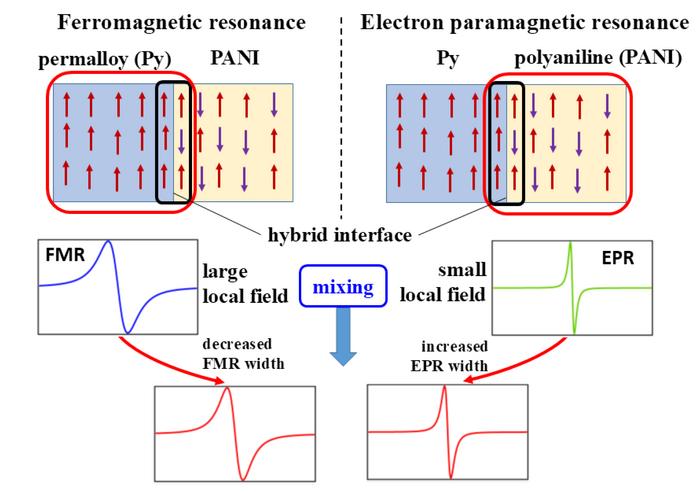
To investigate the characteristics of spin currents, OMU Graduate School of Science Professor Katsuichi Kanemoto’s group designed a multilayer device consisting of a ferromagnetic layer and an organic semiconductor material. By adopting a doped conducting polymer with a long spin relaxation time, the team succeeded in observing the effects of spin transport and spin current generation from the non-magnetic, organic semiconductor side.
The long spin relaxation times not only make for more efficiency in spintronics, but also enable direct observation of phenomena due to spin current generation in the organic layer side. Moreover, the researchers were able to find that, contrary to a theory that has been generally accepted, the width of the ferromagnetic resonance measurements for the layer of the spin current supplier slightly narrowed in the device system using the organic semiconductor with a long spin relaxation time.
“The use of the organic semiconductor makes it possible to pursue physical properties from the non-magnetic layer side, for which there was no information until now,” explained Professor Kanemoto. “Our work can be expected to contribute to a deeper understanding of the properties of spin currents.”
The findings were published in Advanced Electronic Materials.
Reference
Spin Current Generation at the Hybrid Ferromagnetic Metal/Organic Semiconductor Interface as Revealed by Multiple Magnetic Resonance Techniques
Kohei Takaishi, Haruka Tsutsumi, Hideto Matsuoka, Takayuki Suzuki, Katsuichi Kanemoto
https://onlinelibrary.wiley.com/doi/10.1002/aelm.202400322
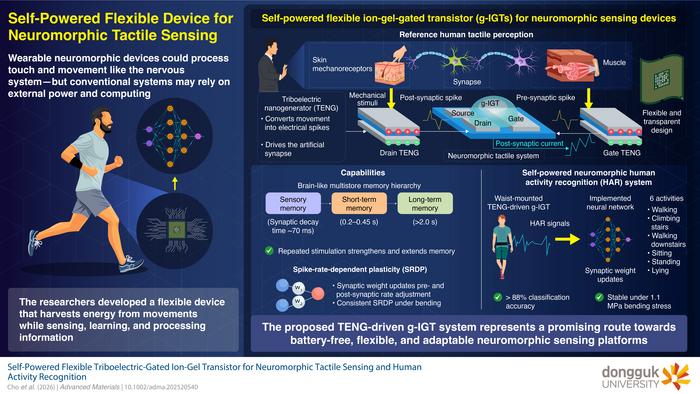
The proposed TENG-driven g-IGT is a flexible, self-powered neuromorphic device capable of reproducing multiple memory states and spike-rate-dependent learning Neuromorphic devices, which are designed to emulate aspects of biological neural networks, are promising candidates for developing low-power and intelligent sensing technologies, including wearable applications. Among the device architectures explored for neuromorphic computing, graphene-channel ion-gel-gated transistors (g-IGTs) are...
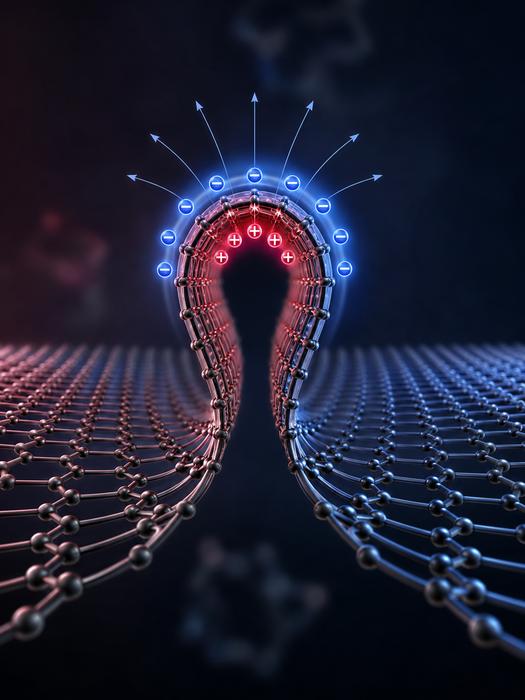
Rice University researchers have shown that sub-nanometer wrinkles in graphene generate flexoelectric charge separation, reshaping local electrical behavior through curvature alone. Extreme bending produces polarization far stronger than in larger systems and may enable geometry-controlled electronics without chemical doping. Published in Advanced Materials.
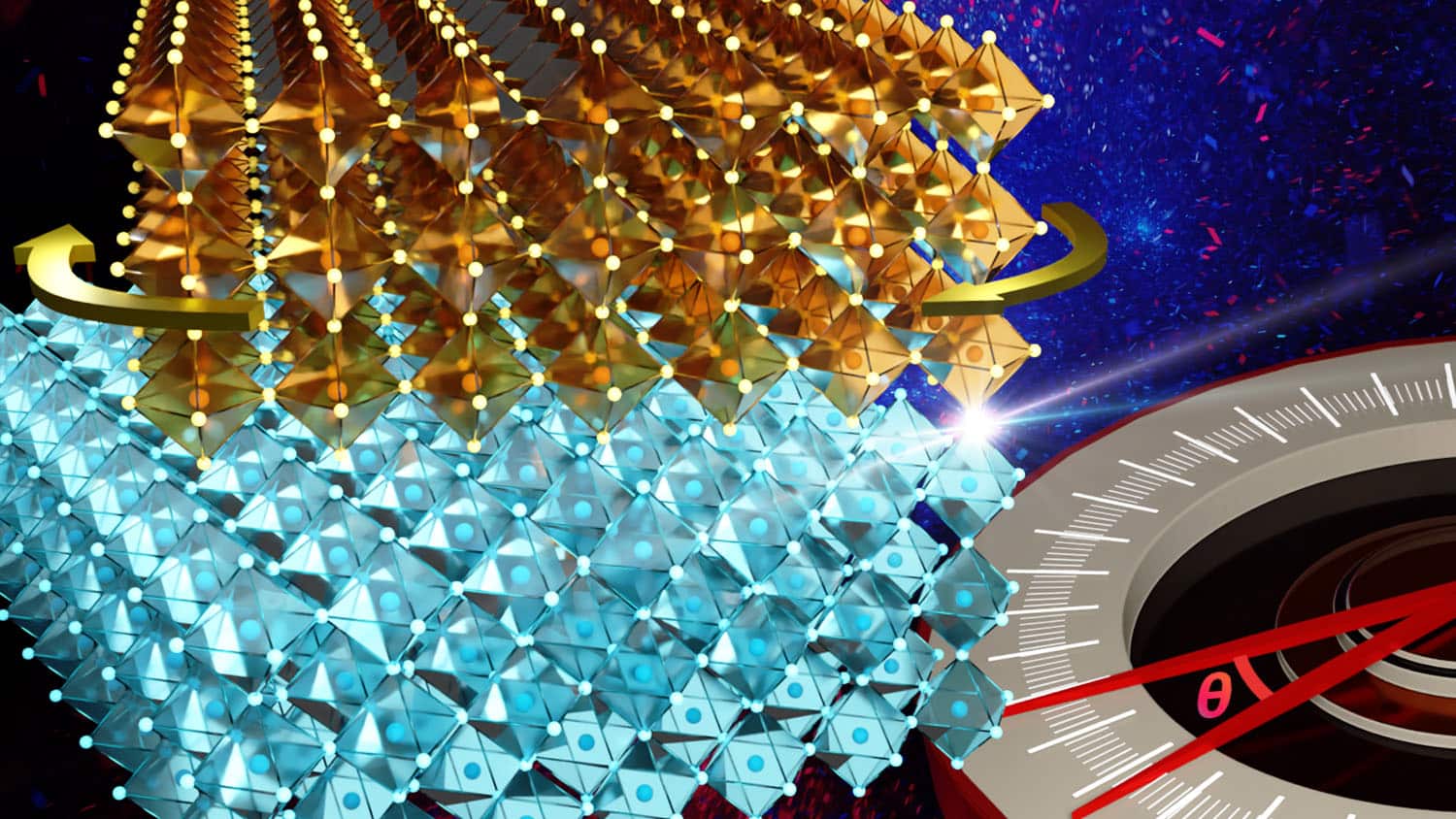
Researchers at NC State have extended twistronics beyond van der Waals materials into strongly bonded crystalline oxides. By stacking sodium niobate membranes with twist angles controlled down to 0.1 degrees, and confirming results via synchrotron X-ray diffraction, the team found interlayer bonds distort the atomic lattice, shifting phase structure and domain configuration. The technique works at near-millimeter scale, far larger than typical twistronic devices, marking a real step toward pract






