Pennsylvania State University (Penn State)
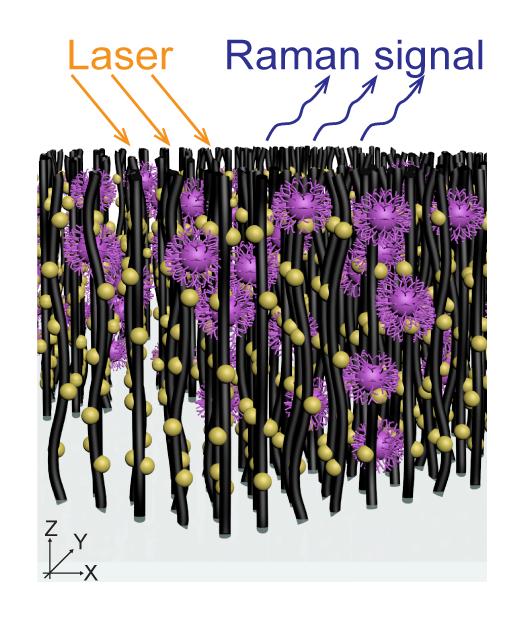
A device to quickly capture and identify various strains of virus has been developed, according to researchers at Penn State and New York University.
Currently, virologists estimate that 1.67 million unknown viruses are in animals, a number of which can be transmitted to humans. Known viruses, such as H5N1, Zika and Ebola have caused widespread illness and death. The World Health Organization states that early detection can halt virus spread by enabling rapid deployment of countermeasures.
"We have developed a fast and inexpensive handheld device that can capture viruses based on size," said Mauricio Terrones, distinguished professor of physics, chemistry, and materials science and engineering at Penn State. "Our device uses arrays of nanotubes engineered to be comparable in size to a wide range of viruses. We then use Raman spectroscopy to identify the viruses based on their individual vibration."
This device, called a VIRRION, has a wide range of possible uses. For farmers, for example, early detection of a virus in the field can save an entire crop. Early detection of a virus in livestock can save a herd from illness. Humans also will benefit by the detection of viruses in minutes rather than in days with current methods. Because of its size and low cost, such a device would be useful in every doctor's office as well as in remote locations when disease outbreaks occur.
"Most current techniques require large and expensive pieces of equipment," Terrones said. "The VIRRION is a few centimeters across. We add gold nanoparticles to enhance the Raman signal so that we are able to detect the virus molecule in very low concentrations. We then use machine learning techniques to create a library of virus types."
According to Professor Elodie Ghedin, a virologist at NYU, "The VIRRION enables the rapid enrichment of virus particles from any type of sample -- environmental or clinical -- which jump-starts viral characterization. This has applications in virus emergence, virus discovery and in diagnosis. Eventually, we hope to use this device for the capture and sequencing of single virions, giving us a much better handle on the evolution of the virus in real time."
Added lead author Ying-Ting Yeh, an assistant research professor in the Terrones group, "We synthesized a gradient of aligned carbon nanotube forest arrays to capture different viruses according to their size and detect them in-situ using Raman spectroscopy. We designed and assembled a portable platform that enriches virus particles from several milliliters of clinical samples in a couple of minutes."
A rapid and label-free platform for virus capture and identification from clinical samples
Ying-Ting Yeh, Kristen Gulino, Tsui-Wen Chou, Bin Zhou, YuHe Zhang, Aswathy Sabestien, Zhong Lin, Istvan Albert, Huaguang Lu and Venkataranman Swaminathan
PNAS (2019)
Tunable and label-free virus enrichment for ultrasensitive virus detection using carbon nanotube arrays
Yin-Ting Yeh, Yi Tang, Aswathy Sebastian, Archi Dasgupta, Nestor Perea-Lopez, Istvan Albert, Huaguang Lu, Mauricio Terrones and Si-Yang Zheng
Science Advances (2016) Vol. 2, no. 10, e1601026
Contact information:
Mauricio Terrones
Penn State professor of physics, chemistry, materials science and engineering
mut11@psu.edu
Phone: 814-865-0343
Yin-Ting Yeh
Penn State assistant research professor in Terrones Research Group
yxy155@psu.edu
Phone: 814-865-0809
Elodie Ghedin
NYU professor at Center for Genomics and Systems Biology
elodie.ghedin@nyu.edu
Phone: (212) 998-8250
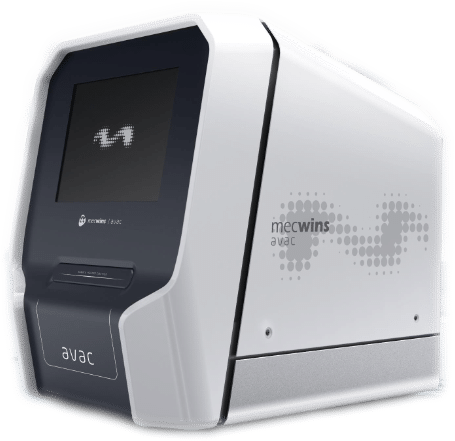
Mecwins has described its AVAC technology, which labels target proteins with plasmonic nanoparticles and counts each one individually by dark-field micro-spectrophotometry. The AVAC Analyzer reaches femtogram-range sensitivity.
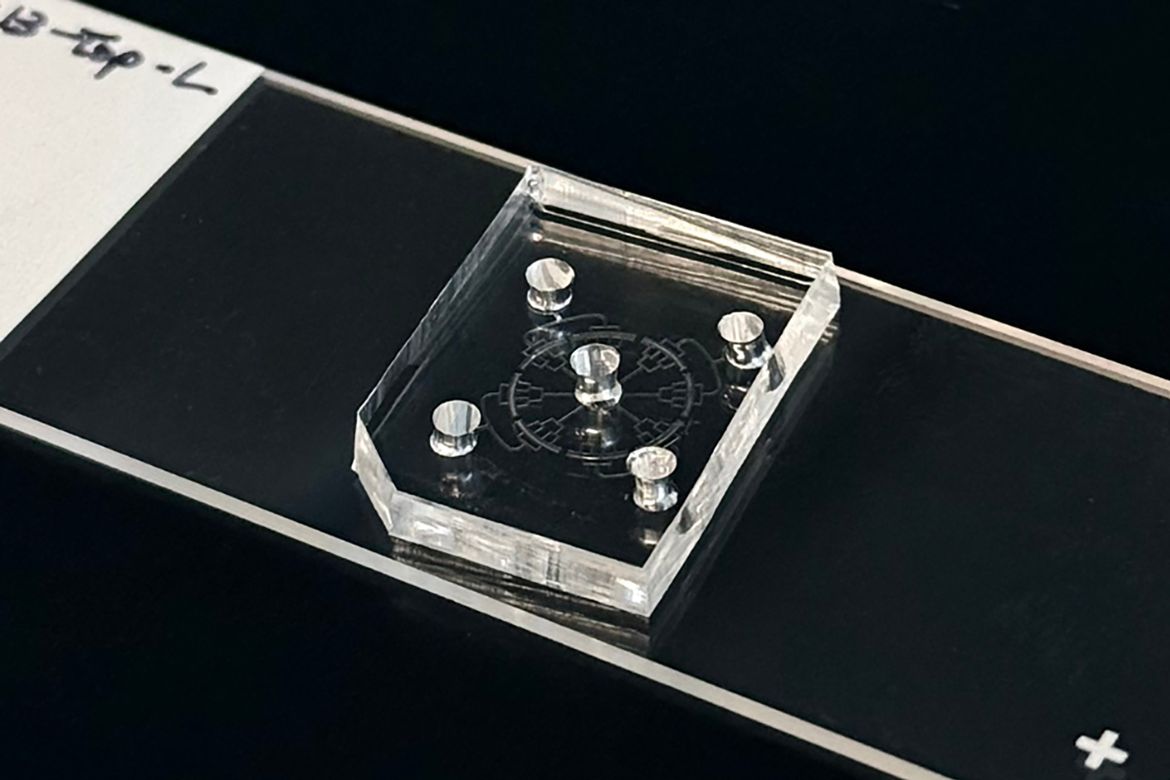
Hesperos has received an SBIR Phase II grant (R44AI197758) from NIAID to expand its Malaria-on-a-Chip platform, adding support for viable, replicating parasite strains and predictive PK/PD modeling.
UCLA researchers have shown that briefly squeezing a cell's nucleus for milliseconds can loosen tightly packed DNA and make CRISPR activation far more effective at reprogramming cell identity. After mapping which genomic regions opened, they aimed guide RNAs at those sites, raising the share of mouse skin cells converted to neurons from about 3% to 10%. Adding a priming step that activated Oct4 pushed conversion to roughly 40%.
This week in nanotech
$108.5M raised
7 funding rounds · 40 deals tracked
New products
 Ti-WCMBN Nanomaterialia Featured
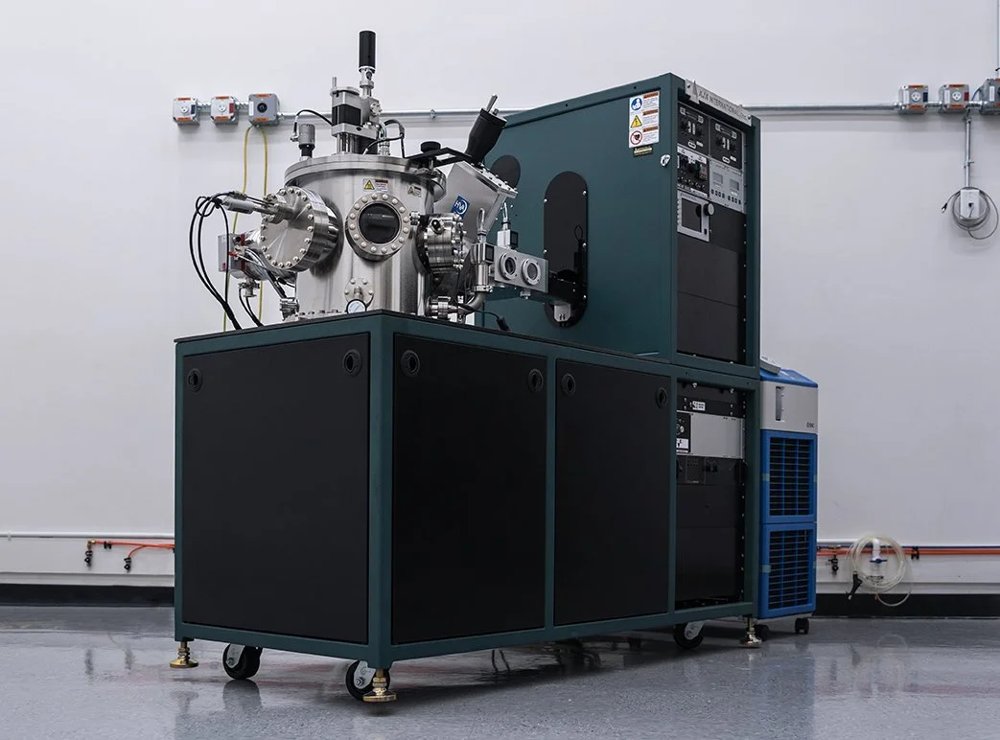 Orion Sputtering Deposition SystemsAJA International Featured
 Discover Mapping SuiteOnto Innovation
Market insights
Last 30 days: Quantum Technologies drew the most money: $3.17B.
Money raised per month