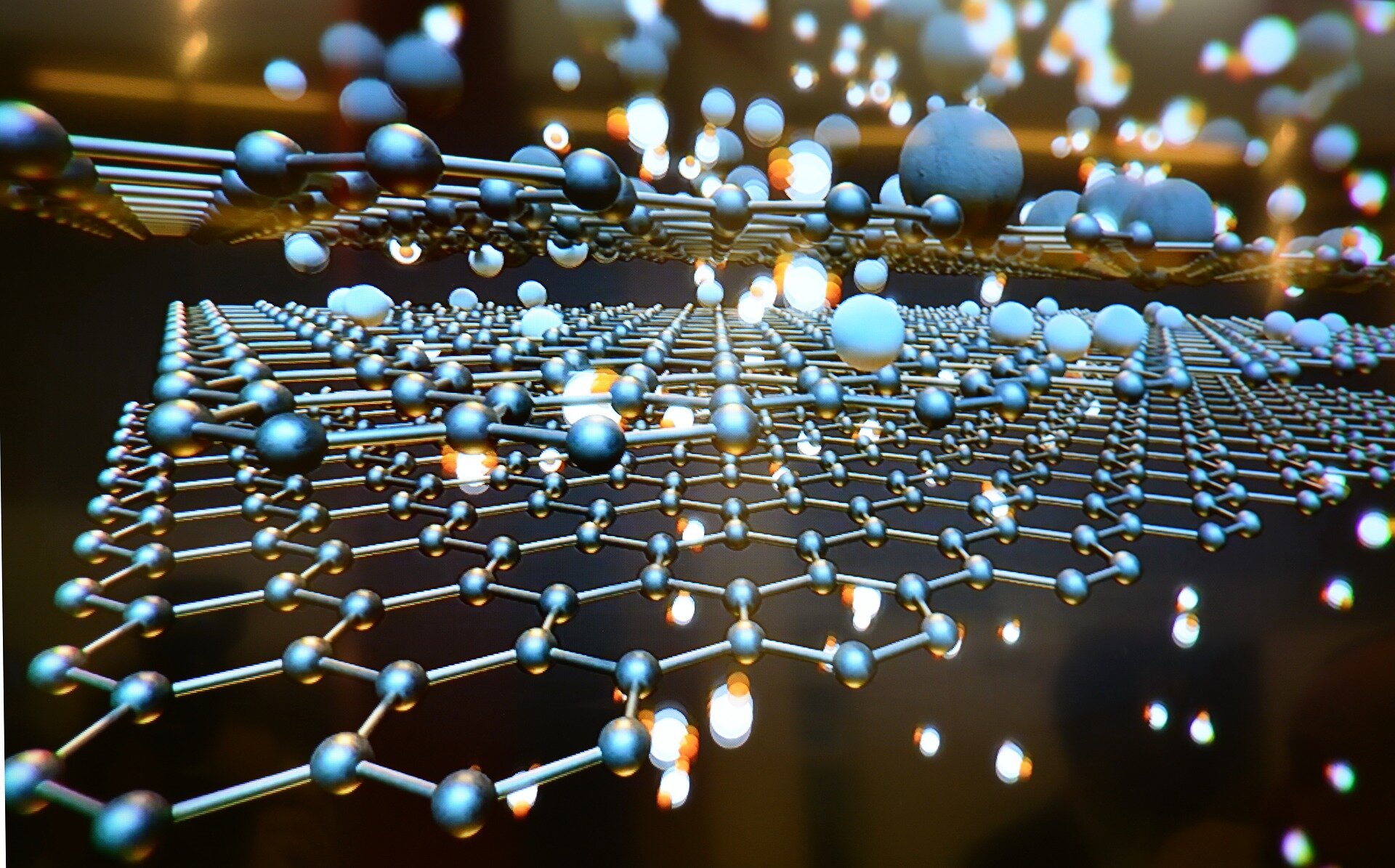
Transition metal dichalcogenides (TMDs), a two-dimensional (2-D) semiconductor, are promising materials for next-generation optoelectronic devices. They can emit strong light due to the large binding energies of excitons, quasiparticles composed of electron-hole pair, as well as an atomically thin nature. In existing 2-D light emitting devices, however, the simultaneous injection of electrons and holes into 2-D materials has been challenging, which results in low light emission efficiency.
To overcome these problems, Prof. Gwan-Hyoung Lee's group in Seoul National University and Prof. Chul-Ho Lee's group in Korea University demonstrated all-2-D light-emitting field-effect transistors (LEFETs) by staking 2-D materials. They chose graphene and monolayer WSe2 as contact electrode and an ambipolar channel, respectively. Typically, a junction between metal and semiconductor has a large energy barrier. It is the same at a junction of graphene and WSe2.
However, Lee's group utilized the barrier-tunable graphene electrode as a key for the selective injection of electrons and holes. Since the work function of graphene can be tuned by an external electric field, the contact barrier height can be modulated in the graphene-contacted WSe2 transistor, enabling selective injection of electrons and holes at each graphene contact. By controlling the densities of injected electrons and holes, high efficiency of electroluminescence as high as 6% was achieved at room temperature.
In addition, it was demonstrated that, by modulating the contacts and channel with separate three gates, the polarity and light emission of LEFETs can be controlled, showing great promises of the all-2-D LEFETs in multi-digit logic devices and highly integrated optoelectronic circuitry.
This research is published as a paper entitled "Multi-operation mode light-emitting field-effect transistors based on van der Waals heterostructure" in Advanced Materials.
Reference:
Multioperation‐Mode Light‐Emitting Field‐Effect Transistors Based on van der Waals Heterostructure
Junyoung Kwon, June‐Chul Shin, Huije Ryu, Jae Yoon Lee, Dongjea Seo, Kenji Watanabe, Takashi Taniguchi, Young Duck Kim, James Hone, Chul‐Ho Lee, Gwan‐Hyoung Lee
Contact:
Gwan-Hyoung Lee
Associate Professor
Materials Science and Engineering
Seoul National University
gwanlee@snu.ac.kr
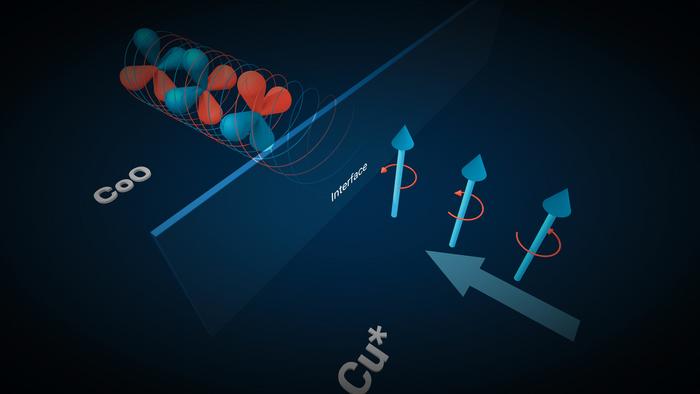
Researchers at Johannes Gutenberg University Mainz (JGU) are the first to directly utilize orbital currents without the need for conversion of the orbital current into a spin current. “We have thus realized the first purely orbitronic device approach,” said Dr. Christin Schmitt, a scientist in the research group of Professor Mathias Kläui at the JGU Institute of Physics. Orbitronics is a promising technology for future memory devices, as it could enable the realization of large-scale storage...
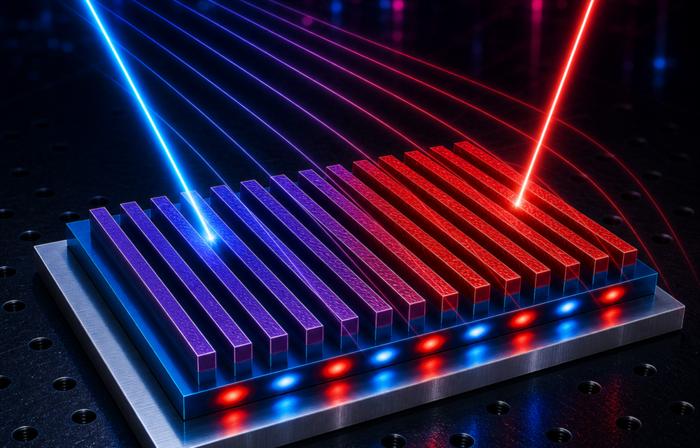
certain wavelength and direction will also emit heat in the same ways. This fundamental relationship, known as reciprocity, limits our ability to independently control heat absorption and heat emission. But if absorption and emission could be separated, engineers could design devices that absorb heat from one direction while emitting it in another. By ‘steering’ thermal energy, they could create more efficient thermal management, energy conversion, infrared sensing, and thermal communicati...
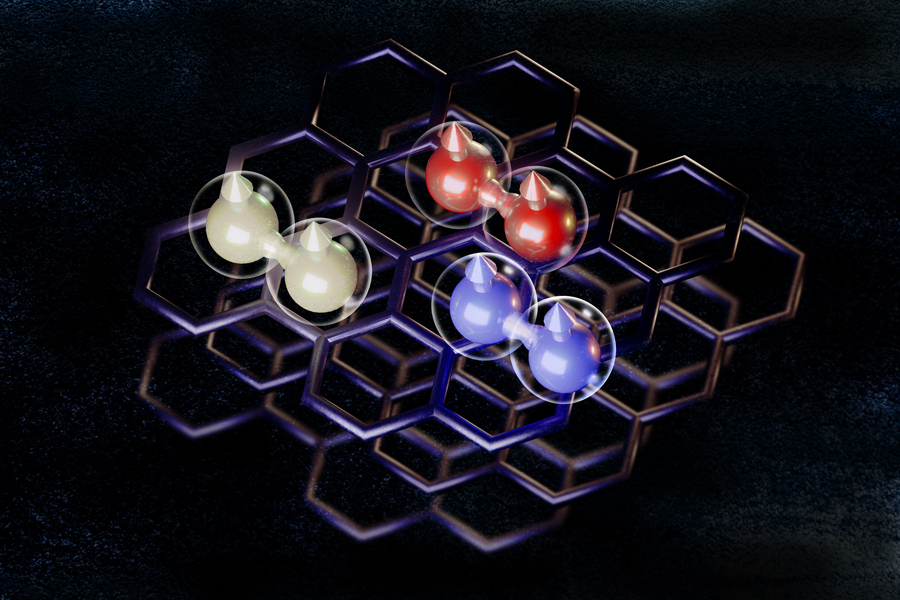
MIT researchers have found that rhombohedral graphene — a naturally occurring staircase-like stack of four or five atomically thin carbon layers found in ordinary graphite — can host multiple distinct superconducting states simultaneously, a rarity among known superconductors. Publishing in Nature, the team reports that three of these states not only survive exposure to magnetic fields up to around 9 tesla (roughly 180,000 times Earth's magnetic field), which would normally destroy supercondu...
