Most people only encounter turbulence as an unpleasant feature of air travel, but it’s also a notoriously complex problem for physicists and engineers. The same forces that rattle planes are swirling in a glass of water and even in the whorl of subatomic particles. Because turbulence involves interactions across a range of distances and timescales, the process is too complicated to be solved through calculation or computational modelling – there’s simply too much information involved.
Scientists have attempted to tackle the issue by studying the turbulence that occurs in superfluids, which is formed by tiny identical whirls called quantized vortices. A key question is how turbulence happens on the quantum scale and how is it linked to turbulence at larger scales.
Researchers at Aalto University have brought that goal closer with a new study of quantum wave turbulence. Their findings, published in Nature Physics, demonstrate a new understanding of how wave-like motion transfers energy from macroscopic to microscopic length scales, and their results confirm a theoretical prediction about how the energy is dissipated at small scales.
How energy disappears
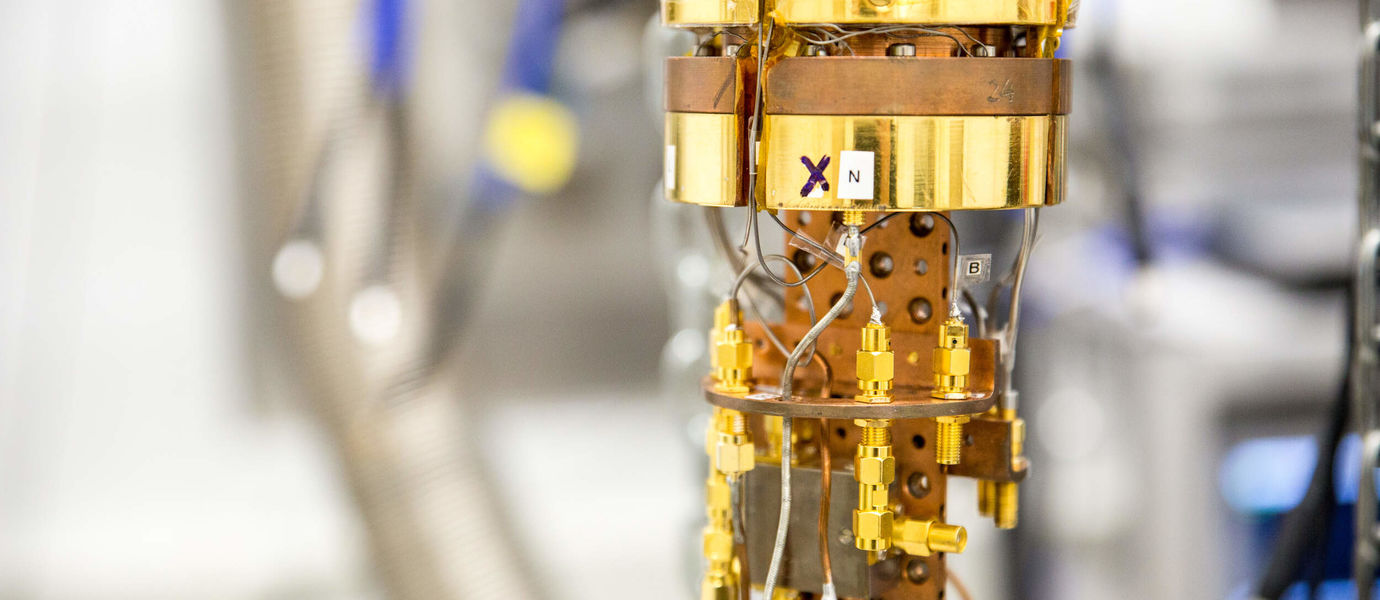
The team of researchers, led by Senior Scientist Vladimir Eltsov, studied turbulence in the Helium-3 isotope in a unique, rotating ultra-low temperature refrigerator in the Low Temperature Laboratory at Aalto, which belongs to the national OtaNano research infrastructure. They found that at microscopic scales so-called Kelvin waves act on individual vortices by continually pushing energy to smaller and smaller scales – ultimately leading to the scale at which dissipation of energy takes place.
‘The question of how energy disappears from quantized vortices at ultra-low temperatures has been crucial in the study of quantum turbulence. Our experimental set-up is the first time that the theoretical model of Kelvin waves transferring energy to the dissipative length scales has been demonstrated in the real world,’ says Jere Mäkinen, the lead author of the study and a Postdoctoral Researcher at Aalto.
Planes, trains and automobiles
In the future, an improved understanding of turbulence beginning on the quantum level could allow for improved engineering in domains where the flow and behaviour of fluids and gases like water and air is a key question.
‘Our research with the basic building blocks of turbulence might help point the way to a better understanding of interactions between different length scales in turbulence. Understanding that in classical fluids will help us do things like improve the aerodynamics of vehicles, predict the weather with better accuracy, or control water flow in pipes. There is a huge number of potential real-world uses for understanding macroscopic turbulence,’ Mäkinen says.
For now, Eltsov, Mäkinen, and others plan to go where the science takes them. Right now, their goal is to manipulate a single quantized vortex using nano-scale devices submerged in superfluids.
Reference
Rotating quantum wave turbulence
J. T. Mäkinen, S. Autti, P. J. Heikkinen, J. J. Hosio, R. Hänninen, V. S. L’vov, P. M. Walmsley, V. V. Zavjalov & V. B. Eltsov
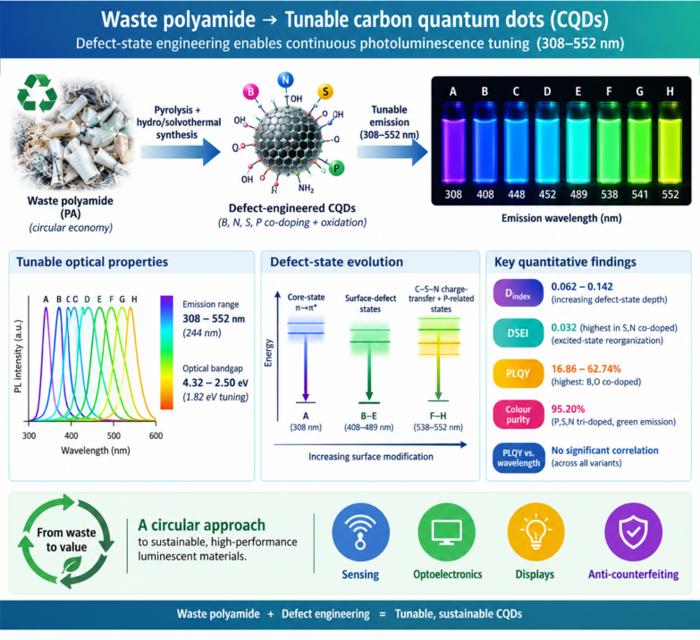
Waste polyamide-derived CQDs show continuous photoluminescence tuning from 308 to 552 nm through sequential defect-state engineering, with optical transition energies decreasing from 4.32 to 2.50 eV. @Christian Ebere Enyoh from Saitama University Carbon quantum dots (CQDs) are fluorescent carbon nanomaterials with potential applications in sensing, optoelectronics, displays, anti-counterfeiting, and environmental technologies. Their optical properties can be adjusted by modifying the carbon...
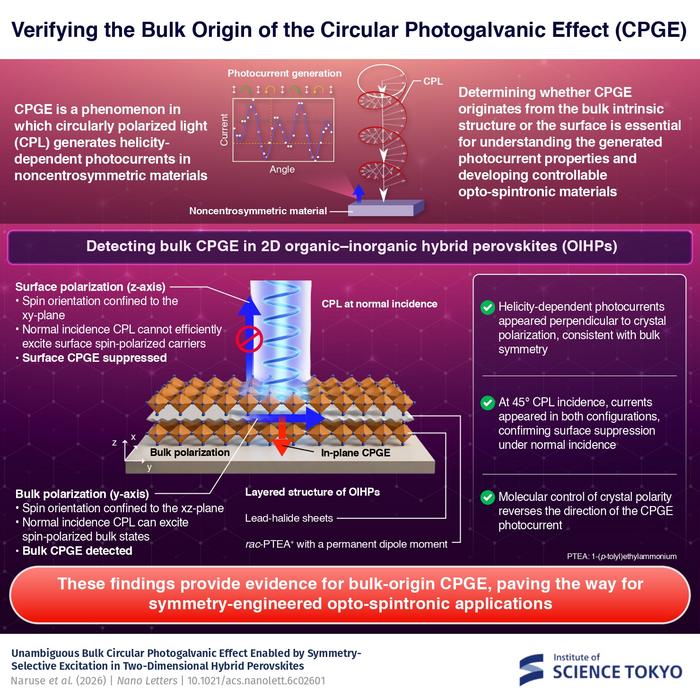
The researchers used circularly polarized light at normal incidence and found that helicity-dependent photocurrents appeared perpendicular to the crystal’s polarization but vanished when measured parallel to it, supporting a bulk origin of CPGE. @Institute of Science Tokyo The circular photogalvanic effect (CPGE), a phenomenon that generates helicity-dependent photocurrents in noncentrosymmetric materials, can originate purely from a crystal's internal structure without contribution from the...
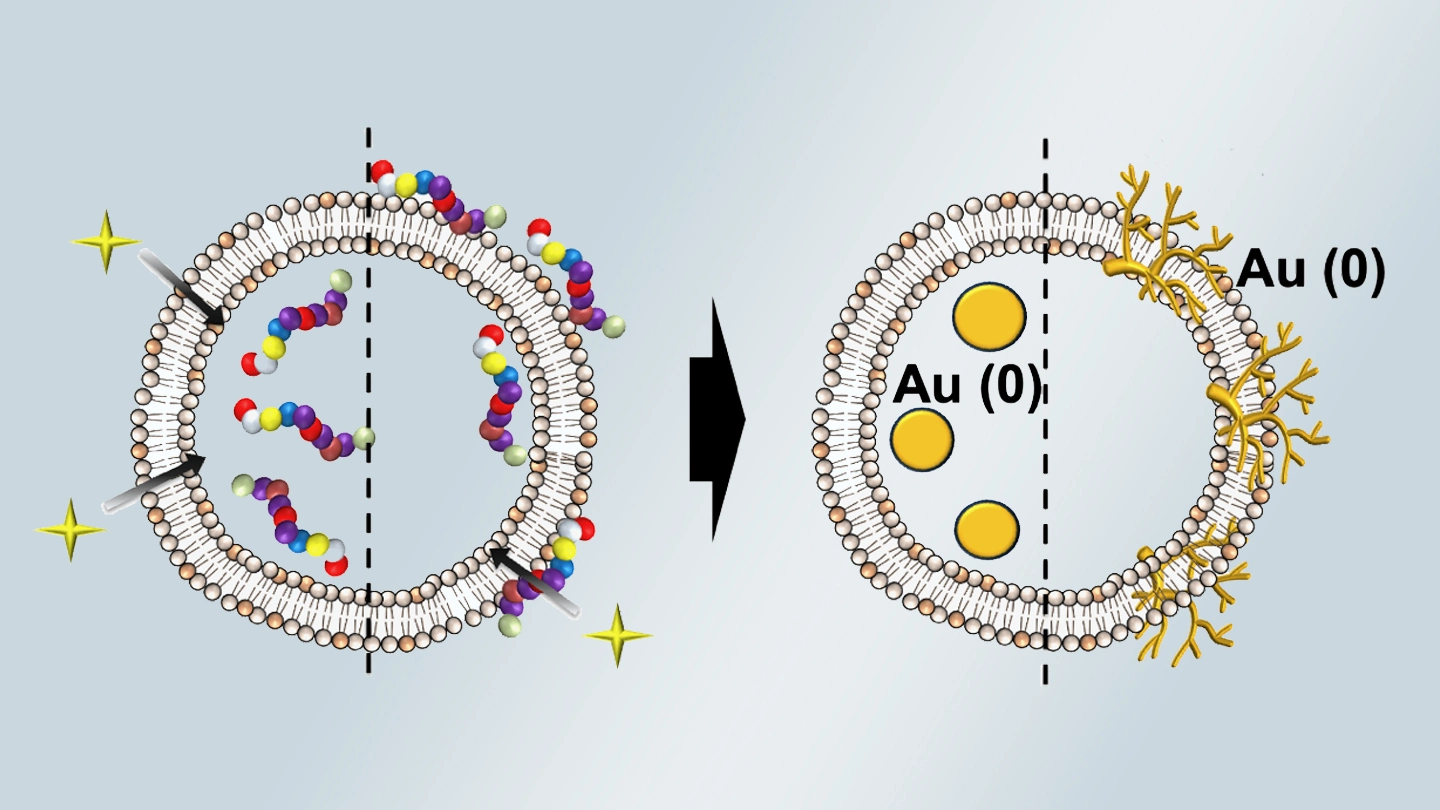
Summary of gold nanoparticle growth programming in liposome based on localization of biomineralization peptide The position of biomineralization peptides within liposomes can influence how gold nanoparticles grow, reports a research team from Institute of Science Tokyo. Peptides localized at the membrane interface promote branched structures, while those confined to the liposome interior favor spherical nanoparticles. The findings offer a new strategy for controlling nanoscale reaction...
