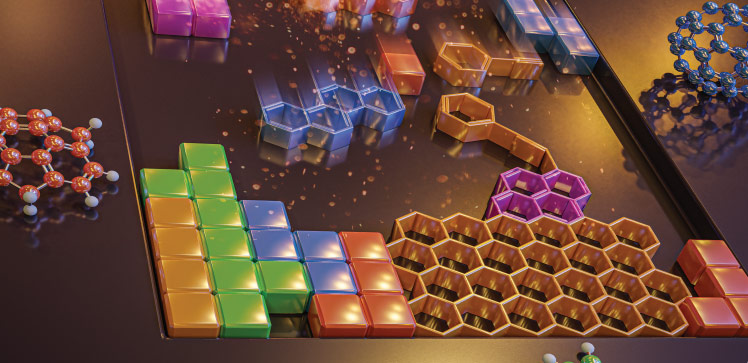
Carbon nanostructures that formed in circumstellar envelopes around carbon-rich stars may have a shared chemical origin with soot particles produced by fuel combustion. The same reaction mechanism may underpin each process, KAUST researchers have shown. The proposed mechanism could also lead to improved methods for carbon nanomaterial manufacture.
Carbon-rich nanoparticle formation — whether interstellar or combustive in nature — is thought to rely on compounds called polycyclic aromatic hydrocarbons (PAHs), which are akin to clusters of fused benzene rings held together by shared carbon-carbon pi-bonds. Several mechanisms have been proposed to explain how PAHs could combine with other carbon molecules to grow into soot and related carbon nanoparticles.
“All these studies, however, are insufficient to explain the inception of ‘peri-condensed aromatic hydrocarbons’ with only pi-bonds between carbon atoms, which can be present in large amounts in flames,” says Hanfeng Jin, a postdoc in Aamir Farooq’s labs, who led the research. “We have proposed a new mechanism that explains the nucleation of peri-condensed aromatic hydrocarbons.”
The team showed that peri-condensed aromatic hydrocarbon nucleation could be explained by reactions between aromatic aryl molecules and phenylacetylene, via a hydrogen abstraction phenylacetylene addition (HAPaA) mechanism. “Phenylacetylene is easily formed and can be present in considerable amounts in flames,” Jin explains. Both benzene and acetylene, phenylacetylene’s precursors, are known to be crucial intermediates in astrochemistry and combustion chemistry, he adds.
The researchers used quantum chemical calculations to show that peri-condensed aromatic hydrocarbons can grow by phenylacetylene addition to “zig-zag-” and “armchair-” shaped structures around the aryl molecule periphery. The initial step of the HAPaA mechanism has no energy barrier, so is equally relevant to both low temperature interstellar chemistry and to high temperature combustion.
HAPaA reaction intermediates and products predicted by theory were confirmed experimentally using state-of-the-art synchrotron vacuum ultraviolet photoionization molecular beam mass spectrometry, Jin says. The HAPaA mechanism was also applicable to larger molecular analogues of phenylacetylene, enabling repeated cycles of PAH clustering toward carbonaceous nanoparticle formation.
“The beauty of our proposed mechanism, compared to the traditional pathways of PAH formation and growth, is that it is universally applicable,” Farooq says. “This mechanistic understanding would help us limit the formation of soot particles from combustion systems, for example, by using chemical compounds that suppress zig-zag and armchair peripheries, which increase the efficiency of HAPaA mechanism,” he says. “Likewise, our proposed mechanism can be used to increase the fidelity of models used for predicting the evolution of carbon in the interstellar media.”
Reference
Inception of Carbonaceous Nanostructures via Hydrogen-Abstraction Phenylacetylene-Addition Mechanism
Hanfeng Jin, Lili Ye, Jiuzhong Yang, Yu Jiang, Long Zhao, and Aamir Farooq
https://pubs.acs.org/doi/10.1021/jacs.1c08230
King Abdullah University of Science and Technology (KAUST)
Cornell and Pacific Northwest National Laboratory researchers have developed a predictive model for how crystals such as calcite incorporate silica nanoparticles, revealing that the energy needed to cross water layers at the crystal surface strongly governs uptake, and that amines rather than carboxylic acids bind best.

A polymer hydrogel that grows stronger under repeated bending and strain has been developed by chemists, who report the material survived 10,000 bending cycles in tests on a knee-like joint. Made from a biodegradable blend of sugar crystals and polyethylene glycol, the 3D printable material uses sliding cyclodextrin rings to reinforce stressed regions, mimicking collagen.
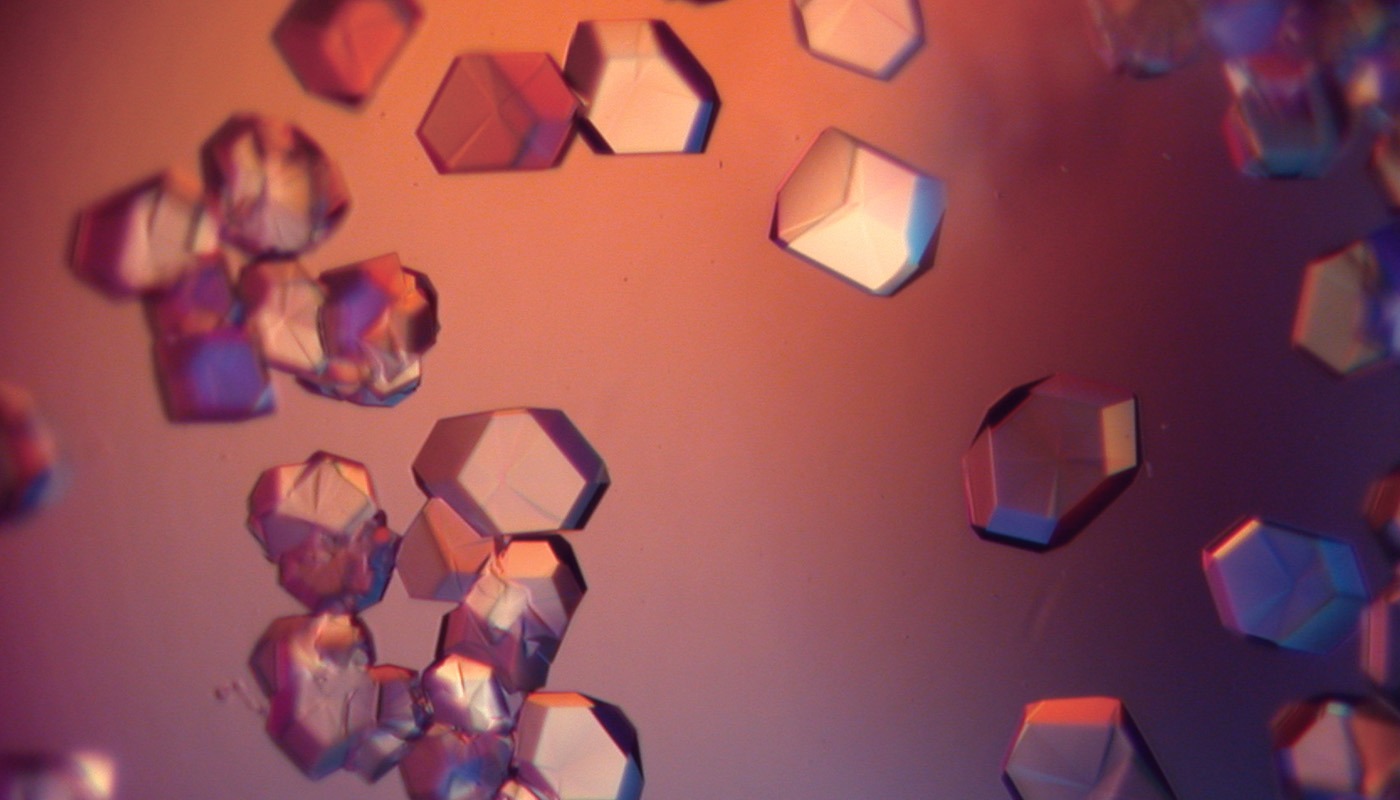
Rigaku has introduced the PhotonJetMAX-S microfocus sealed-tube X-ray source for the XtaLAB Synergy-S, delivering more than twice the diffracted intensity of the PhotonJet-S at a peak power of 50 W.
This week in nanotech
$18.9M raised
4 funding rounds · 31 deals tracked
New products
 Nion-compatible In Situ STEM Holders for Electrical BiasingHummingbird Scientific Featured
 Orion Sputtering Deposition SystemsAJA International Featured
 Talphene™ Graphene AdditivesTalga Group
Market insights
Last 30 days: Semiconductors & Electronics was the busiest vertical: 52 of 170 events (31%).
Money raised per month