Key aspects:
How Tiny Electrical Signals Control Life
At every moment, thousands of charges move through our bodies. These tiny electrical signals are fundamental to life: signaling, energy conversion or metabolic processes all depend on the precise, regulated movement of charges across biological membranes and within cells. Charge transport is a central control mechanism.
Phosporic acid (H3PO4) and its derivatives are ubiquitous in nature, for example, found as the main component of DNA and RNA, in cell membranes and as part of the universal energy carrier ATP. These molecules have proven to be particularly important in the transport of positive charges in living systems. Phosphoric acid particularly is also of great technical importance, and widely used in certain batteries and in fuel cells, where a unique property of phosphoric acid is exploited─its exceptionally high proton conductivity.
Protons, carriers of a positive charge, travel through phosphate-containing compounds like passengers travelling on a bus: They "jump" from molecule to molecule using hydrogen bonds as their routes. This mechanism, called "proton-shuttling", allows charges to be transferred very rapidly. Although it is generally known that this mechanism exists, fundamental questions remain unanswered. In their current study, researchers from the Department of Molecular Physics at the Fritz Haber Institute, together with their collaborators from Leipzig and the USA, aimed to determine the structure of a key phosphoric acid anionic complex. In doing so, they shed light on the elementary first steps of the fascinating charge transfer process.
A Cold Look at Hot Chemistry with Cryogenic Spectroscopy
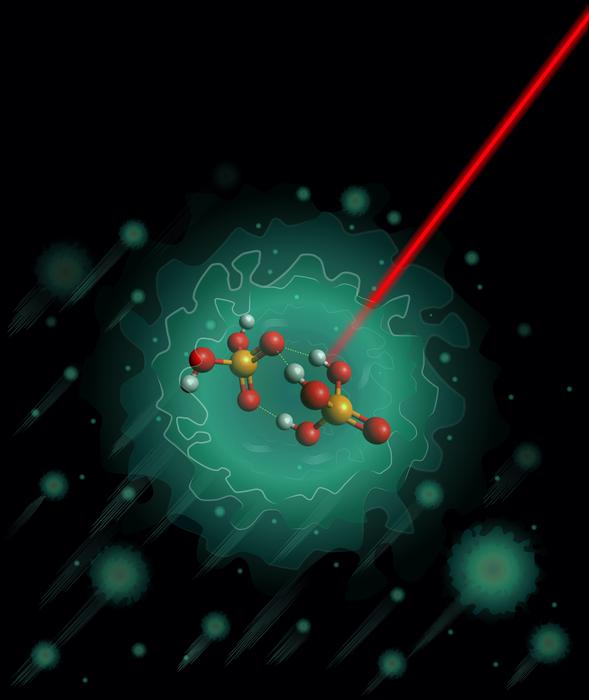
From earlier studies it is already known that possibly a specific negatively charged species of phosphoric acid may be the starting point of the proton-shuttling cascade: the deprotonated dimer H3PO4·H2PO4-. To find out more about its role, the researchers produced this molecule in the laboratory and investigated it under cryogenic conditions. They placed the molecule inside a helium nanodroplet, which cools it down to just 0.37 degrees above absolute zero and investigated its structure using infrared radiation. The extreme cooling virtually eliminates interfering factors and thus enables a highly precise resolution of the molecular structure. The experimental structure analysis was supported by quantum chemical calculations, which allow for the prediction of the molecule’s structure and behavior.
The Invisible Network: Structure and Hydrogen Bonds Found
Interestingly, the experimental data showed only partial agreement with the theoretical prediction. While the calculations predicted two possible structures that should theoretically be equally likely to occur, the experimental data clearly revealed that the deprotonated dimer of phosphoric acid adopts a unique, stable structure. This structure is relatively rigid, with high barriers for proton transfer. It involves three hydrogen bonds and a shared acceptor oxygen atom. Other studies on phosphoric acid-containing clusters reported a similar coordination, suggesting that this hydrogen-bonding motif is likely common for such systems. This result underscores the limitations of theoretical predictions and highlights the necessity of experiments for accurate structure assignment.
Why It Matters
This work provides insight into the molecular origin of phosphoric acid’s extraordinary proton conductivity, “Nature’s proton highway”. The structure analysis reveals one unique structure of the key anionic dimer H3PO4·H2PO4- with a novel hydrogen-bonding motif that may be key to understanding proton transport in phosphoric acid-based systems. The study serves as a benchmark for quantum chemical methods in modeling phosphate-containing clusters, opening new pathways for designing more efficient proton-conducting materials and understanding biological proton transfer.
Source: Fritz Haber Institute of the Max Planck Society
Reference
Cryogenic Vibrational Spectroscopy of the Deprotonated Dimer of Phosphoric AcidClick to copy article link
América Y. Torres-Boy, Jia Han, Gurpur Rakesh D. Prabhu, Martín I. Taccone, Anoushka Ghosh, Hannah Buttkus, Katja Ober, Gerard Meijer, Knut R. Asmis, Anne B. McCoy, Gert von Helden
The Journal of Physical Chemistry A, Vol 130/Issue 5
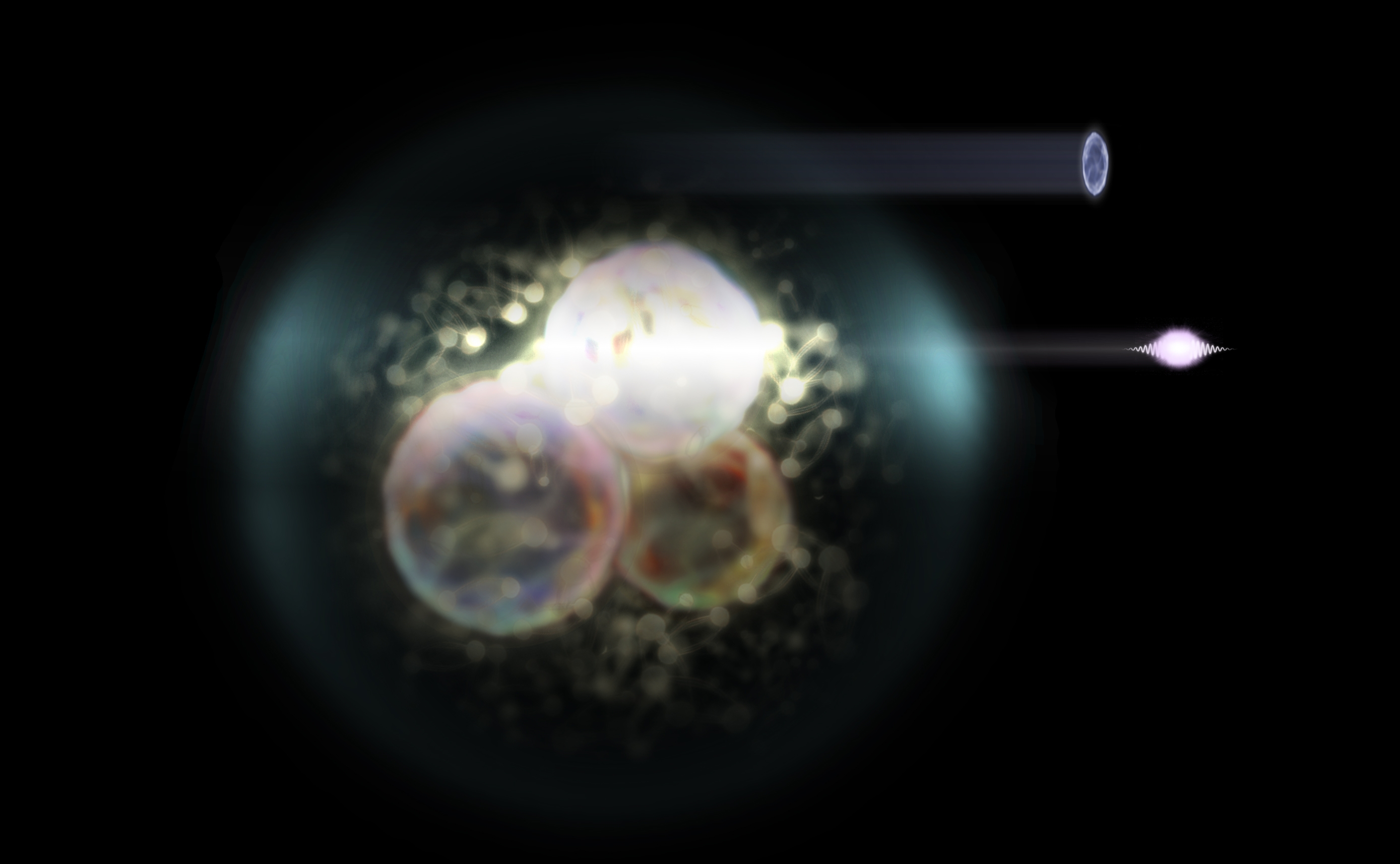
During a deeply inelastic collision with a proton, a relativistic electron (highlighted in blue) can emit a high-energy photon (purple...

Scientists at the U.S. Department of Energy’s (DOE) Brookhaven National Laboratory and collaborators have a new way to use data from...

Theoretical physicists and experimentalists work together to measure the mass of a rare isotope expected to form a rare proton halo,...
This week in nanotech
$24.4M raised
5 funding rounds · 33 deals tracked
New products
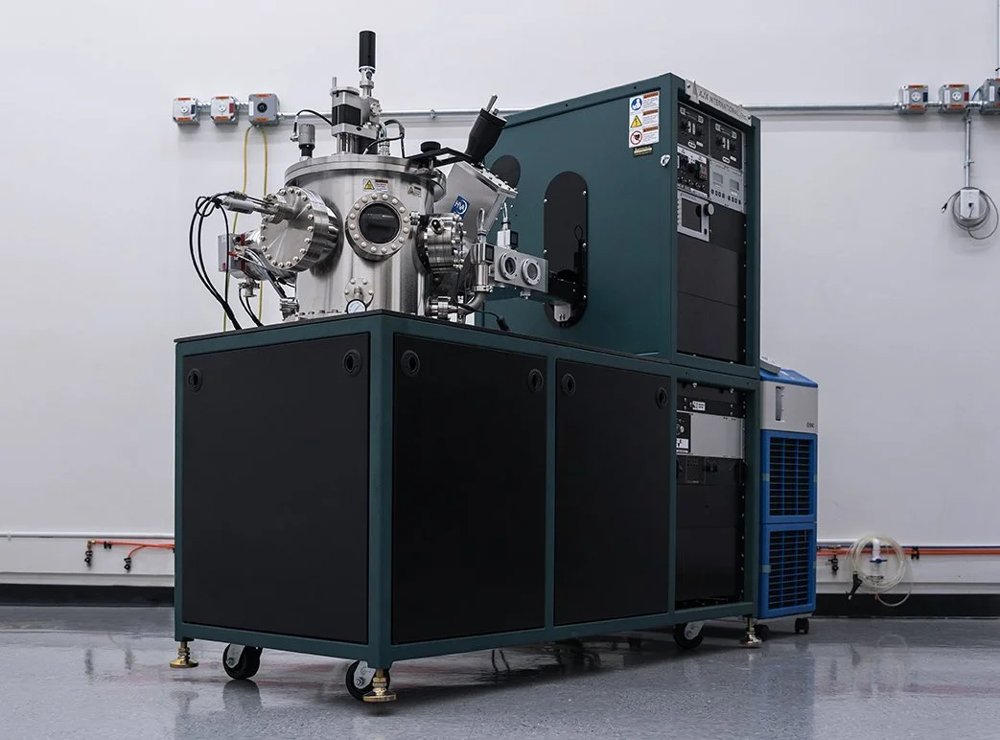 Orion Sputtering Deposition SystemsAJA International Featured
 Nion-compatible In Situ STEM Holders for Electrical BiasingHummingbird Scientific Featured
 GHK-CuPeoples Peps
Market insights
Last 30 days: Quantum Technologies drew the most money: $3.17B.
Money raised per month
Behind the deal
Who invested in Photon Bridge’s $11.2M Series A?
See the investors with Insights Pro →