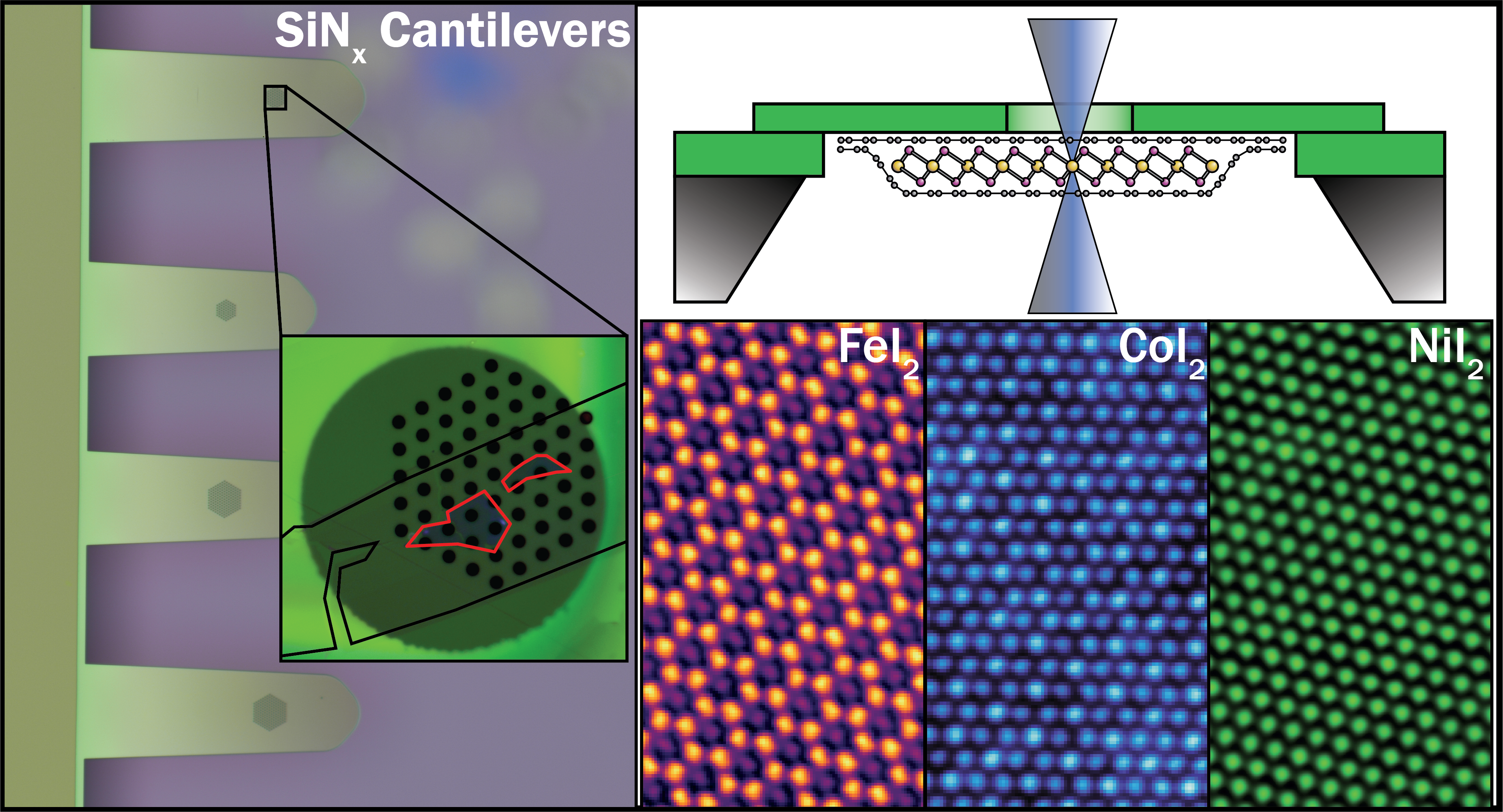
Two-dimensional (2D) materials promise revolutionary advances in electronics and photonics, but many of the most interesting candidates degrade within seconds of air exposure, making them nearly impossible to study or integrate into real-world technology. Transition metal dihalides represent a particularly compelling yet challenging class of materials, with predicted properties ideal for next-generation devices, but their extreme reactivity when exposed to air prevents even basic structural characterisation.
Researchers at The University of Manchester's National Graphene Institute have now achieved the first atomic‑resolution imaging of monolayer transition metal diiodides, made possible by creating graphene‑sealed TEM samples that prevent these highly reactive materials from degrading on contact with air. The study, published in ACS Nano, demonstrates that fully encapsulating the crystals in graphene preserves atomically clean interfaces and extends their usable lifetime from seconds to months. This capability arises from refinements to an inorganic stamp transfer approach the team previously developed and reported in Nature Electronics, which provided the basis for producing stable, hermetically sealed samples.
“Working with these materials felt impossible at first as they are completely destroyed after a few seconds air exposure, preventing traditional fabrication approaches.” explained Dr Wendong Wang who has worked on developing the transfer technique and fabricated the samples in question. “Our approach protects samples r without any unnecessary transfer stages. Being able to make samples that can survive not just hours but months, and for international transfer between facilities, solves a major bottleneck in 2D materials research.“
“Once we were able to make stable samples, we were able to make several interesting observations about these materials, including identifying extensive local structural variations for the thinnest samples, atomic defect dynamics and edge structure evolution”, states Dr Gareth Tainton who conducted the TEM imaging and analysis as part of this work. “The structures of 2D materials are closely linked to their properties, and so being able to directly observe not only the structures of the different crystals, from monolayers up to bulk thicknesses, but also defect behaviour will hopefully inform further work on these materials to unlock their potential in technology”
“What excites me most is how this opens up previously inaccessible scientific territory. We've known theoretically that many reactive 2D materials have exceptional properties for electronics, optoelectronics, and quantum applications, but we couldn't get stable samples into the lab to test those predictions", commented Prof Roman Gorbachev of the National Graphene Institute, who led the investigation.
Reference
Atomic Imaging of 2D Transition Metal DiiodidesClick to copy article link
Wendong Wang, Gareth R. Tainton, Nicholas J. Clark, James G. McHugh, Xue Li, Sam Sullivan-Allsop, David G. Hopkinson, Oldrich Cicvárek, Francisco Selles, Rui Zhang, Joshua D. Swindell, Alex Summerfield, David J. Lewis, Vladimir I. Fal’ko, Zdeněk Sofer, Sarah J. Haigh, Roman Gorbachev
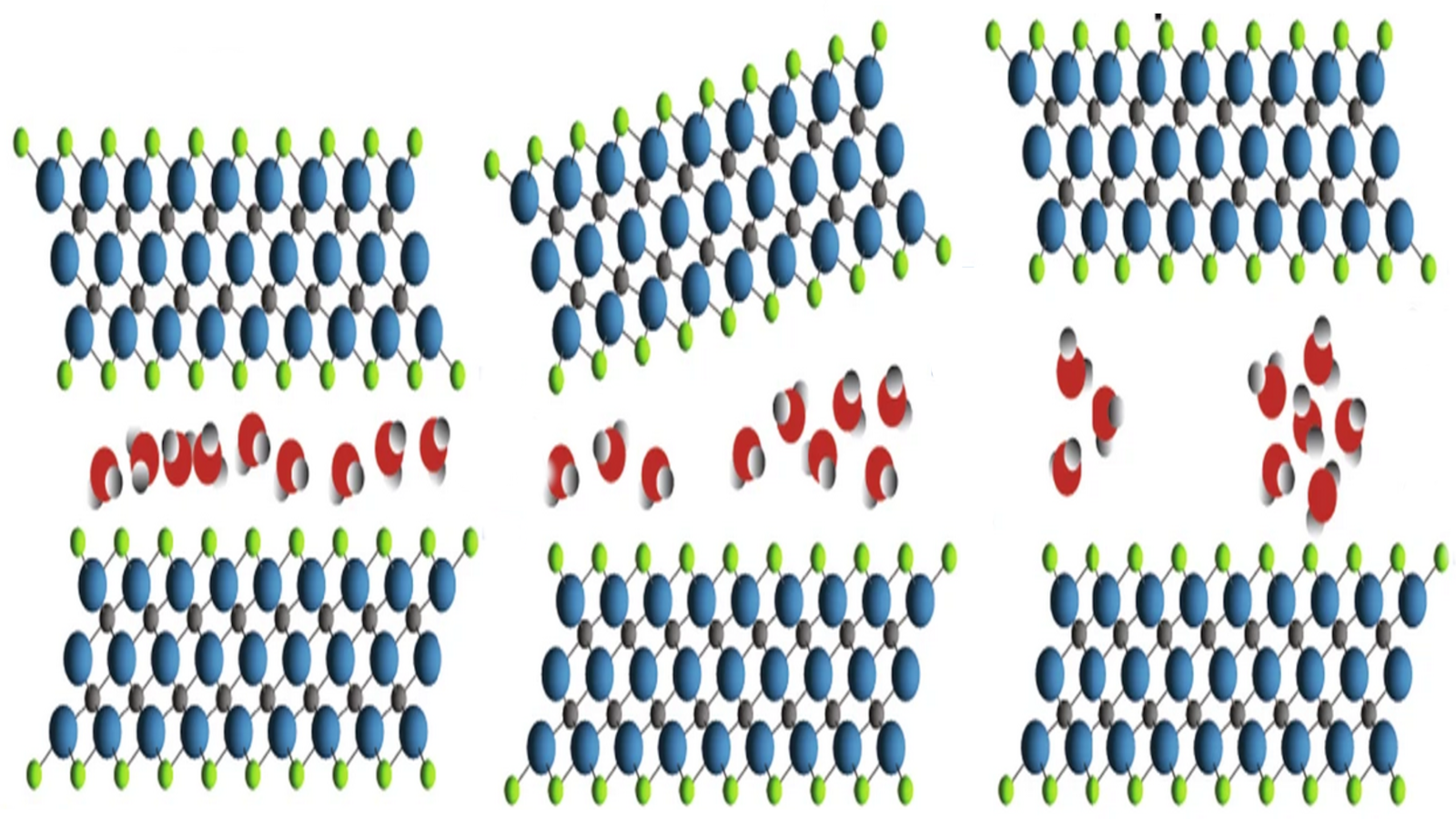
An international team led by Dr. Tristan Petit and Prof. Yury Gogotsi has investigated MXene with confined water and ions at BESSY II. In the MXene samples, a transition between localised ice clusters to quasi-two-dimensional water films was identified by increasing temperature. The team also discovered that the intercalated water structure drives a reversible transition from metallic to semiconducting behaviour of the MXene film. This could enable the development of novel devices or sensors...
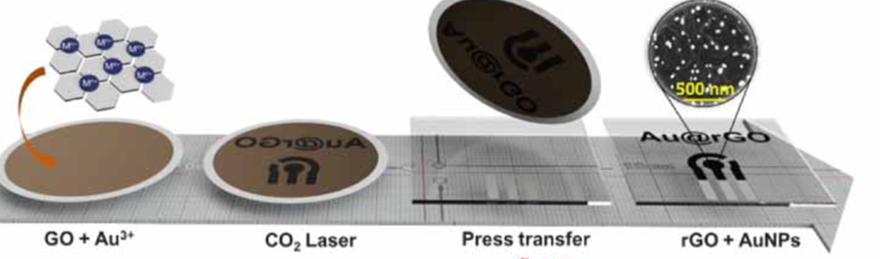
Recently, two scientists from the ICN2 Nanobioelectronics and Biosensors Group participated in a perspective article analysing advances and challenges of the use of 2D materials in sensing technologies. This work represents an international collaboration as part of the European Graphene Flagship initiative, aimed at advancing graphene research and its application in society.
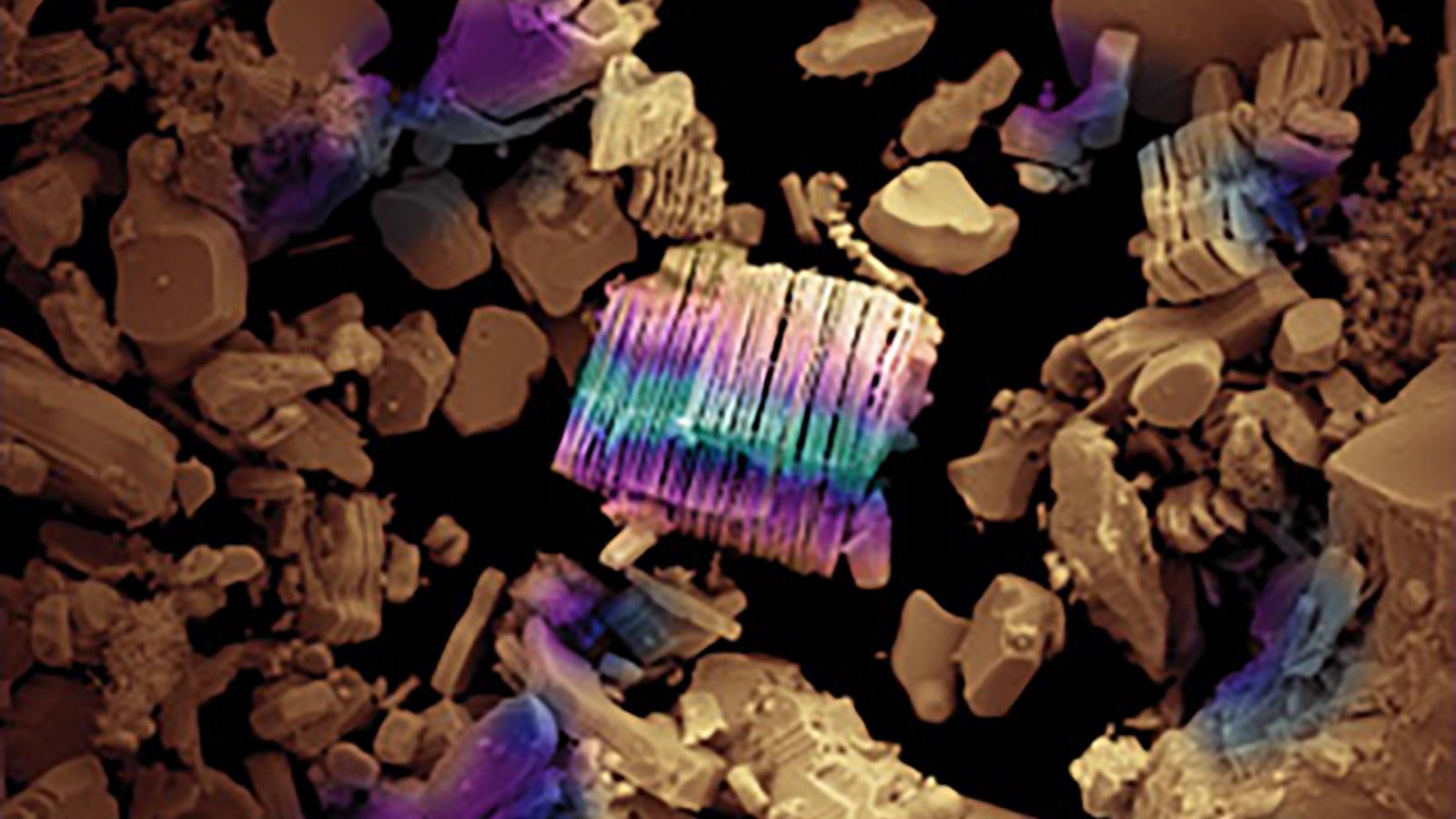
Since their discovery at Drexel University in 2011, MXenes — a family of nanomaterials with unique properties of durability, conductivity and filtration, among many others — has become the largest known and fastest growing family of two-dimensional nanomaterials, with more than 50 unique MXene materials discovered to date. Experimentally synthesizing them and testing the physical properties of each material has been the labor of tens of thousands of scientists from more than 100 countries.
This week in nanotech
$271M raised
6 funding rounds · 27 deals tracked
New products
 DLS-1 Mass Spectrometer for Fusion Gas AnalysisHiden Analytical Featured
 Ti-WCMBN Nanomaterialia Featured
 PKVH / PKVL ZAxis With an opening modelTHK PRECISION CO.,LTD.
Market insights
Last 30 days: Quantum Technologies drew the most money: $3.17B.
Money raised per month
Behind the deal
Who led Institut de Microelectronica de Barcelona (IMB-CNM, CSIC)’s $185.7M Grant?
See the investors with Insights Pro →