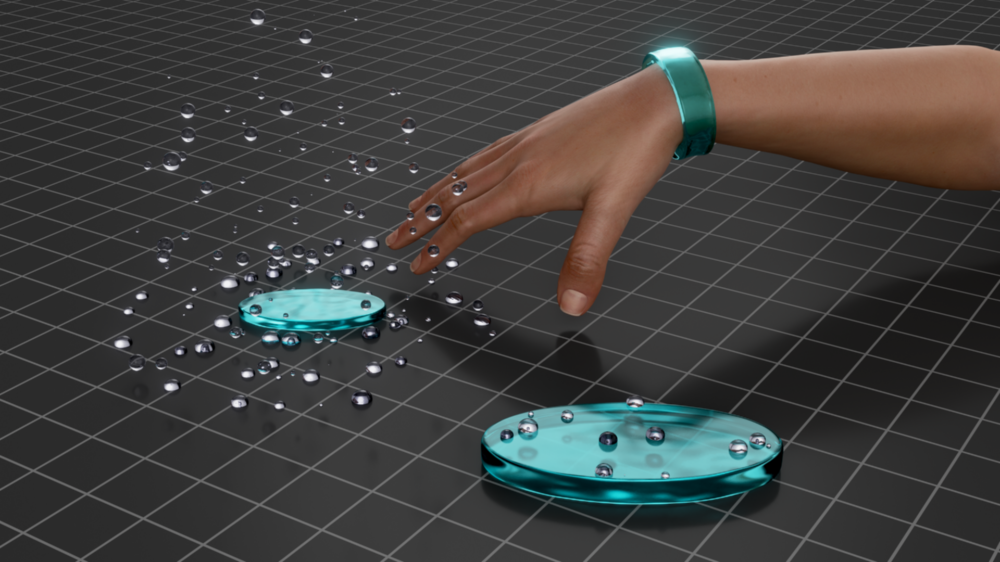
Wearable medical devices, such as the soft exoskeletons that provide support for stroke patients or controlled drug delivery patches, have to be made of materials that can adapt intelligently and autonomously to the wearer's movements and to changing environmental conditions. These are precisely the type of autonomously switchable polymer materials that have recently been developed by materials scientists at the University of Stuttgart and pharmacists at the University of Tübingen, whose research findings have been reported in Advanced Materials Technologies, a leading specialist journal.
The collaborating groups, which are headed up by Prof. Sabine Ludwigs (Institute of Polymer Chemistry) and Prof. Holger Steeb (Institute of Mechanics, MIB) at the University of Stuttgart and Prof. Dominique Lunter (at the University of Tübingen's Department of Pharmaceutical Technology), have published a paper entitled "Autonomous Adaptation of Intelligent Humidity-Programmed Hydrogel Patches", in which they demonstrate how intelligent polymer materials can be produced, whereby the word “intelligent” refers to the fact that the properties of the material can adapt autonomously to the environmental conditions in which they are used. The rigidity of the materials in question can change by more than four orders of magnitude depending on humidity and temperature, and can undergo elastic changes even when subjected to major deformations, which enables the mechanical properties to adjust to the respective application.
One of the authors of the paper, Sabine Ludwigs, refers to these materials as "Intelligent Rubber Materials" and explains that: "this high level of adaptability makes our polymers ideally suited for robots made of soft organic materials, such as those used in biomedicine or in search and rescue missions – the keyword here being ‘soft robotics’. These polymers are also very well suited for use in smart skin applications, such as exoskeletons made of soft flexible fabrics." For both applications, the material needs to allow for both fast and slow movements, meaning it needs to have adjustable viscoelastic properties. "That is exactly what the material we have developed is able to do," says Holger Steeb.
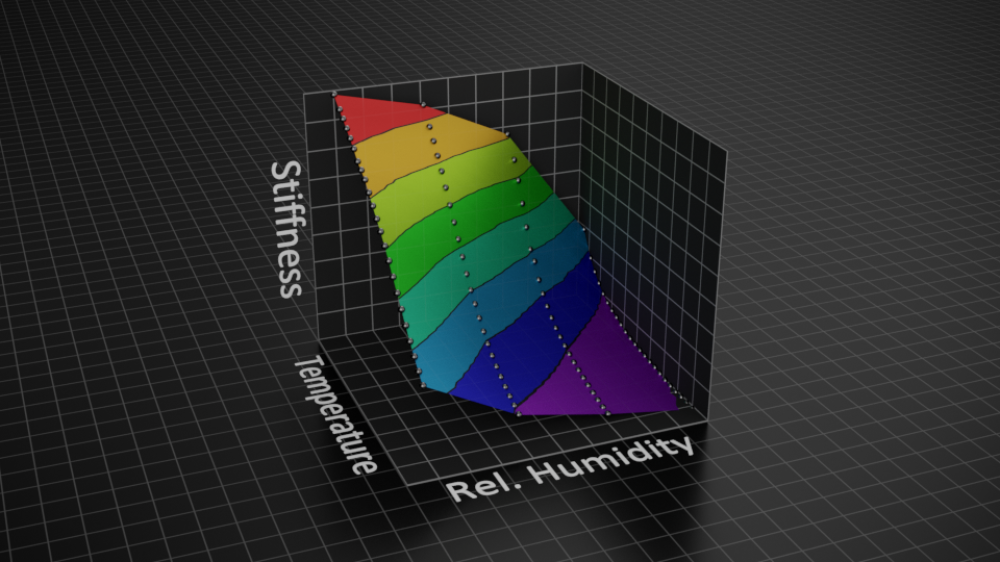
Very high degree of adaptability
In addition, the material's hydro-adaptability and reversible water absorption capacity make it suitable for use as a patch for the controlled release of drugs via the skin. The researchers specifically conducted experiments with the release of the painkiller diclofenac in a skin model. "The key mechanism is that it is the patch itself that controls the release of the active ingredient in response to the variable moisture levels of the wound, i.e., depending on the fluids that seep out of the wound," says Dominique Lunter, a pharmaceutical expert based in Tübingen, Germany.
The relevant research was carried out as part of the recently established cross-faculty Functional Soft Materials Laboratory (FSM Lab) at the University of Stuttgart's Data-integrated Simulation Science Cluster of Excellence (EXC 2075, SimTech). This is the result of a very successful collaboration between two research groups headed up by Sabine Ludwigs who specializes in polymer chemistry, and Holger Steeb, whose work is focused on the mechanics and function of smart polymer materials.
The vision: materials that respond to active triggers
Going forward, the researchers at the University of Stuttgart are planning to investigate multifunctional material systems, which are able to autonomously adapt to their environment as well as react to active triggers, such as electrical stimuli. They are also planning to use simulations as a basis for modeling and predicting complex architectures. As such, the polymer materials research results also benefit the studies being carried out by the university's "Data-Integrated Simulation Science "(SimTech)" cluster of excellence.
Reference
Autonomous Adaption of Intelligent Humidity-Programmed Hydrogel Patches for Tunable Stiffness and Drug Release
Stephan Pflumm, Yvonne Wiedemann, Dominik Fauser, Javidan Safaraliyev, Dominique Lunter, Holger Steeb, Sabine Ludwigs
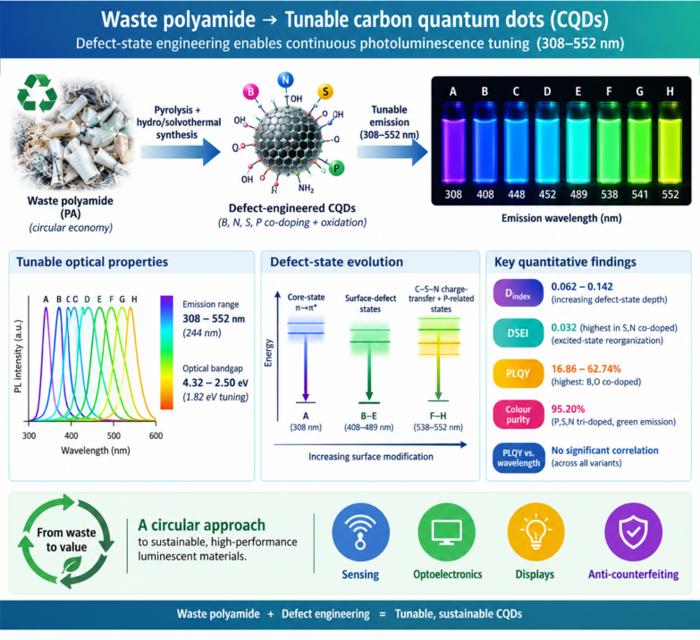
Waste polyamide-derived CQDs show continuous photoluminescence tuning from 308 to 552 nm through sequential defect-state engineering, with optical transition energies decreasing from 4.32 to 2.50 eV. @Christian Ebere Enyoh from Saitama University Carbon quantum dots (CQDs) are fluorescent carbon nanomaterials with potential applications in sensing, optoelectronics, displays, anti-counterfeiting, and environmental technologies. Their optical properties can be adjusted by modifying the carbon...
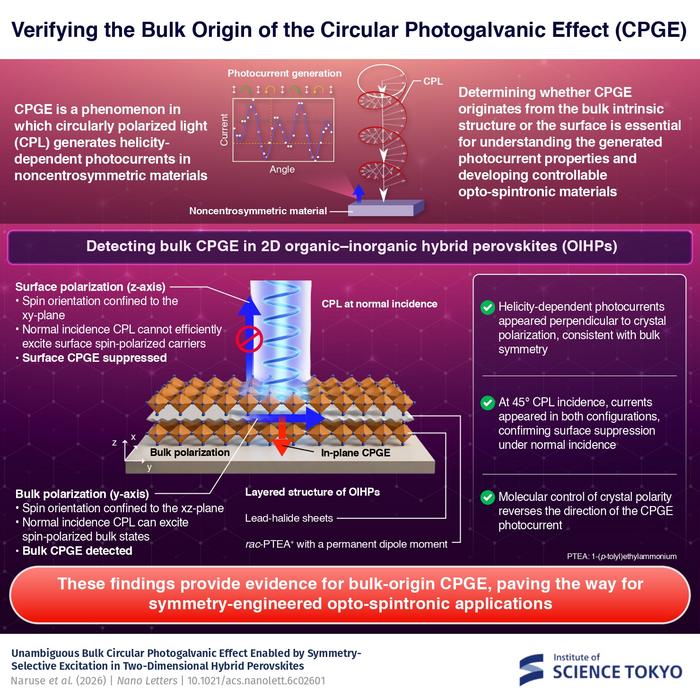
The researchers used circularly polarized light at normal incidence and found that helicity-dependent photocurrents appeared perpendicular to the crystal’s polarization but vanished when measured parallel to it, supporting a bulk origin of CPGE. @Institute of Science Tokyo The circular photogalvanic effect (CPGE), a phenomenon that generates helicity-dependent photocurrents in noncentrosymmetric materials, can originate purely from a crystal's internal structure without contribution from the...
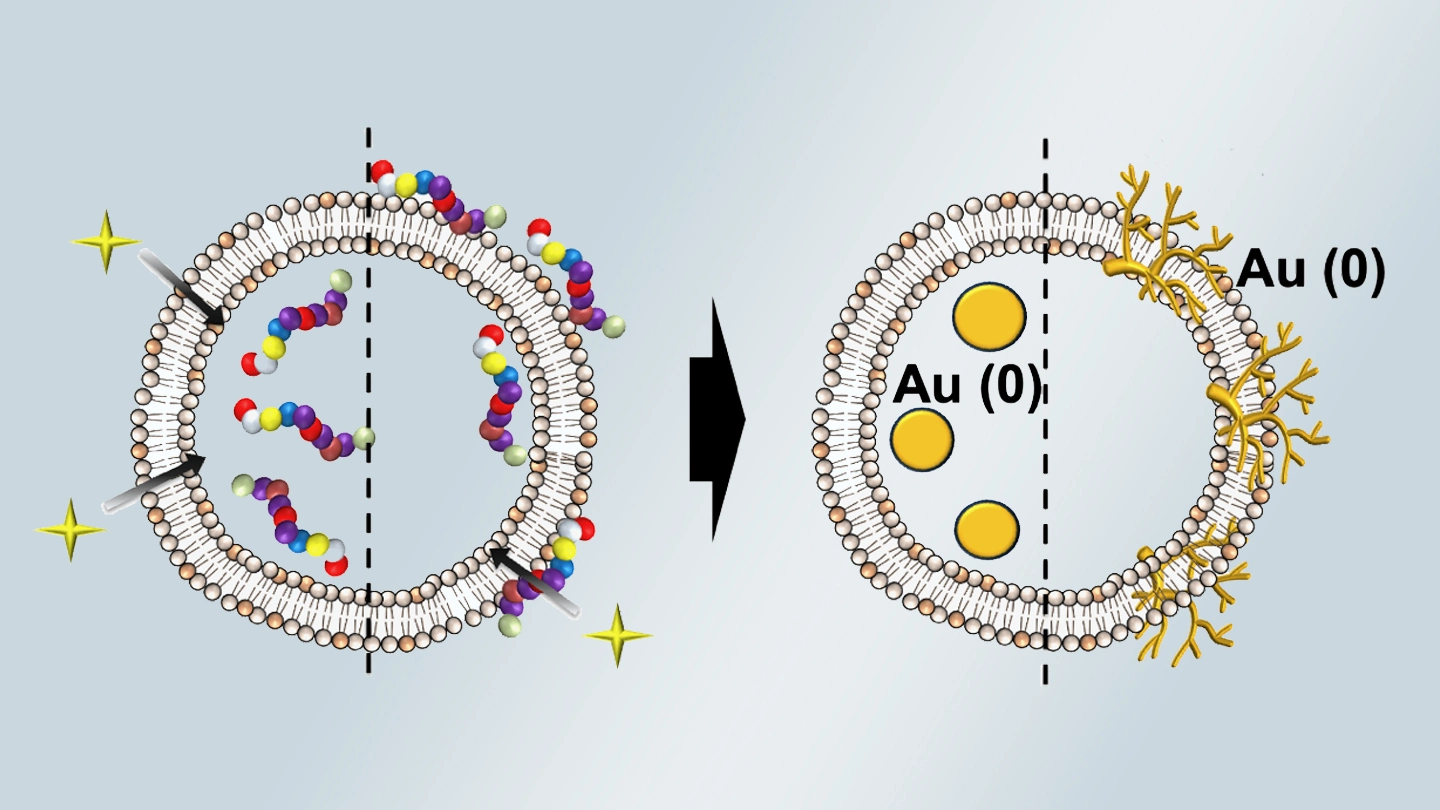
Summary of gold nanoparticle growth programming in liposome based on localization of biomineralization peptide The position of biomineralization peptides within liposomes can influence how gold nanoparticles grow, reports a research team from Institute of Science Tokyo. Peptides localized at the membrane interface promote branched structures, while those confined to the liposome interior favor spherical nanoparticles. The findings offer a new strategy for controlling nanoscale reaction...
