Catalan Institute of Nanoscience and Nanotechnology
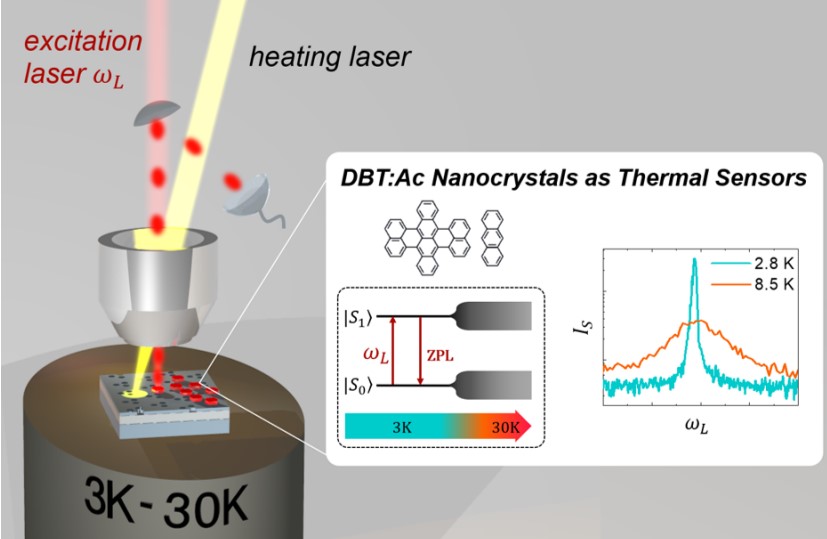
Heat management in micro- and nano-electronics, as well as in other systems at such a small scale, is extremely important and not at all trivial. Being able to measure temperature with excellent precision is the first step to achieve control over it. An effective thermometer for the nanoscale should be non-invasive, to avoid affecting the system in undesirable ways, and guarantee high thermal and spatial resolutions. Various techniques explored so far meet these requirements only partially, and the situation worsens when temperatures as low as tens of Kelvins (less than -200 °C) are involved.
A team of researchers led by Dr Costanza Toninelli from the Italian National Council of Research (CNR), including Prof. Dr Clivia Sotomayor-Torres and various members of her group at the ICN2 (the Photonic and Phononic Nanostructures Group) as well as the Technical University of Denmark, proposed an innovative nanothermometer based on quantum probes. Fluorescent molecules, emitting single photons with high brightness, were embedded in a molecular matrix. The submicron-sized crystals obtained this way can then be positioned on a surface in the precise location where we want to measure the temperature.
As explained in a paper recently published in PRX Quantum, a Physical Reviews journal of the American Physical Society (APS), this technique relies on the variations of the optical response (here the photon emission) of the fluorescent molecules depending on local temperature. Such variations are caused by quantum effects induced in the system by temperature changes. To both calibrate and validate this nanothermometer, the researchers used a laser beam to excite its nanocrystals and monitored the light emission while varying the temperature of the sample under study between 3 and 20K. Several molecular emitters and different surfaces were analysed.
The groundbreaking single-molecule thermometer presented in this work enables the measurement of local temperature at the nanoscale with remarkable sensitivity and astonishing thermal resolution of 0.1-0.01K. In addition, the spatial resolution of a few hundred nanometers (determined by the size of the probe) enables performing a temperature mapping of a nanostructured surface. Finally, this system works with powers as low as 5 nW.
This research demonstrates the potential of nano-engineered ‘devices’ that are basically single-molecule thermometers as probes for studying the thermal properties of materials with extremely reduced invasiveness and high precision, both in terms of thermal and spatial resolutions. Furthermore, it paves the way to the application of this technique in nanoelectronics for temperature monitoring and heat management.
Reference
Quantum thermometry with single molecules in nanoprobes
V. Esteso, R. Duquennoy, R. C. Ng, M. Colautti, P. Lombardi, G. Arregui, E. Chavez-Angel, C. M. Sotomayor-Torres, P. D. Garcia, M. Hilke, and C. Toninelli
https://journals.aps.org/prxquantum/accepted/8507fK0dOfd10b07560b784847e07982b32b71e1b
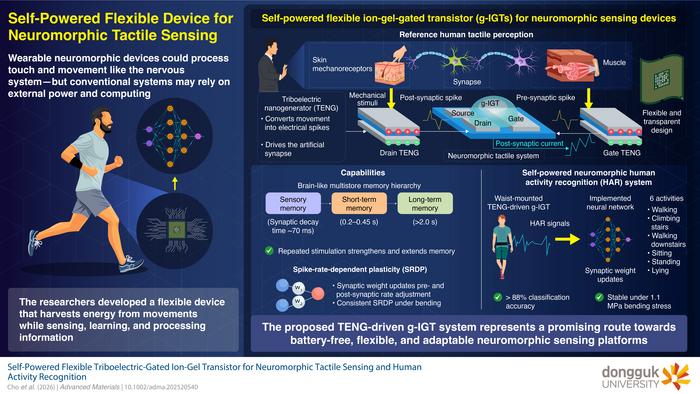
The proposed TENG-driven g-IGT is a flexible, self-powered neuromorphic device capable of reproducing multiple memory states and spike-rate-dependent learning Neuromorphic devices, which are designed to emulate aspects of biological neural networks, are promising candidates for developing low-power and intelligent sensing technologies, including wearable applications. Among the device architectures explored for neuromorphic computing, graphene-channel ion-gel-gated transistors (g-IGTs) are...

Rice University researchers have shown that sub-nanometer wrinkles in graphene generate flexoelectric charge separation, reshaping local electrical behavior through curvature alone. Extreme bending produces polarization far stronger than in larger systems and may enable geometry-controlled electronics without chemical doping. Published in Advanced Materials.
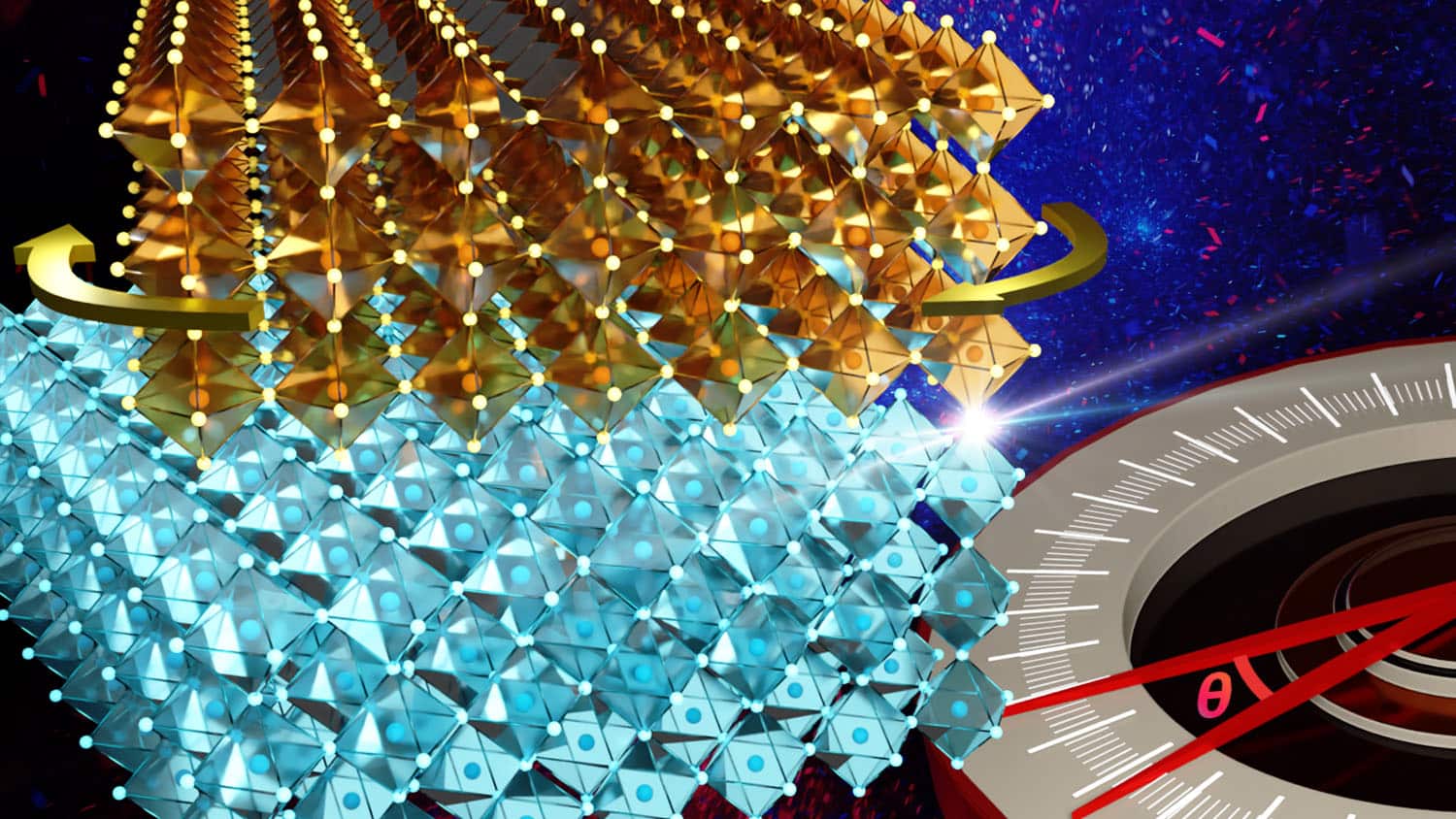
Researchers at NC State have extended twistronics beyond van der Waals materials into strongly bonded crystalline oxides. By stacking sodium niobate membranes with twist angles controlled down to 0.1 degrees, and confirming results via synchrotron X-ray diffraction, the team found interlayer bonds distort the atomic lattice, shifting phase structure and domain configuration. The technique works at near-millimeter scale, far larger than typical twistronic devices, marking a real step toward pract
