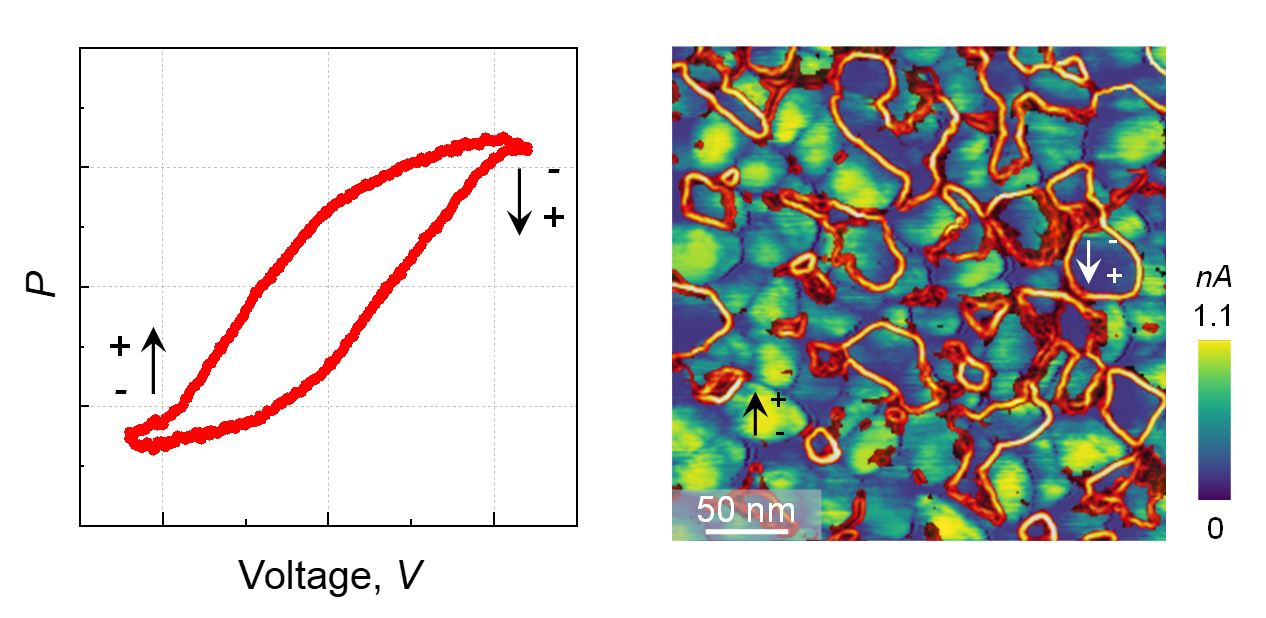
Latest research from Flinders University and UNSW Sydney, published in the American Chemical Society ACS Nano journal, explores switchable polarization in a new class of silicon compatible metal oxides and paves the way for the development of advanced devices including high-density data storage, ultra low energy electronics, and flexible energy harvesting and wearable devices.
The study provides the first observation of nanoscale intrinsic ferroelectricity in magnesium-substituted zinc oxide thin films, i.e. metal oxide thin films with simple wurtzite crystal structures. Ferroelectrics akin to magnets exhibit a corresponding electrical property known as permanent electric polarisation, which stems from electric dipoles featuring equal but oppositely charged ends or poles. The polarization can be repeatedly altered between two or more equivalent states or directions when subjected to an external electric field and, thus the switchable polar materials are under active consideration for numerous technological applications including fast nano-electronic computer memory and low-energy electronic devices.
“The research findings offer significant insights into the switchable polarisation in a new class of much simpler silicon-compatible metal oxides with wurtzite crystal structures and lay a foundation for the development of advanced devices,” says corresponding and last author Dr Pankaj Sharma, Lecturer at Flinders University.
“The demonstrated material system offers very real and important implications for new technology and translatable research,” says corresponding author UNSW Sydney Professor Jan Seidel.
Historically, this technologically important property has been found to exist in complex perovskite oxides that incorporate a range of transition metal cations leading to diverse physical phenomena such as multiferroicity, magnetism, or even superconductivity.
“But, integrating these complex oxides into the semiconductor manufacturing processes has been a significant challenge due to stringent processing requirements related, for instance, to thermal budget and precise control of multiple constituent elements. The present study therefore provides a potential solution” – notes first author Haoze Zhang (UNSW, Sydney).
Reference
Robust Switchable Polarization and Coupled Electronic Characteristics of Magnesium-Doped Zinc Oxide
Haoze Zhang, Ayana Alanthattil, Richard F. Webster, Dawei Zhang, Mohammad B. Ghasemian, Rajendra B. Venkataramana, Jan Seidel, and Pankaj Sharma
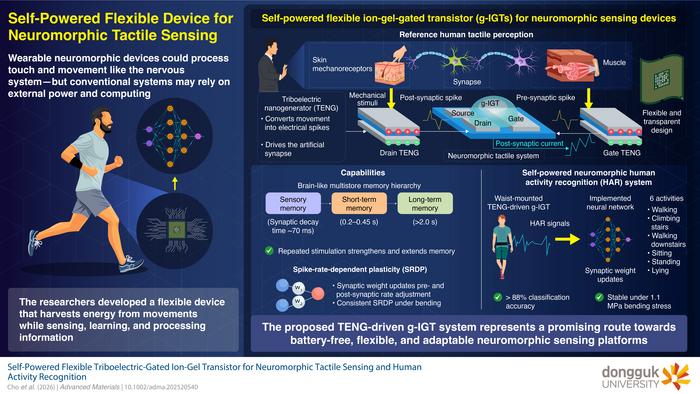
The proposed TENG-driven g-IGT is a flexible, self-powered neuromorphic device capable of reproducing multiple memory states and spike-rate-dependent learning Neuromorphic devices, which are designed to emulate aspects of biological neural networks, are promising candidates for developing low-power and intelligent sensing technologies, including wearable applications. Among the device architectures explored for neuromorphic computing, graphene-channel ion-gel-gated transistors (g-IGTs) are...
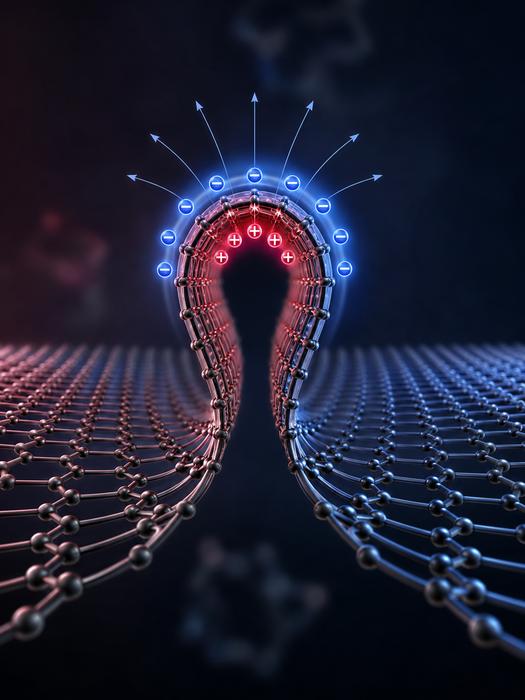
Rice University researchers have shown that sub-nanometer wrinkles in graphene generate flexoelectric charge separation, reshaping local electrical behavior through curvature alone. Extreme bending produces polarization far stronger than in larger systems and may enable geometry-controlled electronics without chemical doping. Published in Advanced Materials.
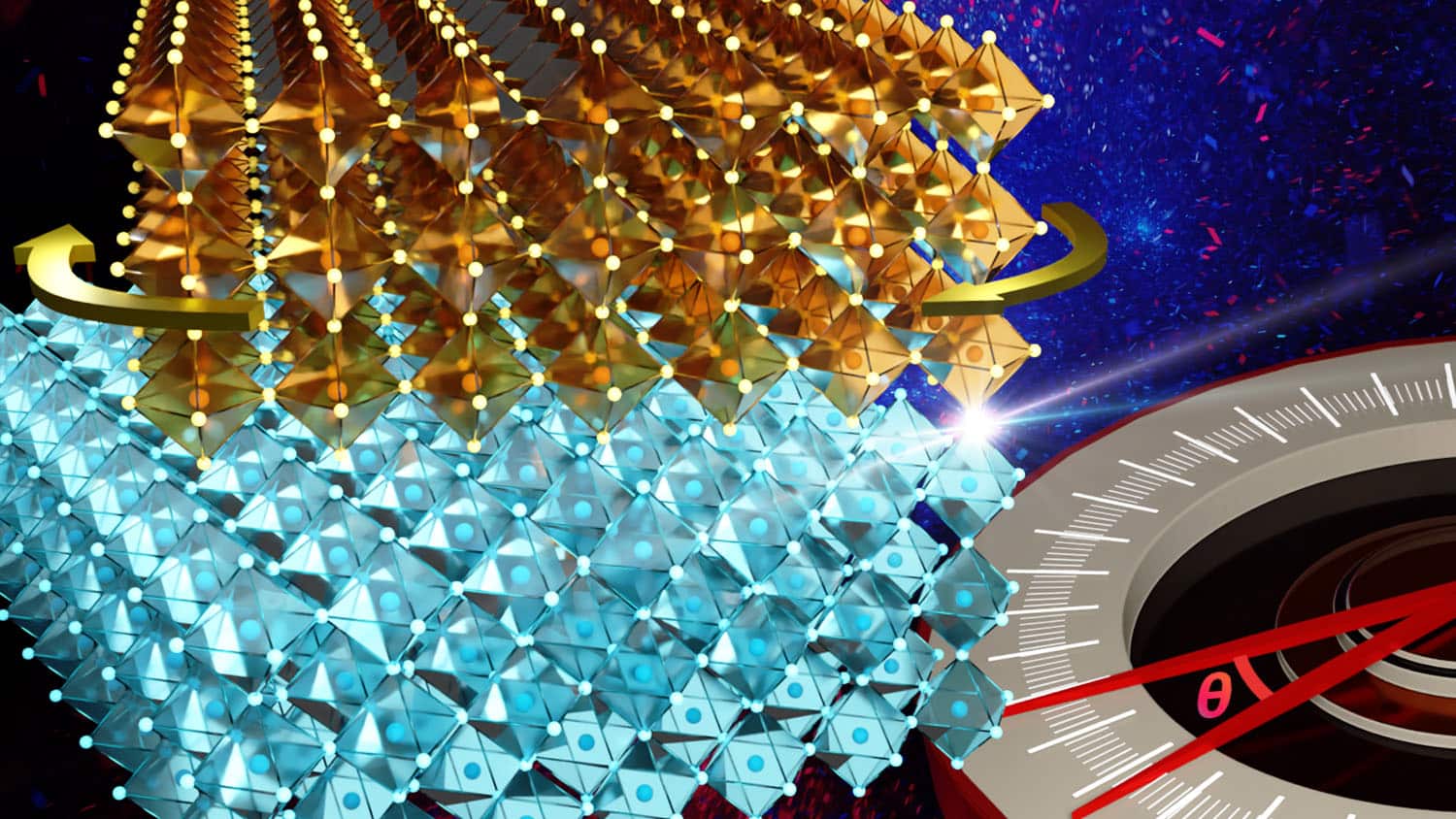
Researchers at NC State have extended twistronics beyond van der Waals materials into strongly bonded crystalline oxides. By stacking sodium niobate membranes with twist angles controlled down to 0.1 degrees, and confirming results via synchrotron X-ray diffraction, the team found interlayer bonds distort the atomic lattice, shifting phase structure and domain configuration. The technique works at near-millimeter scale, far larger than typical twistronic devices, marking a real step toward pract
