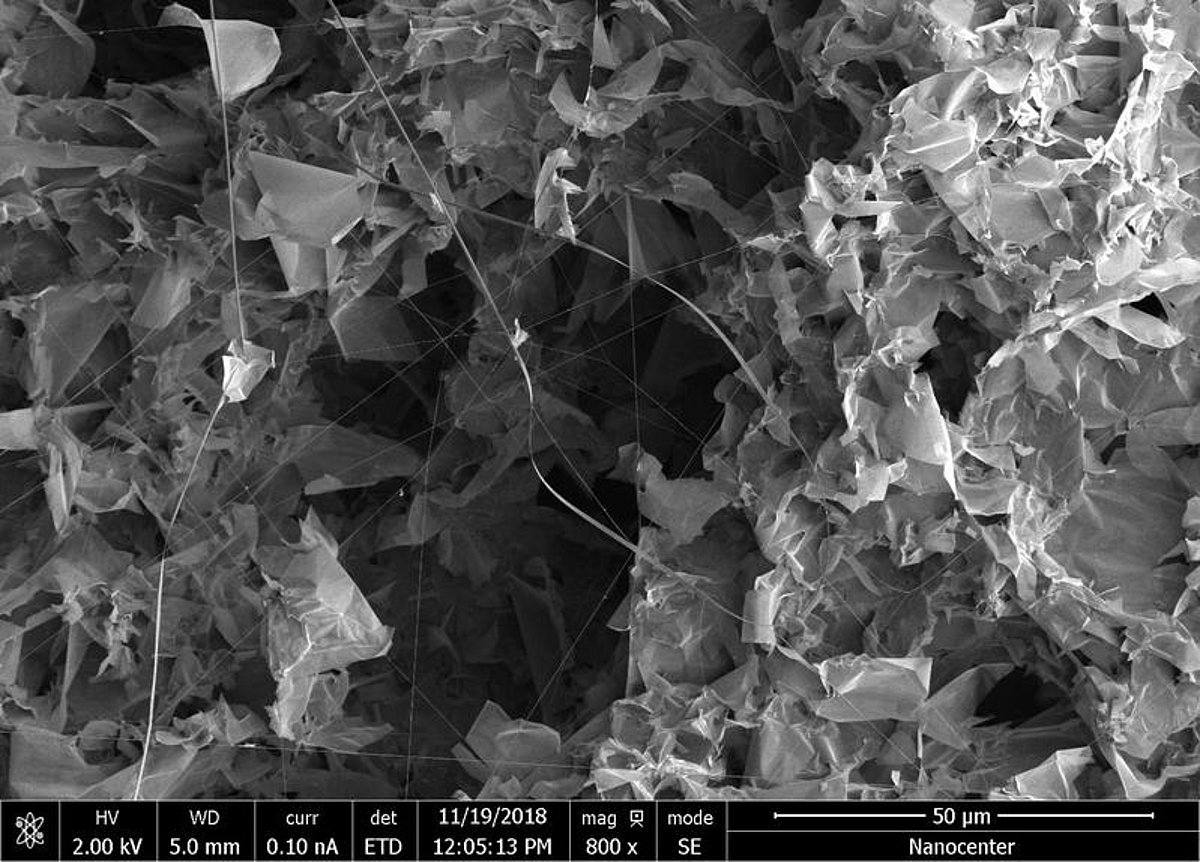
Molybdenum disulfide MoS2 is a groundbreaking material for electronics applications. As a two-dimensional layer similar to graphene, it is an excellent semiconductor, and can even become intrinsically superconducting under the right conditions. It's not particularly surprising that science fiction authors have already been speculating about molycircs, fictional computer circuits built from MoS2, for years – and that physicists and engineers are directing huge research efforts at this material.
At University of Regensburg, we have many years of expertise with diverse quantum materials – in particular also with carbon nanotubes, tube-like macromolecules made from carbon atoms alone. "It was an obvious next step to now focus on MoS2 and its fascinating properties," said Dr. Andreas K. Hüttel, head of the research group Nanotube Electronics and Nanomechanics in Regensburg. In cooperation with Prof. Dr. Maja Remškar, Jožef Stefan Institut Ljubljana, a specialist in the crystalline growth of molybdenum disulfide nanomaterials, his research group started working on quantum devices based on MoS2 nanotubes.
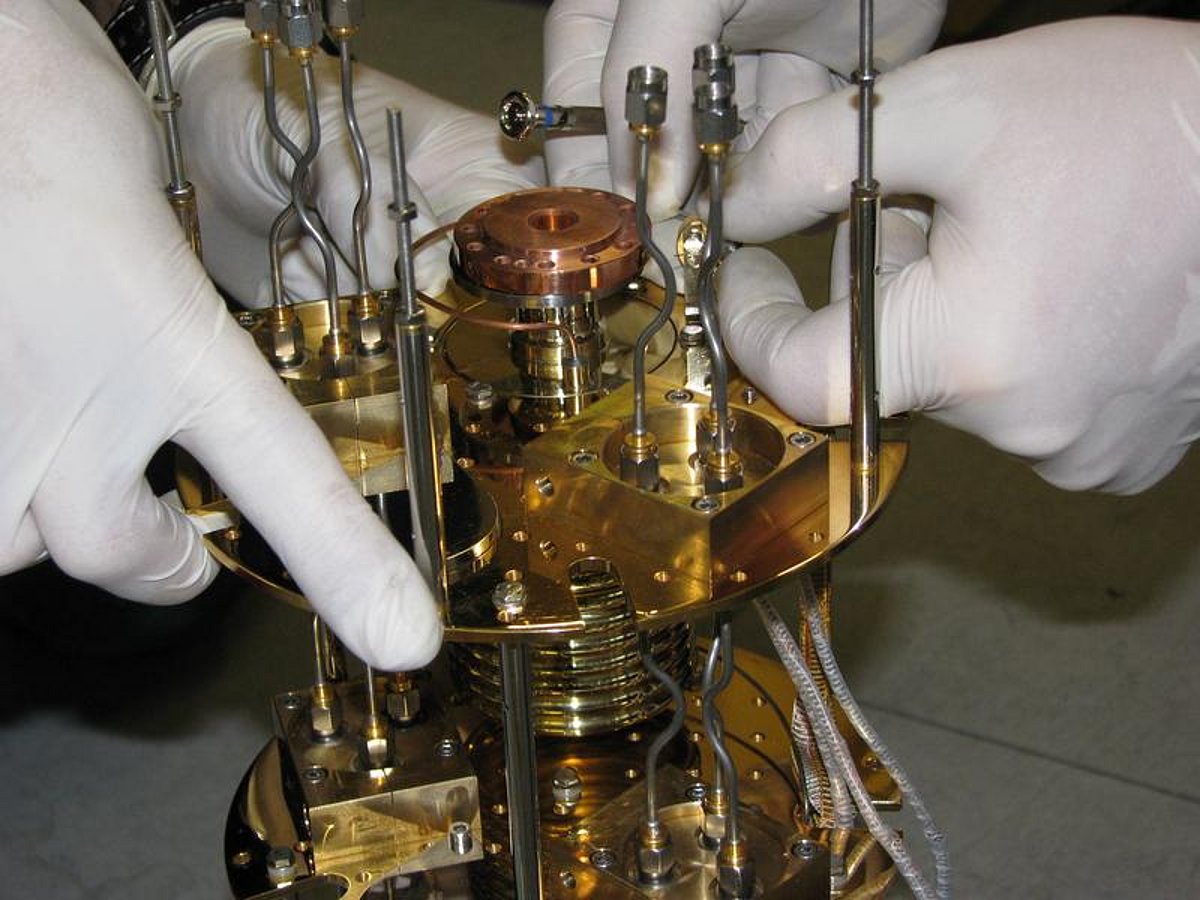
"It turns out that MoS2 makes quantum confinement, i.e., discrete electronic states as you would need for qubits and quantum computers, very difficult to reach with flat flakes on a chip. That is exactly why we are interested in these exotic nanotubes. The tubes can be grown clean and straight, with diameters down to 20nm – and will then automatically give you the small structure sizes that you need."
The initial challenge was to make good metallic contacts. Useful metals with low contact resistances tend to react with the MoS2 surface and destroy its crystal structure, a difficulty that affects also 'flat' MoS2 and is one of the main reasons why not many complex circuits exist there yet. For nanotubes, with small surface areas, this difficulty used to be even more pressing. "Now finally we obtain devices which remain electrically transparent even in the low temperature range typically needed for quantum computation, and which leave the molybdenum disulfide intact," said Dr. Hüttel.
And that's not all – the structure sizes immediately came into play. "So far, for practical reasons we used rather large nanotubes and nanoribbons. Still, we can show that in our low temperature setup, at temperatures below 0.1K as are used in many quantum computing approaches, current passes through discrete quantum states in our chip – and that is a big step towards controllable charge, spin, or even valley qubits in MoS2."
Reference
Non-Destructive Low-Temperature Contacts to MoS2 Nanoribbon and Nanotube Quantum Dots
Robin T. K. Schock, Jonathan Neuwald, Wolfgang Möckel, Matthias Kronseder, Luka Pirker, Maja Remškar, Andreas K. Hüttel
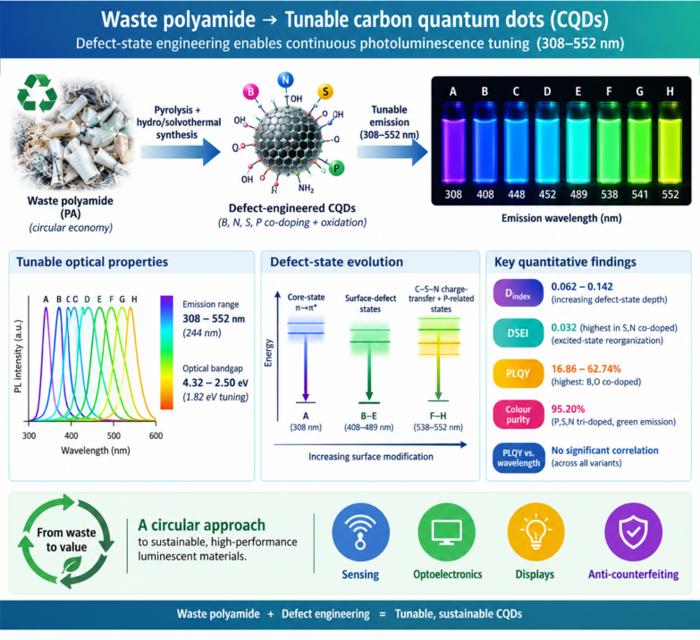
Waste polyamide-derived CQDs show continuous photoluminescence tuning from 308 to 552 nm through sequential defect-state engineering, with optical transition energies decreasing from 4.32 to 2.50 eV. @Christian Ebere Enyoh from Saitama University Carbon quantum dots (CQDs) are fluorescent carbon nanomaterials with potential applications in sensing, optoelectronics, displays, anti-counterfeiting, and environmental technologies. Their optical properties can be adjusted by modifying the carbon...
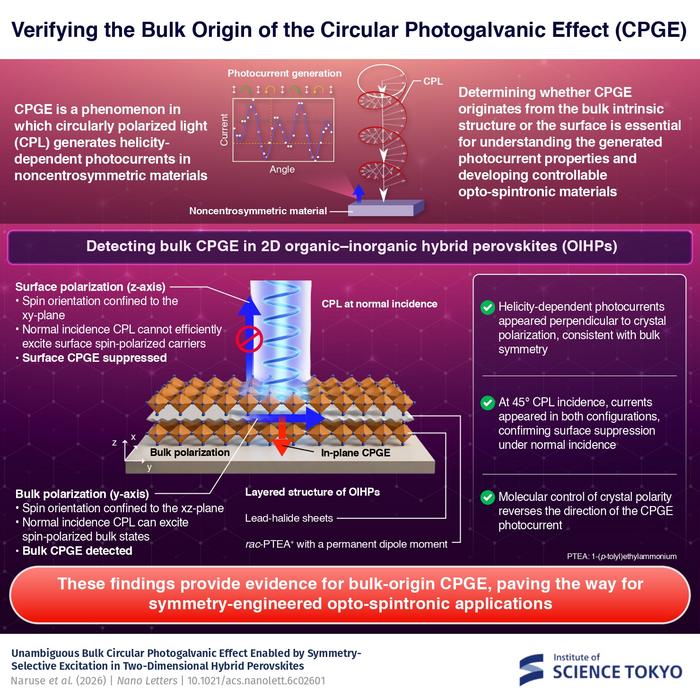
The researchers used circularly polarized light at normal incidence and found that helicity-dependent photocurrents appeared perpendicular to the crystal’s polarization but vanished when measured parallel to it, supporting a bulk origin of CPGE. @Institute of Science Tokyo The circular photogalvanic effect (CPGE), a phenomenon that generates helicity-dependent photocurrents in noncentrosymmetric materials, can originate purely from a crystal's internal structure without contribution from the...
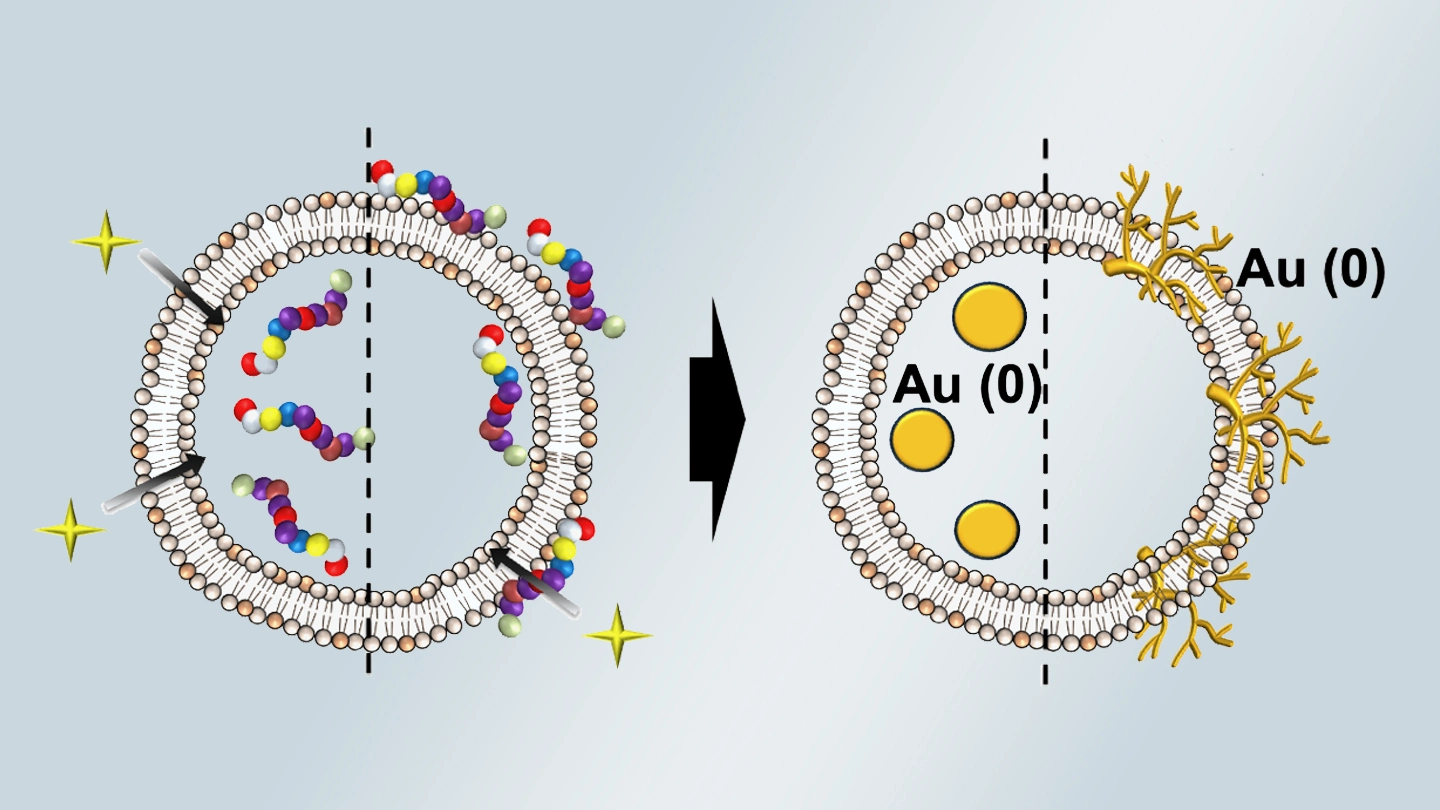
Summary of gold nanoparticle growth programming in liposome based on localization of biomineralization peptide The position of biomineralization peptides within liposomes can influence how gold nanoparticles grow, reports a research team from Institute of Science Tokyo. Peptides localized at the membrane interface promote branched structures, while those confined to the liposome interior favor spherical nanoparticles. The findings offer a new strategy for controlling nanoscale reaction...
