Rice University
Materials that emit and manipulate light are at the heart of technologies ranging from solar energy to advanced imaging systems. But even in well-studied materials, some fundamental behaviors remain unexplained.
Researchers at Rice University have now solved a long-standing mystery in a widely used organic semiconductor, revealing how tiny structural imperfections can actually improve how these materials work.
In a study published in the Journal of the American Chemical Society, the team investigated 9,10-bis(phenylethynyl)anthracene (BPEA), a model system for studying how light energy moves through materials. For years, scientists have observed unusual optical behavior in BPEA, specifically two distinct absorption and emission signals that did not match existing theories.
“This was a long-standing puzzle in the field,” said Colette Sullivan, a doctoral student in Rice’s Department of Chemistry and co-author of the study. “Once we connected the experimental results with theory, it became clear the two signals were coming from completely different processes.”
To understand this behavior, the researchers combined spectroscopy experiments with advanced simulations. Their findings show that the material’s unusual light absorption comes from interactions between two types of excited states — excitons, which carry energy through the material, and charge-transfer states, where electrons shift between molecules.
But the biggest surprise came from the material’s light emission.
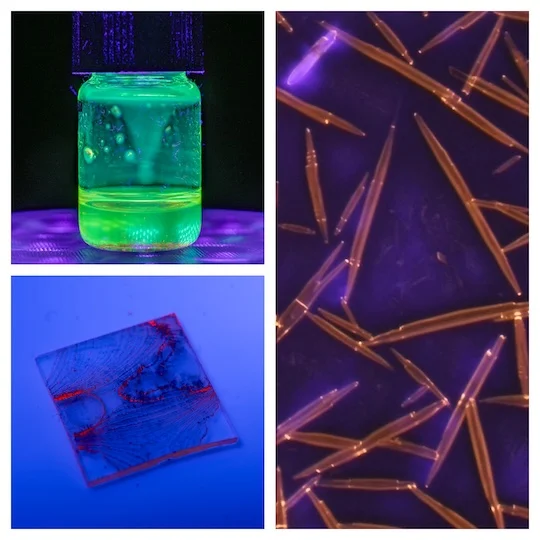
Instead of originating purely from the crystal itself, the team found that the lower-energy light emission comes from tiny structural defects, small irregularities where molecules form X-shaped pairs. These defects act as energy localization sites, or trap states, that behave differently from the rest of the material.
“These defects aren’t just imperfections, they actually create new pathways for energy flow, essentially turning apparent flaws into desirable features,” said Lea Nienhaus, associate professor of chemistry and member of the Rice Advanced Materials Institute.
Theoretical studies led by postdoctoral scientist Jakub Sowa showed that rather than reducing performance, these defect sites actually enhanced a process called triplet-triplet annihilation, which allows materials to convert lower-energy light into higher-energy light. At the same time, they suppress competing energy pathways that would otherwise reduce efficiency.
The result is a material where imperfections can actually improve how energy is converted and emitted.
The findings challenge a long-held assumption in materials science that defects are inherently detrimental. Instead, they suggest that carefully controlling these imperfections could become a powerful design strategy.
“Our work shows that material defects can actually improve performance, creating a target for materials engineering,” said Peter J. Rossky, the Harry C. and Olga K. Wiess Chair in Natural Sciences Emeritus at Rice. “By understanding how molecular structure, disorder and electronic interactions work together, we can begin to design materials where these effects are not just tolerated but deliberately used to control how energy moves.”
This insight could help researchers design more efficient materials for applications in solar energy, optoelectronics and light-based sensing technologies. By intentionally tuning how molecules pack together and where defects form, scientists may be able to create materials that convert and control light more efficiently than ever before.
The research was supported by the National Science Foundation (DMR-2517590), the Camille and Henry Dreyfus Foundation (TC-23-050) and the Alfred P. Sloan Foundation (FG-2024-22474). Additional support was provided by Rice and the NOTS cluster operated by Rice’s Center for Research Computing. The authors also acknowledge the Martí Group for its support.
Reference
The Curious Case of Dual Emission in 9,10-Bis(phenylethynyl)anthraceneClick to copy article link
Jakub K. Sowa*Colette M. SullivanLeon OtisBenjamin J. G. RousseauJussi IsokuorttiJames SheePeter J. Rossky*Lea Nienhaus
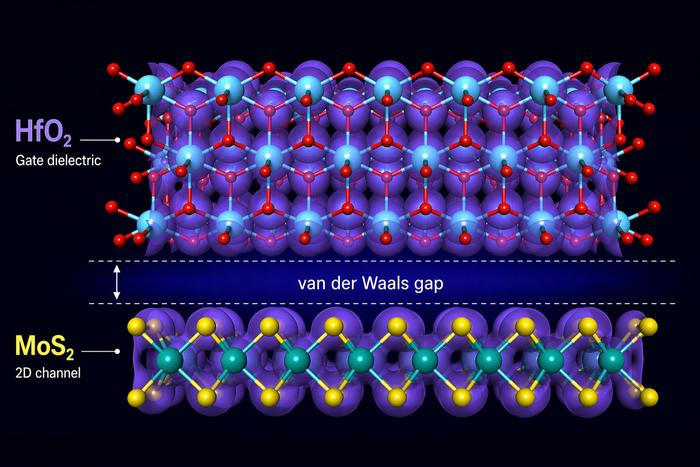
2D materials are widely seen as a promising path toward better computer chips. Researchers at TU Wien now show: some of these materials are unsuitable due to an underestimated effect. But there are alternatives

Rice University researchers studying a class of atom-thin semiconductors known as transition metal dichalcogenides (TMDs) have discovered that light can trigger a physical shift in their atomic lattice, creating a tunable way to adjust the materials’ behavior and properties. The effect, observed in a TMD subtype named after the two-faced Roman god of transitions, Janus, could advance technologies that use light instead of electricity, from faster and cooler computer chips to ultrasensitive se...
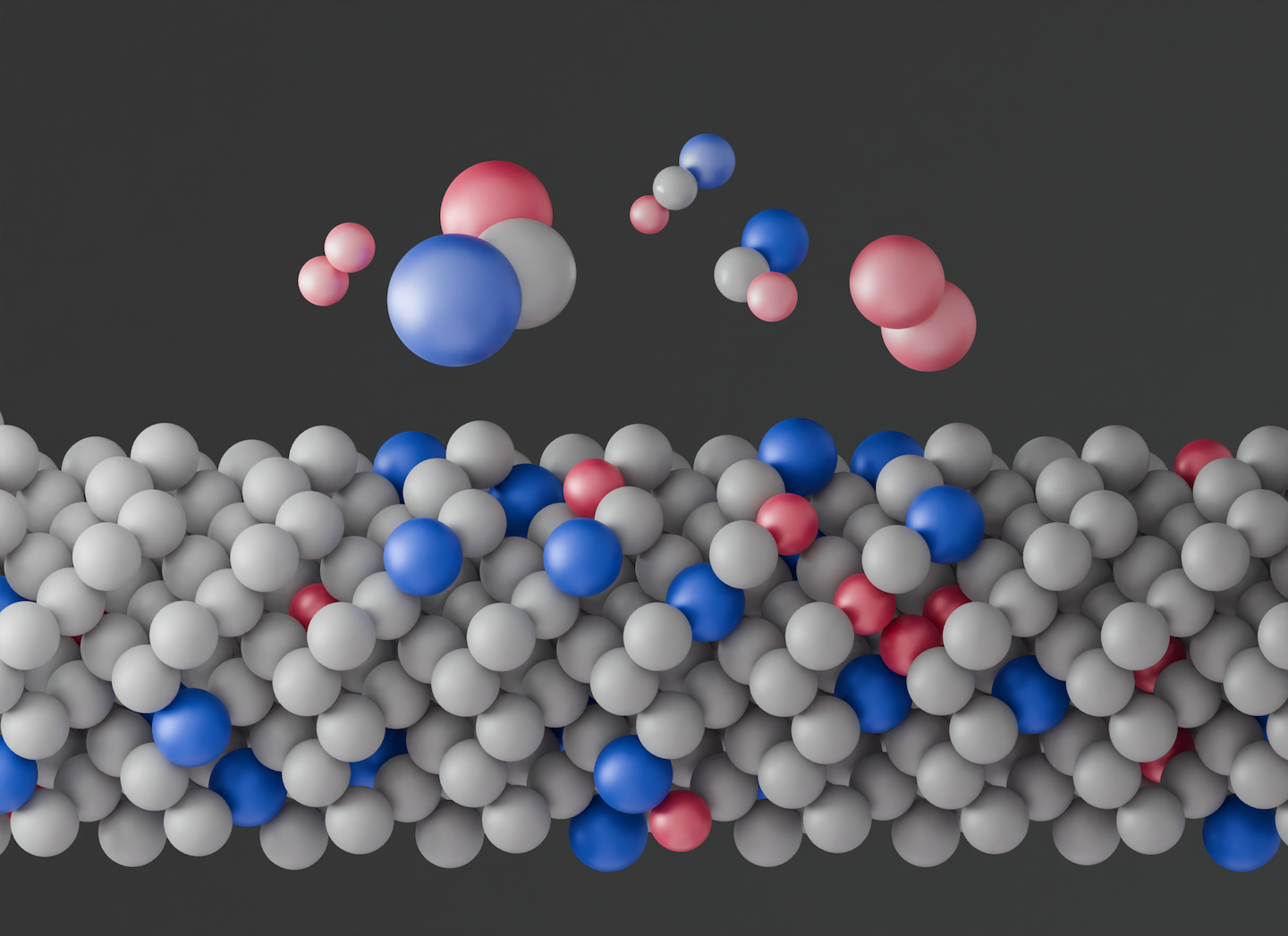
A team led by Lawrence Berkeley National Laboratory (Berkeley Lab) and George Washington University have confirmed that atoms in semiconductors will arrange themselves in distinctive localized patterns that change the material’s electronic behavior. The research, published today in Science, may provide a foundation for designing specialized semiconductors for quantum-computing and optoelectronic devices for defense technologies. On the atomic scale, semiconductors are crystals made of differe...