
Bristol-led team uses nanomaterials made from seaweed to create a strong battery separator, paving the way for greener and more efficient energy storage.
Sodium-metal batteries (SMBs) are one of the most promising high-energy and low-cost energy storage systems for the next-generation of large-scale applications. However, one of the major impediments to the development of SMBs is uncontrolled dendrite growth, which penetrate the battery’s separator and result in short-circuiting.
Building on previous work at the University of Bristol and in collaboration with Imperial College and University College London, the team has succeeded in making a separator from cellulose nanomaterials derived from brown seaweed.
The research, published in Advanced Materials, describes how fibres containing these seaweed-derived nanomaterials not only stop crystals from the sodium electrodes penetrating the separator, they also improve the performance of the batteries.
“The aim of a separator is to separate the functioning parts of a battery (the plus and the minus ends) and allow free transport of the charge. We have shown that seaweed-based materials can make the separator very strong and prevent it being punctured by metal structures made from sodium. It also allows for greater storage capacity and efficiency, increasing the lifetime of the batteries - something which is key to powering devices such as mobile phones for much longer,” said Jing Wang, first author and PhD student in the Bristol Composites Institute (BCI).
Dr Amaka Onyianta, also from the BCI, who created the cellulose nanomaterials and co-authored the research, said: “I was delighted to see that these nanomaterials are able to strengthen the separator materials and enhance our capability to move towards sodium-based batteries. This means we wouldn’t have to rely on scarce materials such as lithium, which is often mined unethically and uses a great deal of natural resources, such as water, to extract it.”
“This work really demonstrates that greener forms of energy storage are possible, without being destructive to the environment in their production,” said Professor Steve Eichhorn who led the research at the Bristol Composites Institute.
The next challenge is to upscale production of these materials and to supplant current lithium-based technology.
Reference
Stable Sodium Metal Batteries in Carbonate Electrolytes Achieved by Bifunctional, Sustainable Separators with Tailored Alignment
Jing Wang, Zhen Xu, Qicheng Zhang, Xin Song, Xuekun Lu, Zhenyu Zhang, Amaka J. Onyianta, Mengnan Wang, Maria-Magdalena Titirici, Stephen J. Eichhorn
https://onlinelibrary.wiley.com/doi/abs/10.1002/adma.202206367
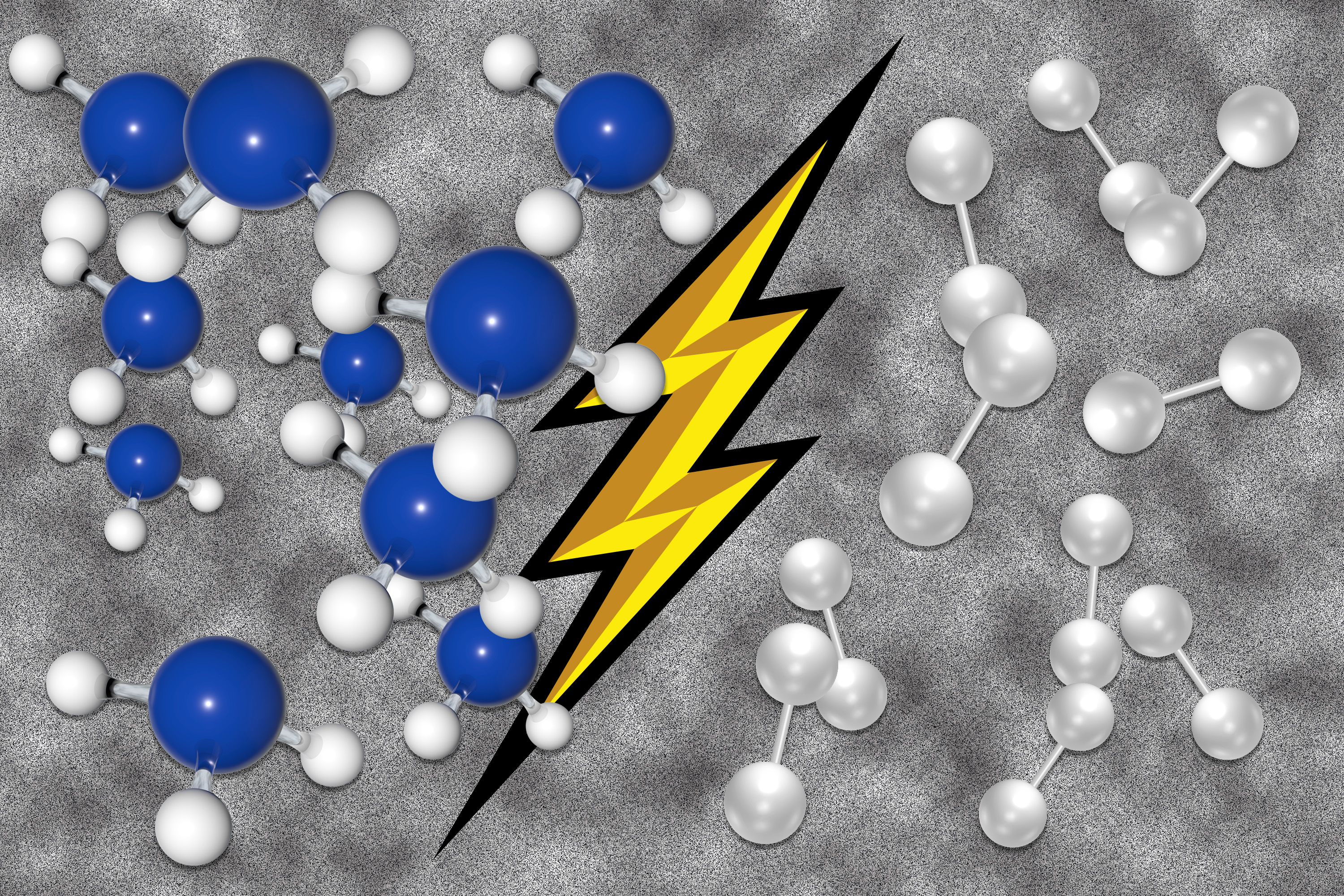
MIT researchers have developed a new way to extract pure hydrogen gas from ammonia and other hydrogen carrier molecules. Their strategy, which uses electricity to speed up the extraction, reduces the temperature and energy required to recover hydrogen from these molecules. As a liquid that is easily stored and transported, ammonia (NH3) is an attractive carrier for hydrogen, which is used in fuel cells, semiconductor manufacturing, chemical processing, and other applications. However,...
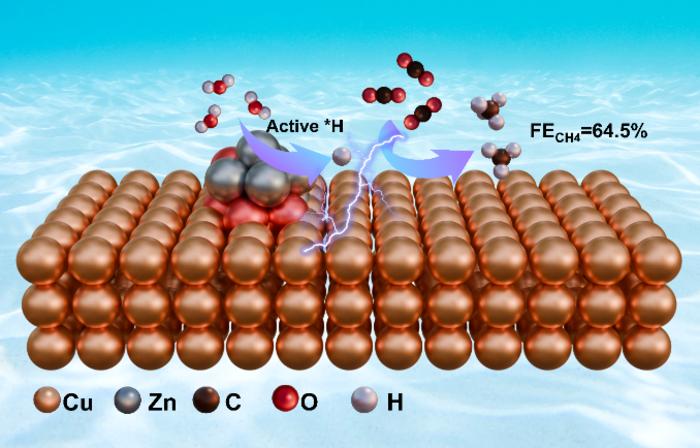
image: CuZn800@C was constructed via solvothermal method and utilizes the high-temperature volatility of zinc to prepare through calcination at different temperatures, which displays a high methane Faradaic efficiency of 64.5% and a remarkable partial current density of -551.3 mA/cm2 at -1.7 V vs. RHE, along with excellent stability. Zn and Cu form a tandem reaction system. Zn sites promote water splitting to provide protons, while Cu sites reduce the energy barrier for *CO hydrogenation....
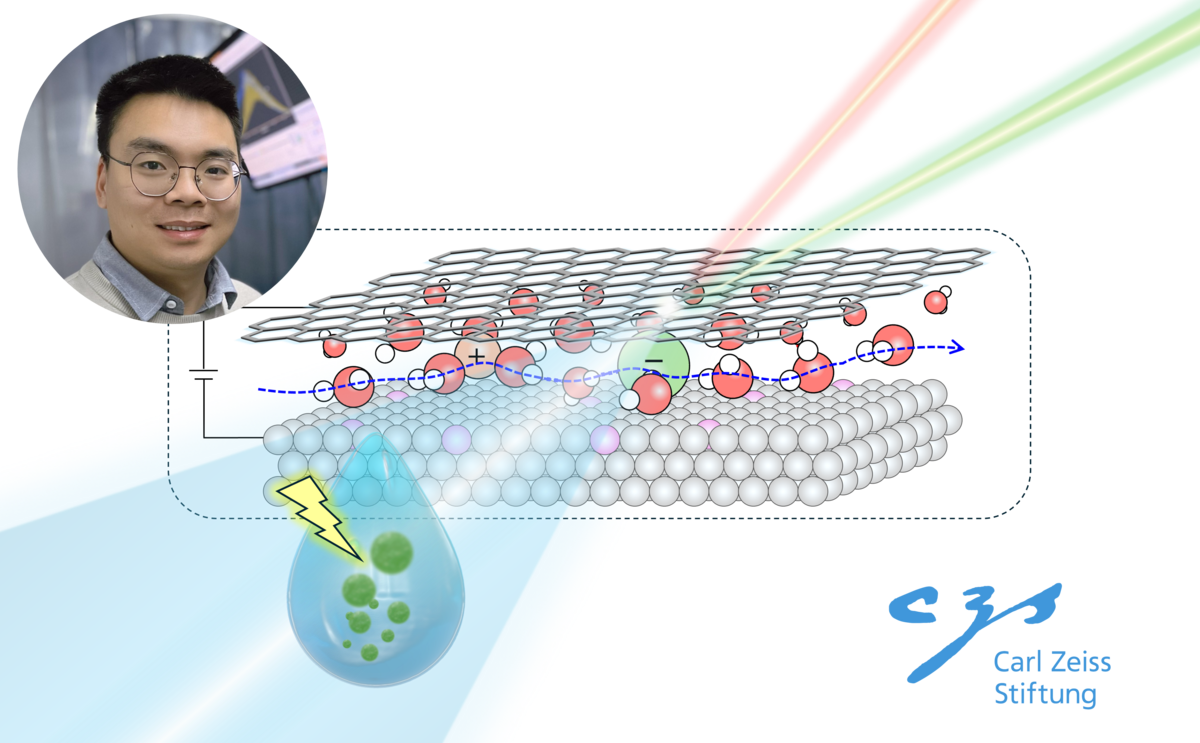
Electrochemical water splitting powered by renewable electricity is a promising pathway to sustainable hydrogen production, but its efficiency and scalability remain limited by costly catalysts and slow reaction kinetics. With €1.5 million in funding from the Carl-Zeiss-Stiftung for five years, Dr. Yongkang Wang and his team will pursue a new approach by visualizing and controlling water at the molecular level, using nanoscale confinement to shape its structure and dynamics at catalytic...
