Taiwan Semiconductor Manufacturing Company has announced plans to manufacture advanced three-nanometer chips at its second fabrication plant in Kumamoto, Japan, marking a significant upgrade from its original production roadmap for the facility.
TSMC CEO C.C. Wei delivered the news to Japanese Prime Minister Sanae Takaichi during a Thursday meeting in Tokyo, just days before Japan's general election. The announcement represents a strategic shift for the facility, which will now produce far more sophisticated chips than the 6nm to 12nm processors initially planned.
"We are seeking to meet soaring demand for AI chips," Wei explained. "This fab will further contribute to local economic growth and, most importantly, form a foundation for Japan's AI business."
The second Kumamoto facility is scheduled to begin operations in late 2027, following the first plant's launch into mass production in late 2024. The three-nanometer chips planned for production are critical components in high-performance computing and AI server infrastructure.
While TSMC has not disclosed the investment amount, Japanese newspaper Yomiuri Shimbun estimates the figure at $17 billion.
Prime Minister Takaichi emphasized the strategic importance of the partnership: "The TSMC plant is a template for economic cooperation and shores up the global chip supply chain and Japan's economic society. We want to strengthen our win-win partnership."
Wei acknowledged the government's crucial role, stating that without Japan's support, "this giga-fab project would not be possible."
Global Expansion Accelerates
The Kumamoto development is part of TSMC's sweeping international expansion strategy. The company is deploying $165 billion in the United States—the largest foreign investment in American history—to build five wafer fabrication facilities, two advanced packaging plants, and a research and development center.
In Europe, TSMC launched construction of an $11 billion plant in Dresden, Germany in August 2024. The company holds a 70% stake in the European Semiconductor Manufacturing Company venture, with the German government providing subsidies covering approximately half the total investment.
Meanwhile, TSMC plans to construct 11 wafer manufacturing facilities and four advanced packaging plants in Taiwan over the coming years.
Addressing Domestic Concerns
The aggressive overseas expansion has sparked anxiety in Taiwan about potential technology transfer and job losses. TSMC has repeatedly assured stakeholders that it will maintain its most advanced production capabilities at home.
"The company intends to add capacity for more mature semiconductors overseas to alleviate resource constraints at home," TSMC stated. Executive Yuan spokeswoman Michelle Lee added that "all TSMC's decisions are based on customer needs, and their overseas expansion is not intended to replace Taiwan."
Strong Financial Performance Fuels Growth
TSMC's expansion is backed by robust financial results. The company reported 2025 revenue of NT$3.81 trillion ($120.6 billion), a 31.6% increase year-over-year. Net income surged 46.4% to NT$1.72 trillion ($54.4 billion).
"Our business in the fourth quarter was supported by strong demand for our leading-edge process technologies," said Wendell Huang, TSMC's Senior Vice President and Chief Financial Officer.
For the first quarter of 2026, TSMC projects revenue between $34.6 billion and $35.8 billion, with gross profit margins of 63-65% and operating profit margins of 54-56%.
Industry Outlook
The broader semiconductor sector is experiencing unprecedented growth. The Semiconductor Industry Association announced Friday that global chip sales reached a record $791.7 billion in 2025, up 25.6% from the previous year, and are projected to exceed $1 trillion in 2026.
"The global semiconductor industry posted its highest-ever annual sales in 2025," said SIA President and CEO John Neuffer. "Semiconductors are the foundation of nearly all modern technology, and emerging technologies like AI, IoT, 6G, autonomous driving, and others will continue to drive robust demand for chips."

Thermo Fisher Scientific Introduces the Vulcan™ Automated Lab to Transform Semiconductor Analysis
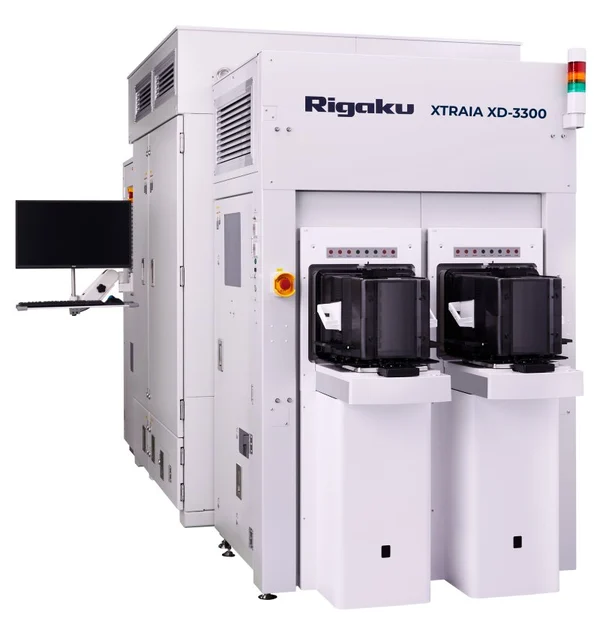
XTRAIA XD-3300 Tokyo, Japan; Rigaku Corporation, a global solution partner in X-ray metrology systems and a Group company of Rigaku...

Teledyne HiRel Semiconductors announces the availability of its latest rad-tolerant wideband 50 GHz RF switch, model TDSW050A2T. This...
