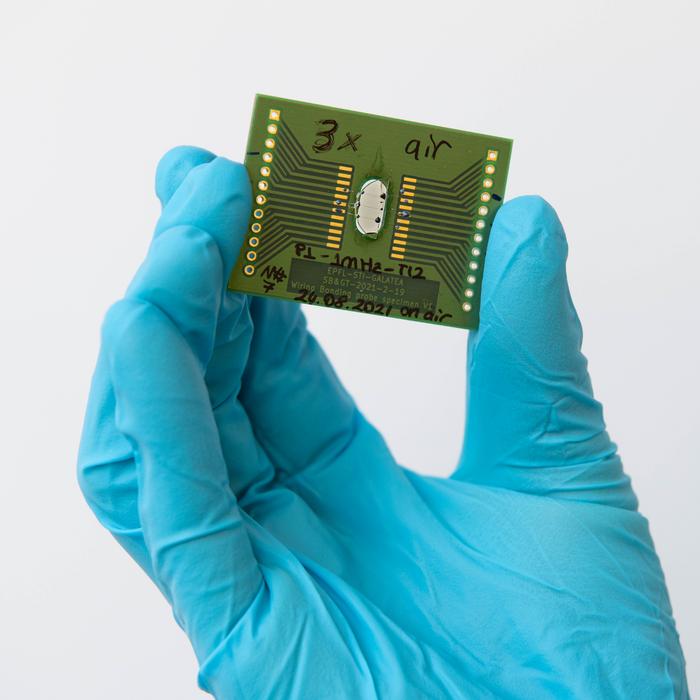
What happens when you expose tellurite glass to femtosecond laser light? That’s the question that Gözden Torun at the Galatea Lab, in a collaboration with Tokyo Tech scientists, aimed to answer in her thesis work when she made the discovery that may one day turn windows into single material light-harvesting and sensing devices. The results are published in PR Applied.
Interested in how the atoms in the tellurite glass would reorganize when exposed to fast pulses of high energy femtosecond laser light, the scientists stumbled upon the formation of nanoscale tellurium and tellurium oxide crystals, both semiconducting materials etched into the glass, precisely where the glass had been exposed. That was the eureka moment for the scientists, since a semiconducting material exposed to daylight may lead to the generation of electricity.
“Tellurium being semiconducting, based on this finding we wondered if it would be possible to write durable patterns on the tellurite glass surface that could reliably induce electricity when exposed to light, and the answer is yes,” explains Yves Bellouard who runs EPFL’s Galatea Laboratory. “An interesting twist to the technique is that no additional materials are needed in the process. All you need is tellurite glass and a femtosecond laser to make an active photoconductive material.”
Using tellurite glass produced by colleagues at Tokyo Tech, the EPFL team brought their expertise in femtosecond laser technology to modify the glass and analyze the effect of the laser. After exposing a simple line pattern on the surface of a tellurite glass 1 cm in diameter, Torun found that it could generate a current when exposing it to UV light and the visible spectrum, and this, reliably for months.
“It’s fantastic, we’re locally turning glass into a semiconductor using light,” says Yves Bellouard. “We’re essentially transforming materials into something else, perhaps approaching the dream of the alchemist!”.
Reference
Femtosecond-laser direct-write photoconductive patterns on tellurite glass
Gözden Torun, Anastasia Romashkina, Tetsuo Kishi, and Yves Bellouard
https://journals.aps.org/prapplied/abstract/10.1103/PhysRevApplied.21.014008
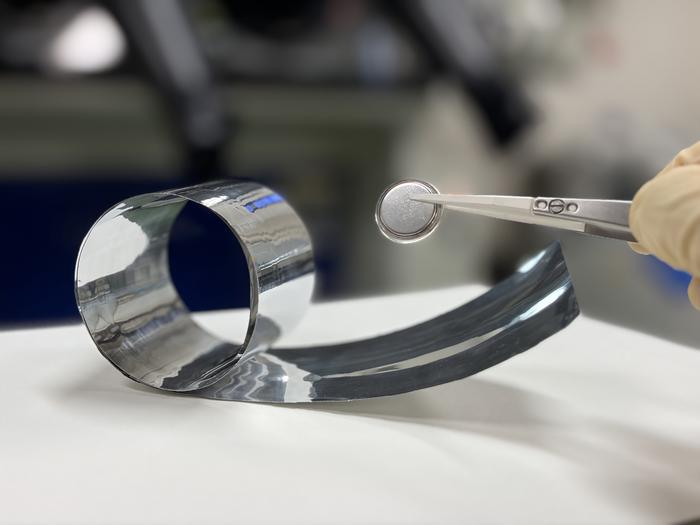
Adding a trace amount of manganese to aluminum foil anodes could make next-generation lithium-ion batteries lighter, cheaper and more sustainable. Researchers at Tohoku University and UACJ Corporation found that dissolving manganese into aluminum slows lithium transport and promotes a fine internal boundary network, letting lithium be removed more completely while the electrode stays dense and stable.
Sila has signed a multi-year commercial offtake agreement with Panasonic Energy Corporation of North America for its Titan Silicon anode material, with the potential for over $1 billion of offtake over time.
Smoltek Hydrogen AB and hyworx GmbH have signed a Letter of Intent to integrate Smoltek's porous transport electrode into Hyworx PEM electrolyzer stacks, starting with testing in a 4 kW stack.
This week in nanotech
21 deals tracked
New products
 Nion-compatible In Situ STEM Holders for Electrical BiasingHummingbird Scientific Featured
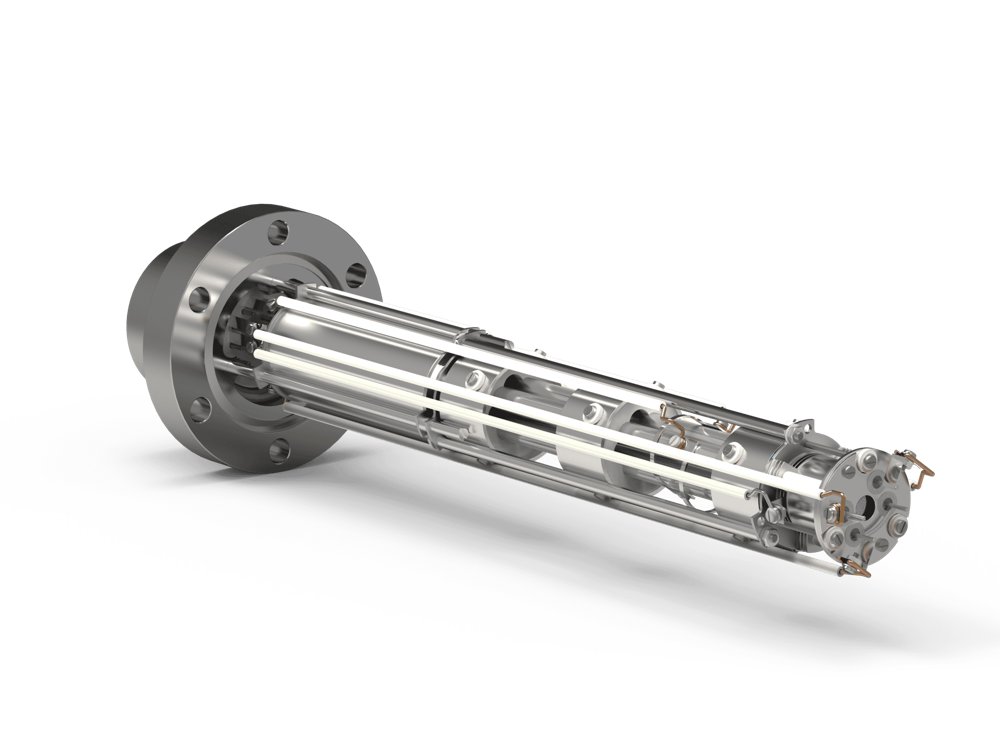 DLS-1 Mass Spectrometer for Fusion Gas AnalysisHiden Analytical Featured
 GiiiGii
Market insights
Last 30 days: Semiconductors & Electronics was the busiest vertical: 52 of 169 events (31%).
Money raised per month