São Paulo Research Foundation
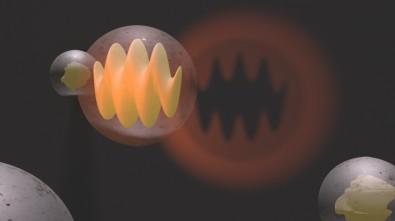
Energy is information. Lengthening the time during which a system is capable of retaining energy before losing it to the local environment is a key goal for the development of quantum information. This interval is called the "coherence time". Several studies have been performed with the aim of retarding decoherence.
A study conducted by researchers at the University of Campinas's Gleb Wataghin Institute of Physics (IFGW-UNICAMP) in São Paulo State, Brazil, in partnership with colleagues at the University of Michigan's Physics Department in Ann Arbor, USA, and Sungkyunkwan University's Advanced Institute of Nanotechnology (SAINT SKKU) in Seoul, South Korea, set out to understand the decoherence process on the femtosecond (10-15 s) timescale. An article describing the results was published in Physical Review Letters.
In the study, interactions between excitons (excited electrons) and phonons (quantum units of vibrational energy in a crystal lattice) were observed on the femtosecond timescale. A femtosecond is one quadrillionth of a second.
The use of a revolutionary ultrafast spectroscopy technique with high temporal and spectral resolution was fundamental to the success of the study, which was supported by FAPESP via a Young Investigator Grant awarded to Lázaro Aurélio Padilha Junior and a project conducted in partnership with the University of Michigan under the aegis of the São Paulo Research Foundation - FAPESP program São Paulo Researchers in International Collaboration (SPRINT).
Padilha was one of the principal investigators for the project, and Diogo Burigo Almeida, then a postdoctoral fellow at Michigan, was one of the main authors. The experiment was performed with semiconducting nanocrystals dispersed in a colloidal solution at cryogenic temperatures.
"We found that when the material is excited [by light], the light it emits changes color in under 200 femtoseconds. This is due to interaction between excitons and phonons. The excitons transfer part of the energy they receive to the crystal lattice. This causes a change of frequency and hence a change of emission color," Padilha told.
Their study was the first to observe this phenomenon. "It had never been observed before because the amount of energy transferred from each exciton to the lattice is tiny, corresponding to 26 millielectron volts (26x10-3 eV), and the process takes a very short time, lasting under 200 femtoseconds (200x10-15 s). Similar phenomena have been observed but on far greater timescales and due to other processes. We accessed hitherto unknown physical relations," he said.
He and his research group long studied semiconductor nanomaterials with sizes between 1 nanometer and 10 nm. A major challenge arises when promoting the growth of these materials, as each individual unit grows differently; hence, the spectrum of light emitted by the material after excitation is broadened, with the various components emitting at slightly different frequencies, and the color of the emission is less precise. When a single particle is isolated, the spectrum becomes narrower, but signal detection is retarded. In other words, spectral resolution is enhanced but at the loss of temporal resolution.
"About five years ago we began working with a technique that can pick out subsets comprising a few thousand identical particles from a set of 1020 nm particles," Padilha said. "This has enabled us to achieve very fine and precise spectral resolution, as well as fine temporal resolution. In this study, we obtained single-particle spectral resolution for a group of particles in an exceptionally short time."
As noted, this experimental solution enabled the researchers to access hitherto unknown physical processes, such as the ultrafast exciton-phonon interaction. It is worth recalling that in condensed matter physics, the phonon is a quasi-particle associated with the quantum of vibration that propagates in a crystal lattice.
There are no immediate technological applications for the results obtained, but in the not-too-distant future, knowledge of physical interactions on the femtosecond timescale can help scientists control the structure of materials such that excitons retain energy from electrical or light impulses for longer periods, retarding decoherence in quantum systems.
"Prolonging coherence is key to the success of devices such as optical switches and single-photon emitters," Almeida said. "Actually, what you aim to do is reduce energy waste to a minimum. When the material changes color, it means it's losing energy. We discovered that this loss is extremely fast. That's what we want to delay."
Non-Markovian Exciton-Phonon Interactions in Core-Shell Colloidal Quantum Dots at Femtosecond Timescales
A. Liu, D. B. Almeida, W. K. Bae, L. A. Padilha, and S. T. Cundiff
Physical Review Letter Vol. 123, Iss. 5, 7403 – Published 2 August 2019
DOI: 10.1103/PhysRevLett.123.057403
Fundação de Amparo à Pesquisa do Estado de São Paulo (FAPESP)
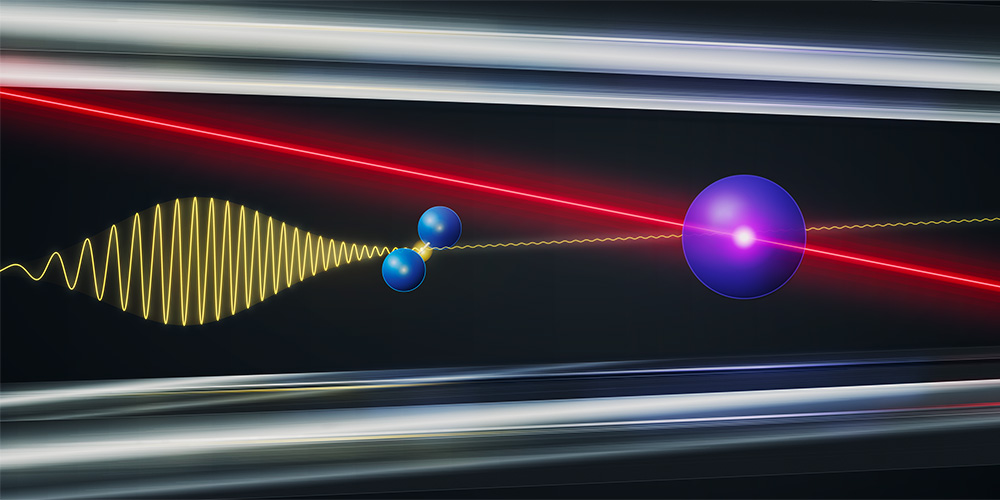
Researchers at the University of Basel have identified and coherently controlled so called forbidden vibrational transitions in individual trapped nitrogen molecular ions without destroying them. Using quantum logic spectroscopy, a single calcium ion served as messenger, letting the team probe the molecule repeatedly and determine its fundamental vibrational frequency ten times more precisely than before.
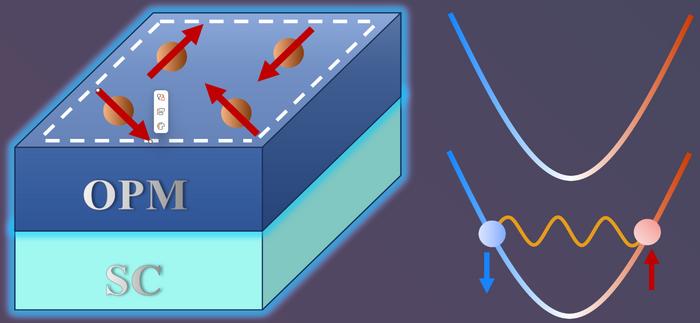
Odd-parity magnets host an intrinsic hidden Zeeman field that lifts Kramers degeneracy without any applied field, researchers report. Using an f-wave magnet model on a triangular lattice, the team shows how non-relativistic spin splitting and this hidden field combine to stabilize s-wave superconductivity far beyond the Pauli limit.

Rhombohedral hexalayer graphene, in which six carbon sheets are stacked with a slight lateral offset like staircase steps, hosts both superconductivity and electrically controllable orbital magnetism, researchers report in Nature Physics. The arrangement yields a rich collection of quantum states in a simple carbon-based material, positioning rhombohedral multilayer graphene as a platform for probing the fundamental mechanisms of superconductivity and magnetism and potentially for new ways of…
This week in nanotech
9 deals tracked
New products
 Ti-WCMBN Nanomaterialia Featured
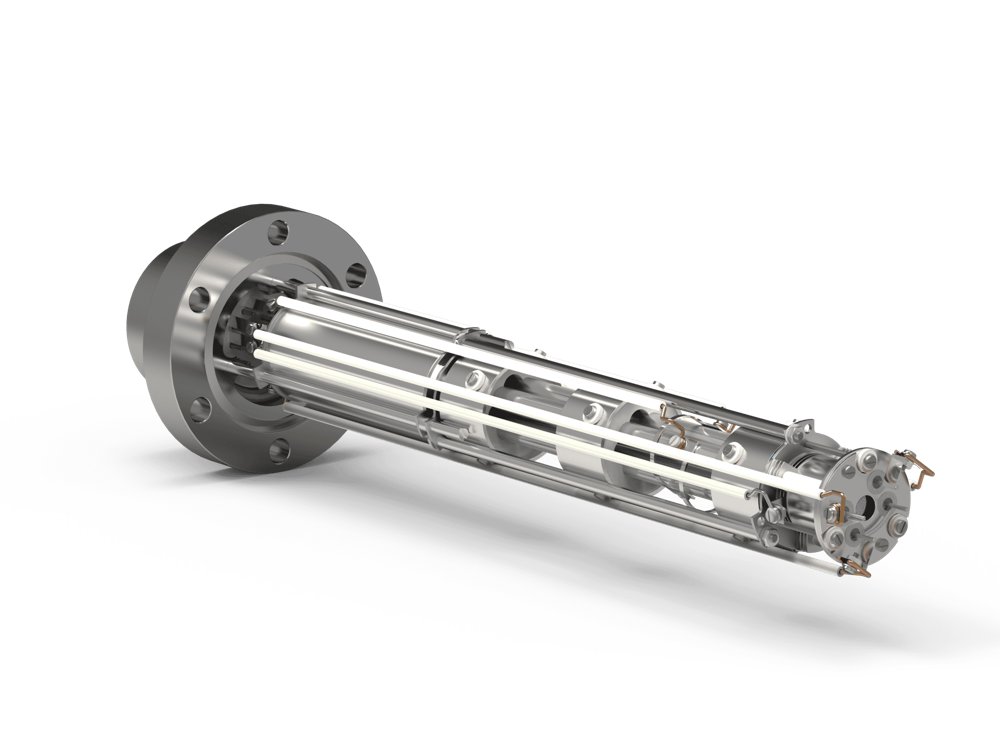 DLS-1 Mass Spectrometer for Fusion Gas AnalysisHiden Analytical Featured
 GHK-CuPeoples Peps
Market insights
Last 30 days: Semiconductors & Electronics was the busiest vertical: 39 of 130 events (30%).
Money raised per month