EPFL
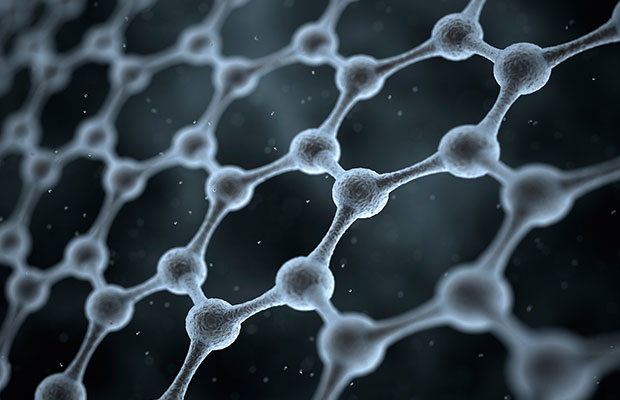
Graphene is a modern wonder material possessing unique properties of strength, flexibility and conductivity whilst being abundant and remarkably cheap to produce, lending it to a multitude of useful applications—especially true when these 2-D atom-thick sheets of carbon are split into narrow strips known as Graphene Nanoribbons (GNRs).
New research published in EPJ Plus, authored by Kristians Cernevics, Michele Pizzochero, and Oleg V. Yazyev, Ecole Polytechnique Federale de Lausanne (EPFL), Lausanne, Switzerland, aims to better understand the electron transport properties of GNRs and how they are affected by bonding with aromatics. This is a key step in designing technology such chemosensors.
"Graphene nanoribbons—strips of graphene just few nanometres wide—are a new and exciting class of nanostructures that have emerged as potential building blocks for a wide variety of technological applications," Cernevics says.
The team performed their investigation with the two forms of GNR, armchair and zigzag, which are categorized by the shape of the edges of the material. These properties are predominantly created by the process used to synthesize them. In addition to this, the EPFL team experimented p-polyphenyl and polyacene groups of increasing length.
"We have employed advanced computer simulations to find out how electrical conductivity of graphene nanoribbons is affected by chemical functionalisation with guest organic molecules that consist of chains composed of an increasing number of aromatic rings," says Cernevics.
The team discovered that the conductance at energies matching the energy levels of the corresponding isolated molecule was reduced by one quantum, or left unaffected based on whether the number of aromatic rings possessed by the bound molecule was odd or even. The study shows this 'even-odd effect' originates from a subtle interplay between the electronic states of the guest molecule spatially localized on the binding sites and those of the host nanoribbon.
"Our findings demonstrate that the interaction of the guest organic molecules with the host graphene nanoribbon can be exploited to detect the 'fingerprint' of the guest aromatic molecule, and additionally offer a firm theoretical ground to understand this effect," Cernevics concludes: "Overall, our work promotes the validity of graphene nanoribbons as promising candidates for next-generation chemosensing devices."
These potentially wearable or implantable sensors will rely heavily on GRBs due to their electrical properties and could spearhead a personalized health revolution by tracking specific biomarkers in patients.
Reference:
Kristiāns Čerņevičs, Michele Pizzochero & Oleg V. Yazyev
Contact:
Kristiāns Čerņevičs
Doctoral Assistant, Chair of Computational Condensed Matter Physics
Institute of Physics, Ecole Polytechnique Fédérale de Lausanne (EPFL)
kristians.cernevics@epfl.ch
IMB-CNM-CSIC is a partner in POLARIS, an EIC Pathfinder Open 2026 project led by ICN2 to develop graphene-based brain implants. Researcher Anton Guimerà leads the institute's contribution.
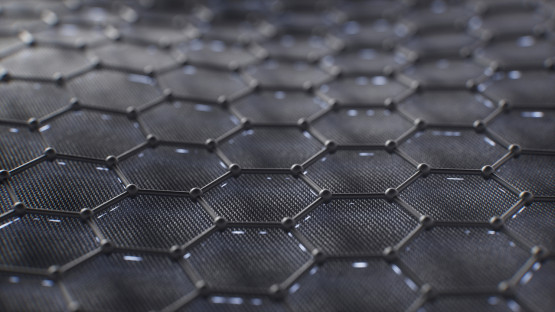
Cornell researchers found that applying voltage to a four-layer graphene stack slides the layers between atomic stacking arrangements, reversibly switching the material between nonmagnetic and magnetic states. The effect, reported in Nature Nanotechnology, exploits weak van der Waals bonds rather than breaking chemical bonds, and the resulting state persists after voltage is removed.
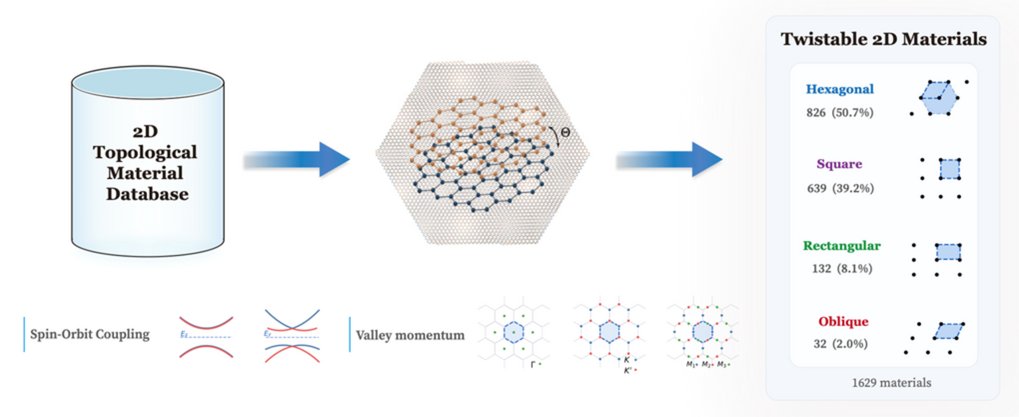
Two new studies catalog nearly 9,000 two-dimensional materials and identify 61 semimetals and 1,568 insulators suited to twistronics, the stacking and rotating of atomically thin layers to engineer narrow electronic bands. The work maps topological electronic structures, predicts promising twisted bilayers such as tin diselenide and hafnium disulfide, and confirms several candidates can be grown in bulk and exfoliated into working devices, giving researchers a systematic route to designer…
This week in nanotech
$271M raised
6 funding rounds · 26 deals tracked
New products
 Nion-compatible In Situ STEM Holders for Electrical BiasingHummingbird Scientific Featured
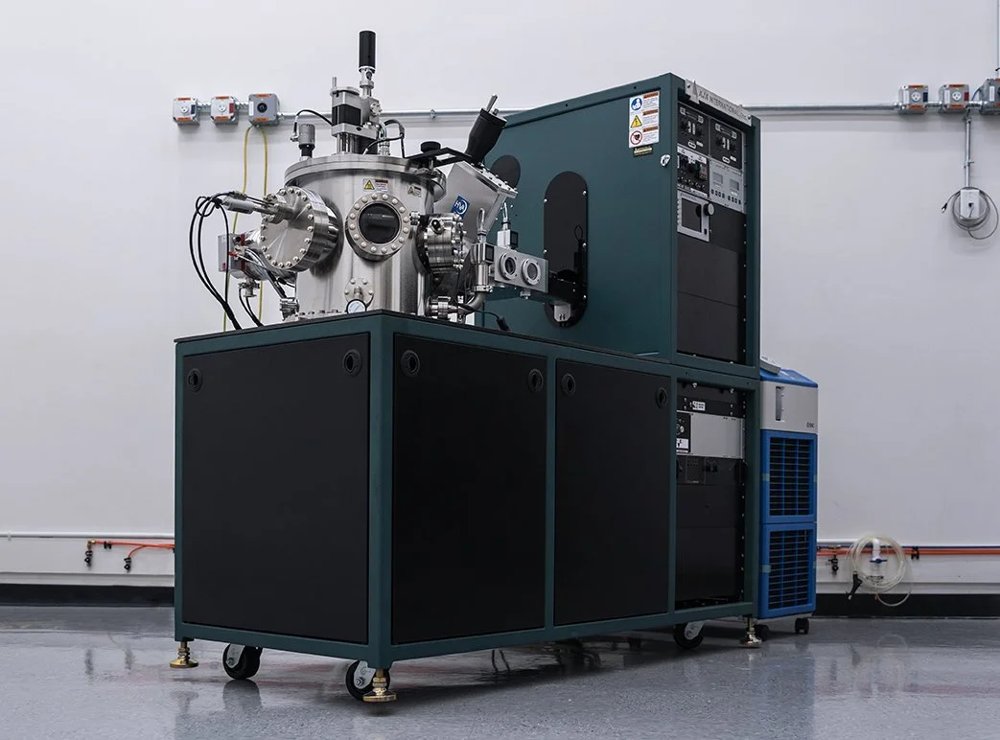 Orion Sputtering Deposition SystemsAJA International Featured
 SunscreenUnchained Labs
Market insights
Last 30 days: Quantum Technologies drew the most money: $3.17B.
Money raised per month