Natural gas is more clean and efficient than diesel, but it's also more volatile and requires a bigger, heavier, reinforced storage tank, complicating the vehicle design process.
Researchers at University of Pittsburgh are attempting to solve this problem with a new and improved natural gas storage system.
The storage system doesn't actually exist yet. Currently, researchers are trying to find an ideal material to incorporate into their system. Scientists at Pittsburgh's Swanson School of Engineering are exploring the qualities of various metal-organic frameworks capable of absorbing natural gas.
Metal-organic frameworks, or MOFs, are compounds combining metal ions with organic molecules to form 3-D porous structures.
Storing natural gas inside an empty container requires intense pressure, but a porous crystal, sponge-like material promises to absorb and store natural gas more efficiently -- without the extra weight.
The main problem facing the researchers is that these porous crystal/gas systems produce lots of heat as they absorb the gas, limiting the speed at which they can be filled.
A new paper by Pittsburgh researchers, published recently in the journal Physical Review Letters, explores the mechanics of heat transfer in these systems and highlight ways the systems might be able to dispel heat more quickly.
"Not a lot is known about how to make adsorbents dissipate heat quickly," lead study author Christopher E. Wilmer, assistant professor of chemical and petroleum engineering, explained in a press release. "This study illuminates some of the fundamental mechanisms involved."
Wilmer thinks MOFs will be of increasing importance as natural gas continues to play a larger role in the economy. Currently, the natural gas industry injects some $500 billion into the global economy, but U.S. storage infrastructure is lacking.
"By gaining a better understanding of heat transfer mechanisms at the atomic scale in porous materials, we could develop a more efficient material that would be thermally conductive rather than thermally insulating," Wilmer explained. "Beyond natural gas, these insights could help us design better hydrogen gas storage systems as well. Any industrial process where a gas interacts with a porous material, where heat is an important factor, could potentially benefit from this research."
University of Pittsburgh
#Nanomaterials #Nanoengineering
This week in nanotech
$281.1M raised
6 funding rounds · 36 deals tracked
New products
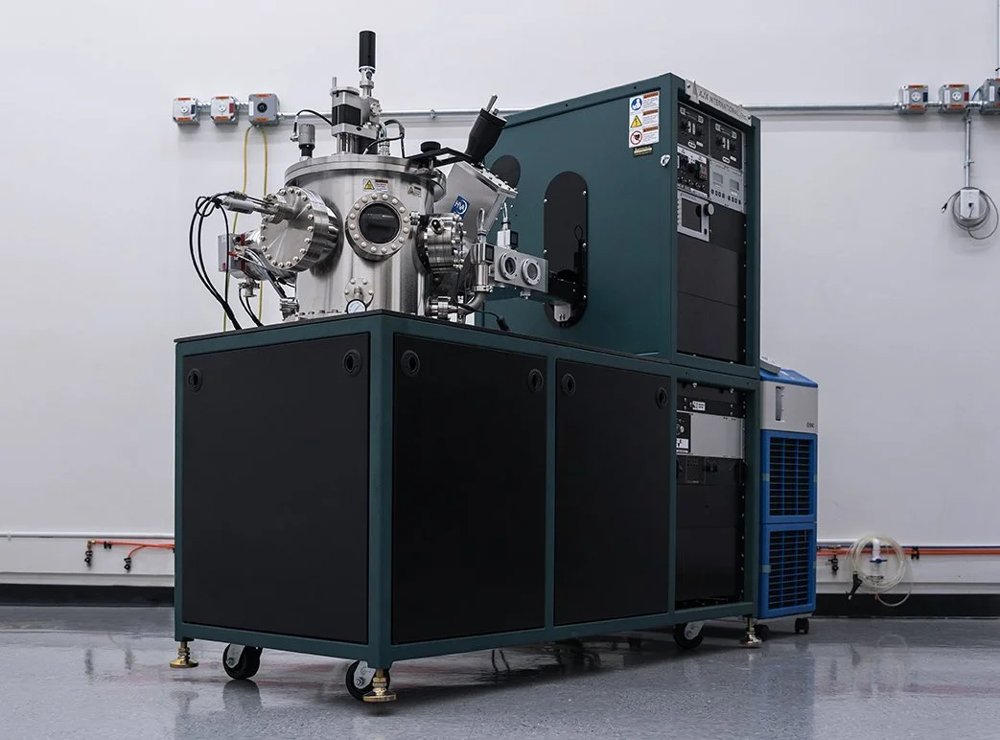 Orion Sputtering Deposition SystemsAJA International Featured
 Ti-WCMBN Nanomaterialia Featured
 Ionic® Purification SystemBionano Genomics, Inc.
Market insights
Last 30 days: Quantum Technologies drew the most money: $3.17B.
Money raised per month
Behind the deal
Who invested in Vertical Semiconductor’s $73M Grant?
See the investors with Insights Pro →