Technische Universität Dresden (TU Dresden)
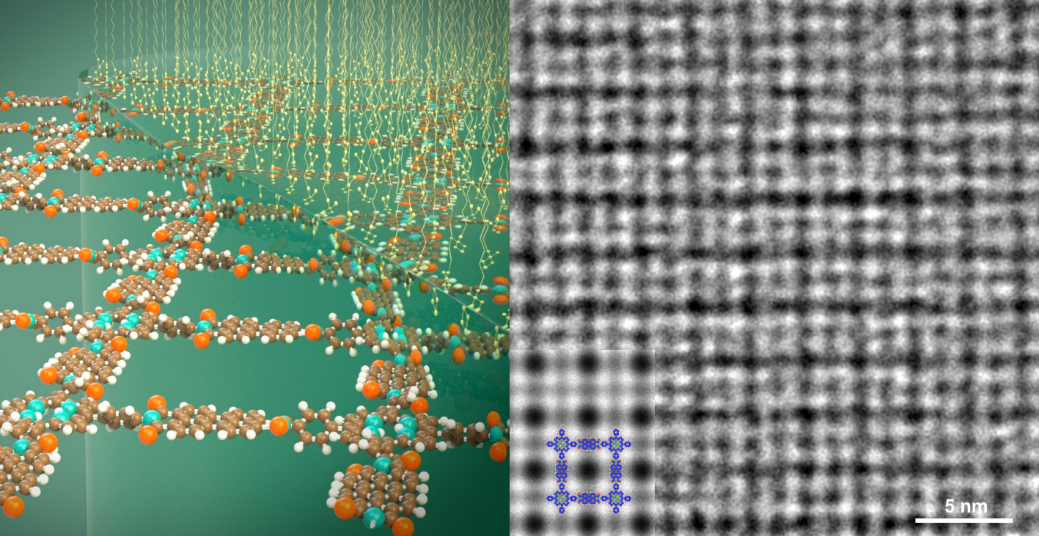
Scientists at the Center for Advancing Electronics Dresden (cfaed) at TU Dresden have succeeded in synthesizing sheet-like 2D polymers by a bottom-up process for the first time. A novel synthetic reaction route was developed for this purpose. The 2D polymers consist of only a few single atomic layers and, due to their very special properties, are a promising material for use in electronic components and systems of a new generation. The research result is a collaborative work of several groups at TU Dresden and Ulm University and was published this week in two related articles in the scientific journals Nature Chemistry and Nature Communications.
Ever since Hermann Staudinger discovered the linear polymers in 1920, it has been a dream of synthetic scientists to extend the polymerization into the second dimension. A two-dimensional (2D) polymer is a sheet-like monomolecular macromolecule consisting of laterally connected repeat units with end groups along all edges. Given the enormous chemical and structural diversity of the building blocks (i.e., monomers), 2D polymers hold great promise in the rational material design tailored for next-generation applications, such as membrane separation, electronics, optical devices, energy storage and conversion, etc. However, despite the tremendous developments in synthetic chemistry over the last century, the bottom-up synthesis of 2D polymers with defined structures remains a formidable task.
Since 2014, a group of scientists from Technische Universität Dresden and Universität Ulm joined forces to pursue this intriguing yet challenging goal. The research team led by Prof. Dr. Xinliang Feng (TU Dresden) innovatively developed a novel synthetic route: using surfactant monolayer as a soft template to guide the supramolecular organization of monomers and the subsequent 2D polymerization at an air-water interface. This synthetic methodology is now termed as surfactant-monolayer-assistant interfacial synthesis (SMAIS). By using the SMAIS method, Dr. Tao Zhang synthesized crystalline quasi-2D polyaniline films with lateral size ~50 cm2 and tunable thickness (2.6 - 30 nm). The superior charge transport properties and chemiresistivity toward ammonia and volatile organic compounds render the quasi-2D polyaniline films as promising electroactive materials for thin-film organic electronics. To further explore the potential of SMAIS, Mr. Kejun Liu, Dr. Tao Zhang, Dr. Zhikun Zheng and Dr. Renhao Dong achieved controlled synthesis of highly-crystalline few-layer 2D polyimide and polyamide for the first time. The 2D polymers have a thickness of only a few nanometers and can be readily transferred onto arbitrary substrates, opening up exciting opportunity for the integration of 2D polymers into next-generation devices and systems.
Along with the pivotal developments on the synthesis front, the transmission electron microscopy group led by Prof. Dr. Ute Kaiser (Uni Ulm) provided another indispensable pillar of the joint research. Since the development of aberration correction, high-resolution TEM imaging has been a powerful technique in structural characterization down to the atomic scale. Yet, hydrogen-containing organic materials are extremely prone to structural disintegration under the electron beam, rendering HRTEM imaging of 2D polymers a highly demanding mission. By utilizing the spherical-aberration-corrected HRTEM, Dr. Haoyuan Qi has successfully unraveled the micro-morphology, molecular structures, grain boundary and edge structures, of the synthetic 2D polymers: an achievement which is rarely reported in literature.
The molecular structures and overall crystallinity have been further elucidated via synchrotron grazing-incidence X-ray scattering (cfaed Chair for Organic Devices, Prof. Dr. Stefan Mannsfeld, TU Dresden). The group of Prof. Dr. Thomas Heine (TU Dresden) provided density-functional tight-binding calculations which offers significant insights into the atomistic structures of the synthetic 2D polymers.
On-water surface synthesis of crystalline two-dimensional polymers assisted by surfactant monolayers
Kejun Liu, Haoyuan Qi, Renhao Dong, Rishi Shivhare, Matthew Addicoat, Tao Zhang, Hafeesudeen Sahabudeen, Thomas Heine, Stefan Mannsfeld, Ute Kaiser, Zhikun Zheng, Xinliang Feng
Nature Chemistry (2019)
DOI: 10.1038/s41557-019-0327-5
Engineering crystalline quasi-two-dimensional polyaniline thin film with enhanced electrical and chemiresistive sensing performances
Tao Zhang, Haoyuan Qi, Zhongquan Liao, Yehu Horev, Luis Panes-Ruiz, Petko Petkov, Zhe Zhang, Rishi Shivhare, Panpan Zhang, Kejun Liu, Viktor Bezugly, Shaohua Liu, Zhikun Zheng, Stefan Mannsfeld, Thomas Heine, Gianaurelio Cuniberti, Hossam Haick, Ehrenfried Zschech, Ute Kaiser, Renhao Dong, Xinliang Feng
Nature Communications (2019)
DOI: 10.1038/s41467-019-11921-3
Contact information:
Xinliang Feng
Professor and head of the Chair of Molecular Functional Materials at TU Dresden
Xinliang.Feng@tu-dresden.de
Phone: +49 351 463-43251
Center for Advancing Electronics Dresden (cfaed) at TU Dresden
Teledyne DALSA has launched the Rad-icon 2329HS X-ray detector, featuring a 27 Mp CMOS sensor, 10X faster frame rate and 3X higher sensitivity than the previous model. It was shown at the NDTMA conference.
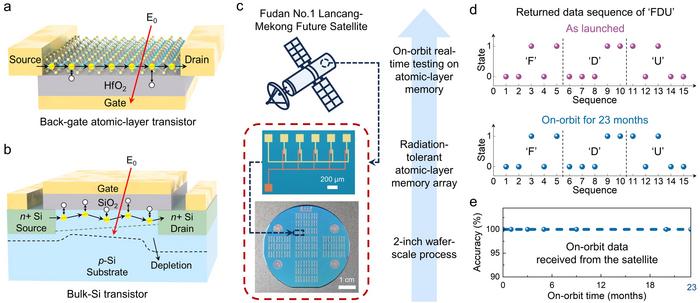
A monolayer MoS2 memory array fabricated at wafer scale on the Fudan No.1 satellite has returned stored data with 100% accuracy after 23 months in low Earth orbit, marking the first on-orbit real-time test of atomic-layer memory. Ground Co-60 gamma irradiation up to 20 Mrad left on/off current ratios stable across roughly eight orders of magnitude and preserved low-noise readout at picoampere levels.
GE HealthCare expanded global clinical and research collaborations to evaluate Photonova Spectra, its photon-counting CT system, across institutions in North America, Europe and Asia.
This week in nanotech
$18.9M raised
4 funding rounds · 31 deals tracked
New products
 DLS-1 Mass Spectrometer for Fusion Gas AnalysisHiden Analytical Featured
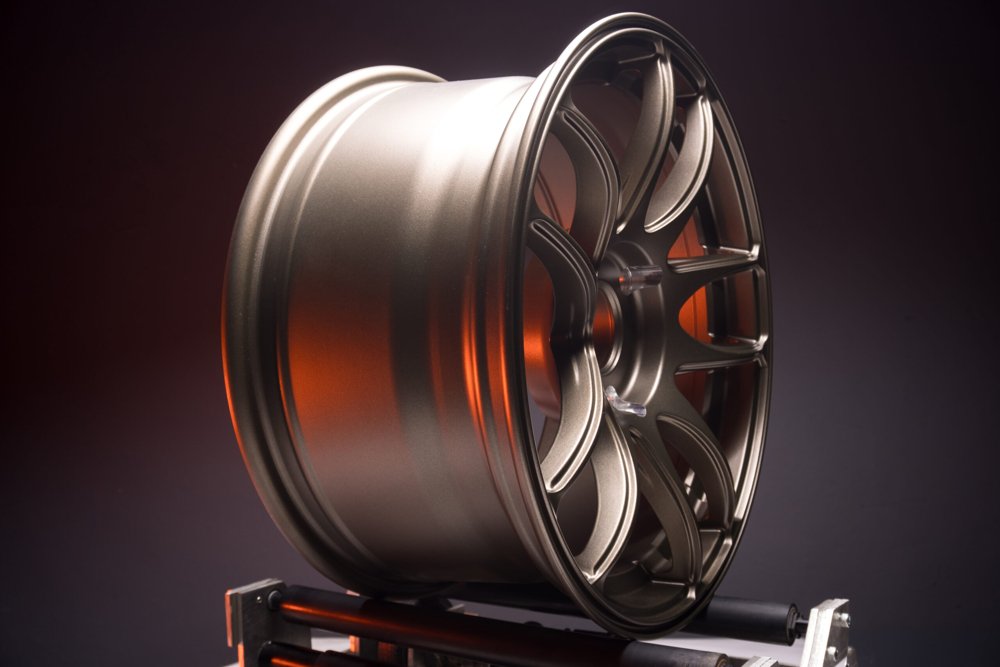 Ti-WCMBN Nanomaterialia Featured
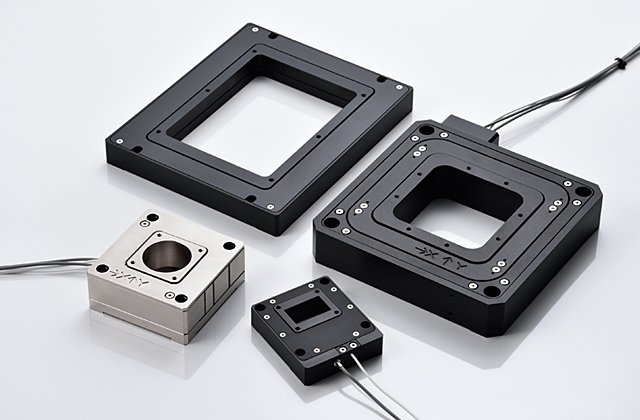 PKVH / PKVL ZAxis With an opening modelTHK PRECISION CO.,LTD.
Market insights
Last 30 days: Semiconductors & Electronics was the busiest vertical: 52 of 170 events (31%).
Money raised per month