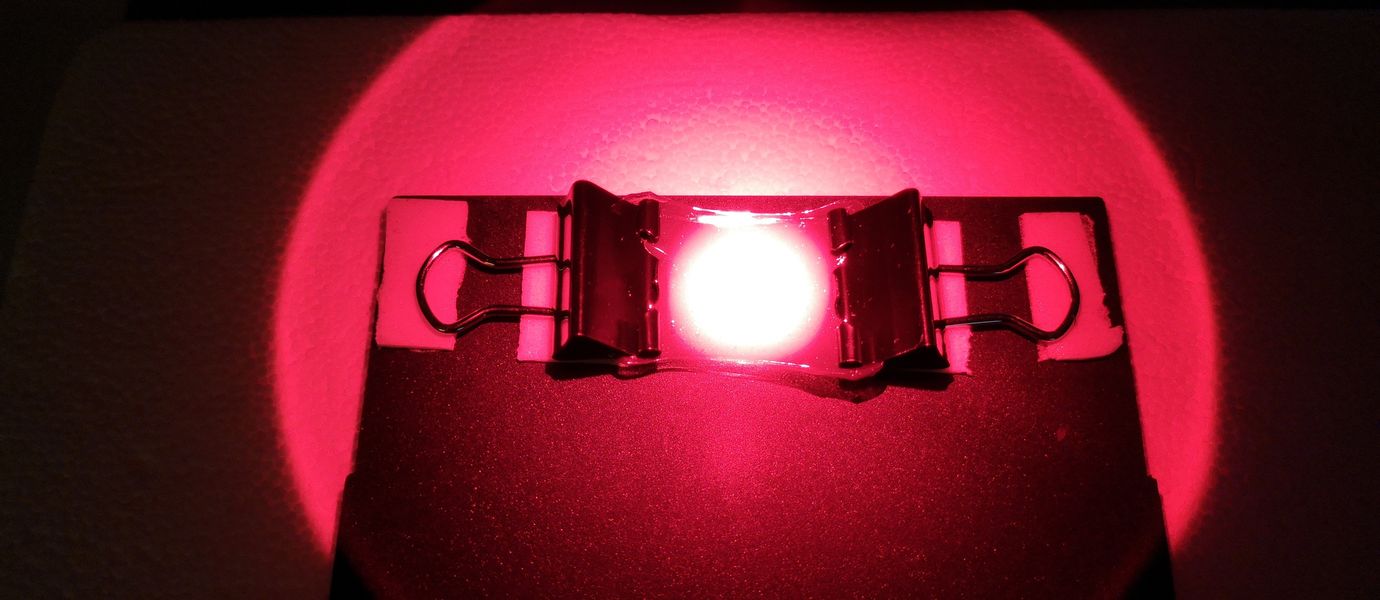
Folk belief says there’s a pot of gold at the end of the rainbow, but a new technology is turning that idea on its head – using particles of gold to make colours. With further work, the method developed at Aalto University could herald a new display technology.
The technique uses gold nanocylinders suspended in a gel. The gel only transmits certain colours when lit by polarized light, and the colour depends on the orientation of the gold nanocylinders. In a clever twist, a collaboration led by Anton Kuzyk’s and Juho Pokki’s research groups used DNA molecules to control the orientation of gold nanocylinders in the gel.
‘DNA isn’t just an information carrier – it can also be a building block. We designed the DNA molecules to have a certain melting temperature, so we could basically program the material,’ says Aalto doctoral candidate Joonas Ryssy, the study’s lead author. When the gel heats past the melting temperature, the DNA molecules loosen their grip and the gold nanocylinders change orientation. When the temperature drops, they tighten up again, and the nanoparticles go back to their original position.
The team tested several custom DNA molecules with different melting temperatures to find the best response. With the current system, the technology can produce red and green light. Once further work makes blue light transmission possible, this approach could be used to generate any colour by mixing red, green, and blue.
‘The whole concept – the underlying philosophy behind the work – is to use simple methods, simple materials and simple tools to generate colours in a dynamic and reversible way,’ says Sesha Manuguri, a postdoctoral researcher at Aalto who led the study.
For Manuguri, part of the elegance of the technique is that the gold nanocylinders accomplish both the necessary tasks. ‘The gold nanorods get hot when they’re lit, heating the gel, and they’re also responsible for colour formation. So, you don’t need separate heating elements,’ he says.
With further development, this approach could be used to produce colour in different kinds of displays. Because the materials are all biocompatible, this could be ideal for displays on wearable sensor devices, but the technology could also be used in billboards or other displays.
‘We’ve done the basic science to bring these building blocks together in a symbiotic manner to create something functional. Now it’s up to engineers to explore what kind of devices could be made,’ says Manuguri.
Reference
DNA-Engineered Hydrogels with Light-Adaptive Plasmonic Responses
Joonas Ryssy, Arttu J Lehtonen, Jacky Loo, Minh-Kha Nguyen, Jani Seitsonen, Yike Huang, Badri Narayanan Narasimhan, Juho Pokki, Anton Kuzyk, Sesha Manuguri
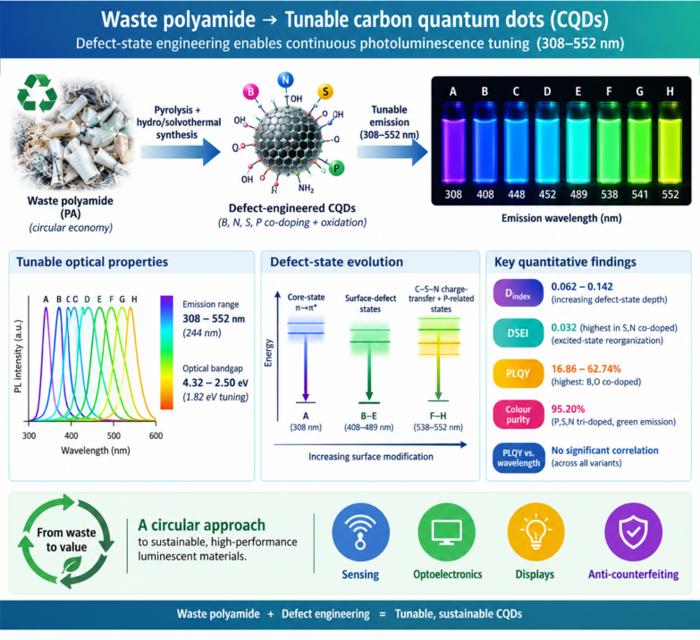
Waste polyamide-derived CQDs show continuous photoluminescence tuning from 308 to 552 nm through sequential defect-state engineering, with optical transition energies decreasing from 4.32 to 2.50 eV. @Christian Ebere Enyoh from Saitama University Carbon quantum dots (CQDs) are fluorescent carbon nanomaterials with potential applications in sensing, optoelectronics, displays, anti-counterfeiting, and environmental technologies. Their optical properties can be adjusted by modifying the carbon...
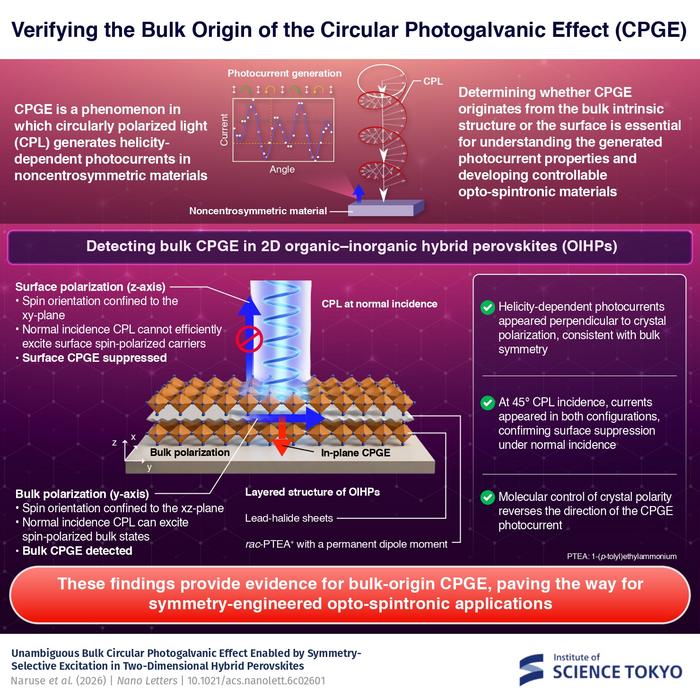
The researchers used circularly polarized light at normal incidence and found that helicity-dependent photocurrents appeared perpendicular to the crystal’s polarization but vanished when measured parallel to it, supporting a bulk origin of CPGE. @Institute of Science Tokyo The circular photogalvanic effect (CPGE), a phenomenon that generates helicity-dependent photocurrents in noncentrosymmetric materials, can originate purely from a crystal's internal structure without contribution from the...
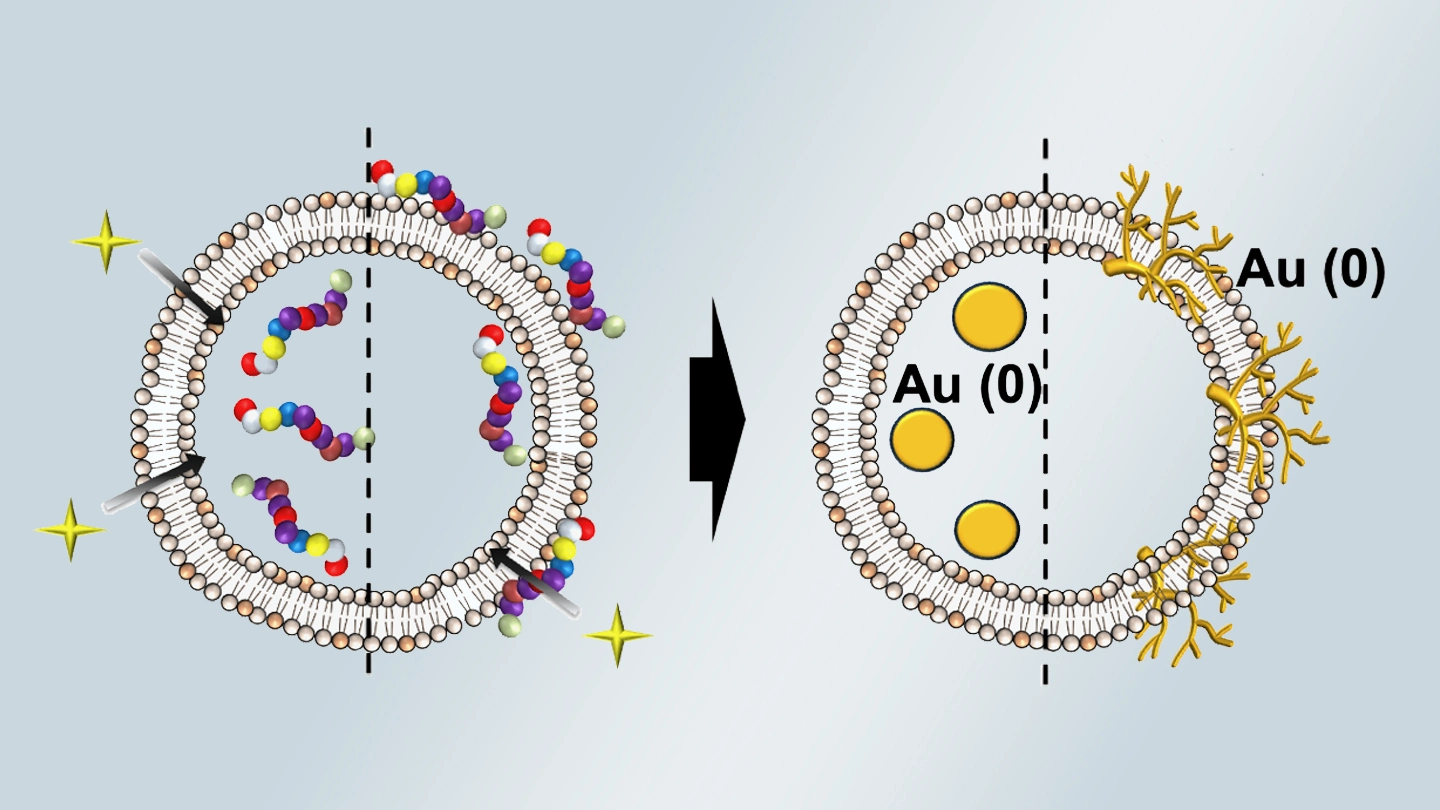
Summary of gold nanoparticle growth programming in liposome based on localization of biomineralization peptide The position of biomineralization peptides within liposomes can influence how gold nanoparticles grow, reports a research team from Institute of Science Tokyo. Peptides localized at the membrane interface promote branched structures, while those confined to the liposome interior favor spherical nanoparticles. The findings offer a new strategy for controlling nanoscale reaction...
