Ruhr-Universität Bochum
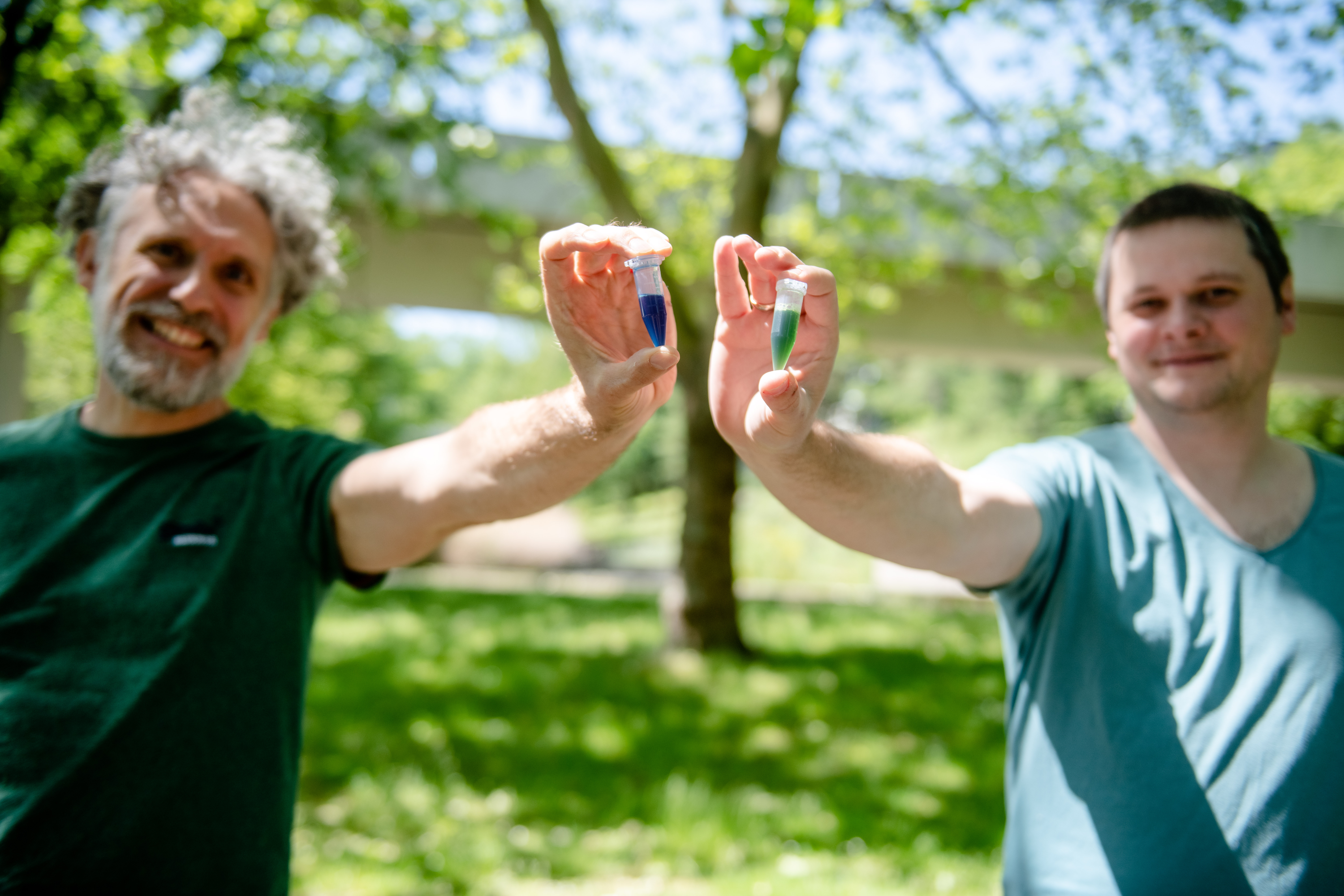
Potential sources of renewable energy include protein complexes that are responsible for photosynthesis. However, their efficiency in technical applications still leaves much to be desired. For example, they cannot convert green light into energy. A research team has successfully closed this so-called green gap by combining a photosynthesis protein complex with a light-collecting protein from cyanobacteria.
Imitating plants, algae and bacteria
Biosolar cells are an innovative concept for converting sunlight into electrical energy. They are manufactured using biological components from nature. At their core are so-called photosystems: large protein complexes that are responsible for energy conversion in plants, algae and cyanobacteria. Photosystem II, PSII for short, plays a central role in the process, because it can use water as an electron source for the generation of electricity.
Cooperation so far unsuccessful in the test tube
"However, as unique as PSII is, its efficiency is limited, because it can use merely a percentage of the sunlight," explains Professor Marc Nowaczyk, Head of the Molecular Mechanisms of Photosynthesis project group at RUB. When it comes to the so-called green gap in particular, PSII is almost inactive. "Cyanobacteria have solved the problem by forming special light-collecting proteins, i.e. phycobilisomes, which also make use of this light. This cooperation works in nature, but not yet in the test tube."
Super complexes use twice as many photons of the green gap
In collaboration with the research group of Professor Wolfgang Schuhmann at RUB and the Israeli research group of Professor Noam Adir, Nowaczyk's team has succeeded in producing a two-component bioelectrode. The main difficulty was the functional interaction of the multiprotein complexes, some of which were combined across species.
The researchers stabilised these super complexes using short-chain chemical crosslinkers that permanently fix the proteins at a very short distance from each other. In the next step, they inserted them into appropriate electrode structures. "We mastered this challenge by using customised, three-dimensional and transparent electrodes in combination with redox-active hydrogels," says Dr. Volker Hartmann, lead author of the study. This design enabled the researchers to use twice as many photons within the green gap, compared to a system without any light collection complexes.
Promising interim stage
The assembly of protein complexes in the test tube is considered a promising interim stage in the development of biological solar cells. The advantages of different species can thus be functionally combined in semi-artificial systems. In future, the researchers will be mainly focusing on optimising the production and life span of the biological components.
Improved quantum efficiency in an engineered light harvesting/photosystem II super-complex for high current density biophotoanodes
Volker Hartmann, Dvir Harris, Tim Bobrowski, Adrian Ruff, Anna Frank, Thomas Günther Pomorski, Matthias Rögner, Wolfgang Schuhmann, Noam Adir, Marc M. Nowaczyk
Journal of Materials Chemistry A (2020)
DOI: 10.1039/D0TA03444D
Contact information:
RUB Chair for Plant Biochemistry, Faculty of Biology and Biotechnology
marc.m.nowaczyk@rub.de
Phone: +49 234 32 23657
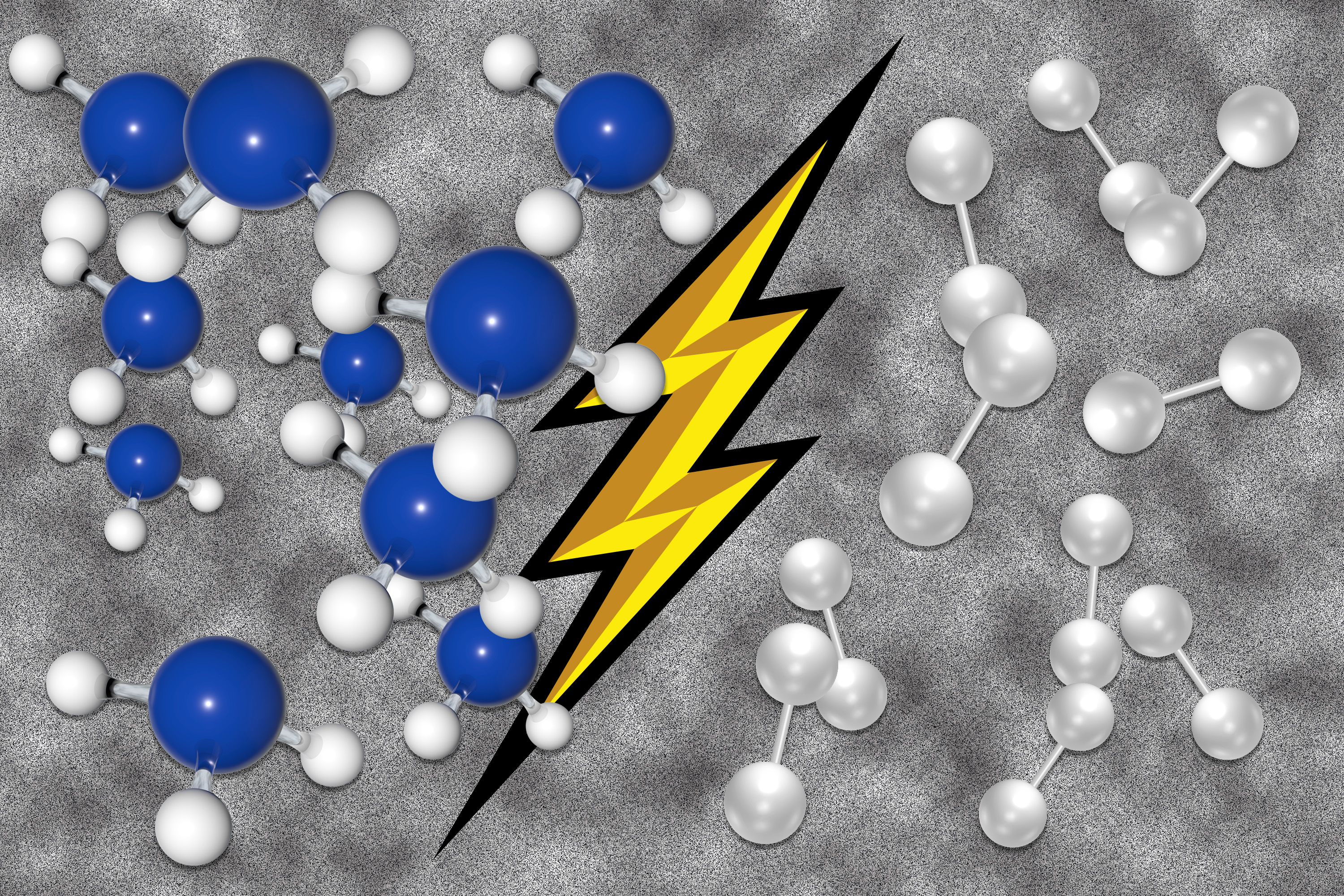
MIT researchers have developed a new way to extract pure hydrogen gas from ammonia and other hydrogen carrier molecules. Their strategy, which uses electricity to speed up the extraction, reduces the temperature and energy required to recover hydrogen from these molecules. As a liquid that is easily stored and transported, ammonia (NH3) is an attractive carrier for hydrogen, which is used in fuel cells, semiconductor manufacturing, chemical processing, and other applications. However,...
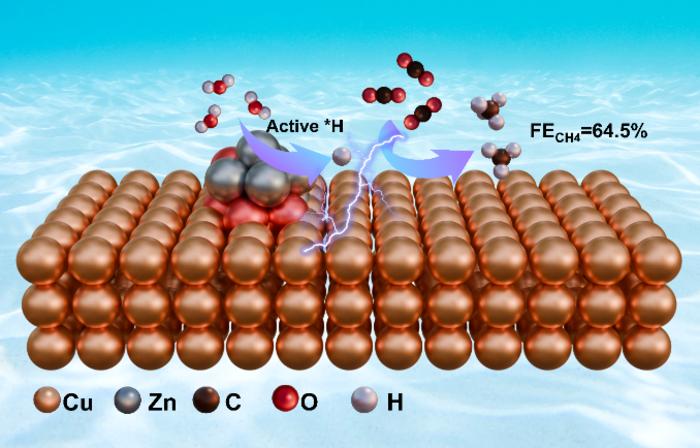
image: CuZn800@C was constructed via solvothermal method and utilizes the high-temperature volatility of zinc to prepare through calcination at different temperatures, which displays a high methane Faradaic efficiency of 64.5% and a remarkable partial current density of -551.3 mA/cm2 at -1.7 V vs. RHE, along with excellent stability. Zn and Cu form a tandem reaction system. Zn sites promote water splitting to provide protons, while Cu sites reduce the energy barrier for *CO hydrogenation....
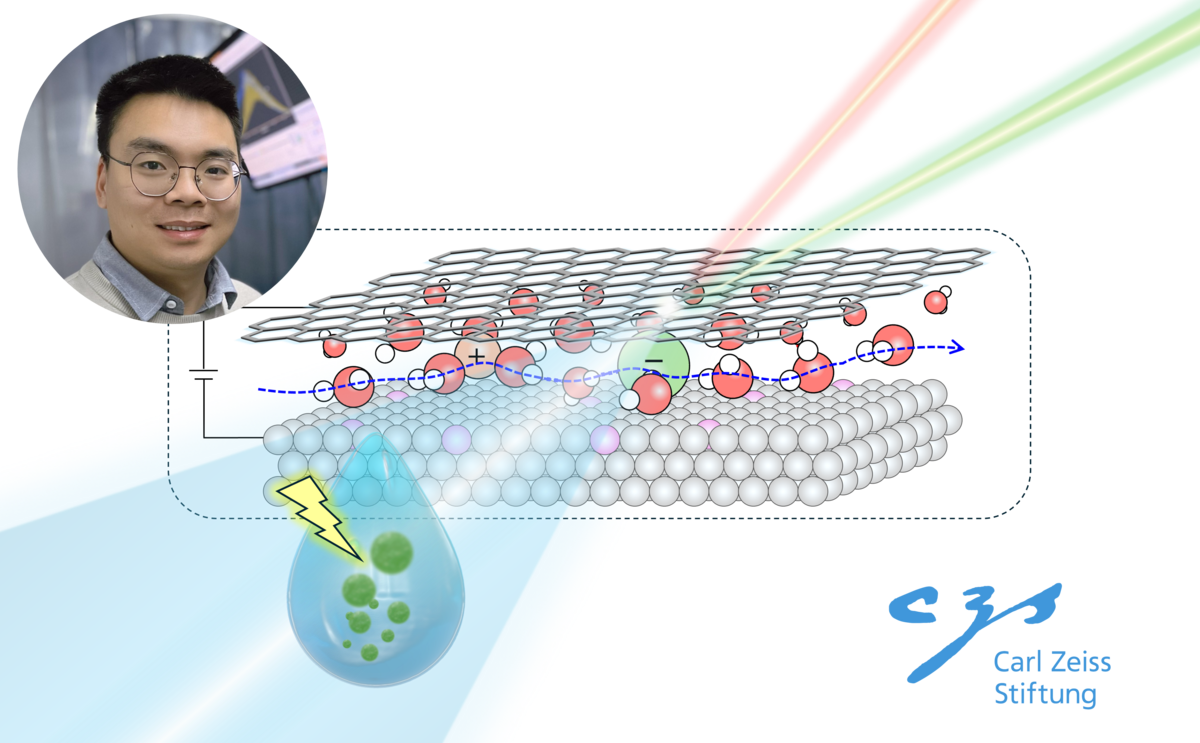
Electrochemical water splitting powered by renewable electricity is a promising pathway to sustainable hydrogen production, but its efficiency and scalability remain limited by costly catalysts and slow reaction kinetics. With €1.5 million in funding from the Carl-Zeiss-Stiftung for five years, Dr. Yongkang Wang and his team will pursue a new approach by visualizing and controlling water at the molecular level, using nanoscale confinement to shape its structure and dynamics at catalytic...






