U.S. Department of Energy's Office of Science / Brookhaven National Laboratory (BNL)
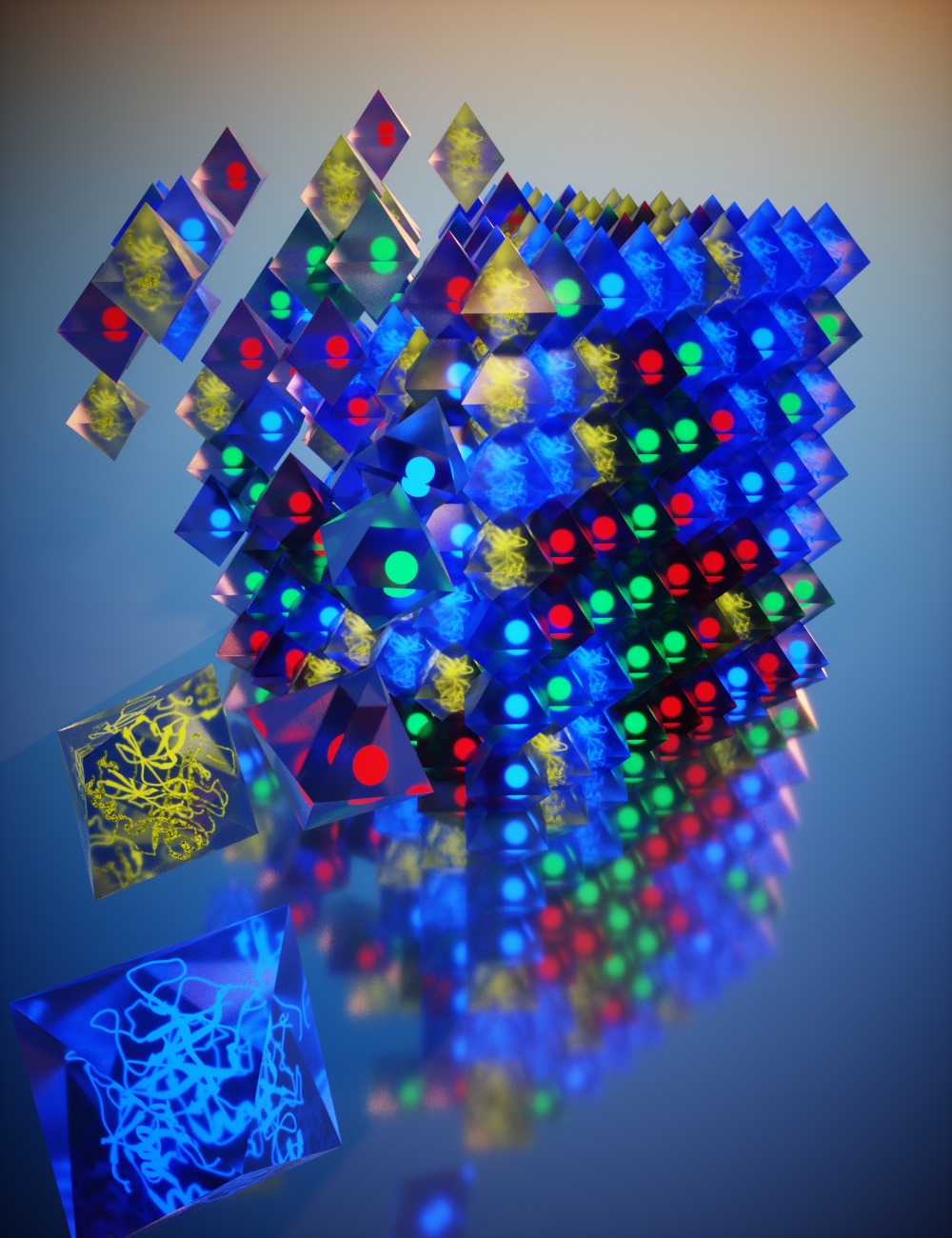
Scientists have developed a platform for assembling nanosized material components, or "nano-objects," of very different types--inorganic or organic--into desired 3-D structures. Though self-assembly (SA) has successfully been used to organize nanomaterials of several kinds, the process has been extremely system-specific, generating different structures based on the intrinsic properties of the materials. As reported in a paper published today in Nature Materials, their new DNA-programmable nanofabrication platform can be applied to organize a variety of 3-D materials in the same prescribed ways at the nanoscale (billionths of a meter), where unique optical, chemical, and other properties emerge.
"One of the major reasons why SA is not a technique of choice for practical applications is that the same SA process cannot be applied across a broad range of materials to create identical 3-D ordered arrays from different nanocomponents," explained corresponding author Oleg Gang, leader of the Soft and Bio Nanomaterials Group at the Center for Functional Nanomaterials (CFN)--a U.S. Department of Energy (DOE) Office of Science User Facility at Brookhaven National Laboratory--and a professor of Chemical Engineering and of Applied Physics and Materials Science at Columbia Engineering. "Here, we decoupled the SA process from material properties by designing rigid polyhedral DNA frames that can encapsulate various inorganic or organic nano-objects, including metals, semiconductors, and even proteins and enzymes."
The scientists engineered synthetic DNA frames in the shape of a cube, octahedron, and tetrahedron. Inside the frames are DNA "arms" that only nano-objects with the complementary DNA sequence can bind to. These material voxels--the integration of the DNA frame and nano-object--are the building blocks from which macroscale 3-D structures can be made. The frames connect to each other regardless of what kind of nano-object is inside (or not) according to the complementary sequences they are encoded with at their vertices. Depending on their shape, frames have a different number of vertices and thus form entirely different structures. Any nano-objects hosted inside the frames take on that specific frame structure.
To demonstrate their assembly approach, the scientists selected metallic (gold) and semiconducting (cadmium selenide) nanoparticles and a bacterial protein (streptavidin) as the inorganic and organic nano-objects to be placed inside the DNA frames. First, they confirmed the integrity of the DNA frames and formation of material voxels by imaging with electron microscopes at the CFN Electron Microscopy Facility and the Van Andel Institute, which has a suite of instruments that operate at cryogenic temperatures for biological samples. They then probed the 3-D lattice structures at the Coherent Hard X-ray Scattering and Complex Materials Scattering beamlines of the National Synchrotron Light Source II (NSLS-II)--another DOE Office of Science User Facility at Brookhaven Lab. Columbia Engineering Bykhovsky Professor of Chemical Engineering Sanat Kumar and his group performed computational modeling revealing that the experimentally observed lattice structures (based on the x-ray scattering patterns) were the most thermodynamically stable ones that the material voxels could form.
"These material voxels allow us to begin to use ideas derived from atoms (and molecules) and the crystals that they form, and port this vast knowledge and database to systems of interest at the nanoscale," explained Kumar.
Gang's students at Columbia then demonstrated how the assembly platform could be used to drive the organization of two different kinds of materials with chemical and optical functions. In one case, they co-assembled two enzymes, creating 3-D arrays with a high packing density. Though the enzymes remained chemically unchanged, they showed about a fourfold increase in enzymatic activity. These "nanoreactors" could be used to manipulate cascade reactions and enable the fabrication of chemically active materials. For the optical material demonstration, they mixed two different colors of quantum dots--tiny nanocrystals that are being used to make television displays with high color saturation and brightness. Images captured with a fluorescence microscope showed that the formed lattice maintained color purity below the diffraction limit (wavelength) of light; this property could allow for significant resolution improvement in various display and optical communication technologies.
"We need to rethink how materials can be formed and how they function," said Gang. "Material redesign may not be necessary; simply packaging existing materials in new ways could enhance their properties. Potentially, our platform could be an enabling technology 'beyond 3-D printing manufacturing' to control materials at much smaller scales and with greater material variety and designed compositions. Using the same approach to form 3-D lattices from desired nano-objects of different material classes, integrating those that would otherwise be considered incompatible, could revolutionize nanomanufacturing."
Ordered three-dimensional nanomaterials using DNA-prescribed and valence-controlled material voxels
Ye Tian, Julien R. Lhermitte, Lin Bai, Thi Vo, Huolin L. Xin, Huilin Li, Ruipeng Li, Masafumi Fukuto, Kevin G. Yager, Jason S. Kahn, Yan Xiong, Brian Minevich, Sanat K. Kumar & Oleg Gang
Nature Materials (2020)
DOI: 10.1038/s41563-019-0550-x
Contact information:
Oleg Gang
Professor at Columbia Engineering & Leader at Center for Functional Nanomaterials (CFN)
og2226@columbia.edu
Phone: (212) 854-1095 or (631) 344-3645
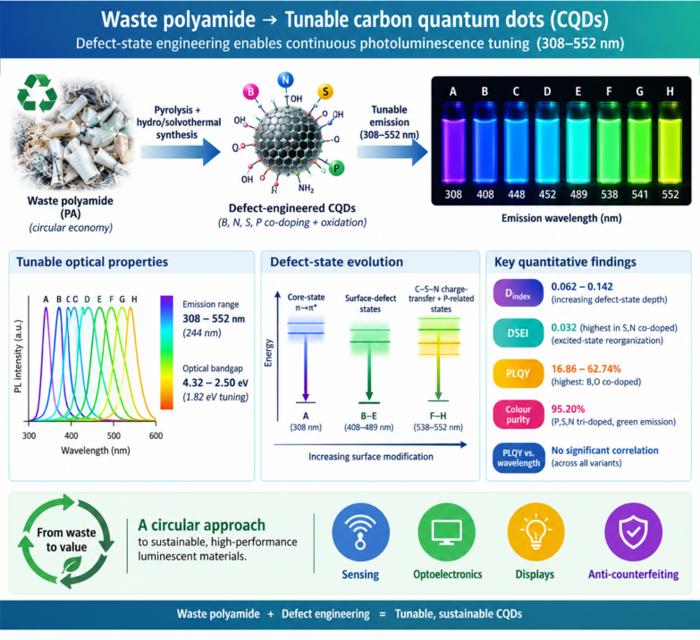
Waste polyamide-derived CQDs show continuous photoluminescence tuning from 308 to 552 nm through sequential defect-state engineering, with optical transition energies decreasing from 4.32 to 2.50 eV. @Christian Ebere Enyoh from Saitama University Carbon quantum dots (CQDs) are fluorescent carbon nanomaterials with potential applications in sensing, optoelectronics, displays, anti-counterfeiting, and environmental technologies. Their optical properties can be adjusted by modifying the carbon...
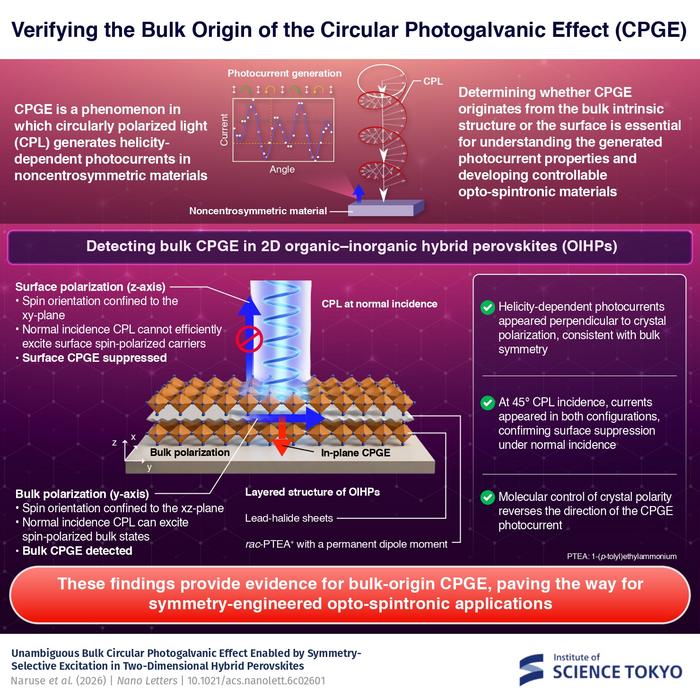
The researchers used circularly polarized light at normal incidence and found that helicity-dependent photocurrents appeared perpendicular to the crystal’s polarization but vanished when measured parallel to it, supporting a bulk origin of CPGE. @Institute of Science Tokyo The circular photogalvanic effect (CPGE), a phenomenon that generates helicity-dependent photocurrents in noncentrosymmetric materials, can originate purely from a crystal's internal structure without contribution from the...
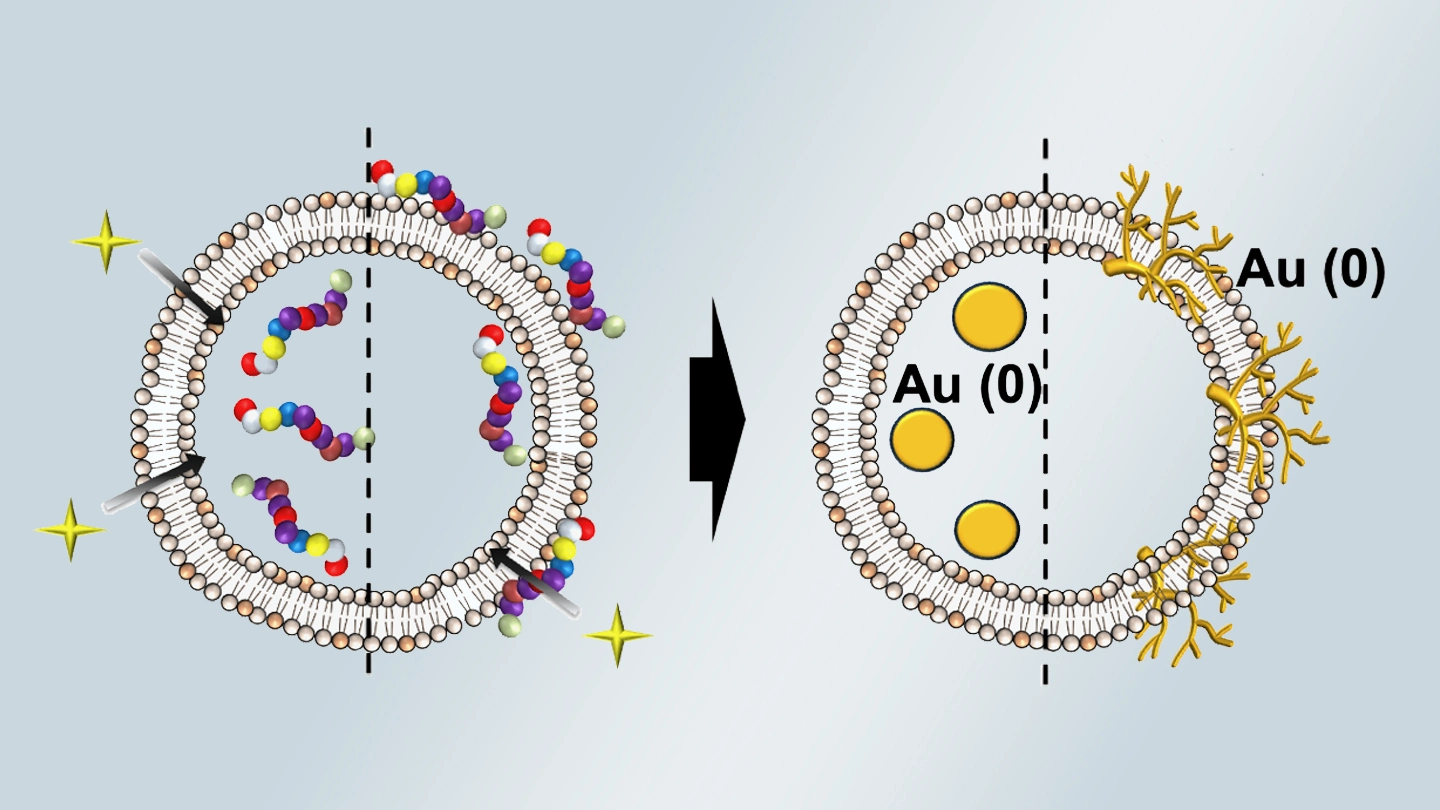
Summary of gold nanoparticle growth programming in liposome based on localization of biomineralization peptide The position of biomineralization peptides within liposomes can influence how gold nanoparticles grow, reports a research team from Institute of Science Tokyo. Peptides localized at the membrane interface promote branched structures, while those confined to the liposome interior favor spherical nanoparticles. The findings offer a new strategy for controlling nanoscale reaction...