King Abdullah University of Science and Technology (KAUST)
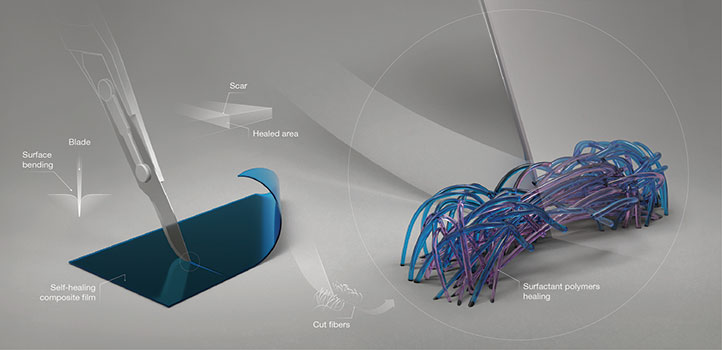
Wearable electronics could be perpetually powered by stretchy, self-mending materials that use body heat to generate electricity. Three carefully curated organic compounds have been combined to develop a prototype thermoelectric material that is both stretchy and self-healing, can generate its own electricity, and is robust enough to withstand the stresses and strains of daily life.
Sensors worn on the skin or as implants are an increasingly popular way to gather biological data for personal and medical purposes. They can monitor valuable markers of human health, such as heart rate, blood pressure, brain activity, muscle motion, calories burned and the release of certain chemicals. The ultimate goal is self-powered wearable technologies, but these will require a reliable and durable electricity source.
Thermoelectric materials use temperature gradients to generate electricity. They have the potential to power wearable technologies using body heat, eliminating the need for batteries, but current materials lack the flexibility, strength and resilience to avoid being permanently damaged.
A team led by Derya Baran and Seyoung Kee at KAUST have blended the highly conductive thermoelectric polymer PETOT:PSS (poly(3,4-ethylenedioxythiophene) doped with polystyrene sulfonate), with dimethyl sulfoxide, an organic compound that boosts the performance of PETOT:PSS, and Triton X-100, a sticky, gel-like agent that encourages hydrogen bonding with PETOT:PSS. "This final ingredient was essential for providing the stretchy and self-healing properties we needed," says Kee.
The researchers used a 3D printer to deposit their mixture into thick layers and then tested the thermoelectric performance of these films under duress. First, they found that a temperature difference of 32 degrees Celsius between the two sides of the film generated the maximum power output of 12.2 nanowatts.
The team then tested the self-healing behavior of the films by cutting them in half with a razor blade while they powered an LED light. "Amazingly, the light did not go out during or after cutting," says Kee. "I repeated the cut ten times, but it continued to self-heal in less than one second and retained 85 percent of its power output." Additionally, when they stretched the film to around a third longer than its original size, it still provided a stable power supply.
"Wearable electronics are under continuous strain, and their power supply is prone to breaking," says Kee. "Our material can provide constant and reliable power because it can deform, stretch, and most importantly, heal itself."
Twelve nanowatts is not enough to power many devices, except perhaps highly efficient biosensors and transmitters, but it is a promising start. "We have shown that such materials can be made easily using 3D printing, which is a very popular and practical technology" says Kee. "Next, we must find materials with even better thermoelectric properties so that we can generate greater power in the near future."
Self‐Healing and Stretchable 3D‐Printed Organic Thermoelectrics
Seyoung Kee, Md Azimul Haque, Daniel Corzo, Husam N. Alshareef, Derya Baran
Advanced Functional Materials (2019) Vol. 29, Iss. 51
Contact information:
Derya Baran
KAUST Assistant Professor in Material Science and Engineering
derya.baran@kaust.edu.sa
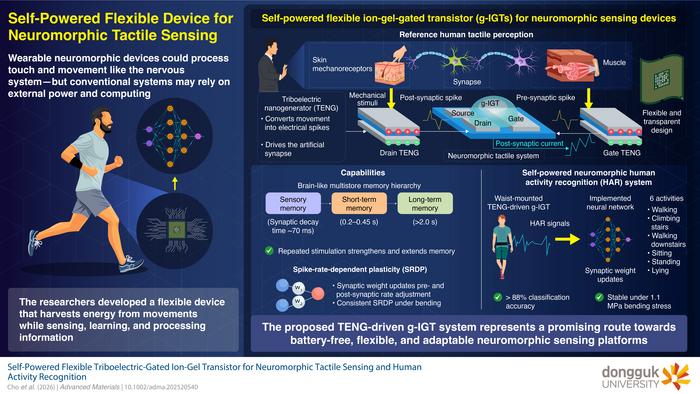
The proposed TENG-driven g-IGT is a flexible, self-powered neuromorphic device capable of reproducing multiple memory states and spike-rate-dependent learning Neuromorphic devices, which are designed to emulate aspects of biological neural networks, are promising candidates for developing low-power and intelligent sensing technologies, including wearable applications. Among the device architectures explored for neuromorphic computing, graphene-channel ion-gel-gated transistors (g-IGTs) are...
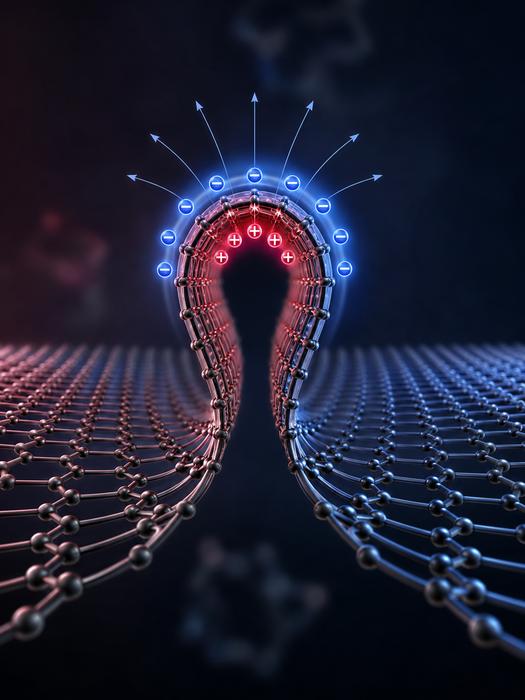
Rice University researchers have shown that sub-nanometer wrinkles in graphene generate flexoelectric charge separation, reshaping local electrical behavior through curvature alone. Extreme bending produces polarization far stronger than in larger systems and may enable geometry-controlled electronics without chemical doping. Published in Advanced Materials.
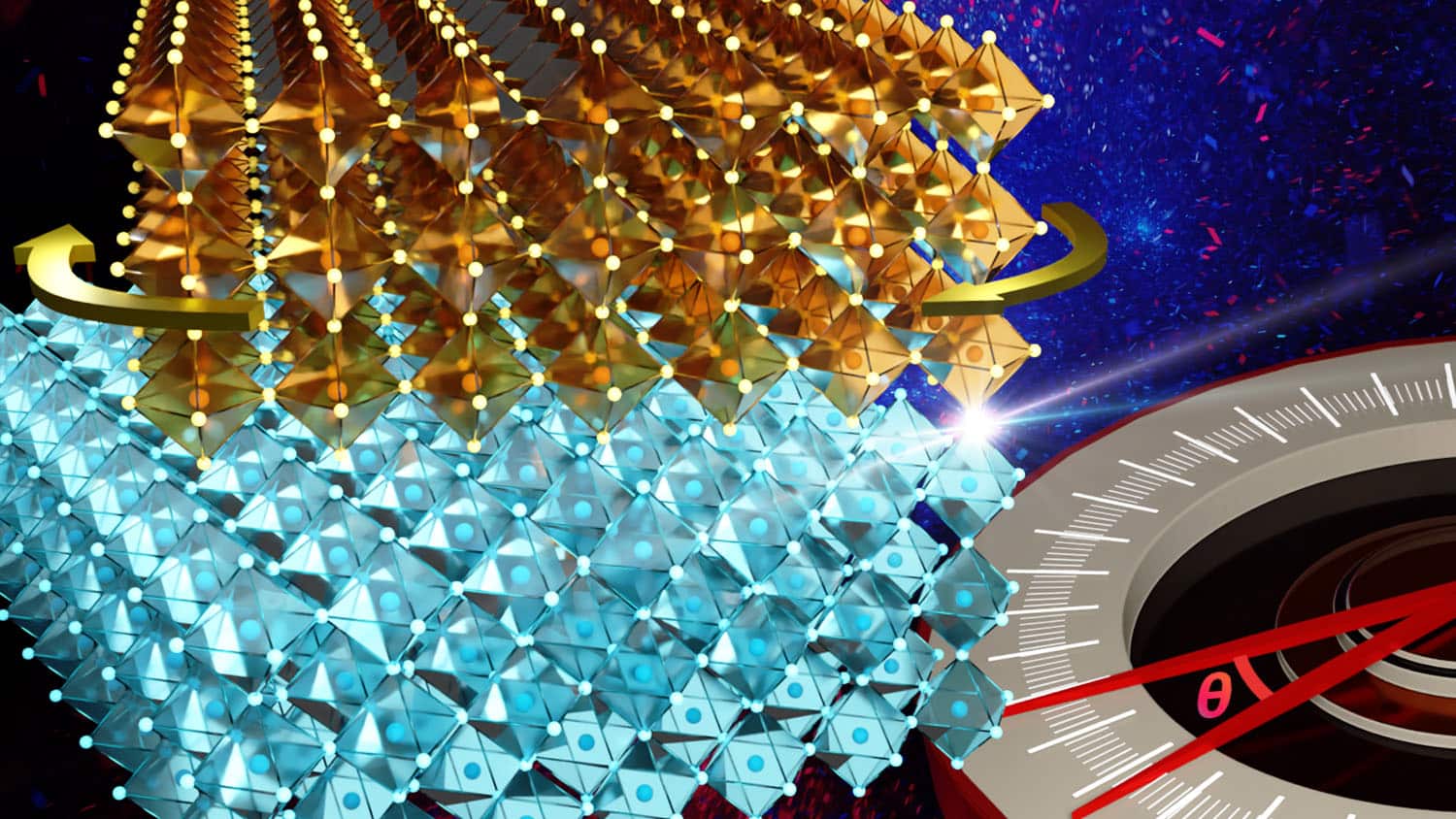
Researchers at NC State have extended twistronics beyond van der Waals materials into strongly bonded crystalline oxides. By stacking sodium niobate membranes with twist angles controlled down to 0.1 degrees, and confirming results via synchrotron X-ray diffraction, the team found interlayer bonds distort the atomic lattice, shifting phase structure and domain configuration. The technique works at near-millimeter scale, far larger than typical twistronic devices, marking a real step toward pract
