The fundamental laws of physics are based on symmetries that, among other things, determine the interactions between charged particles. Using ultracold atoms, researchers at Heidelberg University have experimentally constructed the symmetries of quantum electrodynamics. They hope to gain new insights for implementing future quantum technologies that can simulate complex physical phenomena. The results of the study were published in the journal Science.
The theory of quantum electrodynamics deals with the electromagnetic interaction between electrons and light particles. It is based on so-called U(1) symmetry, which for instance specifies the movement of particles. With their experiments, the Heidelberg physicists, under the direction of Junior Professor Dr Fred Jendrzejewski, seek to advance the efficient investigation of this complex physical theory. They recently succeeded in experimentally realising one elementary building block. "We see the results of our research as a major step towards a platform built from a chain of properly connected building blocks for a large-scale implementation of quantum electrodynamics in ultracold atoms," explains Prof. Jendrzejewski, who directs an Emmy Noether group at Heidelberg University's Kirchhoff Institute for Physics.
According to the researchers, one possible application would be developing large-scale quantum devices to simulate complex physical phenomena that cannot be studied with particle accelerators. The elementary building block developed for this study could also benefit the investigation of problems in materials research, such as in strongly interacting systems that are difficult to calculate.
A scalable realization of local U(1) gauge invariance in cold atomic mixtures
A. Mil, T. V. Zache, A. Hegde, A. Xia, R. P. Bhatt, M. K. Oberthaler, Ph. Hauke, J. Berges, F. Jendrzejewski
Science (2020)
DOI: 10.1126/science.aaz5312
Contact information:
Fred N. Jendrzejewski
Professor at Kirchhoff Institute for Physics, University of Heidelberg
fnj@kip.uni-heidelberg.de
Phone: +49 6221 54 5182
Jendrzejewski Group
University of Heidelberg
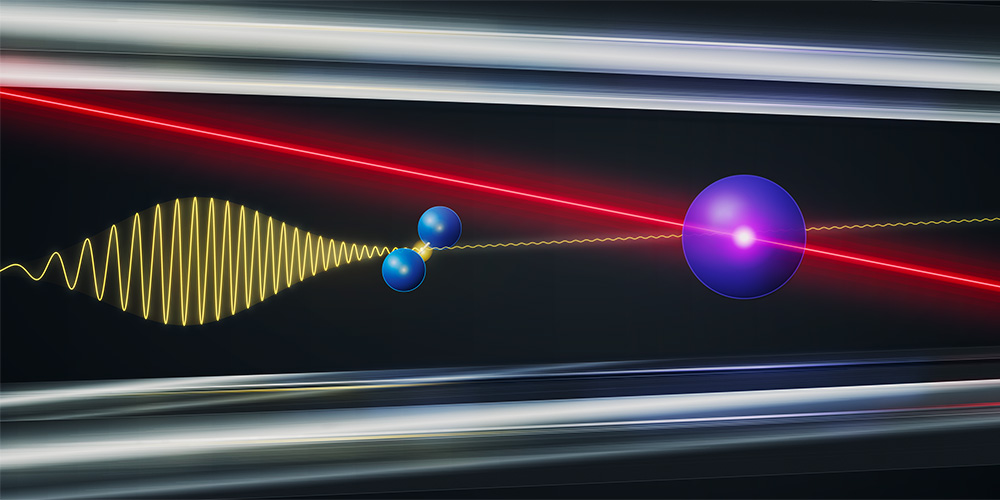
Researchers at the University of Basel have identified and coherently controlled so called forbidden vibrational transitions in individual trapped nitrogen molecular ions without destroying them. Using quantum logic spectroscopy, a single calcium ion served as messenger, letting the team probe the molecule repeatedly and determine its fundamental vibrational frequency ten times more precisely than before.
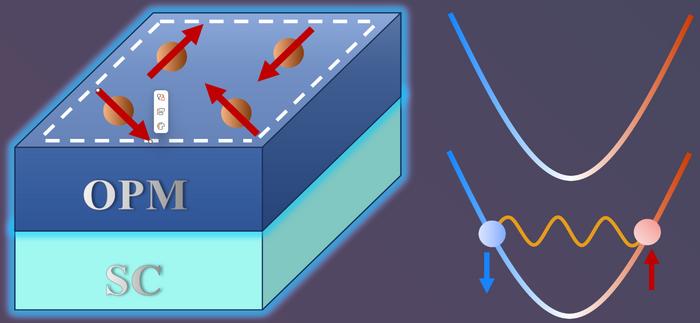
Odd-parity magnets host an intrinsic hidden Zeeman field that lifts Kramers degeneracy without any applied field, researchers report. Using an f-wave magnet model on a triangular lattice, the team shows how non-relativistic spin splitting and this hidden field combine to stabilize s-wave superconductivity far beyond the Pauli limit.
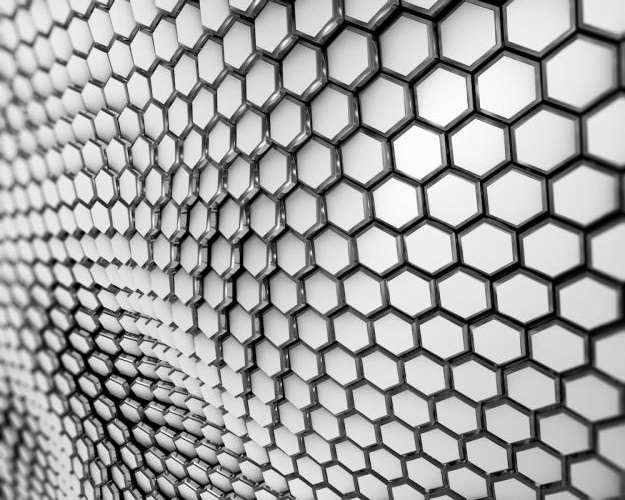
Rhombohedral hexalayer graphene, in which six carbon sheets are stacked with a slight lateral offset like staircase steps, hosts both superconductivity and electrically controllable orbital magnetism, researchers report in Nature Physics. The arrangement yields a rich collection of quantum states in a simple carbon-based material, positioning rhombohedral multilayer graphene as a platform for probing the fundamental mechanisms of superconductivity and magnetism and potentially for new ways of…
This week in nanotech
9 deals tracked
New products
 Ti-WCMBN Nanomaterialia Featured
 Nion-compatible In Situ STEM Holders for Electrical BiasingHummingbird Scientific Featured
 GHK-CuPeoples Peps
Market insights
Last 30 days: Semiconductors & Electronics was the busiest vertical: 39 of 130 events (30%).
Money raised per month