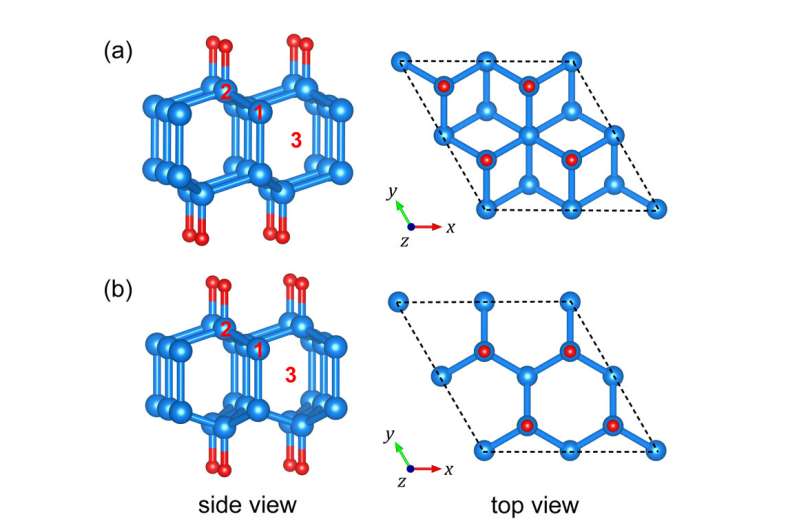
A research team led by Prof. WANG Xianlong from the Hefei Institutes of Physical Science of the Chinese Academy of Sciences (CAS) has discovered a new method to improve the stability of diamane synthesized by-high pressure method. By introducing boron (B) and nitrogen (N) dopants into diamane, they found that the diamane's structure and electronic properties could be regulated.
Related results were published in Physical Review B.
Diamane is a two-dimensional (2D) single-layer diamond obtained by compressing bi-layer graphene to form interlayer sp3 bonds. With the characteristics of both graphene and diamond, it is expected to be a new 2D carbon material alongside graphene. However, diamane synthesized by high-pressure method is converted back to graphene after releasing pressure, and it cannot be maintained under ambient conditions.
In this study, the researchers investigated the structural and electronic properties of different doped forms of B and N atoms in cubic and hexagonal diamane based on the first-principles methods.
They found that the doping configuration reduced the formation energy of diamane, promoted the synthesis of diamane and enhanced the stability of diamane at ambient condition.
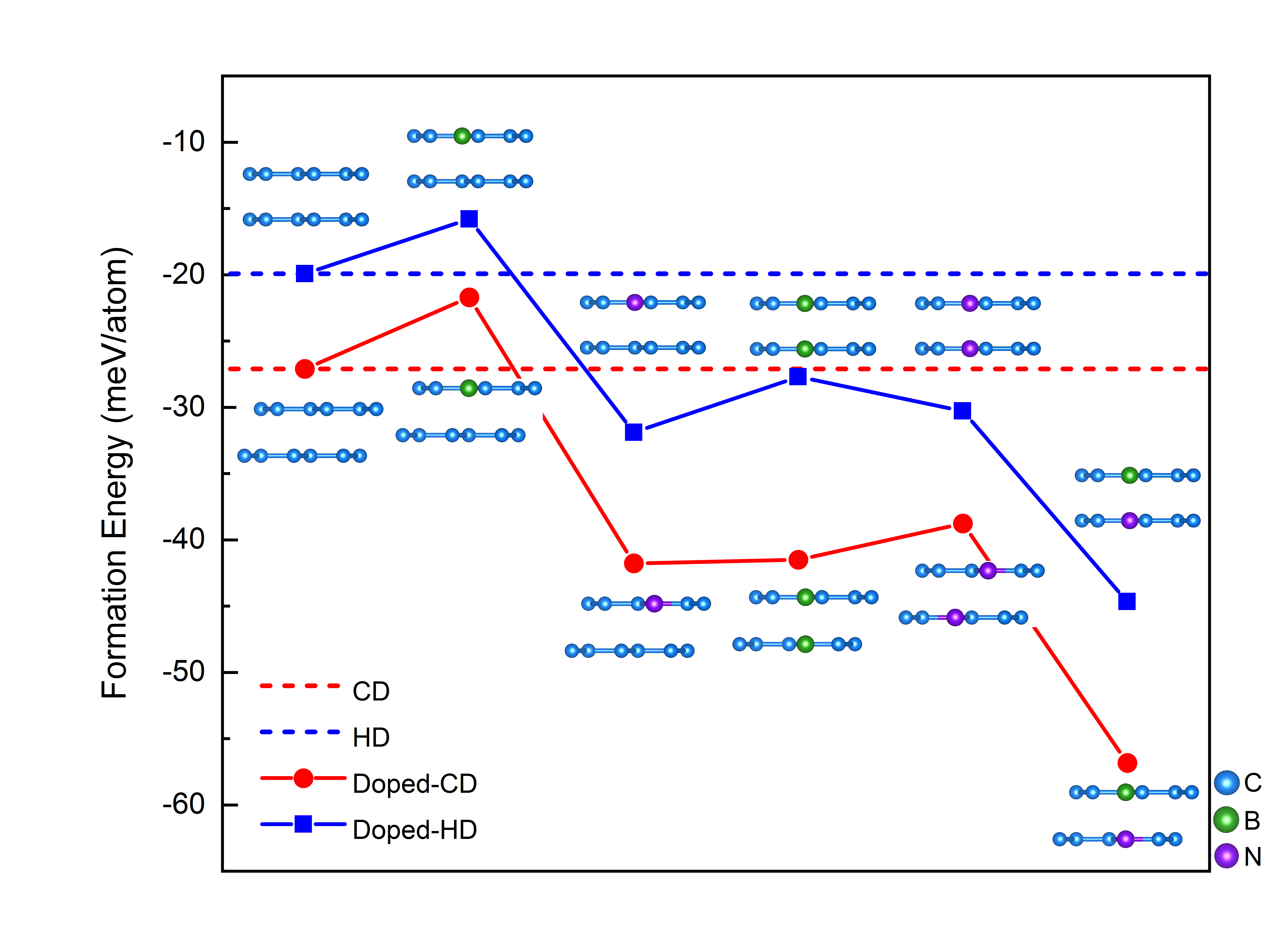
They proposed an easiest mechanism to synthesize diamane experimentally by compressing bi-layer graphene with one layer doped with B atom and the other doped with N atom.
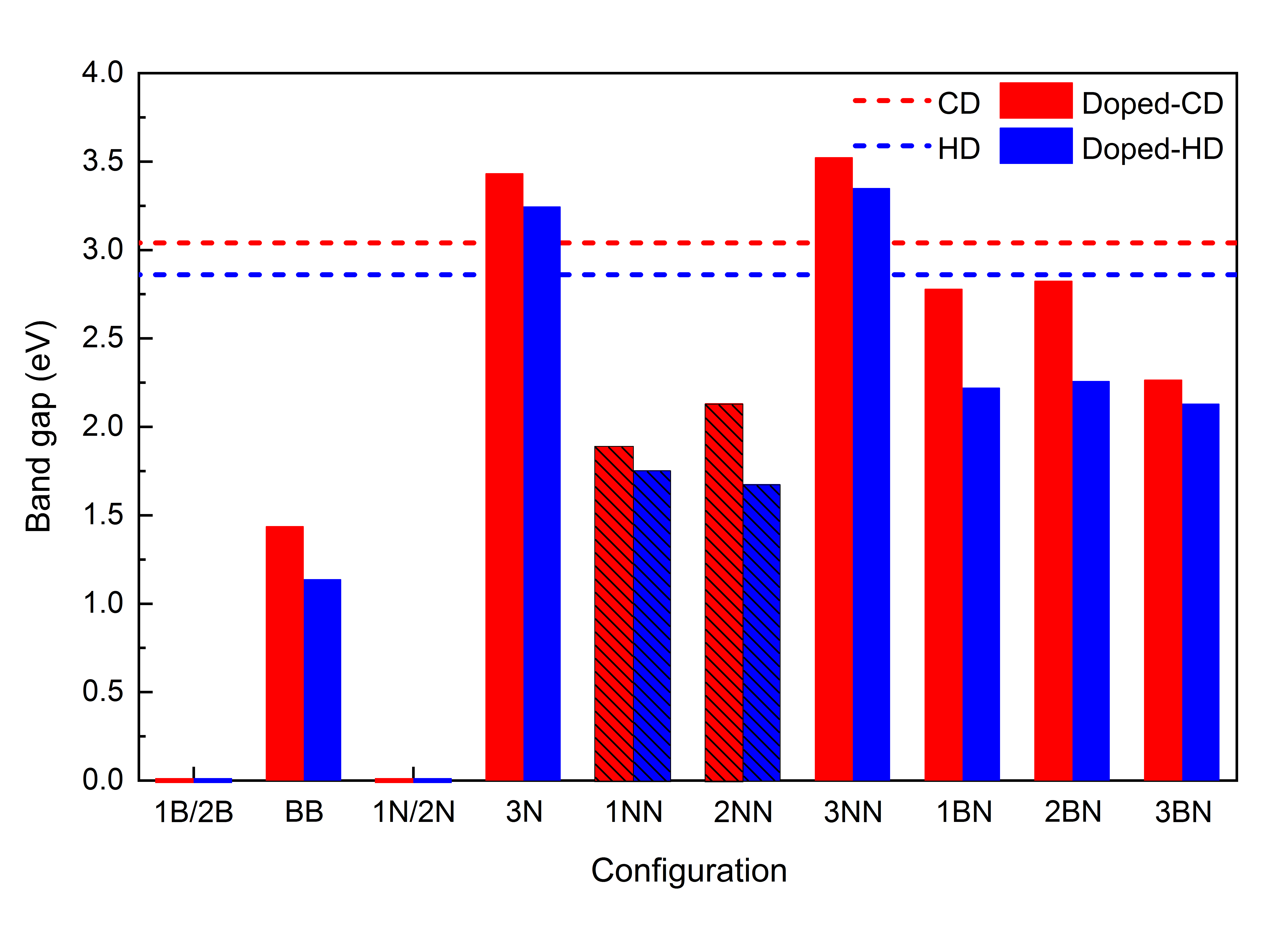
Diamane doped with N atoms was easy to obtain experimentally because the formation energy of diamane was not sensitive to the distribution of N dopant. In addition, depending on the concentrations and distributions of B and N atoms, doped diamane had variable electronic structures (semiconductor, metal, superconductivity ~ 4 K), which could be applied to the field of 2D electronic devices.
This work offers a new scheme to synthesize more stable and functional diamane.
This work was supported by the National Natural Science Foundation of China, and the calculations were performed in the Center for Computational Science of the Hefei Institutes of Physical Science of CAS.
Chinese Academy of Sciences
Reference
Configuration stability and electronic properties of diamane with boron and nitrogen dopants
Caoping Niu, Jie Zhang, Hanxing Zhang, Jing Zhao, Wenming Xia, Zhi Zeng, and Xianlong Wang
Phys. Rev. B 105, 174106 – Published 17 May 2022
https://journals.aps.org/prb/abstract/10.1103/PhysRevB.105.174106
Waste polyamide-derived CQDs show continuous photoluminescence tuning from 308 to 552 nm through sequential defect-state engineering, with optical transition energies decreasing from 4.32 to 2.50 eV. @Christian Ebere Enyoh from Saitama University Carbon quantum dots (CQDs) are fluorescent carbon nanomaterials with potential applications in sensing, optoelectronics, displays, anti-counterfeiting, and environmental technologies. Their optical properties can be adjusted by modifying the carbon...
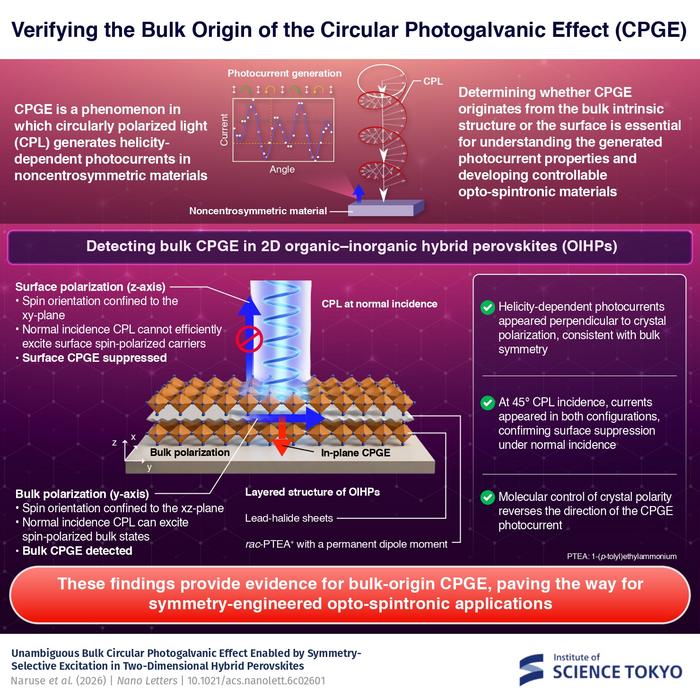
The researchers used circularly polarized light at normal incidence and found that helicity-dependent photocurrents appeared perpendicular to the crystal’s polarization but vanished when measured parallel to it, supporting a bulk origin of CPGE. @Institute of Science Tokyo The circular photogalvanic effect (CPGE), a phenomenon that generates helicity-dependent photocurrents in noncentrosymmetric materials, can originate purely from a crystal's internal structure without contribution from the...
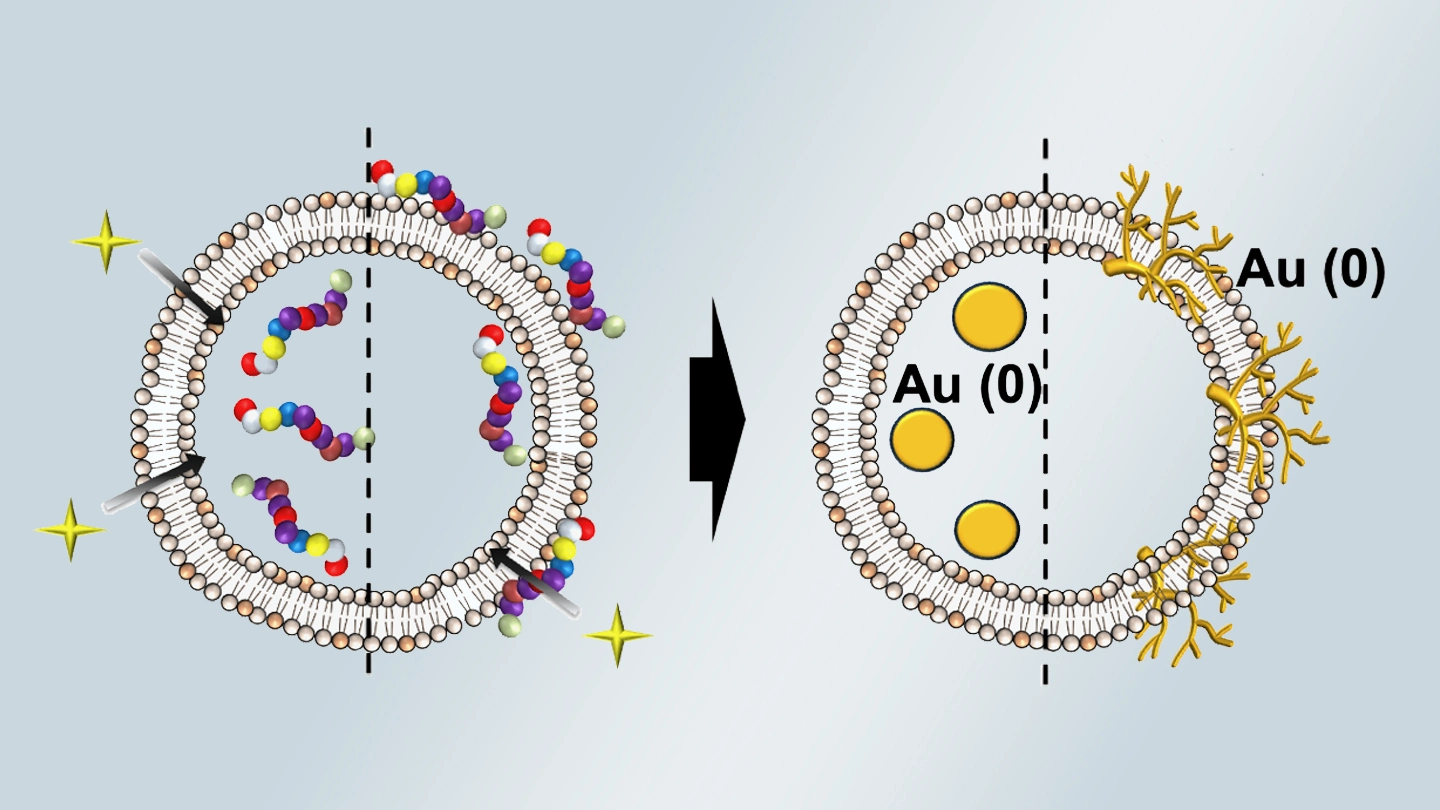
Summary of gold nanoparticle growth programming in liposome based on localization of biomineralization peptide The position of biomineralization peptides within liposomes can influence how gold nanoparticles grow, reports a research team from Institute of Science Tokyo. Peptides localized at the membrane interface promote branched structures, while those confined to the liposome interior favor spherical nanoparticles. The findings offer a new strategy for controlling nanoscale reaction...
