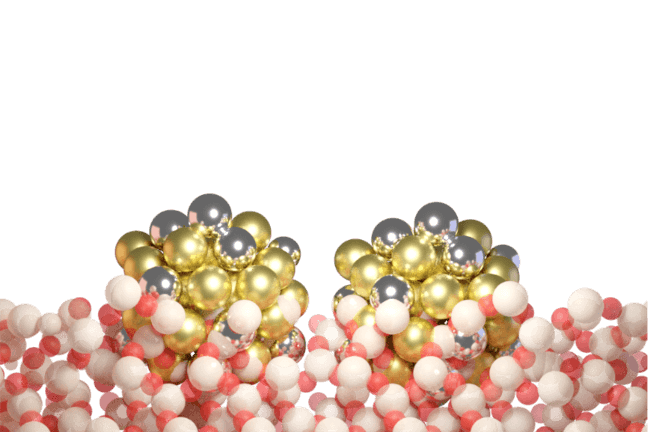
Researchers from the Harvard John A. Paulson School of Engineering and Applied Sciences (SEAS), Harvard Department of Chemistry & Chemical Biology, and Utrecht University have reported on a previously elusive way to improve the selectivity of catalytic reactions, adding a new method of increasing the efficacy of catalysts for a potentially wide range of applications in various industries including pharmaceuticals, cosmetics and much more.
The research is published in Nature Catalysis.
The chemical industry relies on catalysts for over 90 percent of its processes and nearly all these catalysts consist of nanoparticles dispersed on top of a substrate. Researchers have long suspected that the size of individual nanoparticles and the distance between them play important roles in the speed of, and the products produced in the catalytic reaction, but because nanoparticles are prone to moving around and agglomerating during catalysis, it’s been difficult to study exactly how.
Over the past decade, Joanna Aizenberg, the Amy Smith Berylson Professor of Materials Science and Professor of Chemistry & Chemical Biology, and her lab have been drawing inspiration from nature to build highly ordered, porous materials for a wide range of catalytic reactions. Inspired by the structure of butterfly wings, the researchers designed a new catalyst platform that partially embeds nanoparticles into the substrate, trapping them so they don’t move around during catalysis, while leaving the rest of the nanoparticles’ surface exposed, enabling them to perform the catalytic reactions efficiently and without agglomeration.
The researchers found that the distance between particles had a huge impact on the selectivity of the reaction.
“Many industrially-relevant chemical reactions follow a cascade whereby chemical A is turned to chemical B which can then be turned into chemical C and so forth,” said Kang Rui Garrick Lim, a graduate student in the Aizenberg Lab and first author of the study. “In some catalytic processes, the intermediate chemical, chemical B, is the goal, while in others it is the end product, chemical C. The selectivity of the catalyst refers to whether it favors the production of chemical B or chemical C.”
A good example of this is the production of benzyl alcohol, a chemical used in everything from shellacks, paints, and leather production to intravenous medications, cosmetics, and topical drugs.
Benzyl alcohol is the intermediate chemical B, derived from the hydrogenation of benzaldehyde (chemical A), before the reaction creates toluene (chemical C), another commonly used chemical but of lower value. In order to produce benzyl alcohol efficiently, the formation of toluene needs to be suppressed.
Currently, to make the more useful benzyl alcohol, the catalytic hydrogenation reaction is slowed down, or not run to completion, to ensure that the reaction will stop at B and form as little toluene as possible.
“Generally, to make these intermediate chemicals, you make the catalyst less reactive and the overall reaction slower, which is not productive at all,” said Lim. “Catalysts are meant to speed things up, not slow them down.”
The researchers demonstrated their platform in the catalytic formation of benzyl alcohol. Lim and the team found that when catalytic metal nanoparticles were placed further apart on the substrate, the reaction was more selective towards benzyl alcohol, the intermediate chemical. When the nanoparticles were closer together, the reaction was more selective towards toluene, the end product. Given that the distance between nanoparticles can be adjusted synthetically using the bioinspired catalyst platform, the research suggests that the same catalyst platform can be easily adapted for a range of intermediate or end product chemicals.
“Catalysis is central to production of a whole range of extremely important materials that are used in pharmaceuticals, consumer products and in manufacturing many products all of us use in everyday life,” said Aizenberg. “Adding this selectivity-improving tool to the chemist’s arsenal is extremely important. It will allow more effective tuning of catalytic processes, more economical use of the feedstocks accompanied by the reduction of energy consumption and waste generation. We hope that chemists will use our platform in further optimization of new and existing catalytic processes.”
Next, the team will use the same platform to understand how the size of nanoparticles impacts the reaction at fixed distances between nanoparticles.
Reference
Nanoparticle proximity controls selectivity in benzaldehyde hydrogenation
Kang Rui Garrick Lim, Selina K. Kaiser, Haichao Wu, Sadhya Garg, Marta Perxés Perich, Jessi E. S. van der Hoeven, Michael Aizenberg & Joanna Aizenberg
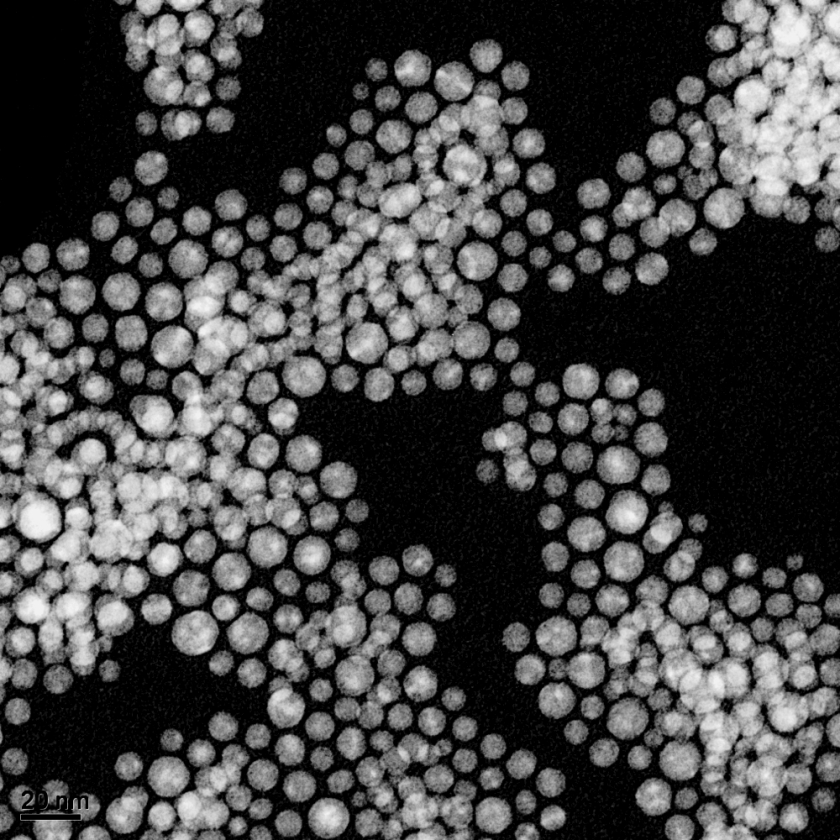
Silver nanoparticles with diameters of ~10 nm deliver the best performance as electrocatalysts. The silver particles are sprayed onto the electrode together with a conductive carbon powder. The ideal mixture consists of 20 per cent by mass silver and 80 per cent by mass carbon powder. This image was taken using a transmission electron microscope (TEM). © HZB Via electrolysis, CO₂ can be reduced to CO, a raw material for further chemical products such as fuels. Within the GreenQuest Project,...
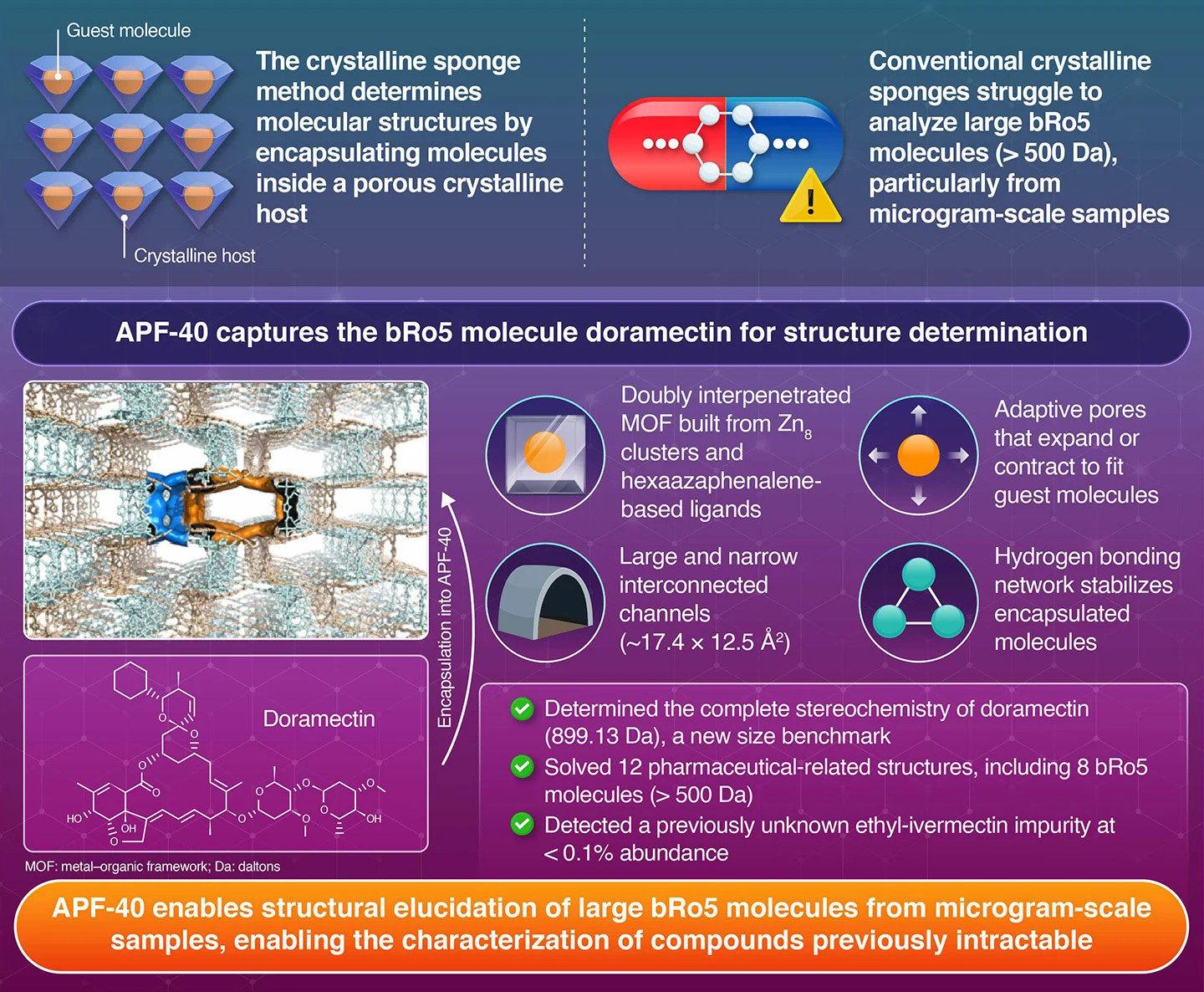
A flexible metal–organic framework developed by researchers from Institute of Science Tokyo enables the structural determination of large "beyond rule of 5" molecules from microgram-scale samples. Using APF-40 as a crystalline sponge, the researchers determined the structures of 12 pharmaceutical-related molecules, including the 899 Da drug molecule doramectin and trace ivermectin derivatives. The method could aid drug discovery, natural products research, and the characterization of rare...
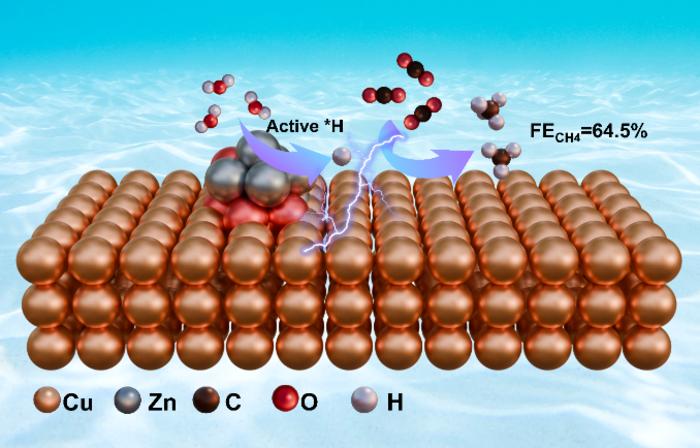
image: CuZn800@C was constructed via solvothermal method and utilizes the high-temperature volatility of zinc to prepare through calcination at different temperatures, which displays a high methane Faradaic efficiency of 64.5% and a remarkable partial current density of -551.3 mA/cm2 at -1.7 V vs. RHE, along with excellent stability. Zn and Cu form a tandem reaction system. Zn sites promote water splitting to provide protons, while Cu sites reduce the energy barrier for *CO hydrogenation....
