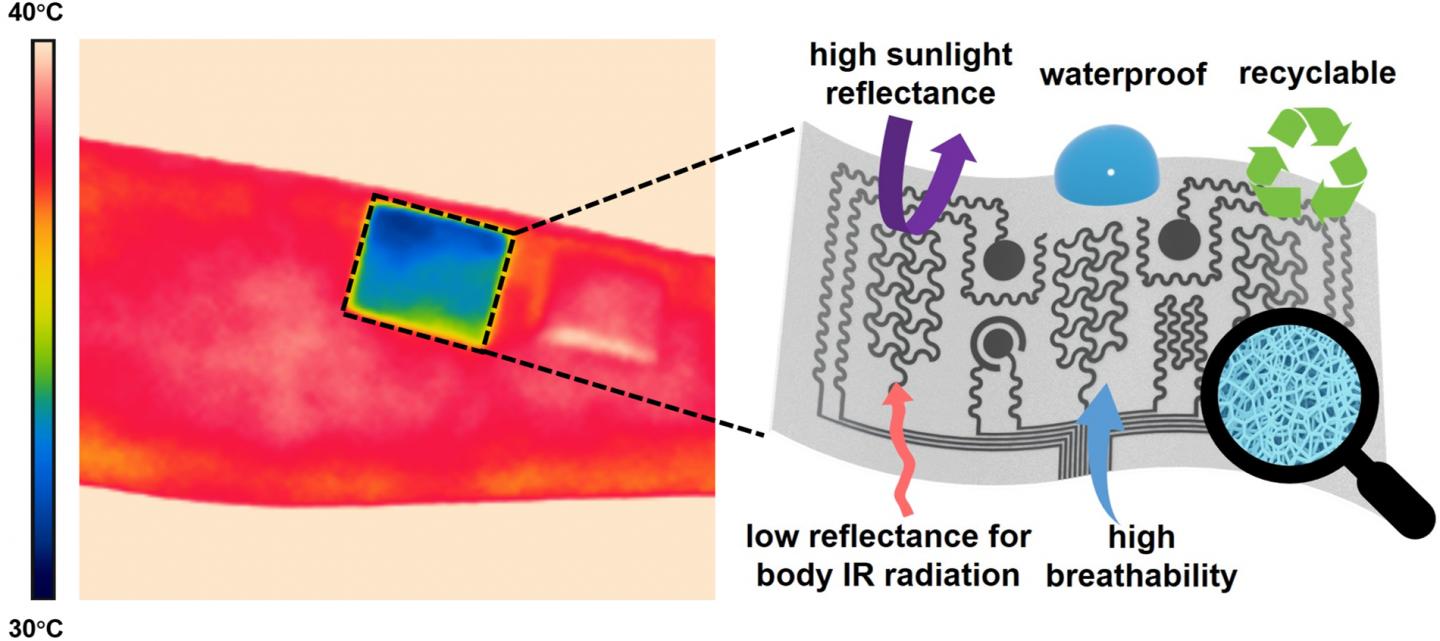
One day, soldiers could cool down on the military battlefield -- preventing heat stroke or exhaustion -- by using "wearable air conditioning," an on-skin device designed by engineers at the University of Missouri. The device includes numerous human health care applications such as the ability to monitor blood pressure, electrical activity of the heart and the level of skin hydration.
The findings are detailed in the journal Proceedings of the National Academy of Sciences.
Unlike similar products in use today or other related concepts, this breathable and waterproof device can deliver personal air conditioning to a human body through a process called passive cooling. Passive cooling does not utilize electricity, such as a fan or pump, which researchers believe allows for minimal discomfort to the user.
"Our device can reflect sunlight away from the human body to minimize heat absorption, while simultaneously allowing the body to dissipate body heat, thereby allowing us to achieve around 11 degrees Fahrenheit of cooling to the human body during the daytime hours," said corresponding author Zheng Yan, an assistant professor in the College of Engineering. "We believe this is one of the first demonstrations of this capability in the emerging field of on-skin electronics."
Currently, the device is a small wired patch, and researchers say it will take one to two years to design a wireless version. They also hope to one day take their technology and apply it to 'smart' clothing.
"Eventually, we would like to take this technology and apply it to the development of smart textiles," Yan said. "That would allow for the device's cooling capabilities to be delivered across the whole body. Right now, the cooling is only concentrated in a specific area where the patch is located. We believe this could potentially help reduce electricity usage and also help with global warming."
Multiscale porous elastomer substrates for multifunctional on-skin electronics with passive-cooling capabilities
Yadong Xu, Bohan Sun, Yun Ling, Qihui Fei, Zanyu Chen, Xiaopeng Li, Peijun Guo, Nari Jeon, Shivam Goswami, Yixuan Liao, Shinghua Ding, Qingsong Yu, Jian Lin, Guoliang Huang, and Zheng Yan
PNAS January 7, 2020 117 (1) 205-213
Contact information:
Zheng Yan
MU Assistant Professor of Mechanical and Aerospace Engineering; Biomedical, Biological and Chemical Engineering
yanzheng@missouri.edu
Phone: 573.884.0562
Zheng Yan Group - Soft Materials and Biointegrated Electronics Lab
University of Missouri (MU)
Teledyne DALSA has launched the Rad-icon 2329HS X-ray detector, featuring a 27 Mp CMOS sensor, 10X faster frame rate and 3X higher sensitivity than the previous model. It was shown at the NDTMA conference.
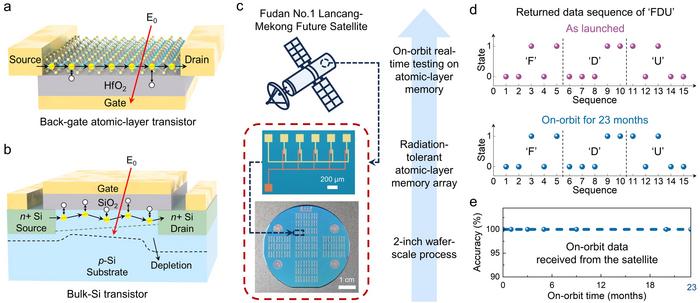
A monolayer MoS2 memory array fabricated at wafer scale on the Fudan No.1 satellite has returned stored data with 100% accuracy after 23 months in low Earth orbit, marking the first on-orbit real-time test of atomic-layer memory. Ground Co-60 gamma irradiation up to 20 Mrad left on/off current ratios stable across roughly eight orders of magnitude and preserved low-noise readout at picoampere levels.
GE HealthCare expanded global clinical and research collaborations to evaluate Photonova Spectra, its photon-counting CT system, across institutions in North America, Europe and Asia.
This week in nanotech
$18.9M raised
4 funding rounds · 31 deals tracked
New products
 Nion-compatible In Situ STEM Holders for Electrical BiasingHummingbird Scientific Featured
 Orion Sputtering Deposition SystemsAJA International Featured
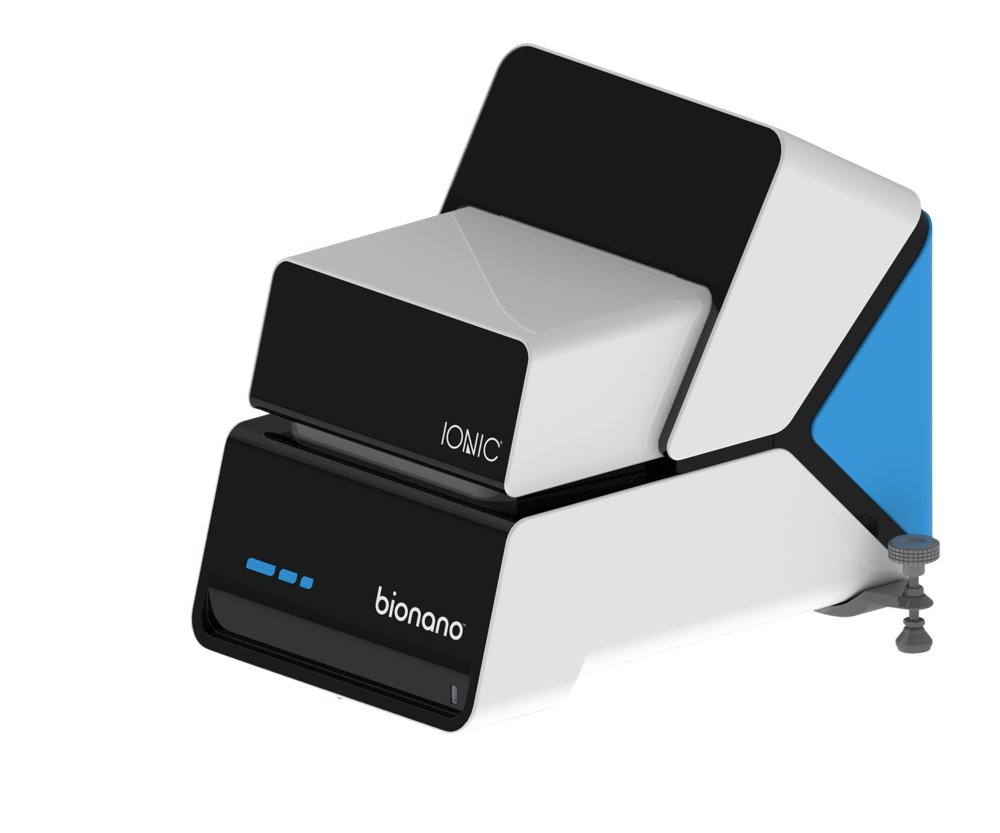 Ionic® Purification SystemBionano Genomics, Inc.
Market insights
Last 30 days: Semiconductors & Electronics was the busiest vertical: 52 of 170 events (31%).
Money raised per month