Graphene, a modified form of carbon, offers versatile potential for use in coating machine components and in the field of electronic switches. An international team of researchers led by physicists at the University of Basel have been studying the lubricity of this material on the nanometer scale. Since it produces almost no friction at all, it could drastically reduce energy loss in machines when used as a coating, as the researchers report in the journal Science.
In future, graphene could be used as an extremely thin coating, resulting in almost zero energy loss between mechanical parts. This is based on the exceptionally high lubricity – or so-called superlubricity – of modified carbon in the form of graphene. Applying this property to mechanical and electromechanical devices would not only improve energy efficiency but also considerably extend the service life of the equipment.
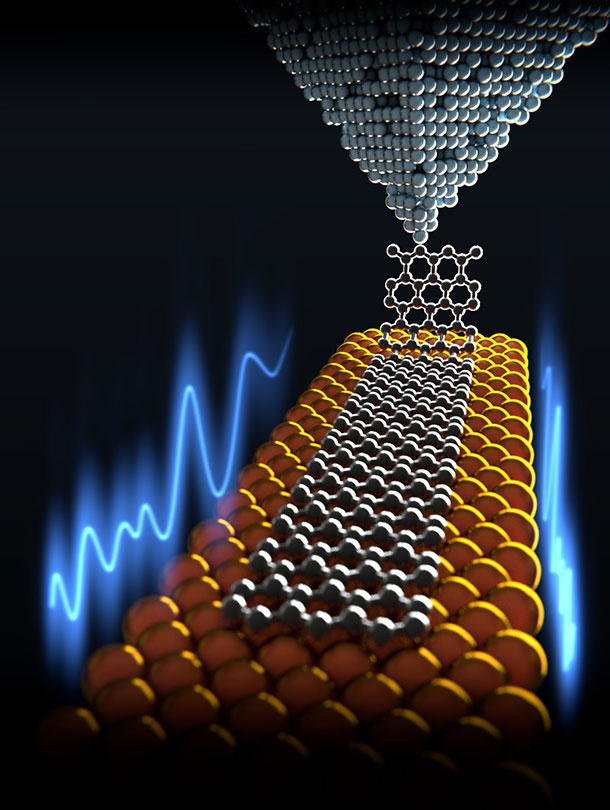
An international community of physicists from the University of Basel and the Empa have studied the above-average lubricity of graphene using a two-pronged approach combining experimentation and computation. To do this, they anchored two-dimensional strips of carbon atoms – so-called graphene nanoribbons – to a sharp tip and dragged them across a gold surface. Computer-based calculations were used to investigate the interactions between the surfaces as they moved across one another. Using this approach, the research team led by Prof. Ernst Meyer at the University of Basel is hoping to fathom out the causes of superlubricity; until now, little research has been carried out in this area.
By studying the graphene ribbons, the researchers hope to learn about more than just the slip behavior. Measuring the mechanical properties of the carbon-based material also makes sense because it offers excellent potential for a whole range of applications in the field of coatings and micromechanical switches. In future, even electronic switches could be replaced by nanomechanical switches, which would use less energy for switching on and off than conventional transistors.
The experiments revealed almost perfect, frictionless movement. It is possible to move graphene ribbons with a length of 5 to 50 nanometers using extremely small forces (2 to 200 piconewtons). There is a high degree of consistency between the experimental observations and the computer simulation.
A discrepancy between the model and reality appears only at greater distances (five nanometers or more) between the measuring tip and the gold surface. This is probably because the edges of the graphene nanoribbons are saturated with hydrogen, which was not accounted for in the simulations.
University of Basel
#MaterialScience #Graphene
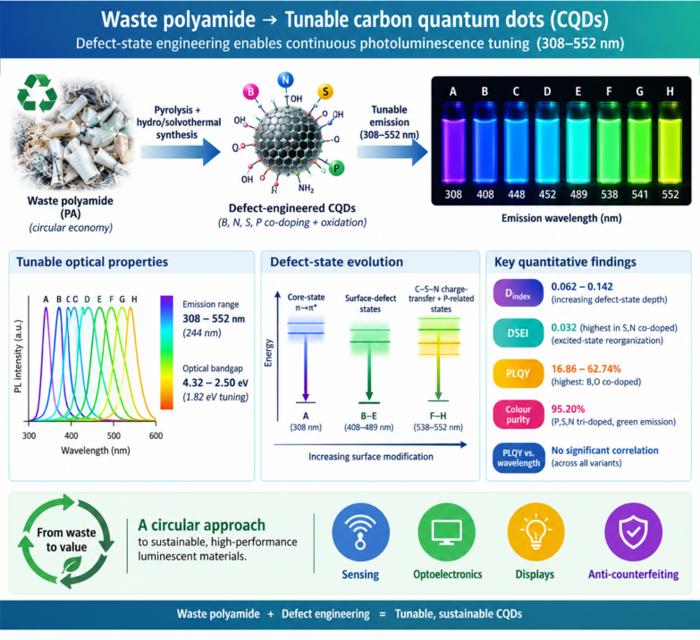
Waste polyamide-derived CQDs show continuous photoluminescence tuning from 308 to 552 nm through sequential defect-state engineering, with optical transition energies decreasing from 4.32 to 2.50 eV. @Christian Ebere Enyoh from Saitama University Carbon quantum dots (CQDs) are fluorescent carbon nanomaterials with potential applications in sensing, optoelectronics, displays, anti-counterfeiting, and environmental technologies. Their optical properties can be adjusted by modifying the carbon...
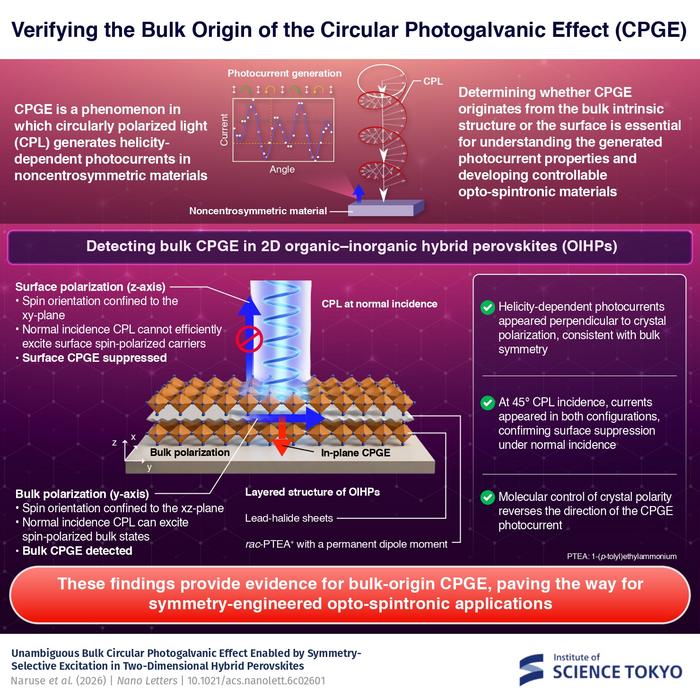
The researchers used circularly polarized light at normal incidence and found that helicity-dependent photocurrents appeared perpendicular to the crystal’s polarization but vanished when measured parallel to it, supporting a bulk origin of CPGE. @Institute of Science Tokyo The circular photogalvanic effect (CPGE), a phenomenon that generates helicity-dependent photocurrents in noncentrosymmetric materials, can originate purely from a crystal's internal structure without contribution from the...
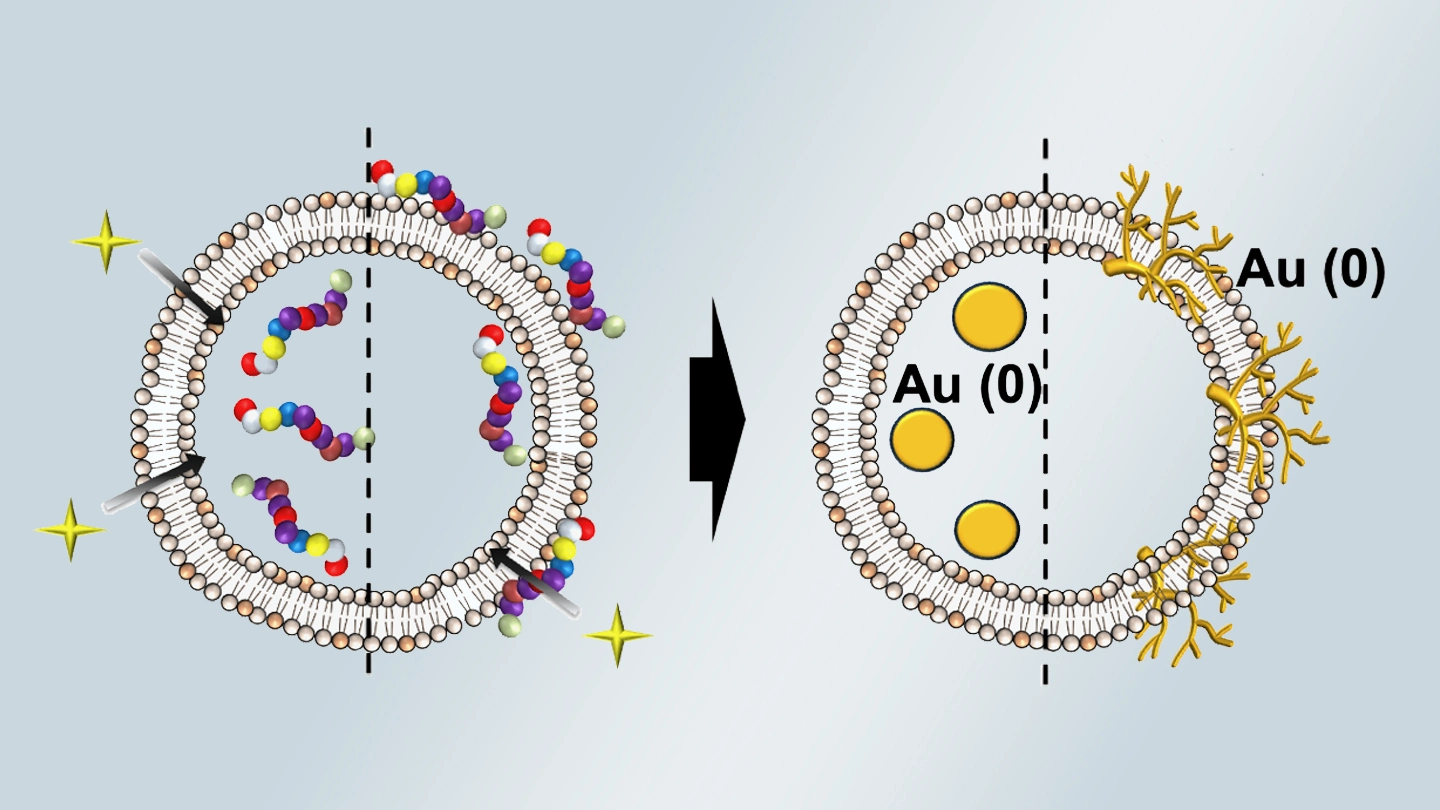
Summary of gold nanoparticle growth programming in liposome based on localization of biomineralization peptide The position of biomineralization peptides within liposomes can influence how gold nanoparticles grow, reports a research team from Institute of Science Tokyo. Peptides localized at the membrane interface promote branched structures, while those confined to the liposome interior favor spherical nanoparticles. The findings offer a new strategy for controlling nanoscale reaction...
