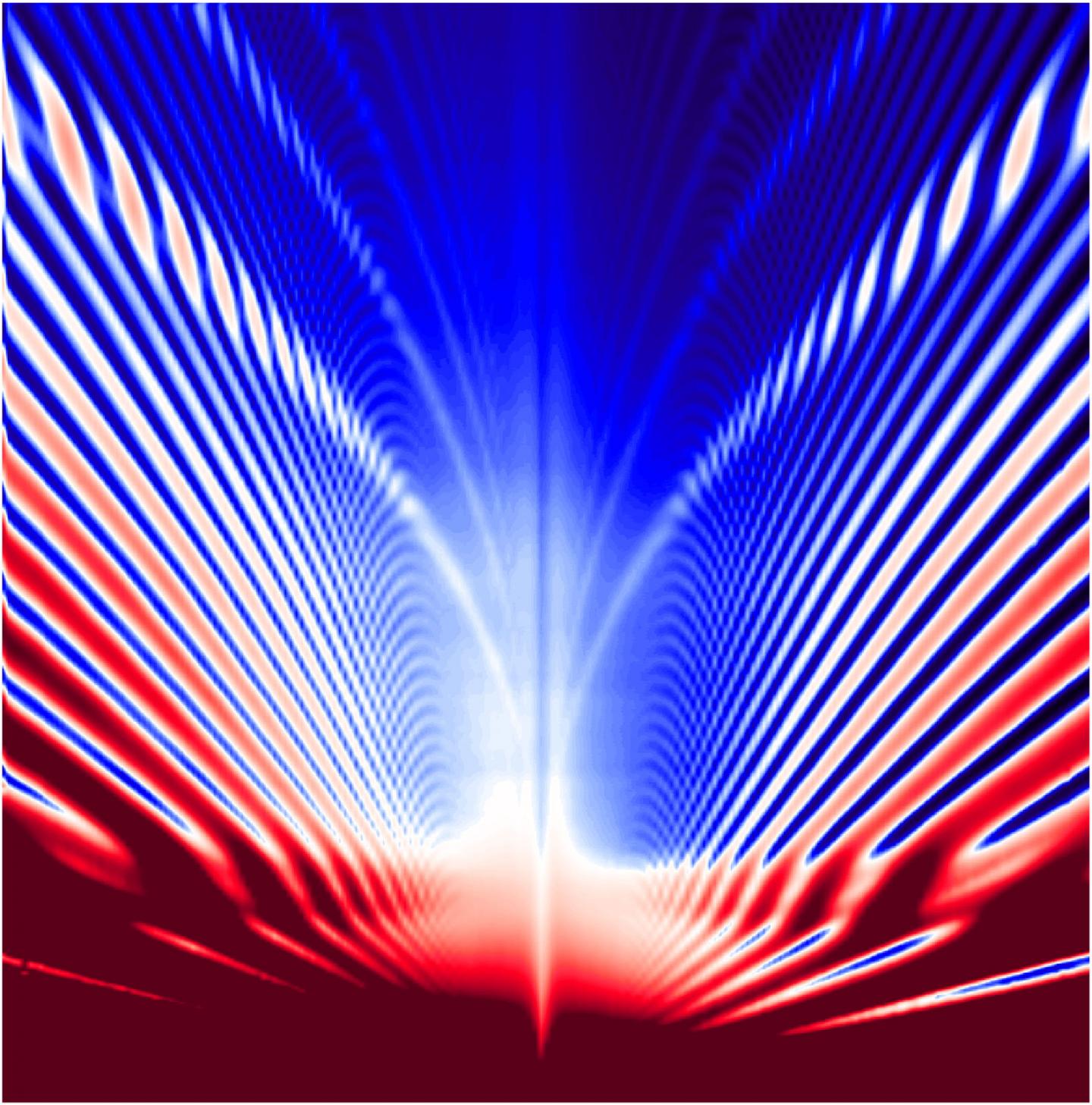
Metals have a large density of electrons and to be able to see the wave nature of electrons one has to make metallic wires that are only a few atoms wide. However, in graphene - one atom thick graphite -- the density of electrons is much smaller and can be changed by making a transistor. As a result of the low density of electrons the wave nature of electrons, as described by quantum mechanics, is easier to observe in graphene.
Often in metals like copper the electron is scattered every 100 nanometers, a distance roughly 1000 times smaller than the diameter of human hair, due to impurities and imperfections. Electrons can travel much longer in graphene, upto distances of 10 micrometer, a distance roughly 10 times smaller than the diameter of human hair. This is realized by sandwiching graphene between layers of boron nitride. The layers of boron nitride have few imperfections to impede the flow of electrons in graphene.
Once electrons travel long distances, implying there are few imperfections, one notices the faint whispers of electrons "talking to each other". Reducing the imperfections is akin to making a room quiet to enable the faint whispers of electronic interactions to develop between many electrons.
In a study, led by PhD student Biswajit Datta, Professor Mandar Deshmukh's group at TIFR realized just this kind of silence allowing electronic interactions to be observed in three layers of graphene. The study reveals a new kind of magnet and provides insight on how electronic devices using graphene could be made for fundamental studies as well as applications. This work discovers the magnetism of electrons in three layers of graphene at a low temperature of -272 Celsius. The magnetism of electrons arises from the coordinated "whispers" between many electrons.
Strong electronic interaction and multiple quantum Hall ferromagnetic phases in trilayer graphene
Biswajit Datta, Santanu Dey, Abhisek Samanta, Hitesh Agarwal, Abhinandan Borah, Kenji Watanabe, Takashi Taniguchi, Rajdeep Sensarma & Mandar M. Deshmukh
Nature Communications 8, Article number: 14518 (2017)
doi:10.1038/ncomms14518
TIFR
#Graphene #Magnetism
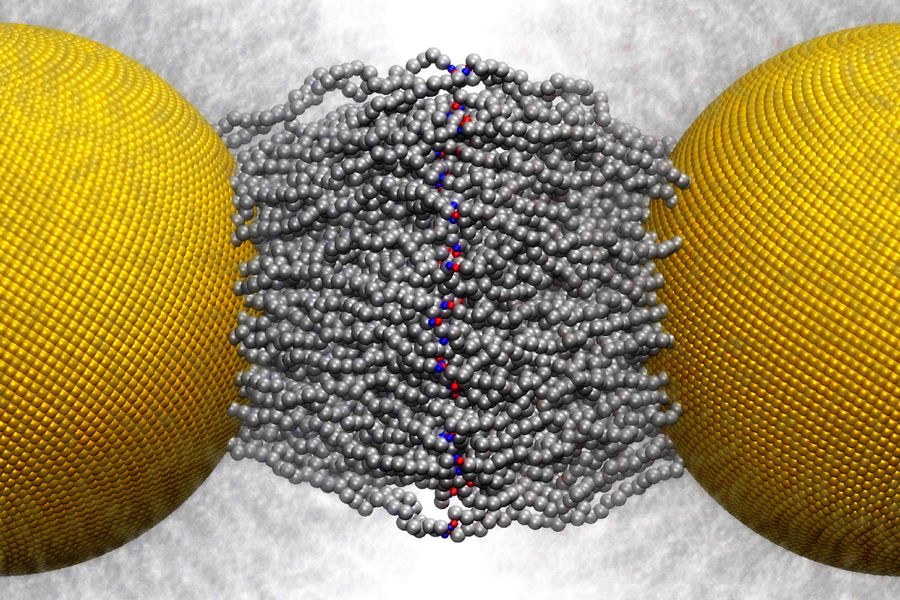
Researchers have shown that super-flexible connector molecules, rather than rigid ones, can tune how nanoparticles pack into larger structures. By varying ligand chain length, particle size and electric charge, the team assembled nanoparticles into crystal lattices never seen before and controlled the number of bonds each particle forms.
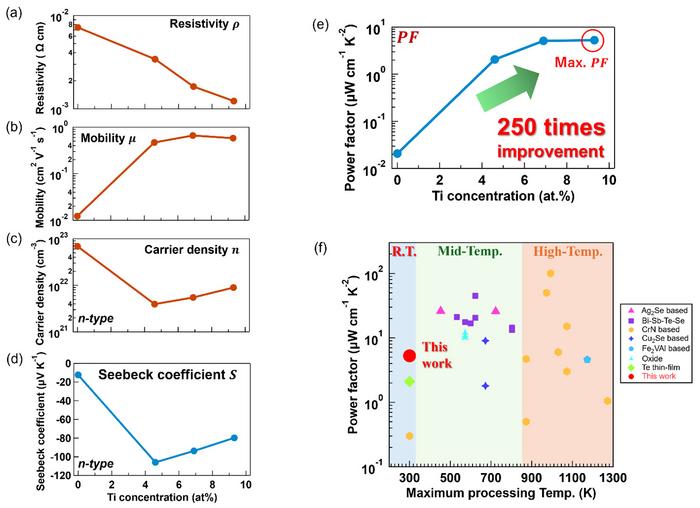
Researchers at Tohoku University have raised the power factor of chromium nitride thin films 250-fold by doping them with small amounts of titanium, reaching 5.26 µW cm⁻¹ K⁻². Titanium's stronger affinity for nitrogen suppresses nitrogen vacancies, cutting carrier concentration while boosting electron mobility by roughly two orders of magnitude.
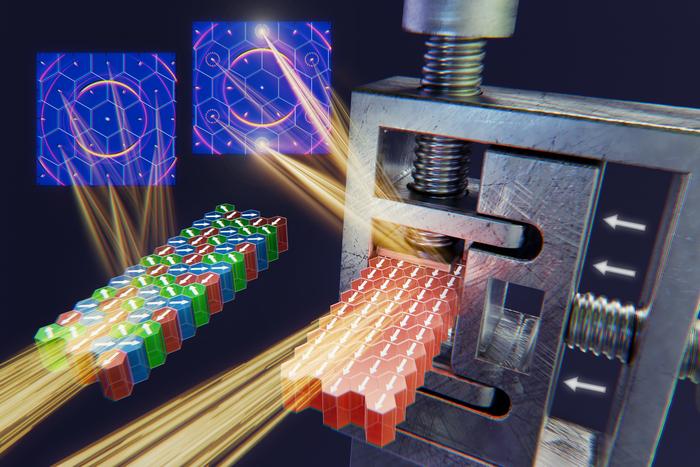
Neutron diffraction at Oak Ridge National Laboratory has shown that a modest mechanical squeeze can substantially reshape the magnetic behavior of altermagnets, a class of materials under investigation for spintronics. Squeezing manganese telluride and iron sulfide crystals between titanium plates altered their magnetic domain populations and changed the anomalous Hall effect, which governs electron transport.
This week in nanotech
$548.4M raised
2 funding rounds · 19 deals tracked
New products
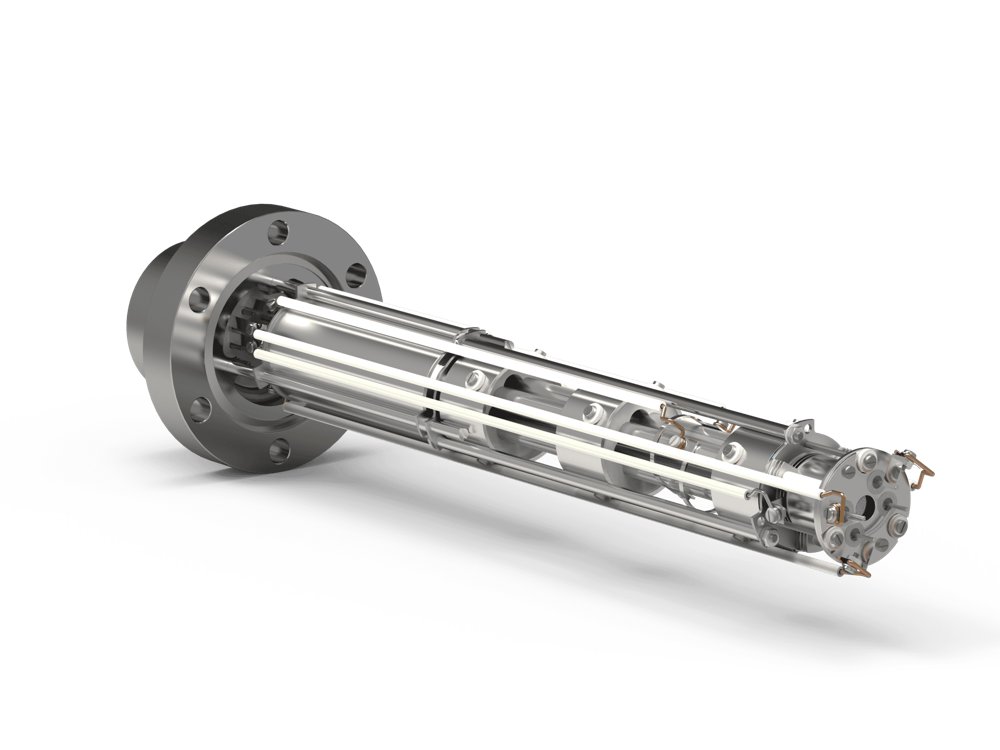 DLS-1 Mass Spectrometer for Fusion Gas AnalysisHiden Analytical Featured
 Nion-compatible In Situ STEM Holders for Electrical BiasingHummingbird Scientific Featured
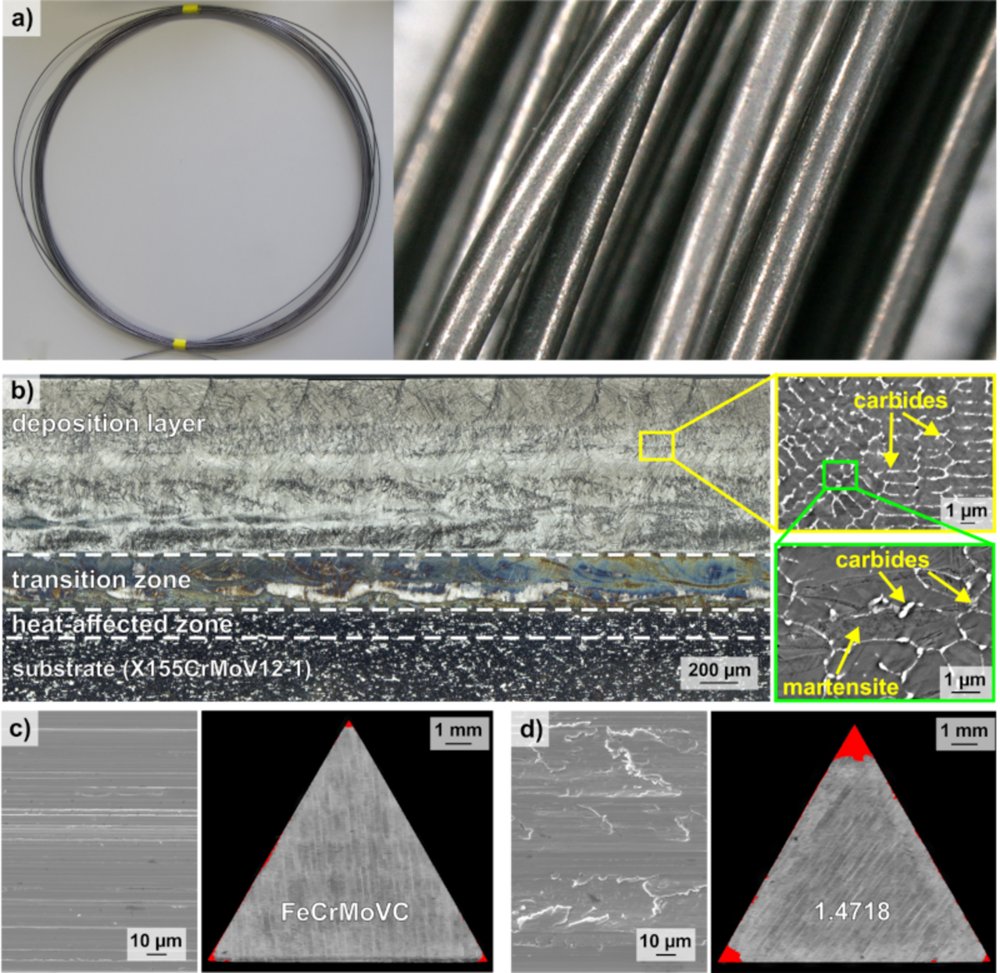 Fe85Cr4Mo8V2C1 wire filler materialLeibniz Institute for Solid State and Materials Research Dresden - IFW Dresden
Market insights
Last 30 days: Quantum Technologies drew the most money: $2.15B.
Money raised per month
Behind the deal
Who led Qilimanjaro Quantum Tech’s $21.9M Series A?
See the investors with Insights Pro →