EPFL
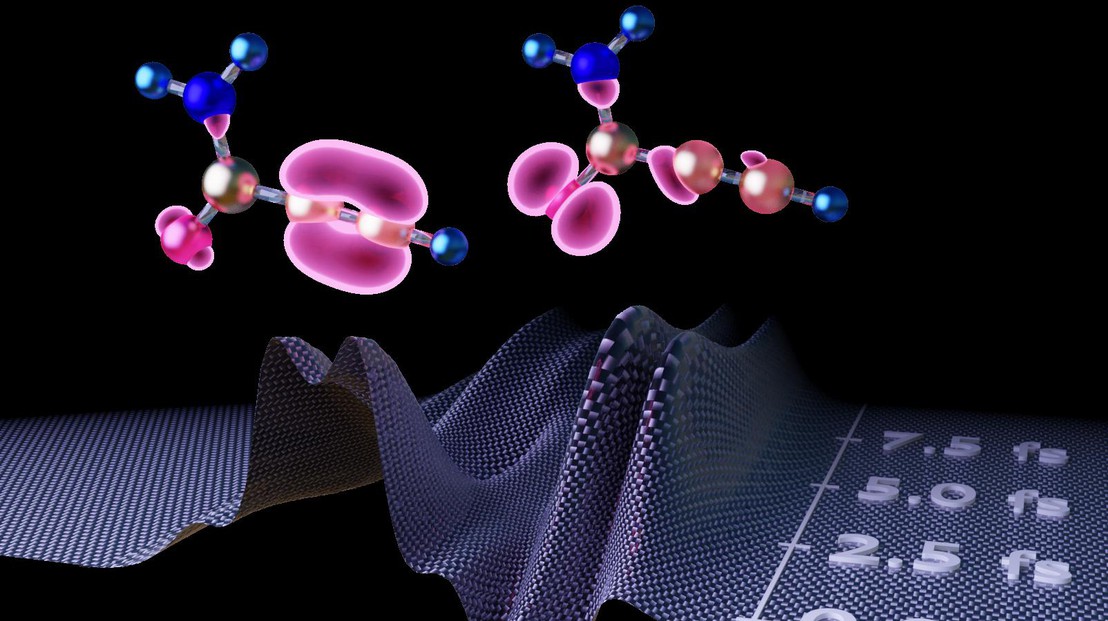
Laser technology is giving scientists an ever-closer look into molecular structures, and this sometimes leads to very interesting surprises. At EPFL’s Laboratory of Theoretical Physical Chemistry (LCPT), a research team studying the dynamics of polyatomic molecules – molecules made up of several atoms – came across one such surprise. They found that electrons in these molecules move quite differently from what would be expected in isolated atoms.
In isolated atoms, the oscillations of electron density are regular, but in most polyatomic molecules, the oscillations quickly become damped. This process is known as decoherence. However, in some molecules the oscillations last longer before decoherence sets in. The EPFL researchers developed a method which captures the physical mechanism behind decoherence, which consequently enables them to identify molecules with long-lasting coherences. Their method could prove interesting in the development of new electron-based technology or studying quantum effects in biomolecules. The findings were recently published in Physical Review Letters.
“Electron movement takes place extremely rapidly – on an attosecond scale – so it’s very difficult to observe,” says Nikolay Golubev, a post-doc at LCPT and the study’s lead author. Furthermore, electron motion is strongly coupled to other processes in a molecule. This is why the research team incorporated additional piece of information into their study: the slower dynamics of the atomic nuclei and its influence on that of electrons. It was found that in most molecular structures the slow nuclear rearrangement damps the initially coherent oscillations of electrons and makes them disappear in a few femtoseconds.
A semiclassical approach
To determine whether this phenomenon is actually taking place, the researchers developed a theoretical technique for an accurate and efficient description of the dynamics of electrons and nuclei after the molecules are ionized by ultrashort laser pulses. They used what’s considered a semiclassical approach in that it combines quantum features, like the simultaneous existence of several states, and classical features, namely classical trajectories guiding the molecular wavefunctions. This method allows scientists to detect the decoherence process much faster, making it easier to analyze many molecules and therefore spot ones that could potentially have long-lasting coherences.
“Solving the Schrödinger equation for the quantum evolution of a polyatomic molecule’s wavefunction exactly is impossible, even with the world’s largest supercomputers,” says Jiri Vanicek, head of the LCPT. “The semiclassical approach makes it possible to replace the untreatable quantum problem with a still difficult, but solvable, problem, and provides a simple interpretation in which the molecule can be viewed as a ball rolling on a high-dimensional landscape.”
To illustrate their method, the researchers applied it to two compounds: propiolic acid, whose molecules present long lasting coherence, and propiolamide (a propiolic acid derivative), in which the decoherence is fast. The team hopes to soon be able to test their method on hundreds of other compounds as well.
Their discovery marks an important step towards a deeper understanding of molecular structures and dynamics, and stands to be a useful tool for observing long-lived electronic coherence in molecules. Backed with a better understanding of the decoherence process, scientists could one day be able to observe exactly how molecules act in biological tissue, for example, or create new kinds of electronic circuits.
Reference:
Nikolay V. Golubev, Tomislav Begušić, and Jiří Vaníček
Phys. Rev. Lett. 125, 083001 – Published 17 August 2020
Contact:
Nikolay Golubev
Postdoctoral Researcher, Laboratory of Theoretical Physical Chemistry
+41 21 693 49 53
nikolay.golubev@epfl.ch
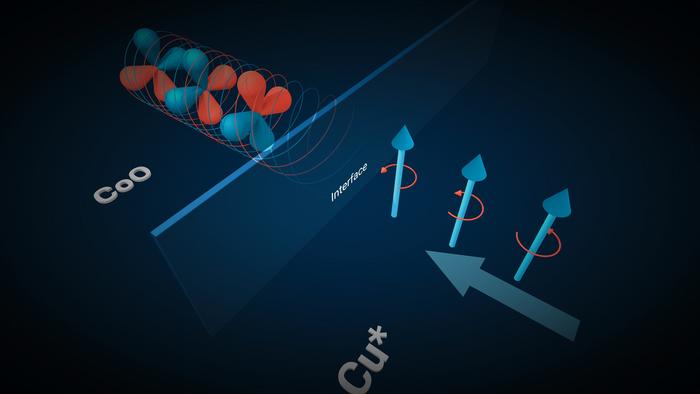
Researchers at Johannes Gutenberg University Mainz (JGU) are the first to directly utilize orbital currents without the need for conversion of the orbital current into a spin current. “We have thus realized the first purely orbitronic device approach,” said Dr. Christin Schmitt, a scientist in the research group of Professor Mathias Kläui at the JGU Institute of Physics. Orbitronics is a promising technology for future memory devices, as it could enable the realization of large-scale storage...
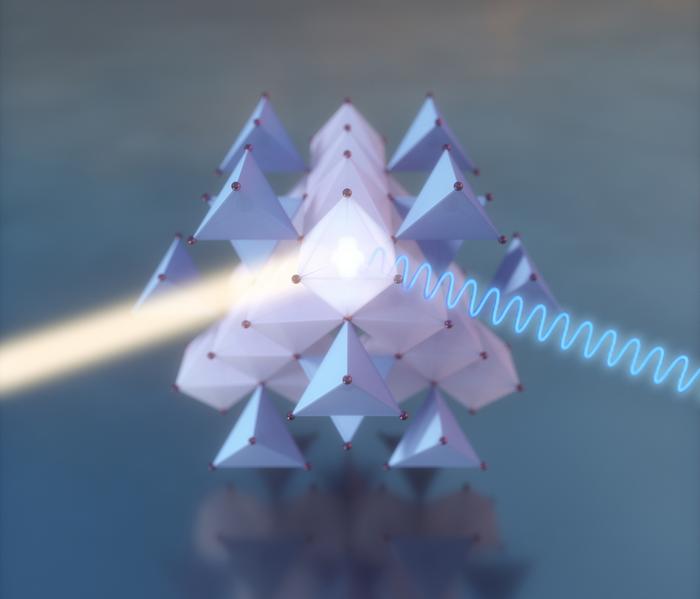
An international research team has observed Jahn-Teller polarons, unique quasiparticles, in cobalt oxide (Co₃O₄) crystals triggered by precisely tailored laser pulses. These polarons emerge through ultrafast electron transfer and local lattice distortions, dramatically influencing the material’s structural, electronic, and magnetic properties. Using advanced pump probe spectroscopy and theoretical modeling led by physicists at the Institute of Nuclear Physics of the Polish Academy of Sciences...
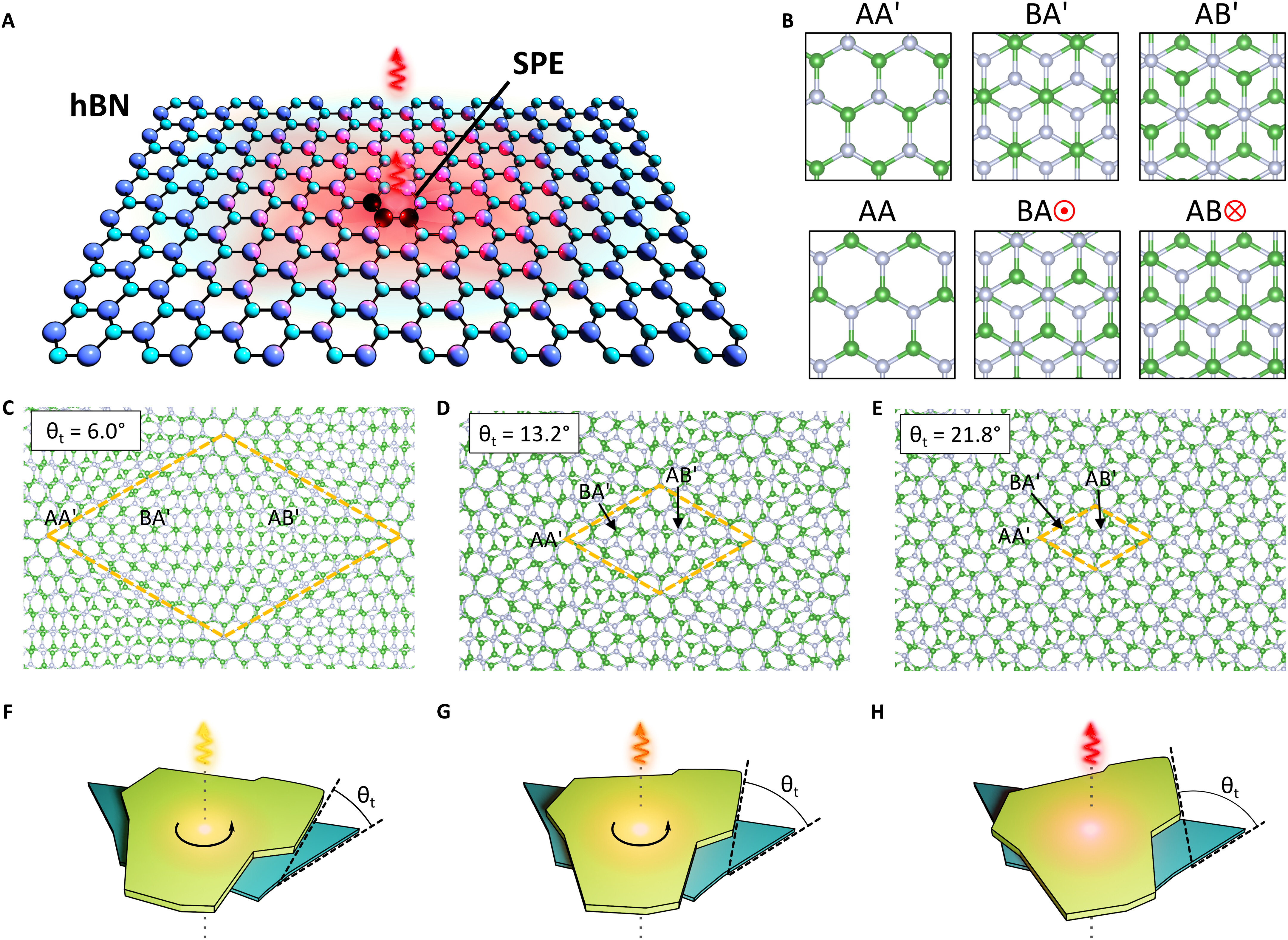
Researchers at the University of Technology Sydney (UTS), in collaboration with the University of Minnesota and Kyung Hee University, have discovered a powerful new way to control tiny quantum light sources by twisting atomically thin layers of hexagonal boron nitride (hBN). In a study published in Science Advances, the team demonstrated that by stacking and twisting hBN layers, they could significantly shift the color and wavelength of quantum emitters. This twistable platform offers far gre...
This week in nanotech
$558.4M raised
5 funding rounds · 34 deals tracked
New products
 Ti-WCMBN Nanomaterialia Featured
 DLS-1 Mass Spectrometer for Fusion Gas AnalysisHiden Analytical Featured
 Ionic® Purification SystemBionano Genomics, Inc.
Market insights
Last 30 days: Quantum Technologies drew the most money: $2.15B.
Money raised per month