Tokyo Metropolitan University (TMU)

Researchers from Tokyo Metropolitan University have developed a new way of calculating simple holograms for heads-up displays (HUDs) and near-eye displays (NEDs). The method is up to 56 times faster than conventional algorithms and does not require power-hungry graphics processing units (GPUs), running on normal computing cores like those found in PCs. This opens the way to developing compact, power-efficient, next-gen augmented reality devices, including 3D navigation on car windshields and eyewear.
The term hologram may still have a sci-fi ring to it, but holography, the science of making records of light in 3D, is used everywhere, from microscopy, fraud prevention on banknotes to state-of-the-art data storage. Everywhere, that is, except for its most obvious offering: truly 3D displays. The deployment of truly 3D displays that don't need special glasses is yet to become widespread. Recent advances have seen virtual reality (VR) technologies make their way into the market, but the vast majority rely on optical tricks that convince the human eye to see things in 3D. This is not always feasible and limits its scope.
One of the reasons for this is that generating the hologram of arbitrary 3D objects is a computationally heavy exercise. This makes every calculation slow and power-hungry, a serious limitation when you want to display large 3D images that change in real-time. The vast majority require specialized hardware like graphics processing units (GPUs), the energy-guzzling chips that power modern gaming. This severely limits where 3D displays can be deployed.
Thus, a team led by Assistant Professor Takashi Nishitsuji looked at how holograms were calculated. They realized that not all applications needed a full rendering of 3D polygons. By solely focusing on drawing the edge around 3D objects, they succeeded in significantly reducing the computational load of hologram calculations. In particular, they could avoid using Fast-Fourier Transforms (FFTs), the intensive math routines powering holograms for full polygons. The team combined simulation data with real experiments by displaying their holograms on a spatial light modulator (SLM) and illuminating them with laser light to produce a real 3D image. At high resolution, they found that their method could calculate holograms up to 56 times faster, and that the images compared favorably to those made using slower, conventional methods. Importantly, the team only used a normal PC computing core with no standalone graphics processing unit, making the whole process significantly less resource hungry.
Faster calculations on simpler cores means lighter, more compact, power-efficient devices that can be used in a wider range of settings. The team have their sights set on heads-up displays (HUDs) on car windshields for navigation, and even augmented reality eyewear to relay instructions on hands-on technical procedures, both exciting prospects for the not too distant future.
Fast calculation of computer-generated hologram of line-drawn objects without FFT
Takashi Nishitsuji, Tomoyoshi Shimobaba, Takashi Kakue, and Tomoyoshi Ito
Optics Express (2020) Volume 28, Issue 11, Page 15907
DOI: 10.1364/OE.389778
Contact information:
Assistant professor of holography & information optics at TMU
nishitsuji@tmu.ac.jp
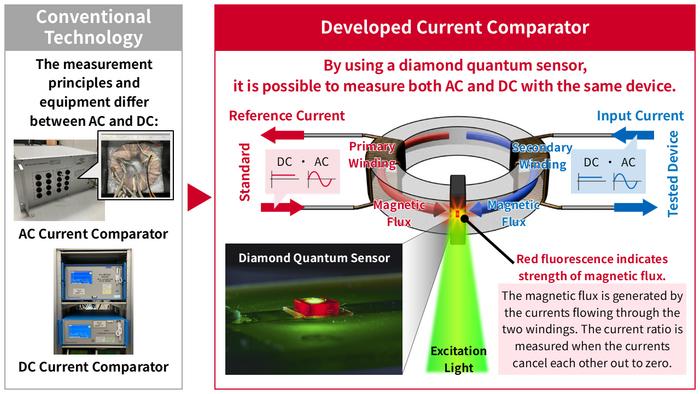
Compact current comparator based on diamond quantum sensing for the unified calibration of AC and DC current measurement instruments Researchers at AIST, in collaboration with the Institute of Science Tokyo and the National Institutes for Quantum Science and Technology, have developed a “current comparator” that uses diamond quantum sensors to accurately evaluate both AC and DC current ratios using the same device setup. A current comparator is a device for the calibration of current...
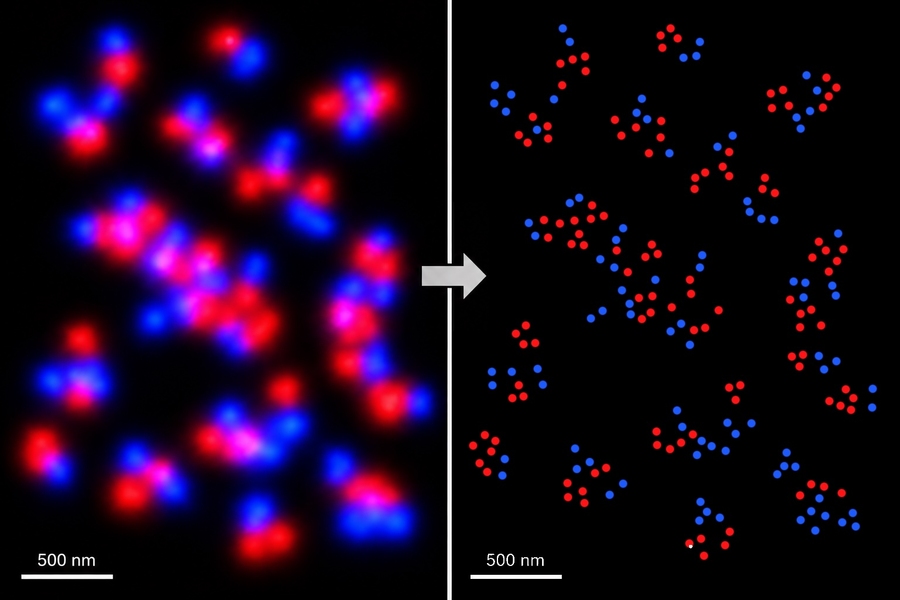
MIT and Broad Institute researchers have developed U-STORM, a super-resolution microscopy platform using engineered upconverting nanoparticles that blink spontaneously and indefinitely. The method achieves 0.6-angstrom localization precision with a single near-infrared laser, enabling multicolor imaging without complex buffers or multiple lasers. This simplifies high-precision molecular imaging for biological applications. Published in Nature Nanotechnology.
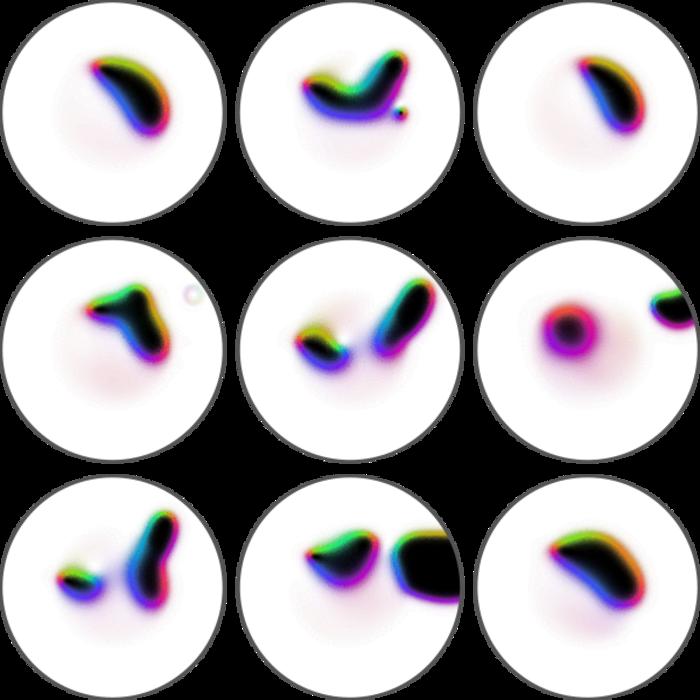
A team of researchers from the Max Born Institute, the Ferdinand Braun Institute, the University of Augsburg, and the Helmholtz-Zentrum Berlin has succeeded in directly imaging the effect of short current pulses on a skyrmion.
