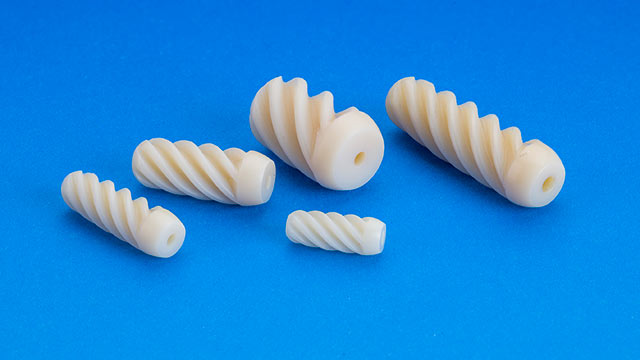
An innovative orthopedic medical device fabricated from a novel biomaterial pioneered in the laboratory of Northwestern University professor Guillermo A. Ameer has received clearance from the U.S. Food and Drug Administration (FDA) for use in surgeries to attach soft tissue grafts to bone.
The biomaterial is the first thermoset biodegradable synthetic polymer ever approved for use in an implantable medical device. It’s unique chemical and mechanical properties enable cutting-edge implant designs that protect the soft tissue graft during insertion and optimize graft fixation to bone.
Ameer’s biomaterial, called CITREGEN™, helps grafted tissues heal by recreating their intrinsic biochemical and structural support network.
CITREGEN’s critical component, citrate, is a naturally occurring anti-microbial and anti-inflammatory molecule that plays a crucial role in bone regeneration, where it regulates cellular metabolic processes and the formation of mineral structures. Ameer spent more than 15 years studying citrate to develop new materials for regenerative engineering. This work that has been expanded upon by other researchers around the world, most notably Jian Yang, Ameer’s former postdoctoral trainee and current chair of The Lloyd and Dorothy Foehr Huck Center for Regenerative Engineering at The Pennsylvania State University.
“CITREGEN is an unprecedented and innovative bioresorbable biomaterial technology developed to support the body’s normal healing process and promote tissue regeneration,” Ameer said. “When used to fabricate devices for reconstruction of tissues, such as ligaments, blood vessels, bladder and bone, results have been impressive and beyond our expectations.”
Ameer is the Daniel Hale Williams Professor of Biomedical Engineering in Northwestern’s McCormick School of Engineering and a professor of surgery in Northwestern’s Feinberg School of Medicine. He also is founding director of Northwestern’s Center for Advanced Regenerative Engineering.
CITREGEN is the core material technology in the CITRELOCK™ Interference Screw System, which will be produced and marketed by Acuitive Technologies, Inc. The system is intended for soft tissue attachment or fixing ligaments and tendon graft tissue in joint surgeries. After surgery, CITREGEN releases molecules essential to bone formation. As CITREGEN is absorbed by the body, it leaves behind a biocompatible ceramic structure that is metabolized by the body’s tissue. This bioresorption process avoids the bulk degradation and chronic inflammation that commonly accompanies other biodegradable polymers on the market.
The CITRELOCK Interference Screw System will become available through Acuitive’s orthopaedic distribution partner in early 2021.
“After almost two decades of research on this advanced materials technology, I am delighted to see a transformative product get FDA clearance and come to market, an effort led by a spectacular team at Acuitive,” Ameer said.
Ameer also is a member of the Simpson Querrey Institute, Chemistry of Life Processes Institute and International Institute for Nanotechnology.
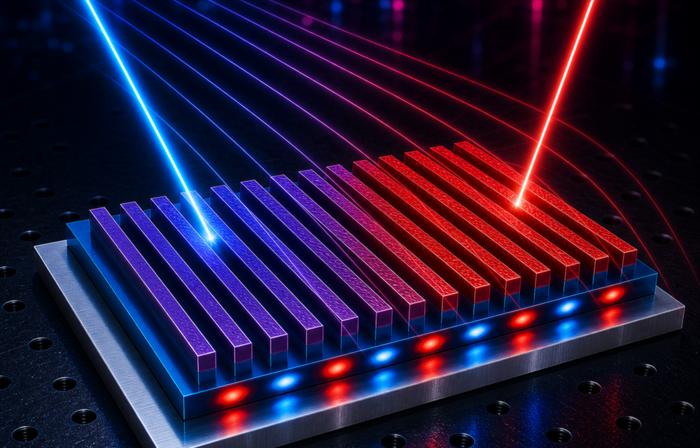
certain wavelength and direction will also emit heat in the same ways. This fundamental relationship, known as reciprocity, limits our ability to independently control heat absorption and heat emission. But if absorption and emission could be separated, engineers could design devices that absorb heat from one direction while emitting it in another. By ‘steering’ thermal energy, they could create more efficient thermal management, energy conversion, infrared sensing, and thermal communicati...
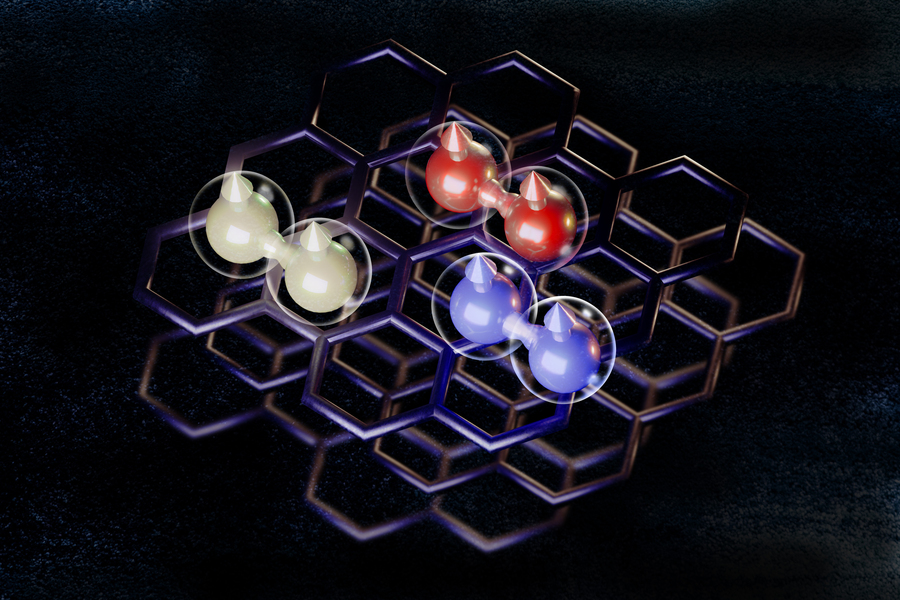
MIT researchers have found that rhombohedral graphene — a naturally occurring staircase-like stack of four or five atomically thin carbon layers found in ordinary graphite — can host multiple distinct superconducting states simultaneously, a rarity among known superconductors. Publishing in Nature, the team reports that three of these states not only survive exposure to magnetic fields up to around 9 tesla (roughly 180,000 times Earth's magnetic field), which would normally destroy supercondu...
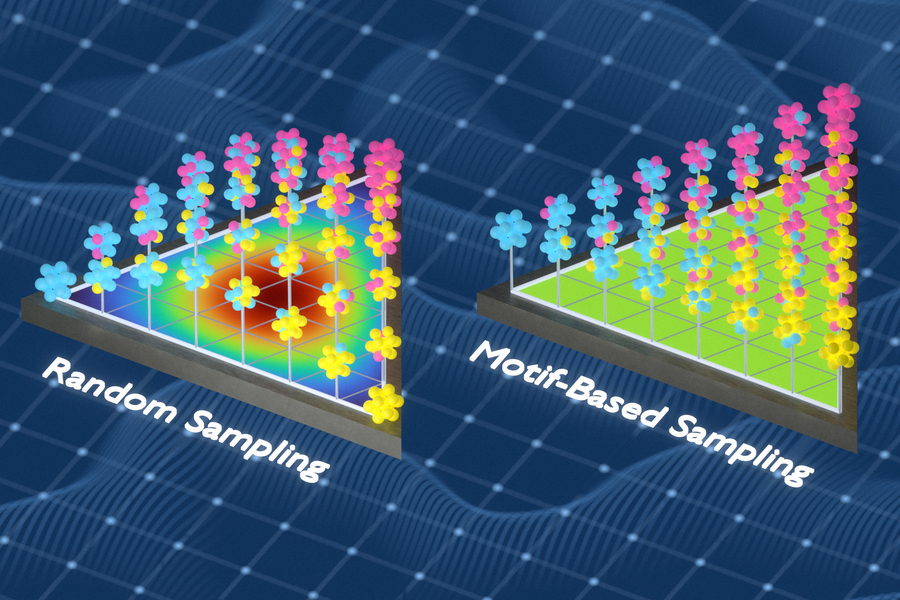
MIT researchers have developed a new approach that dramatically improves the modeling of chemically disordered metal alloys, a long-standing challenge in materials science. Traditional simulation techniques struggle with the complex atomic arrangements in real-world alloys. The team addressed this by creating smarter training datasets for machine-learning models that better capture the diverse local chemical environments in disordered materials. Using information theory to generate more repre...
This week in nanotech
$281.1M raised
6 funding rounds · 36 deals tracked
New products
 Nion-compatible In Situ STEM Holders for Electrical BiasingHummingbird Scientific Featured
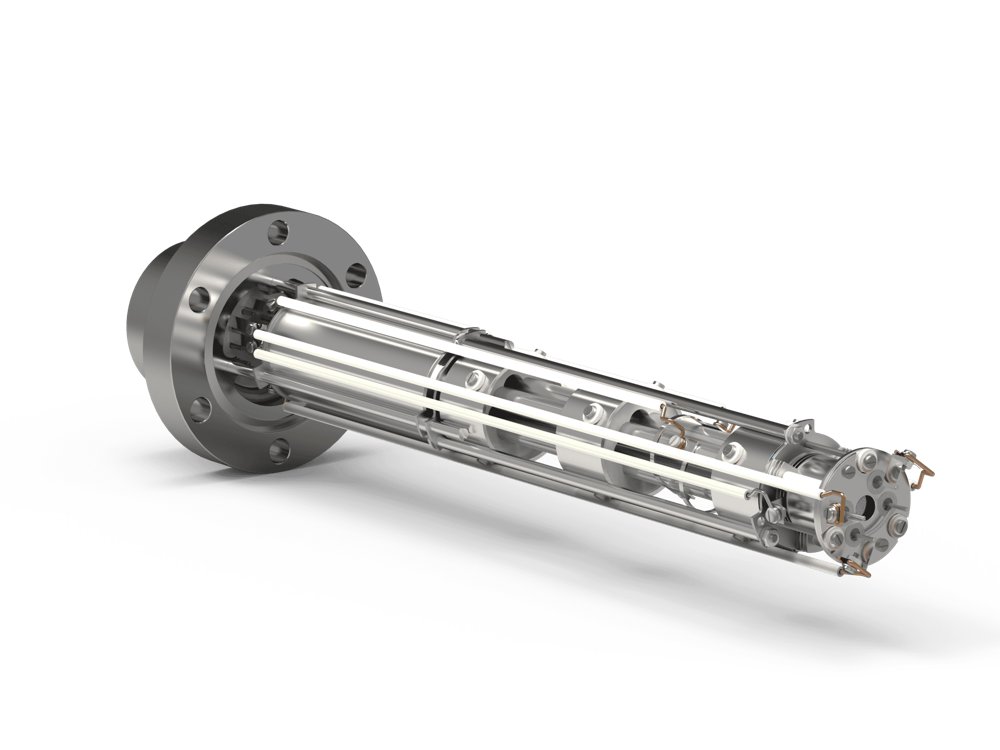 DLS-1 Mass Spectrometer for Fusion Gas AnalysisHiden Analytical Featured
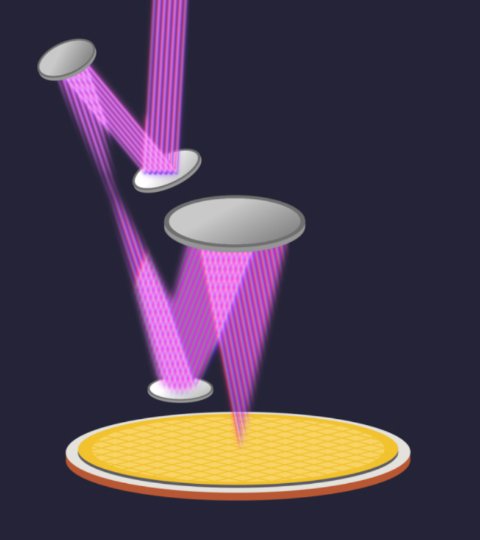 Aether®Lam Research
Market insights
Last 30 days: Quantum Technologies drew the most money: $3.17B.
Money raised per month