Aarhus University
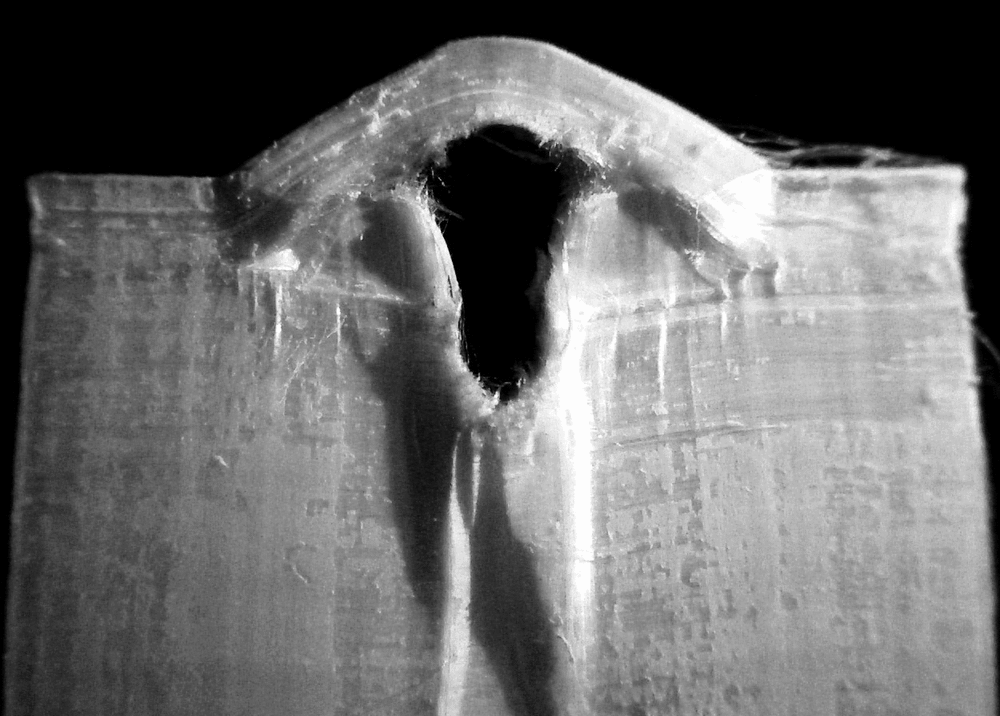
Imagine a velvety, soft material that is extremely light, but also strong enough to stop a bullet. This is close to a description of ultra-high molecular weight polyethylene (UHMWPE), a super-plastic material commercially known as Dyneema or Spectra, which is already taking over from the para-aramid fibrous material, Kevlar, in e.g. bullet-proof jackets.
There is also much need for the super material in many other applications than body armour, and therefore researchers have now set up guidelines and failure maps for use of the material in joints with steel bolts. The research team is being led by Simon Skovsgård, PhD and MSc in engineering at the Department of Engineering, Aarhus University, and Professor Norman Fleck at the University of Cambridge.
The results have just been published in the International Journal of Solids and Structures.
"The tests we've done showed that the material began to deform at the joints, but the fibres weren't broken. This is interesting in relation to other popular composite materials, such as carbon fibre composites, which snaps suddenly. Here, although we can tear the material, it's really difficult to actually break the fibres," says Simon Skovsgård.
UHMWPE consists of extremely long chains of polyethylene (PE). And these long chains strengthen the intermolecular interactions of the substance and enable the material to transfer stress loads effectively to the polymer skeleton.
This means that UHMWPE fibres has an incredibly high tensile strength compared to many other thermoplastics, and this also means that the material is much stronger than steel in the fibre direction. The tensile strength of high-strength steel is approx. 900 MPa, but in order to break the fibres in UHMWPE, you need approximately 3000 MPa.
"UHMWPE fibre plates are a collection of these incredibly strong fibres. It's almost impossible to extend and break the fibres, but if you twist or shear the material, it is soft. This combination makes it easy for the material to absorb energy," says Simon Skovsgård.
The new research results are good news for the commercial use of UHMWPE, which is increasingly being introduced in the shipping industry in containers, ropes and nets, as well as armour for vehicles and personnel and in the textile industry. So far, there has been no experience with using the material combined with other materials.
Load transfer within the bolted joint of a laminate made from ultra-high molecular weight polyethylene fibres
S.P.H.Skovsgaard, H.M.Jensen, N.A.Fleck
International Journal of Solids and Structures 16 August 2019
DOI: 10.1016/j.ijsolstr.2019.08.014
Contact infromation:
Postdoctoral researcher at Department of Engineering, Aarhus University
sphs@eng.au.dk
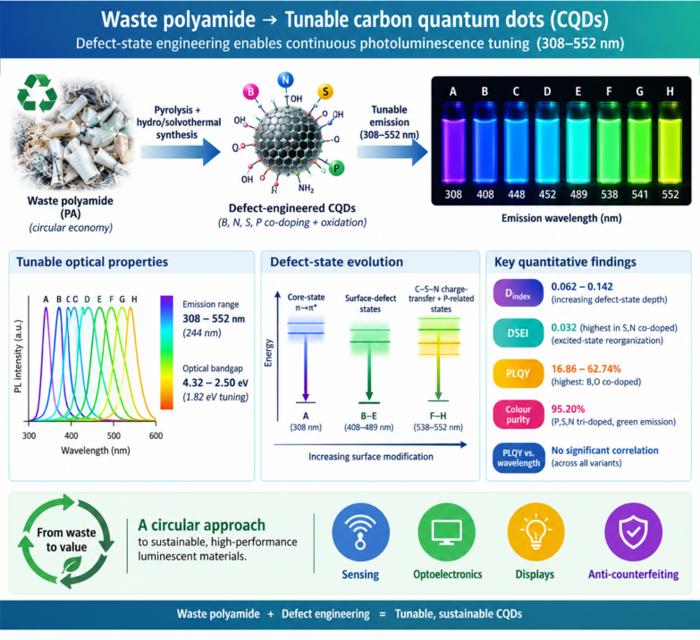
Waste polyamide-derived CQDs show continuous photoluminescence tuning from 308 to 552 nm through sequential defect-state engineering, with optical transition energies decreasing from 4.32 to 2.50 eV. @Christian Ebere Enyoh from Saitama University Carbon quantum dots (CQDs) are fluorescent carbon nanomaterials with potential applications in sensing, optoelectronics, displays, anti-counterfeiting, and environmental technologies. Their optical properties can be adjusted by modifying the carbon...
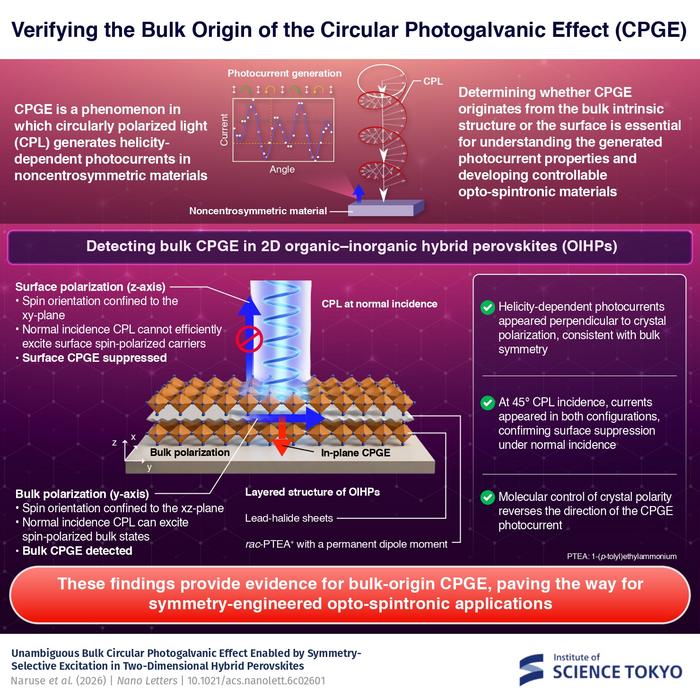
The researchers used circularly polarized light at normal incidence and found that helicity-dependent photocurrents appeared perpendicular to the crystal’s polarization but vanished when measured parallel to it, supporting a bulk origin of CPGE. @Institute of Science Tokyo The circular photogalvanic effect (CPGE), a phenomenon that generates helicity-dependent photocurrents in noncentrosymmetric materials, can originate purely from a crystal's internal structure without contribution from the...
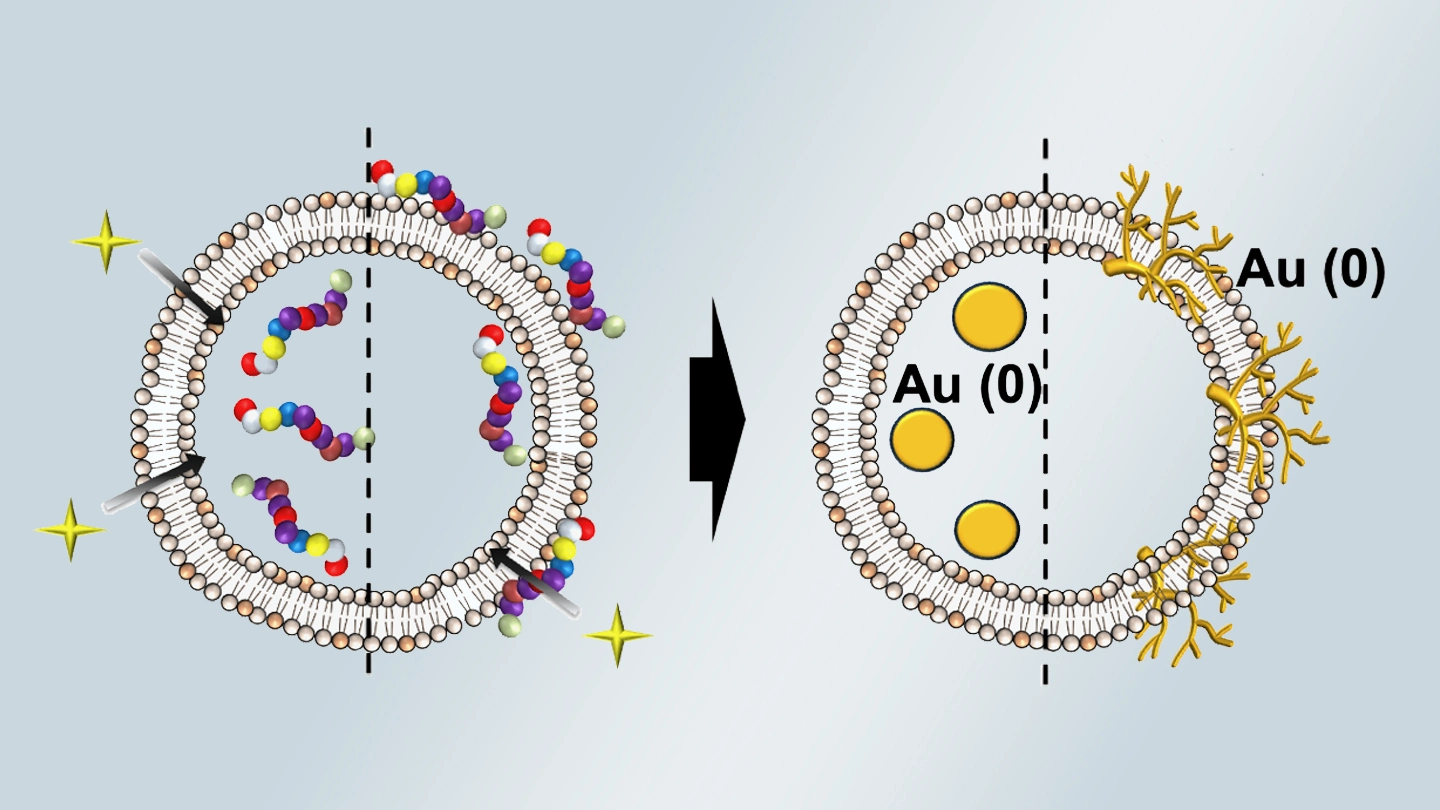
Summary of gold nanoparticle growth programming in liposome based on localization of biomineralization peptide The position of biomineralization peptides within liposomes can influence how gold nanoparticles grow, reports a research team from Institute of Science Tokyo. Peptides localized at the membrane interface promote branched structures, while those confined to the liposome interior favor spherical nanoparticles. The findings offer a new strategy for controlling nanoscale reaction...
