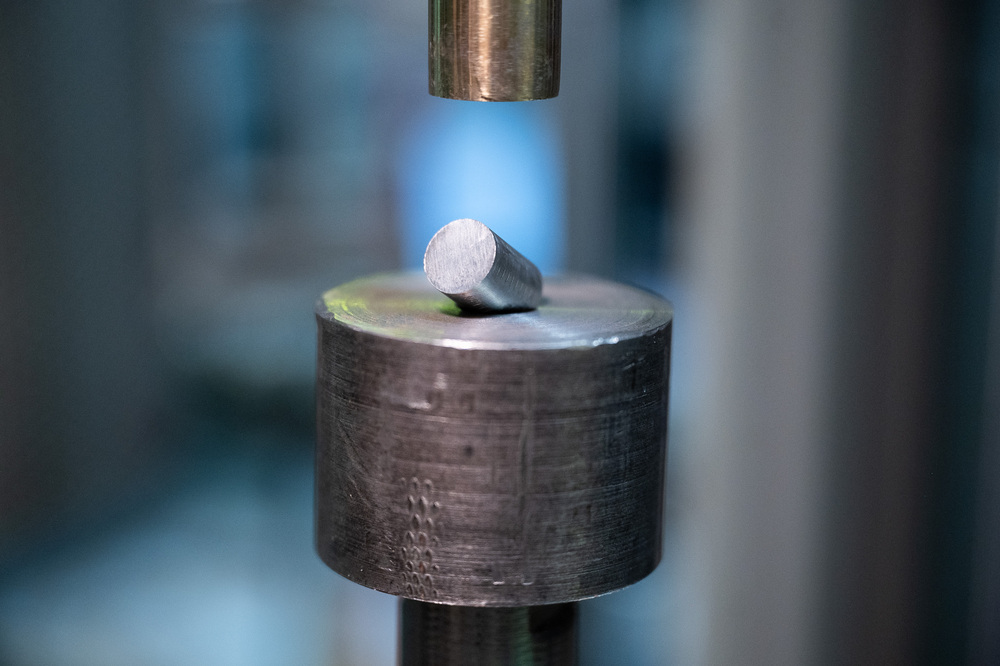
NUST MISIS researchers presented new heat-resistant composites based on aluminum alloy AA6063 for aviation and oil and gas complexes. Unlike conventional aluminum alloys, they are capable of operating at temperatures above 300°C.
Thanks to mechanical alloying, the scientists introduced ready-made aluminide particles into aluminum, which led to an increase in the heat resistance of the developed composites.
“The heat-resistant aluminum composite we have created is a promising development for use in conditions where temperatures exceed 300°C. For example, in braking systems, engines, turbines and drilling rigs. The strength limit of our materials at 300°C exceeds 240 MPa, and at room temperature it is more than 900 MPa. Such materials can become an effective replacement for heavy steels and expensive titanium alloys, which are currently used,” Alexey Proskviryakov, senior researcher at the Laboratory of Ultrafine-grained Metallic Materials at NUST MISIS.
Structural analysis after 30-hour high-energy treatment and subsequent hot pressing at temperatures of 400°C and 500°C showed the formation of a nanocrystalline structure with aluminum crystals about 100 nm in size and dispersed particles of intermetallic compounds. Detailed results of the study are published in the scientific journal The Journal of The Minerals (Q1).
“The obtained composite samples demonstrate high strength characteristics. Additional introduction of copper into the composite structure led to an increase in hardness from 200 HV to 300 HV,” Anastasia Mikhaylovskaya, head of the Laboratory of Ultrafine-grained Metallic Materials at NUST MISIS, PhD, research leader.
Further research by the scientists will be focused on optimising the material composition and production processes.
The study aligns with the goals of NUST MISIS’s Materials of the Future strategic project under the Russian Ministry of Science and Higher Education’s Priority 2030 program.
Reference
Development of Heat-Resistant Composites Based on Al-Mg-Si Alloy Mechanically Alloyed with Aluminide Particles
A. S. Prosviryakov, A. I. Bazlov & A. V. Mikhaylovskaya
https://link.springer.com/article/10.1007/s11837-023-06278-4
National University of Science and Technology MISiS
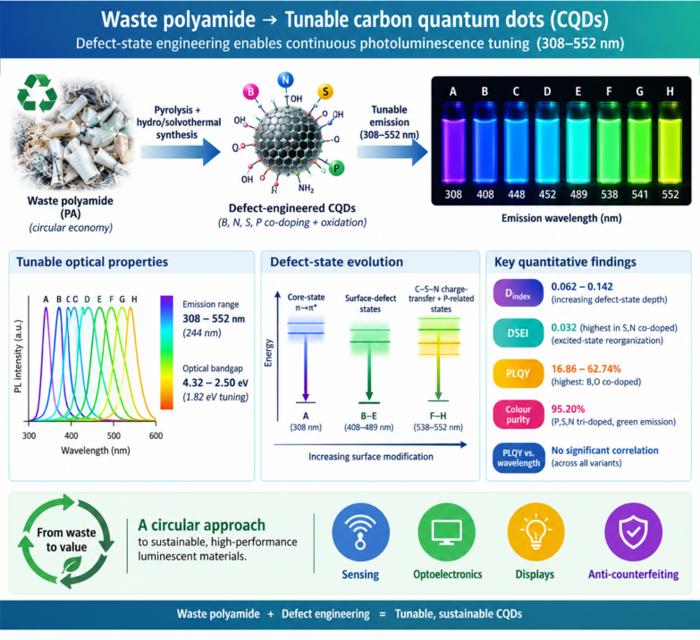
Waste polyamide-derived CQDs show continuous photoluminescence tuning from 308 to 552 nm through sequential defect-state engineering, with optical transition energies decreasing from 4.32 to 2.50 eV. @Christian Ebere Enyoh from Saitama University Carbon quantum dots (CQDs) are fluorescent carbon nanomaterials with potential applications in sensing, optoelectronics, displays, anti-counterfeiting, and environmental technologies. Their optical properties can be adjusted by modifying the carbon...
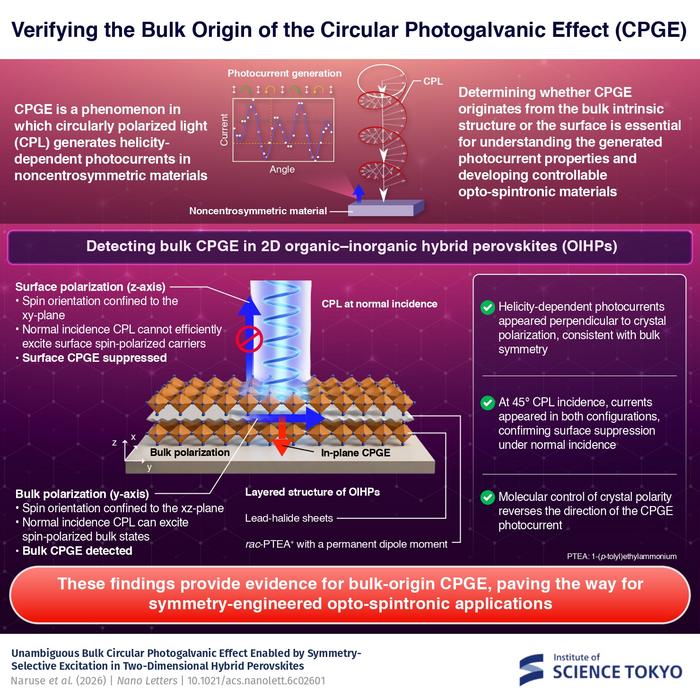
The researchers used circularly polarized light at normal incidence and found that helicity-dependent photocurrents appeared perpendicular to the crystal’s polarization but vanished when measured parallel to it, supporting a bulk origin of CPGE. @Institute of Science Tokyo The circular photogalvanic effect (CPGE), a phenomenon that generates helicity-dependent photocurrents in noncentrosymmetric materials, can originate purely from a crystal's internal structure without contribution from the...
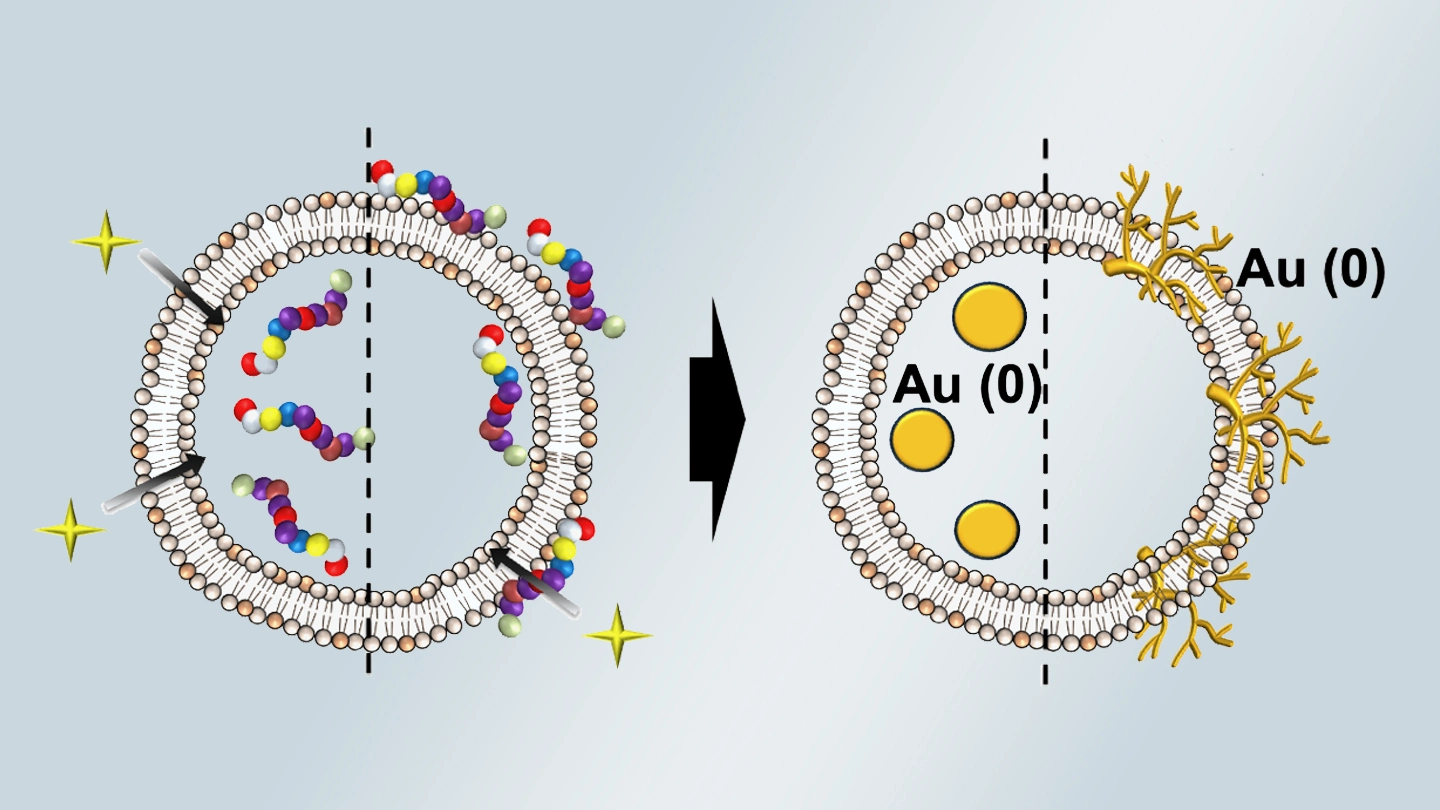
Summary of gold nanoparticle growth programming in liposome based on localization of biomineralization peptide The position of biomineralization peptides within liposomes can influence how gold nanoparticles grow, reports a research team from Institute of Science Tokyo. Peptides localized at the membrane interface promote branched structures, while those confined to the liposome interior favor spherical nanoparticles. The findings offer a new strategy for controlling nanoscale reaction...
