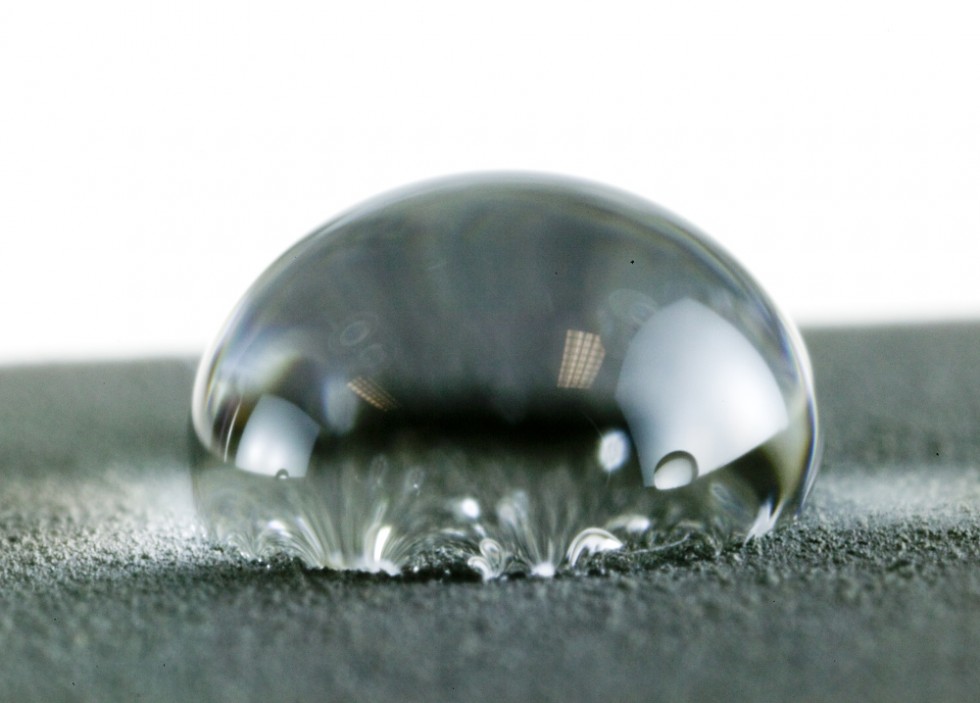
Graphene is a two-dimensional crystal of carbon, with many potential applications such as flexible electronics, efficient transistors and novel sensors. To encourage the uptake of graphene for electrical applications, the challenges of large-scale production and control of its properties under a variety of environmental conditions need to be addressed.
Many graphene-based devices will have to operate in ambient conditions where humidity is non-zero and not monitored. Air humidity can affect graphene's performance through changes in its mechanical and electrical properties - it is therefore critically important to obtain knowledge of graphene's water affinity.
The new study, conducted in collaboration with the Naval Research Laboratory, addresses the much-debated question of whether graphene is hydrophobic or hydrophilic. The common assumption is that graphene, as with many other carbon-based materials, is hydrophobic. This work, published in the American Chemical Society journal ACS Nano, has proved the question to be much more complicated than first thought.
The adhesion and friction properties of single- and double-layer graphene were studied using chemical force microscopy with a hydrophobic probe - a variant of atomic force microscopy where a substrate is studied using the forces between a probe and a surface. A larger adhesion force was measured between the probe and double/triple-layer graphene compared to single-layer graphene, showing that double/triple-layer graphene is more hydrophobic. This suggests that the hydrophobicity depends on the thickness of graphene layers.
These results were further confirmed by the nanoscale mapping of friction forces: hydrophobic domains showed a lower friction force, a result consistent with the fact that the different levels of hydrophobicity tend to affect the arrangement of surrounding water molecules and, in turn, the sliding motion of the probe tip.
The techniques demonstrated by NPL could be used in the future to further our understanding of graphene's wetting behaviour, with a particular focus on the effects of different graphene production methods. In particular, it paves the way to differentiating graphene-based coatings and tailoring them to a specific application.
For example, thicker coatings (double-layer graphene or more) are ideal for hydrophobic applications, such as medical equipment and electronic components. On the other hand, single-layer graphene coatings could be used where a hydrophilic surface is required, as for example in anti-fog glass and coatings for buildings.
Read the ACS Nano article: Thickness-Dependent Hydrophobicity of Epitaxial Graphene
#Graphene
SPECS reports on work at the LMA microscopy lab, where Dr. David Serrate's team used the JT-STM to study graphene nanoribbons on MgO/Ag(001) and the Aarhus 150 to monitor nanostructure growth.
Nanologica's board has resolved on a rights issue of units of appx. SEK 110.5 million, with an oversubscription option of up to SEK 10 million. Commitments and a guarantee intention cover appx. SEK 85.7 million.
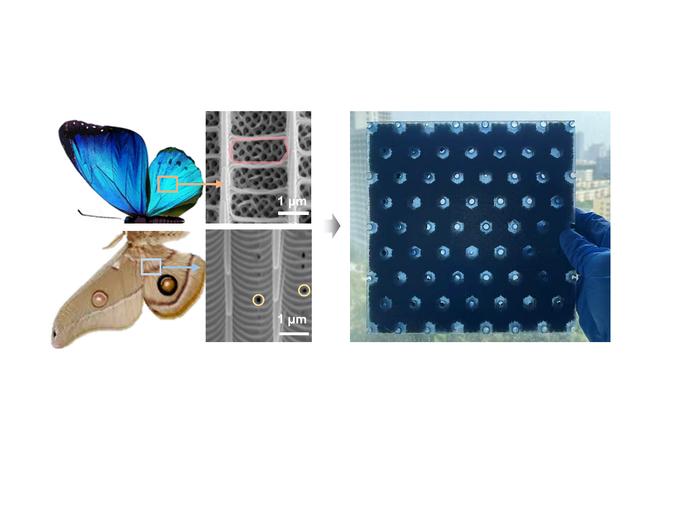
Researchers at Harbin Institute of Technology have printed a 24 mm metamaterial that absorbs impact, shields microwaves and damps low-frequency noise at once. Inspired by butterfly wing scales, it nests a gyroid lattice inside a hexagonal honeycomb, absorbing 21.9 times more impact energy than an equal-weight honeycomb and capturing over 90% of 2-40 GHz radiation and 600-900 Hz sound.
This week in nanotech
$108.5M raised
8 funding rounds · 44 deals tracked
New products
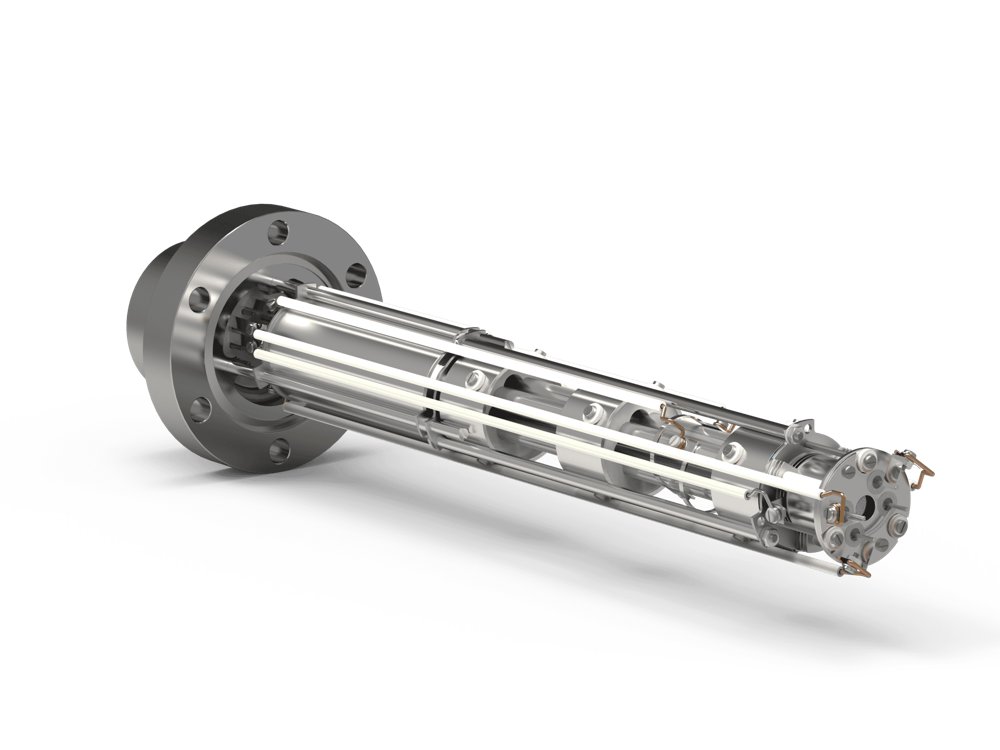 DLS-1 Mass Spectrometer for Fusion Gas AnalysisHiden Analytical Featured
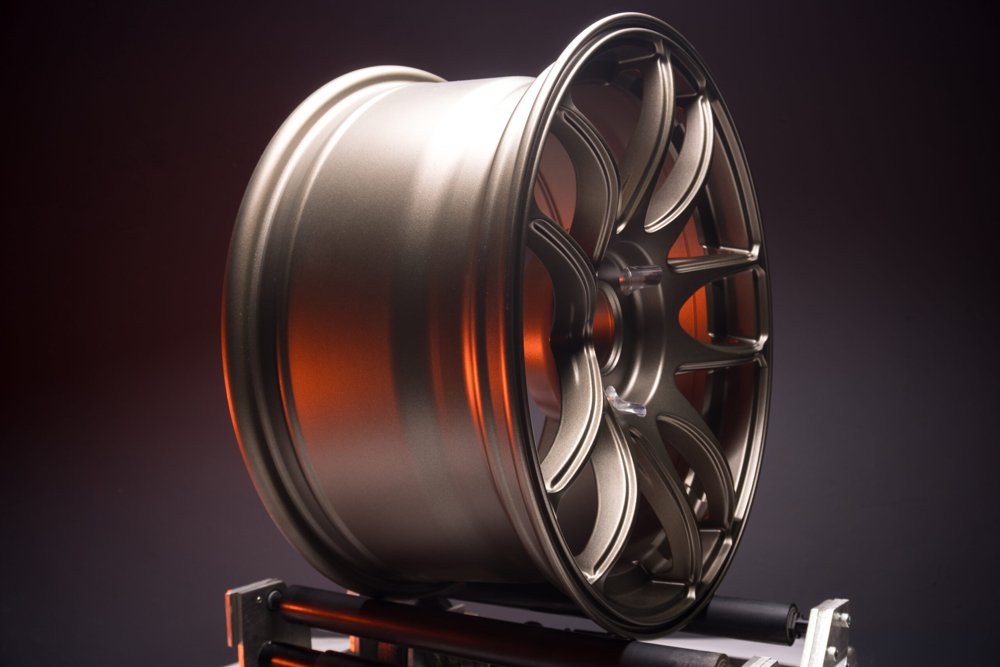 Ti-WCMBN Nanomaterialia Featured
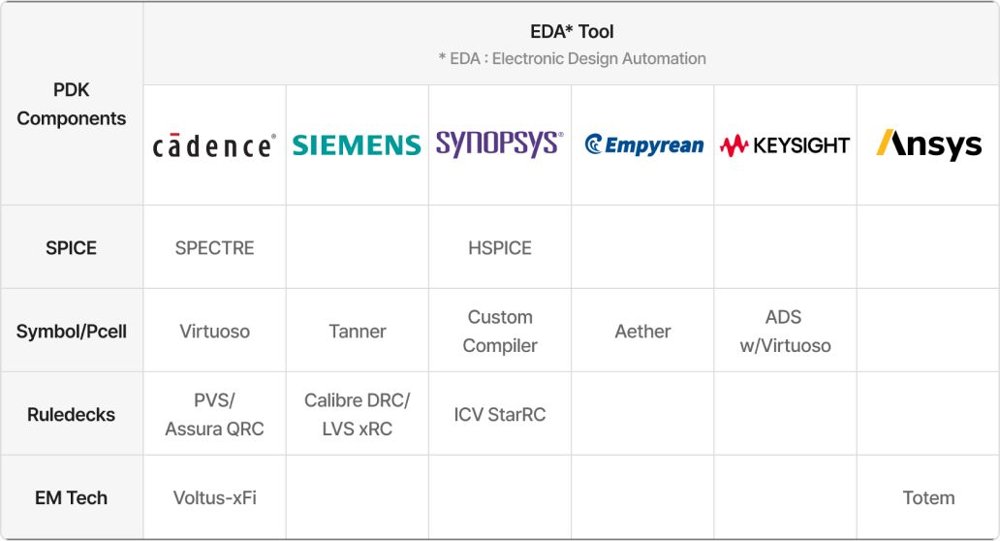 PDK (Process Design Kit)DB HiTek
Market insights
Last 30 days: Quantum Technologies drew the most money: $3.17B.
Money raised per month
Behind the deal
Who invested in Vertical Semiconductor’s $73M Grant?
See the investors with Insights Pro →