Nanoscale “rivets” give graphene qualities that may speed the wonder material’s adoption in products like flexible, transparent electronics, according to researchers at Rice University.
The Rice lab of chemist James Tour reported the creation of “rivet graphene,” two-dimensional carbon that incorporates carbon nanotubes for strength and carbon spheres that encase iron nanoparticles, which enhance both the material’s portability and its electronic properties.
The material is the subject of a paper in the American Chemical Society journal ACS Nano.
Until now, researchers have had to transfer graphene grown via chemical vapor deposition with a polymer layer to keep it from wrinkling or ripping. But the polymer tended to leave contaminants behind and degrade graphene’s abilities to carry a current.
“Rivet graphene proved tough enough to eliminate the intermediate polymer step,” Tour said.
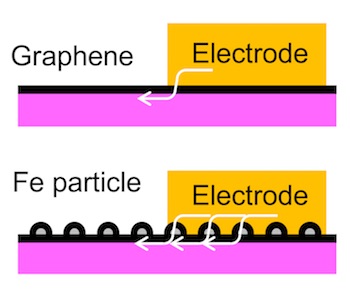
“Also, the rivets make interfacing with electrodes far better compared with normal graphene’s interface, since the junctions are more electrically efficient.
“Finally, the nanotubes give the graphene an overall higher conductivity. So if you want to use graphene in electronic devices, this is an all-around superior material,” he said.
Tests proved rivet graphene retained the strength of the Tour lab’s rebar graphene (which incorporates nanotube reinforcement) as well as rebar’s ability to float on water.
But the rivets also enhanced the material’s ability to transfer current between electrodes and the graphene, even when bent, the researchers reported.
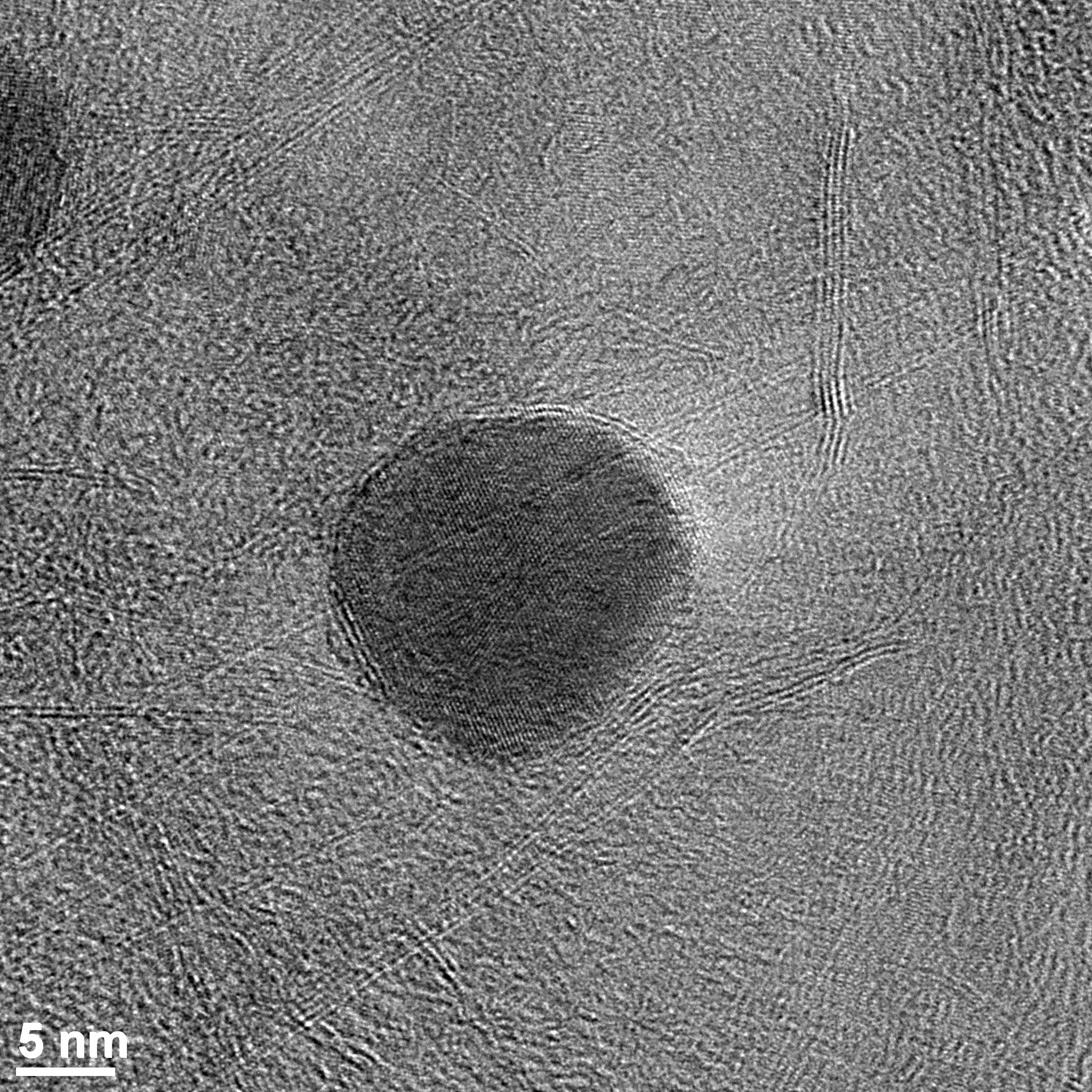
The rivets are layers of carbon wrapped around a 30-nanometer iron core, dubbed “nano-onions” by the lab. The structures are grown in place in the CVD furnace after the dispersal of nanotubes and deposition of graphene. A final step welds all the elements together, Tour said.
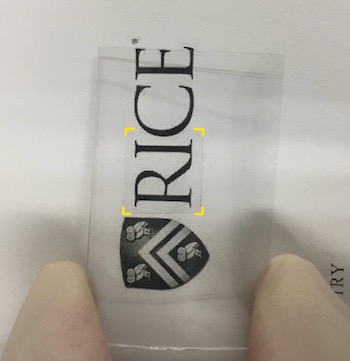
Rivet graphene is transparent enough for flexible and transparent electronics, he said, and the simplified process should be scalable.
Xinlu Li, a former visiting researcher at Rice and a professor at Chongqing University, China, is lead author of the paper. Co-authors are graduate student Junwei Sha of Rice, Tianjin University, China, and the Collaborative Innovation Center of Chemical Science and Engineering in Tianjin; graduate student Yilun Li, postdoctoral researcher Yongsung Ji and former postdoctoral researcher Seoung-Ki Lee of Rice; and Yujie Zhao of Chongqing. Tour is the T.T. and W.F. Chao Professor of Chemistry as well as a professor of computer science and of materials science and nanoengineering.
The research was funded by the Air Force Office of Scientific Research and its Multidisciplinary University Research Initiative, the Natural Science Foundation Project of China’s Chongqing Science and Technology Commission and the China Scholarship Council.
Reference:
Rivet Graphene
ACS Nano, Article ASAP
DOI: 10.1021/acsnano.6b03080
Publication Date (Web): June 28, 2016
Rice University
#Graphene #Nanoparticles #Nanotubes
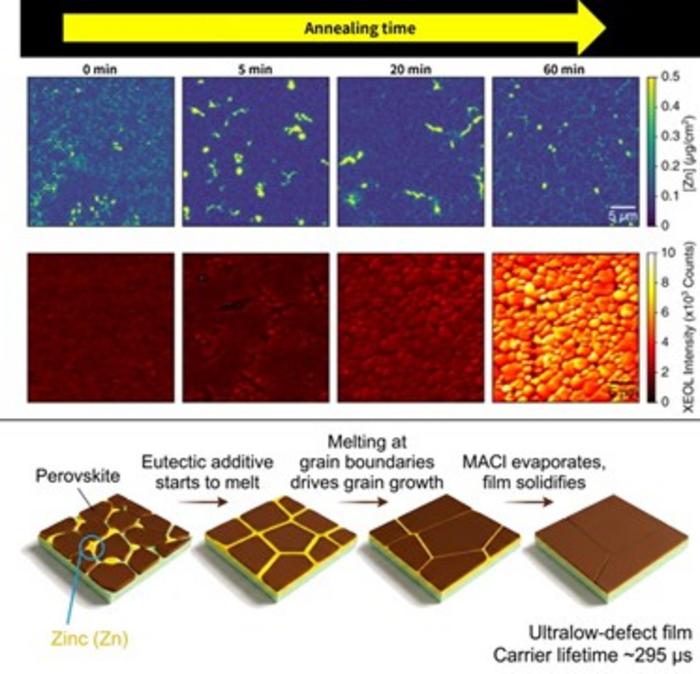
A eutectic mixture of methylammonium chloride and a zinc halide melts at about 100 degrees Celsius, forming a transient liquid layer at perovskite grain boundaries that lets crystals merge into larger, cleaner grains. The resulting films reached a carrier lifetime of roughly 295 microseconds and a surface recombination velocity of 0.3 cm/s, the lowest reported for lead halide perovskites.
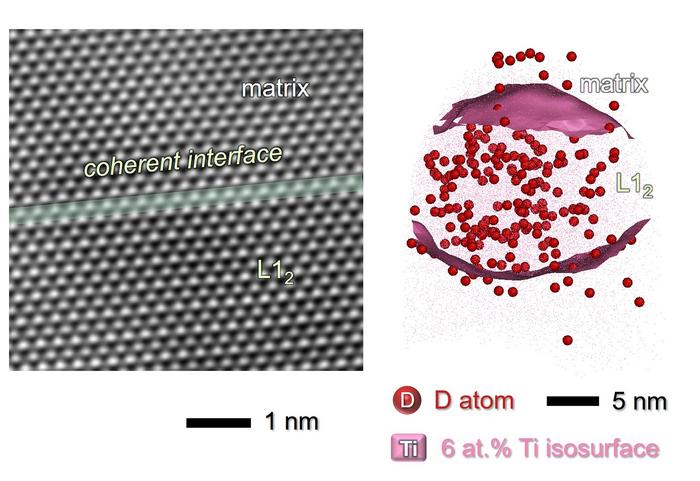
Researchers at the University of Sydney have directly observed hydrogen dissolved in the interstitial spaces between metal atoms in alloys, a world first. Using cryogenic atom probe tomography with deuterium tracers, electron microscopy and theoretical calculations, the team showed hydrogen occupies sites between atoms rather than only collecting at defects, and that local atomic arrangement and chemistry dictate where it prefers to reside.
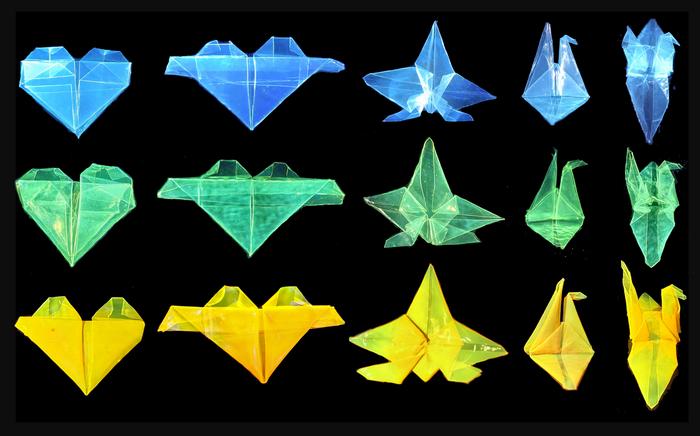
Researchers have developed carbon dots whose fluorescence shifts across the visible spectrum, from blue to red, depending on concentration, liquid environment and acidity. By tuning the particles' surfaces, the team produced versions that change color reversibly as pH shifts, then incorporated them into polymer powders, molded shapes and flexible films.
This week in nanotech
$10.2M raised
2 funding rounds · 19 deals tracked
New products
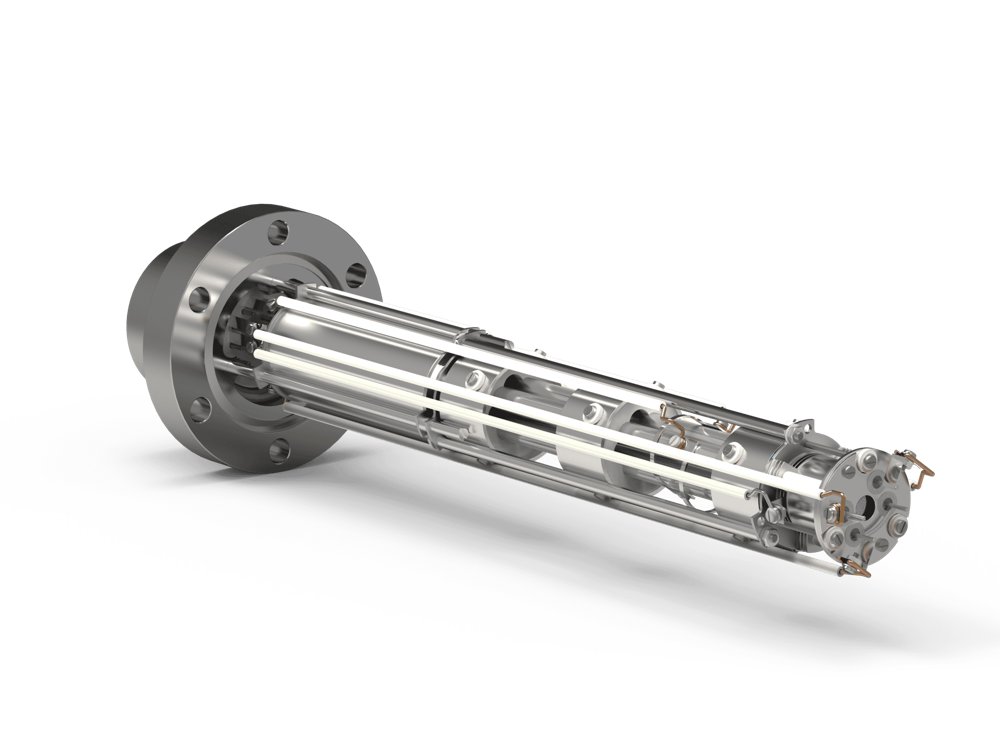 DLS-1 Mass Spectrometer for Fusion Gas AnalysisHiden Analytical Featured
 Nion-compatible In Situ STEM Holders for Electrical BiasingHummingbird Scientific Featured
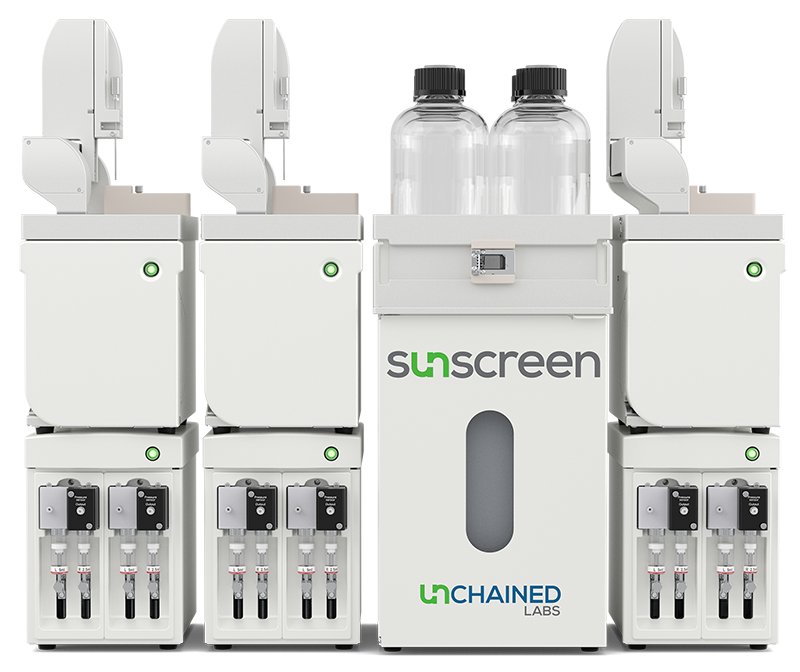 SunscreenUnchained Labs
Market insights
Last 30 days: Quantum Technologies was the busiest vertical: 53 of 180 events (29%).
Money raised per month