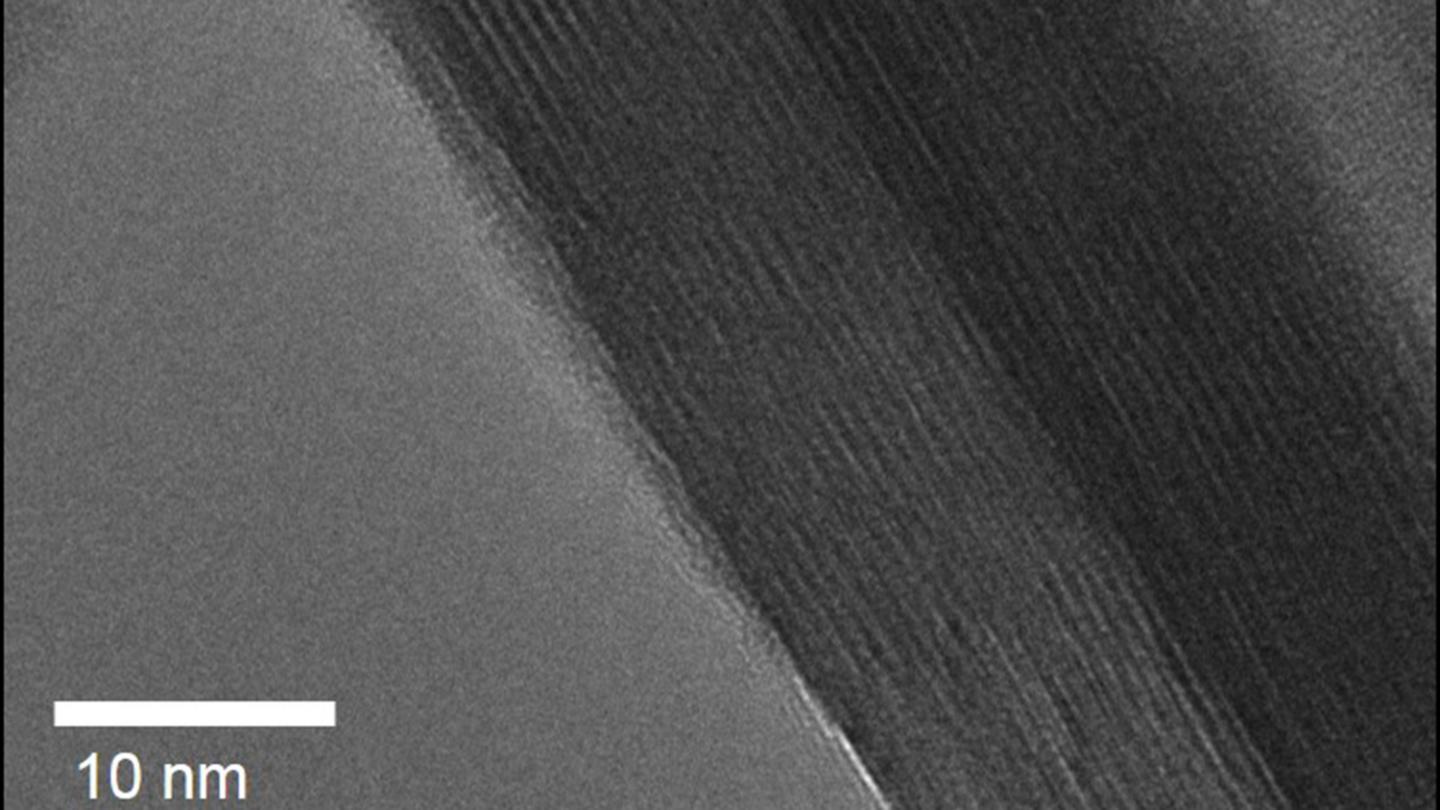
Researchers at North Carolina State University have found that a material which incorporates atomically thin layers of water is able to store and deliver energy much more quickly than the same material that doesn't include the water layers.
The finding raises some interesting questions about the behavior of liquids when confined at this scale and holds promise for shaping future energy-storage technologies.
"This is a proof of concept, but the idea of using water or other solvents to 'tune' the transport of ions in a layered material is very exciting," says Veronica Augustyn, an assistant professor of materials science and engineering at NC State and corresponding author of a paper describing the work. "The fundamental idea is that this could allow an increased amount of energy to be stored per unit of volume, faster diffusion of ions through the material, and faster charge transfer.
"Again, this is only a first step, but this line of investigation could ultimately lead to things like thinner batteries, faster storage for renewable-based power grids, or faster acceleration in electric vehicles," Augustyn says.
"The goal for many energy-storage researchers is to create technologies that have the high energy density of batteries and the high power of capacitors," says James Mitchell, a Ph.D. student at NC State and lead author of the paper. "Pseudocapacitors like the one we discuss in the paper may allow us to develop technologies that bridge that gap."
For this work, the researchers compared two materials: a crystalline tungsten oxide and a layered, crystalline tungsten oxide hydrate - which consists of crystalline tungsten oxide layers separated by atomically thin layers of water.
When charging the two materials for 10 minutes, the researchers found that the regular tungsten oxide stored more energy than the hydrate. But when the charging period was only 12 seconds, the hydrate stored more energy than the regular material. One thing that's intriguing, the researchers say, is that the hydrate stored energy more efficiently - wasting less energy as heat.
"Incorporating these solvent layers could be a new strategy for high-powered energy-storage devices that make use of layered materials," Augustyn says. "We think the water layer acts as a pathway that facilitates the transfer of ions through the material.
"We are now moving forward with National Science Foundation-funded work on how to fine-tune this so-called 'interlayer,' which will hopefully advance our understanding of these materials and get us closer to next-generation energy-storage devices."
Transition from Battery to Pseudocapacitor Behavior via Structural Water in Tungsten Oxide
James B. Mitchell, William C. Lo, Arda Genc, James LeBeau, and Veronica Augustyn
Chem. Mater., Article ASAP
DOI: 10.1021/acs.chemmater.6b05485
North Carolina State University
#MaterialScience #Energy
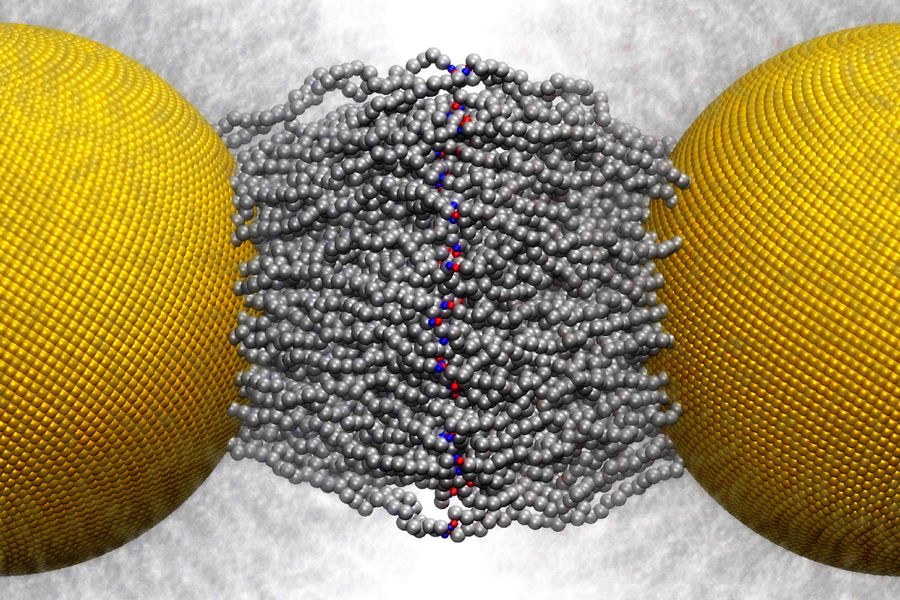
Researchers have shown that super-flexible connector molecules, rather than rigid ones, can tune how nanoparticles pack into larger structures. By varying ligand chain length, particle size and electric charge, the team assembled nanoparticles into crystal lattices never seen before and controlled the number of bonds each particle forms.
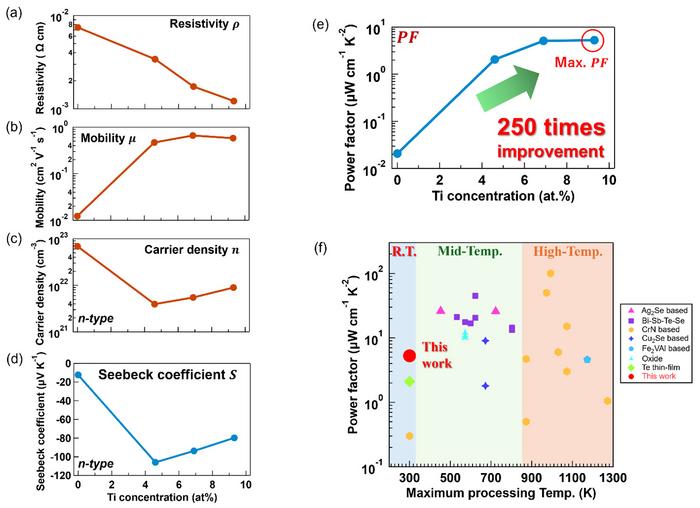
Researchers at Tohoku University have raised the power factor of chromium nitride thin films 250-fold by doping them with small amounts of titanium, reaching 5.26 µW cm⁻¹ K⁻². Titanium's stronger affinity for nitrogen suppresses nitrogen vacancies, cutting carrier concentration while boosting electron mobility by roughly two orders of magnitude.

Neutron diffraction at Oak Ridge National Laboratory has shown that a modest mechanical squeeze can substantially reshape the magnetic behavior of altermagnets, a class of materials under investigation for spintronics. Squeezing manganese telluride and iron sulfide crystals between titanium plates altered their magnetic domain populations and changed the anomalous Hall effect, which governs electron transport.
This week in nanotech
$3.4M raised
1 funding round · 17 deals tracked
New products
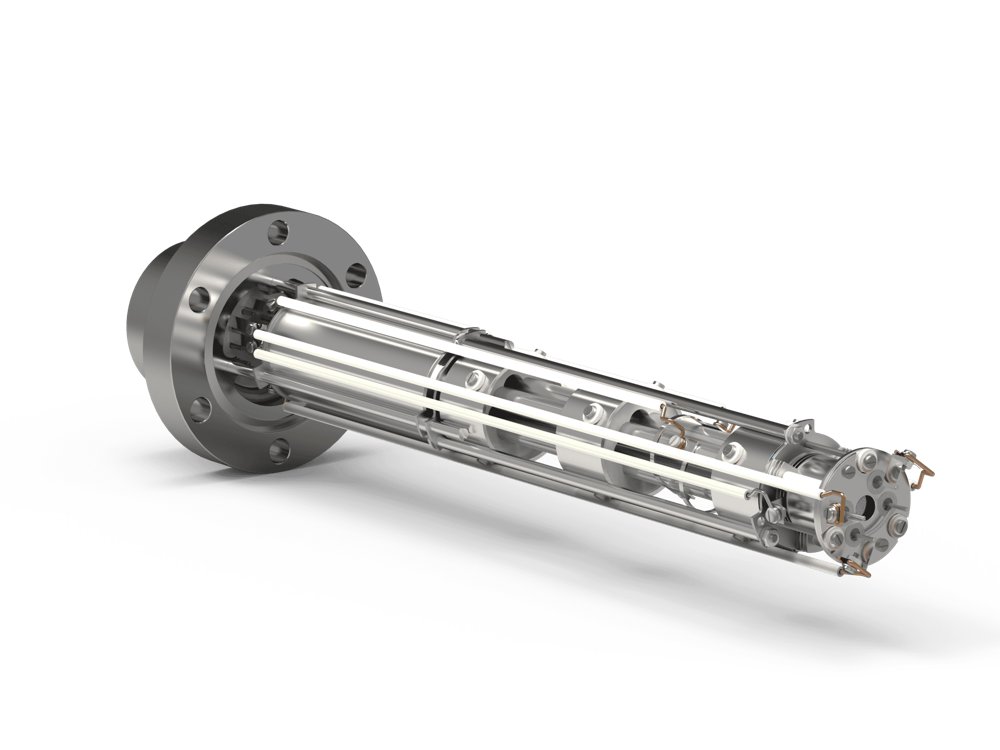 DLS-1 Mass Spectrometer for Fusion Gas AnalysisHiden Analytical Featured
 Orion Sputtering Deposition SystemsAJA International Featured
 PKVH / PKVL ZAxis With an opening modelTHK PRECISION CO.,LTD.
Market insights
Last 30 days: Quantum Technologies was the busiest vertical: 60 of 192 events (31%).
Money raised per month
Behind the deal
Who led Sandia National Laboratories’s $3.4M Grant?
See the investors with Insights Pro →