Systematic copper doping boosts all-solar utilization in tungstic acid nanocrystals.
Sunlight is an inexhaustible source of energy, and utilizing sunlight to generate electricity is one of the cornerstones of renewable energy. More than 40% of the sunlight that falls on earth is in the infrared, visible and ultraviolet spectra; however, current solar technology utilizes primarily visible and ultraviolet rays. Technology to utilize the full spectrum of solar radiation—called all-solar utilization—is still in its infancy.
A team of researchers from Hokkaido University, led by Assistant Professor Melbert Jeem and Professor Seiichi Watanabe at the Faculty of Engineering, have synthesized tungstic acid-based materials doped with copper that exhibited all-solar utilization. Their findings were published in the journal Advanced Materials.
“Currently, the near- and mid-infrared spectra of solar radiation, ranging from 800 nm to 2500 nm, is not utilized for energy generation,” explains Jeem. “Tungstic acid is a candidate for developing nanomaterials that can potentially utilize this spectrum, as it possesses a crystal structure with defects that absorb these wavelengths.”
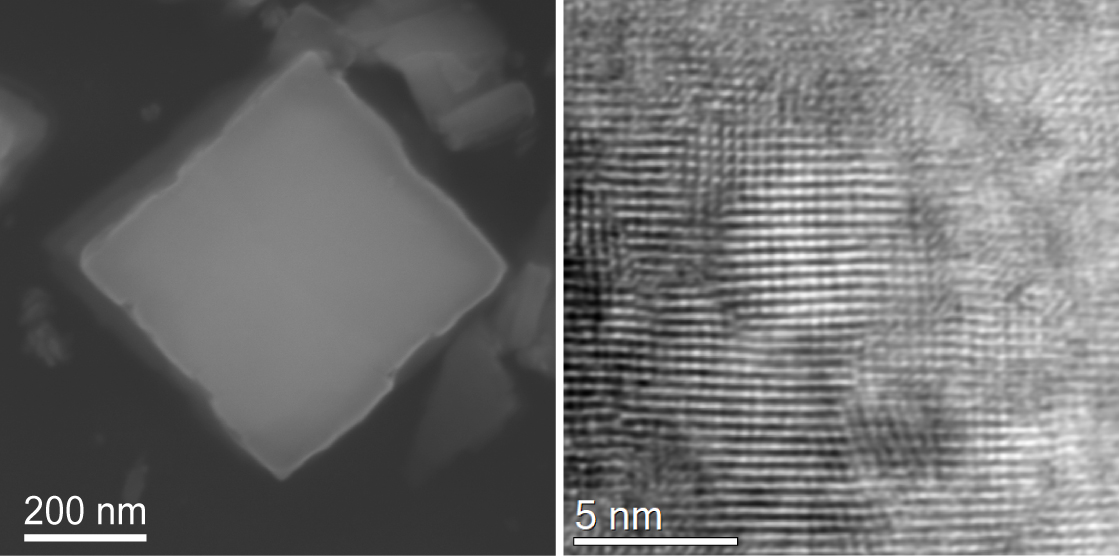
The team used a photo-fabrication technique they had previously developed, submerged photo-synthesis of crystallites, to synthesize tungstic acid nanocrystals doped with varying concentrations of copper. The structures and light-absorbing properties of these nanocrystals were analyzed; their photothermal, photo-assisted water evaporation, and photo-electrochemical characteristics were measured.
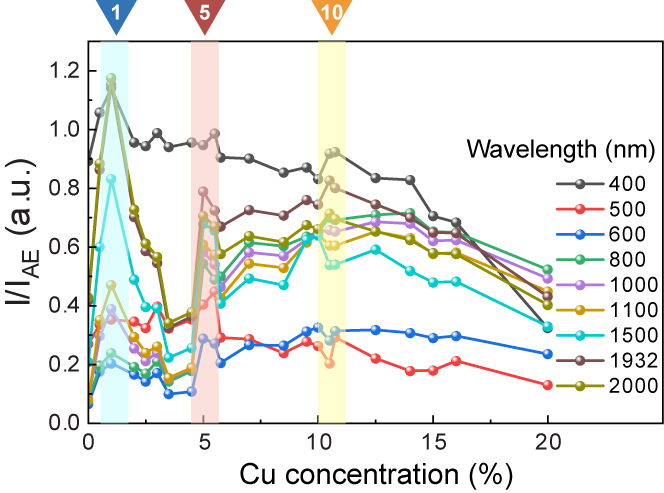
The copper-doped tungsten oxide nanocrystals absorb light across the spectrum, from ultraviolet through visible light to infrared; the amount of infrared light absorbed was greatest at 1% copper doping. 1% and 5% copper-doped nanocrystals exhibited the highest temperature elevation (photothermal characteristic); 1% copper doped crystals also exhibited the greatest water evaporation efficacy, at approximately 1.0 kg per m2 per hour. Structural analysis of the 1% copper-doped nanocrystals indicated that the copper ions may be distorting the crystal structure of tungsten oxide, leading to the observed characteristics when light is absorbed.
“Our discoveries mark a significant advance in advancement in the design of nanocrystallites capable of both synthesizing and harnessing all-solar energy,” concludes Watanabe. “We have demonstrated that copper doping grants tungstic acid nanocrystal a variety of characteristics via all-solar utilization. This provides a framework for further research in the field as well as for the development of applications.”
Contacts
Specially Appointed Assistant Professor Melbert Jeem
Center for Advanced Research of Energy and Materials
Faculty of Engineering
Hokkaido University
Email: m_jeem[at]eng.hokudai.ac.jp
Professor Seiichi Watanabe
Center for Advanced Research of Energy and Materials
Faculty of Engineering
Hokkaido University
Email: sw004[at]eng.hokudai.ac.jp
Sohail Keegan Pinto (International Public Relations Specialist)
Public Relations & Communications Division
Office of Public Relations and Social Collaboration
Hokkaido University
Tel: +81-11-706-2186
Email: en-press[at]general.hokudai.ac.jp
Hokkaido University
Reference
Defect Driven Opto-Critical Phases Tuned for All-Solar Utilization
Melbert Jeem, Ayaka Hayano, Hiroto Miyashita, Mahiro Nishimura, Kohei Fukuroi, Hsueh-I Lin, Lihua Zhang, Seiichi Watanabe
Advanced Materials. July 29, 2023.
MIT researchers have developed a new way to extract pure hydrogen gas from ammonia and other hydrogen carrier molecules. Their strategy, which uses electricity to speed up the extraction, reduces the temperature and energy required to recover hydrogen from these molecules. As a liquid that is easily stored and transported, ammonia (NH3) is an attractive carrier for hydrogen, which is used in fuel cells, semiconductor manufacturing, chemical processing, and other applications. However,...
image: CuZn800@C was constructed via solvothermal method and utilizes the high-temperature volatility of zinc to prepare through calcination at different temperatures, which displays a high methane Faradaic efficiency of 64.5% and a remarkable partial current density of -551.3 mA/cm2 at -1.7 V vs. RHE, along with excellent stability. Zn and Cu form a tandem reaction system. Zn sites promote water splitting to provide protons, while Cu sites reduce the energy barrier for *CO hydrogenation....
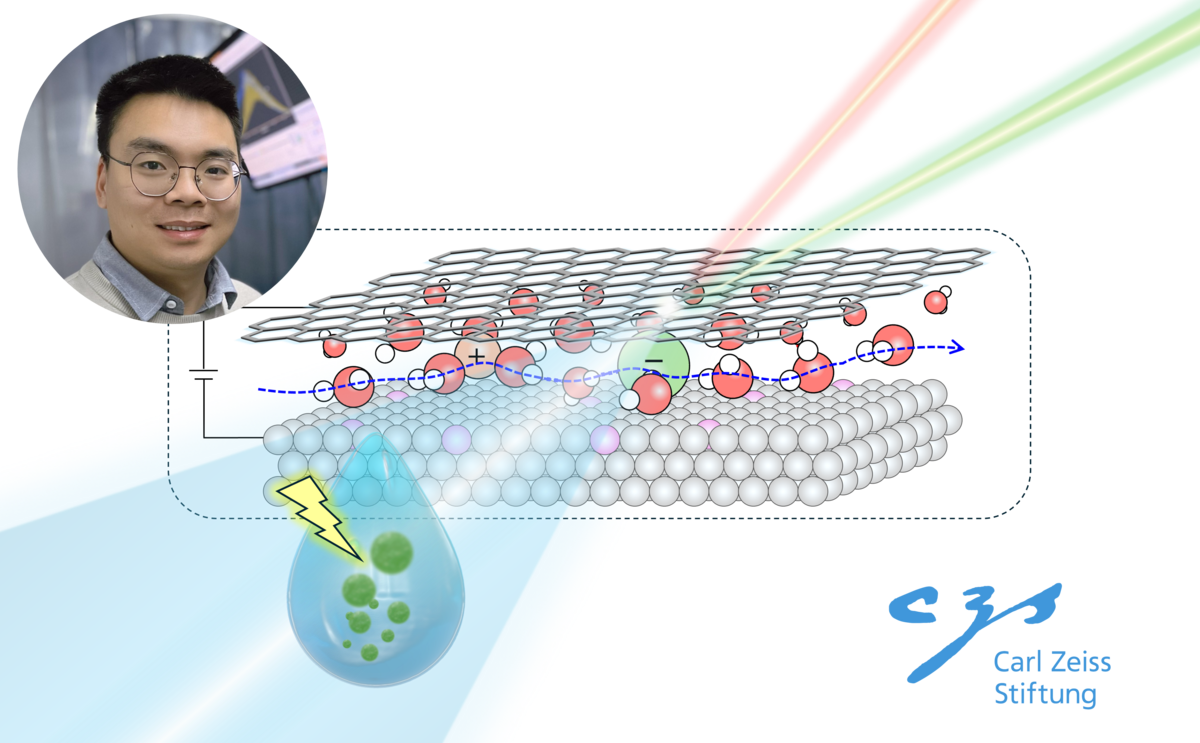
Electrochemical water splitting powered by renewable electricity is a promising pathway to sustainable hydrogen production, but its efficiency and scalability remain limited by costly catalysts and slow reaction kinetics. With €1.5 million in funding from the Carl-Zeiss-Stiftung for five years, Dr. Yongkang Wang and his team will pursue a new approach by visualizing and controlling water at the molecular level, using nanoscale confinement to shape its structure and dynamics at catalytic...
