Researchers have achieved a significant breakthrough in the synthesis of carbon nanotubes (CNTs) by developing a novel catalyst that allows for precise control over their atomic arrangement, known as chirality. This advancement paves the way for the creation of innovative semiconductor devices, addressing a challenge that has remained unresolved for over 30 years.
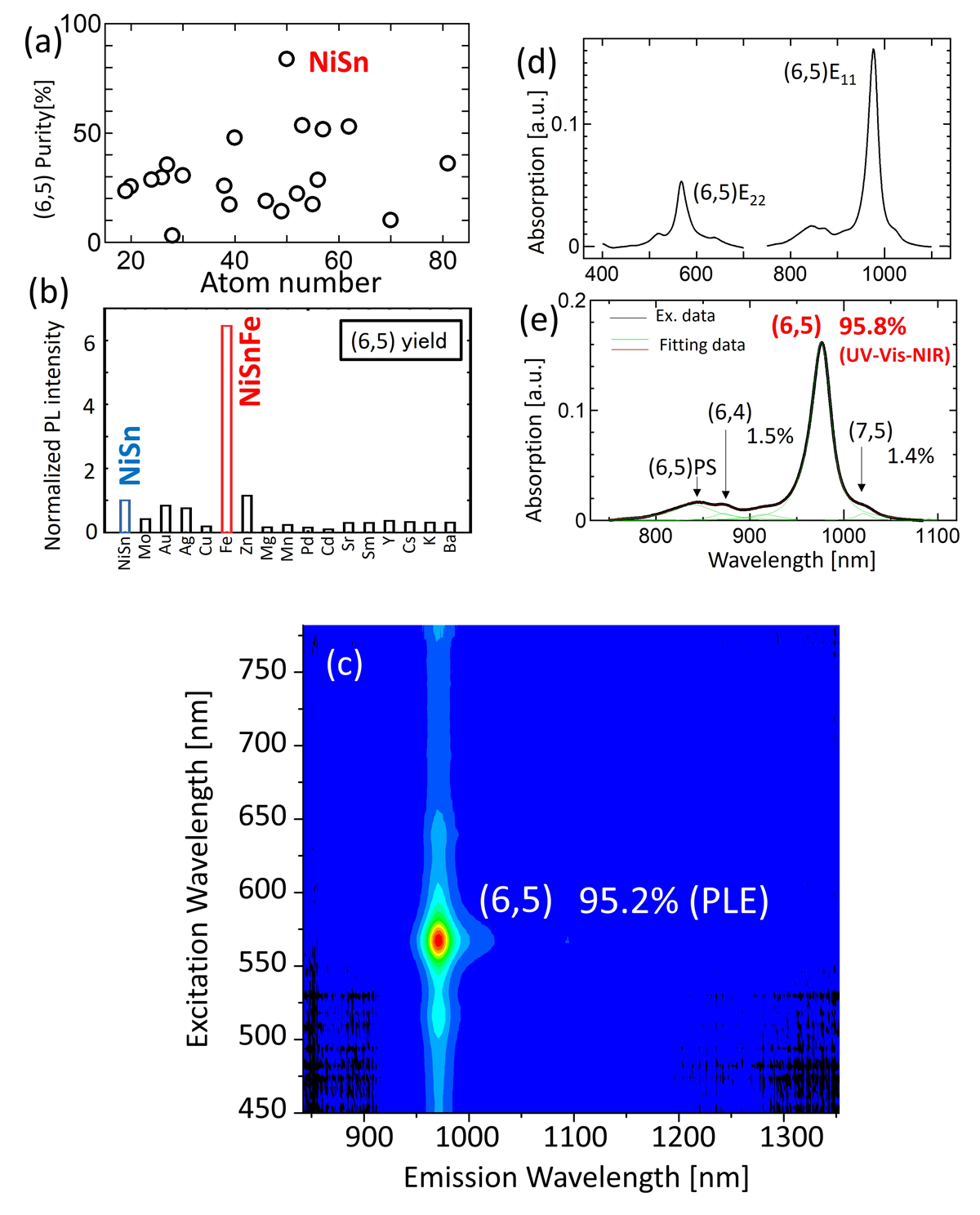
The team consisting of researchers across Japan, led by Associate Professor Toshiaki Kato from the Advanced Institute for Materials Research (WPI-AIMR), has successfully synthesized CNTs with a chiral index of (6,5) at an ultra-high purity of over 95%.
These findings were published in ACS Nano on August 20, 2024.
"A carbon nanotube is basically a sheet of carbon rolled into a hollow tube," explains Kato, "While it sounds simple, CNTs are highly sought after for properties such as their exceptional conductivity, optical characteristics, and mechanical strength."
It's no wonder they're nicknamed the "king of nanomaterials." This laundry list of desirable traits makes them a promising option for a truly broad number of applications - from constructing aircrafts and spaceships to developing biomedical devices.
"The inability to control CNT chirality has been a major barrier to their industrial application, so this project was undertaken to find a catalyst that could consistently produce the desired target," says Kato. Thus far, single-chirality synthesis with a purity of over 90% has only been achieved for (14,4) and (12,6) chiralities.
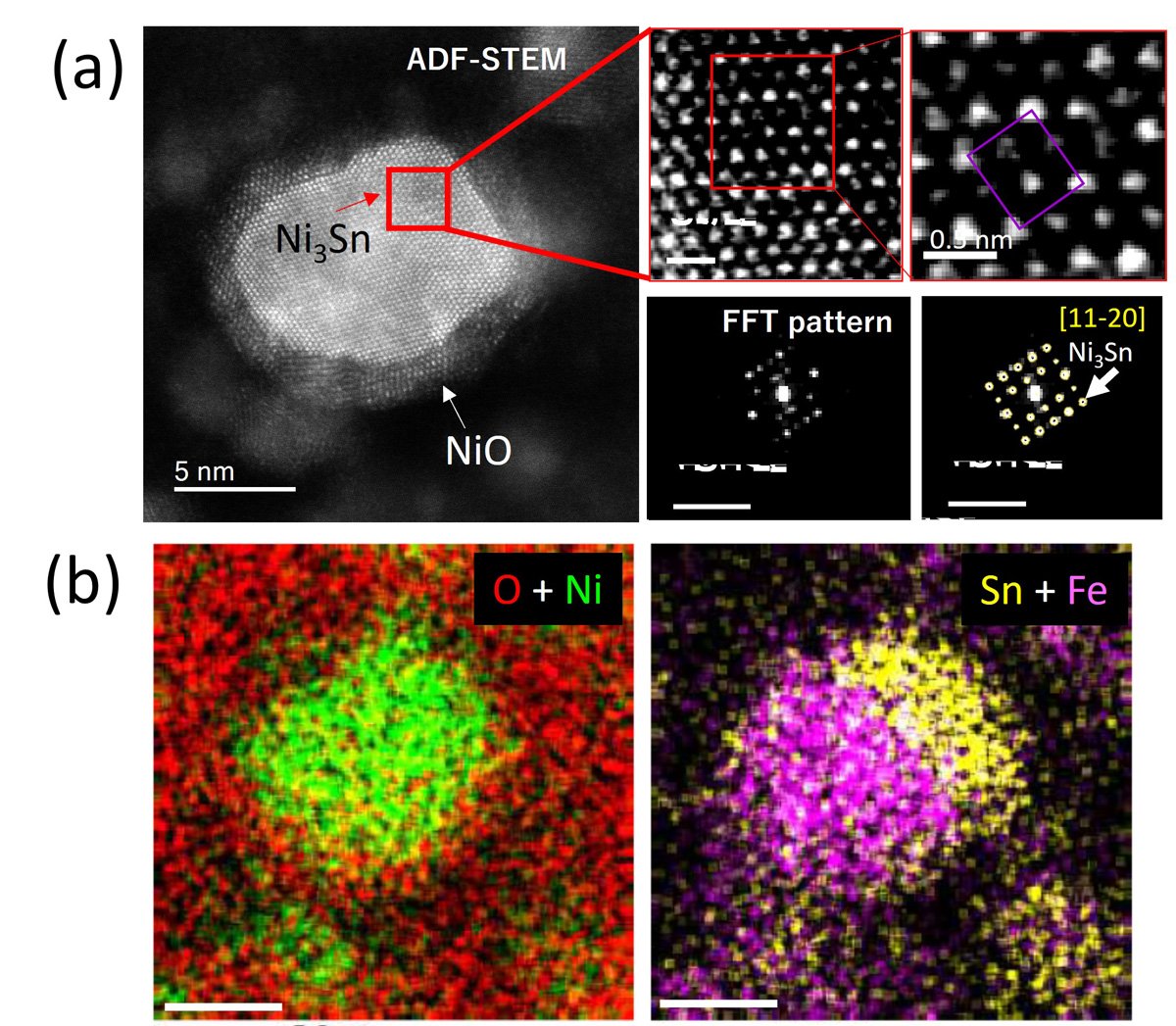
By introducing a new catalyst composed of nickel (Ni), tin (Sn), and iron (Fe), the researchers have opened a new pathway for chirality-controlled synthesis. This NiSnFe catalyst acts as a highly specialized growth catalyst, enabling the selective synthesis of (6,5) chirality CNTs. Furthermore, these chirality-pure bundle structures of (6,5) CNTs show more than a 20-fold increase in their photoluminescence lifetime, compared to isolated (6,5) CNTs. This technique could potentially be used in the future to achieve other chiralities as well.
The research team anticipates that their findings will lead to significant advancements in how semiconductor devices are manufactured and utilized.
Reference
Synthesis of Ultrahigh-Purity (6,5) Carbon Nanotubes Using a Trimetallic Catalyst
Satoru Shiina, Tennpei Murohashi, Koyo Ishibashi, Xing He, Takashi Koretsune, Zheng Liu, Wataru Terashima, Yuichiro K. Kato, Kazutoshi Inoue, Mitsuhiro Saito, Yuichi Ikuhara, and Toshiaki Kato
https://pubs.acs.org/doi/10.1021/acsnano.4c01475
Tohoku University
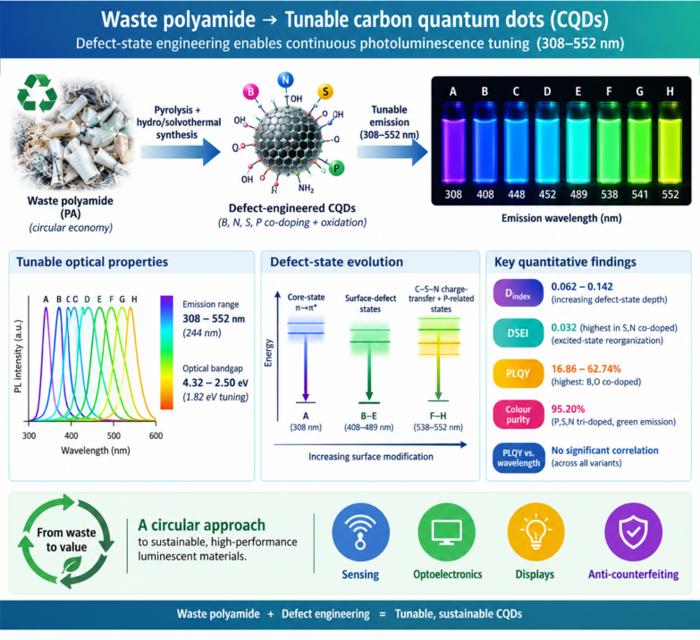
Waste polyamide-derived CQDs show continuous photoluminescence tuning from 308 to 552 nm through sequential defect-state engineering, with optical transition energies decreasing from 4.32 to 2.50 eV. @Christian Ebere Enyoh from Saitama University Carbon quantum dots (CQDs) are fluorescent carbon nanomaterials with potential applications in sensing, optoelectronics, displays, anti-counterfeiting, and environmental technologies. Their optical properties can be adjusted by modifying the carbon...
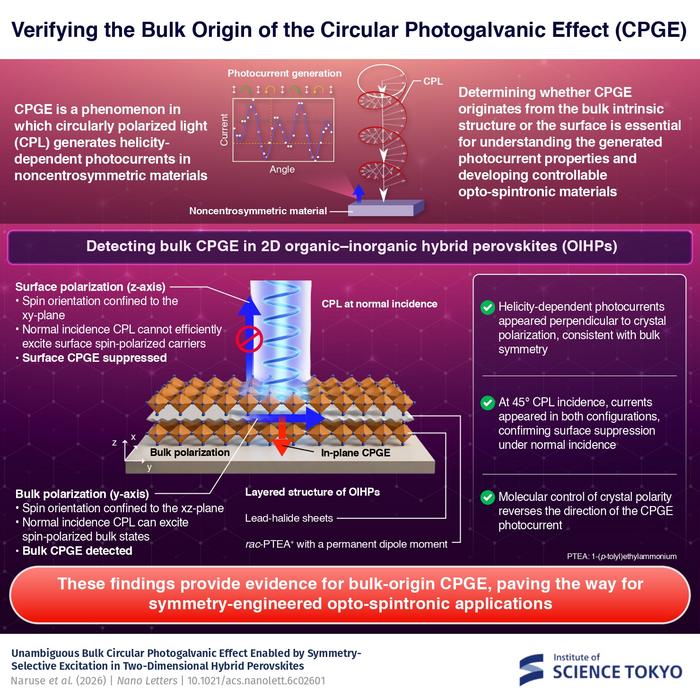
The researchers used circularly polarized light at normal incidence and found that helicity-dependent photocurrents appeared perpendicular to the crystal’s polarization but vanished when measured parallel to it, supporting a bulk origin of CPGE. @Institute of Science Tokyo The circular photogalvanic effect (CPGE), a phenomenon that generates helicity-dependent photocurrents in noncentrosymmetric materials, can originate purely from a crystal's internal structure without contribution from the...
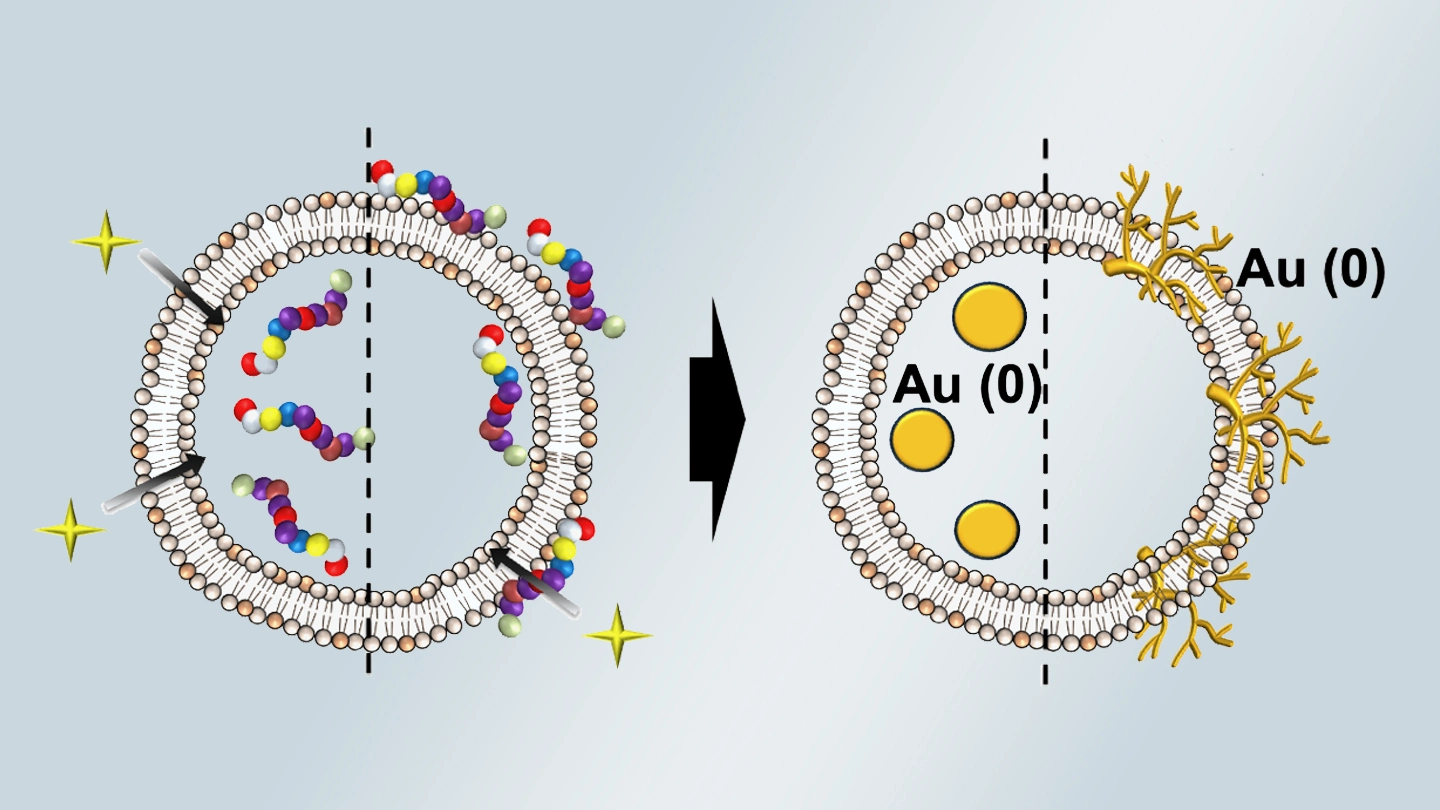
Summary of gold nanoparticle growth programming in liposome based on localization of biomineralization peptide The position of biomineralization peptides within liposomes can influence how gold nanoparticles grow, reports a research team from Institute of Science Tokyo. Peptides localized at the membrane interface promote branched structures, while those confined to the liposome interior favor spherical nanoparticles. The findings offer a new strategy for controlling nanoscale reaction...
