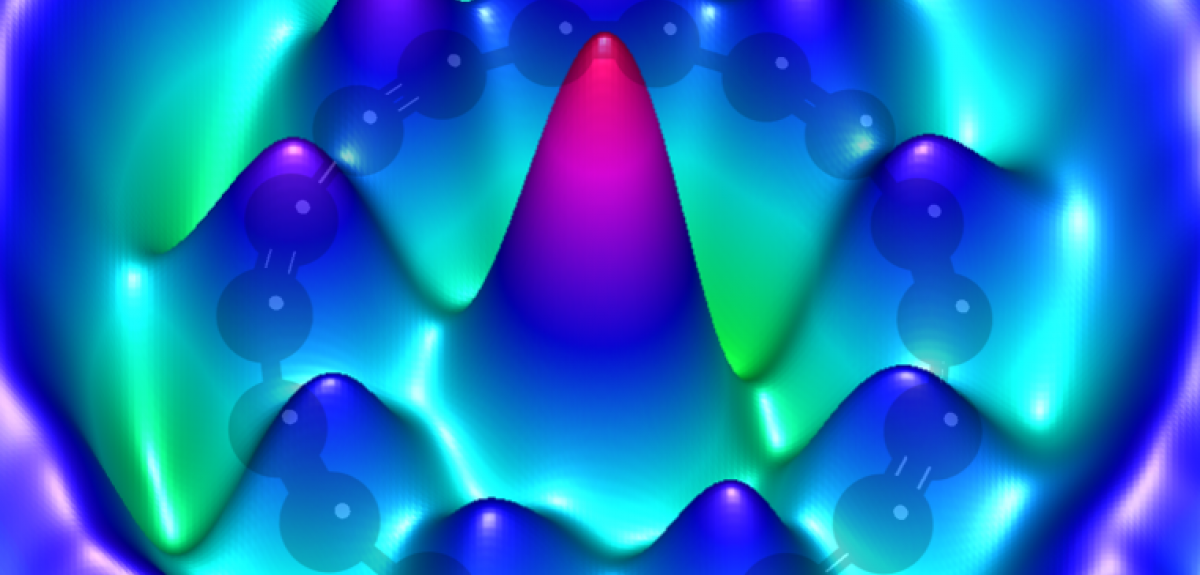
By Katharina Kaiser, Fabian Schulz, and Leo Gross (IBM Research - Zurich); Lorel M. Scriven, Przemyslaw Gawel and Harry L. Anderson (Oxford University)
Carbon, one of the most abundant elements in the universe, can exist in different forms - called allotropes - giving it completely different properties from color to shape to hardness. For example, in a diamond every carbon atom is bonded to four neighboring carbons, whereas in graphite, every carbon atom is bonded to three neighboring carbons.
While these are well studied forms of carbon, there are lesser-known forms and one in particular has been elusive – cyclocarbons, where the carbon atoms have only two neighbors, arranged in the shape of a ring. Discussed for many years, their structure was unknown, and two possibilities were debated, either with all the bonds in the ring of the same length or with alternating shorter and longer bonds. Adding to the drama, evidence for their existence was published in the gas phase, but due to their high reactivity, they could not be isolated and characterized – that is until now.
Based on our previous successes in imaging molecules with atomic force microscopy (AFM) and creating molecules by atom manipulation, scientists from the University of Oxford's Department of Chemistry and IBM Research attempted to find the answer to this debate. Our goal was to synthesize, stabilize and characterize cyclocarbon.
And for the first time, we have succeeded in stabilizing and imaging a ring of 18 carbon atoms.
Our approach was to generate cyclocarbon by atom manipulation on an inert surface at low temperatures (5 K) and to investigate it with high-resolution AFM. We started the collaboration between the groups of Oxford and IBM three years ago with this goal. Initially, we focused on linear segments of two-fold coordinated carbons, exploring possible routes for creating such carbon-rich materials by atom manipulation. We triggered chemical reactions by applying voltage pulses with the tip of the atomic force microscope. We found that such segments could be formed on a copper substrate covered by a very thin layer of table salt. Because the salt layer is chemically very inert, the reactive molecules did not form covalent bonds to it.
After the successful creation of the linear carbon segments, we attempted to create cyclocarbon on the same surface. To this end, the Oxford group synthesized a precursor to cyclo[18]carbon that is a ring of 18 carbon atoms.
Future applications are suggested by the fact that we could fuse cyclocarbons and/or cyclic carbonoxides by atom manipulation. This possibility of forming larger carbon rich structures by fusing molecules with atom manipulation opens the way to create more sophisticated carbon-rich molecules and new carbon allotropes. Eventually, custom-made molecular structures might be used as elements for molecular electronics, based on single electron transfer.
An sp-hybridized molecular carbon allotrope, cyclo[18]carbon
Katharina Kaiser, Lorel M. Scriven, Fabian Schulz, Przemyslaw Gawel, Leo Gross, Harry L. Anderson
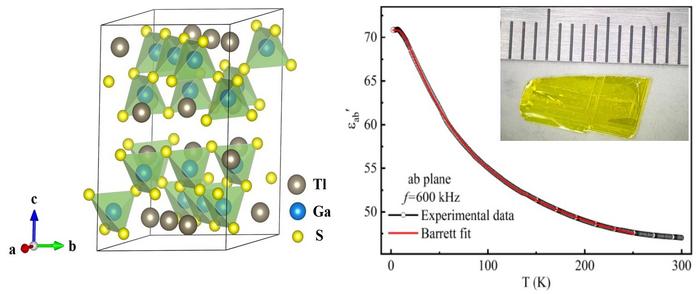
TlGaS2 single crystals show both in-plane and out-of-plane polarization, a rare combination in two-dimensional ferroelectrics that could widen options for ferroelectric transistors and non-volatile memory. Infrared spectroscopy revealed a soft phonon mode below 75 K, a signature tied to quantum ferroelectricity, along with weak structural changes across temperatures that lack clear heat-capacity signals, hinting at local rearrangements rather than conventional phase transitions.
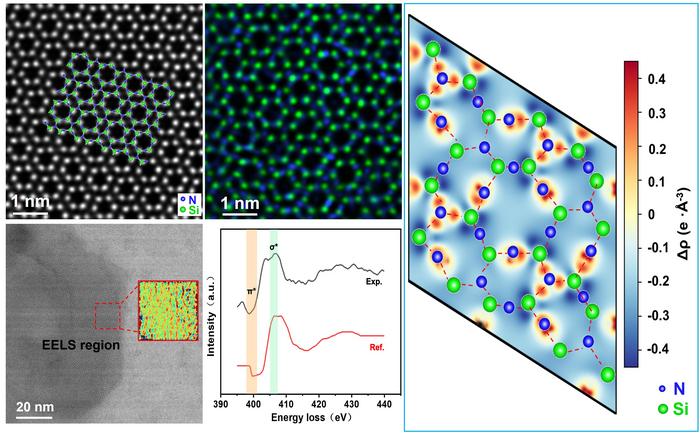
A β-Si3N4 nanolayer about 20 nm thick and continuous over several micrometers has been formed between carbon and silicon carbide without conventional oxide sintering additives, using a porous carbon framework infiltrated with molten silicon. Complementary atomic-resolution imaging resolved both silicon and nitrogen sublattices, confirming the ABAB stacking and corner-sharing tetrahedral network, while electron energy-loss spectroscopy and first-principles calculations linked the spectra to…
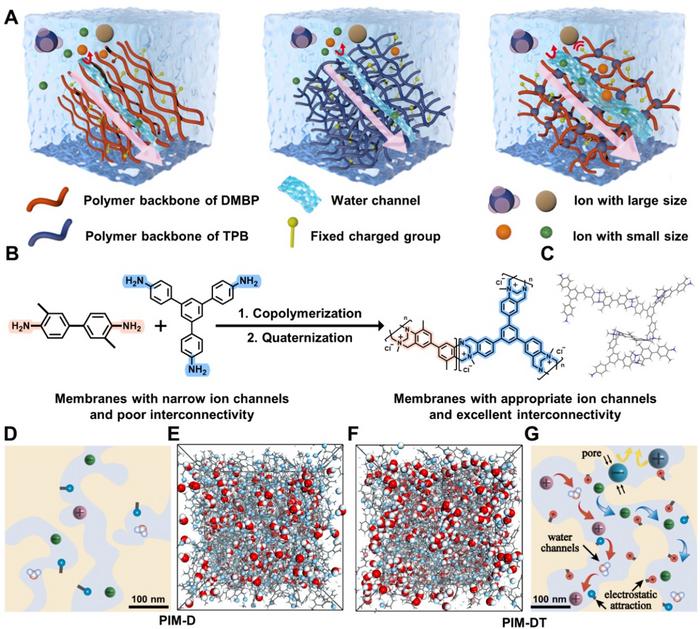
A polymer membrane with interconnected water-filled channels just 0.5 to 0.7 nanometers wide separates singly charged ions from multiply charged ones in both cationic and anionic systems. Built from Tröger's base-derived porous organic polymers, it cut the magnesium-to-lithium ratio in salt-lake brine roughly 500-fold across three electrodialysis stages, yielding 99.5 percent pure lithium carbonate, and enriched sodium chloride to 99.4 percent of ion mass from simulated seawater.
This week in nanotech
$740.7M raised
5 funding rounds · 36 deals tracked
New products
 Nion-compatible In Situ STEM Holders for Electrical BiasingHummingbird Scientific Featured
 Ti-WCMBN Nanomaterialia Featured
 GHK-CuPeoples Peps
Market insights
Last 30 days: Quantum Technologies drew the most money: $3.18B.
Money raised per month
Behind the deal
Who invested in Photon Bridge’s $11.2M Series A?
See the investors with Insights Pro →