A recent discovery by University of Arkansas physicists could help researchers establish the existence of quantum spin liquids, a new state of matter. They've been a mystery since they were first proposed in the 1970s. If proven to exist, quantum spin liquids would be a step toward much faster, next-generation quantum computing.
Scientists have focused attention and research on the so-called Kitaev-type of spin liquid, named in honor of the Russian scientist, Alexei Kitaev, who first proposed it. In particular, they have looked extensively at two materials - RuCl3 and Na2IrO - as candidates for this type. Both have small quantum spin numbers.
"Traditional candidates are pretty limited to only these two," said Changsong Xu, a researcher in the Department of Physics and first author of a paper published in the journal Physical Review Letters.
In their recent work, U of A physicists have greatly expanded the number of materials that might be candidates as Kitaev quantum spin liquids by looking at materials with higher quantum spin numbers, and by putting materials under physical strain to tune their magnetic states.
"Suddenly, we realize there are dozens of candidates we can propose," said Xu.
Quantum spin liquids are defined by their unusual magnetic arrangement. Magnets have a north and south pole, which combined are called dipoles. These are typically produced by the quantum spin of electrons. Inside a magnetic material, dipoles tend to all be parallel to each other (ferromagnetism) or periodically alternate their up and down direction (antiferromagnetism).
In the case of hypothetical quantum spin liquids, dipoles aren't as well ordered. Instead, they exhibit unusual ordering within a small distance of each other. Different ordering creates different types of spin liquids.
Xu, along with Distinguished Professor of Physics Laurent Bellaiche and colleagues in China and Japan, used computational models to predict a Kitaev quantum spin liquid state in materials such as chromium iodide and chromium germanium telluride. The work, which was supported by grants from the Arkansas Research Alliance and the Department of Energy, will give researchers many more materials to study in a search to prove the existence of quantum spin liquids, said Xu.
Possible Kitaev Quantum Spin Liquid State in 2D Materials with S = 3/2
Changsong Xu, Junsheng Feng, Mitsuaki Kawamura, Youhei Yamaji, Yousra Nahas, Sergei Prokhorenko, Yang Qi, Hongjun Xiang, and L. Bellaiche
Physical Review Letters (2020) Vol.124, Iss.8,7205
DOI: 10.1103/PhysRevLett.124.087205
University of Arkansas (U of A)
Rhombohedral hexalayer graphene, in which six carbon sheets are stacked with a slight lateral offset like staircase steps, hosts both superconductivity and electrically controllable orbital magnetism, researchers report in Nature Physics. The arrangement yields a rich collection of quantum states in a simple carbon-based material, positioning rhombohedral multilayer graphene as a platform for probing the fundamental mechanisms of superconductivity and magnetism and potentially for new ways of…
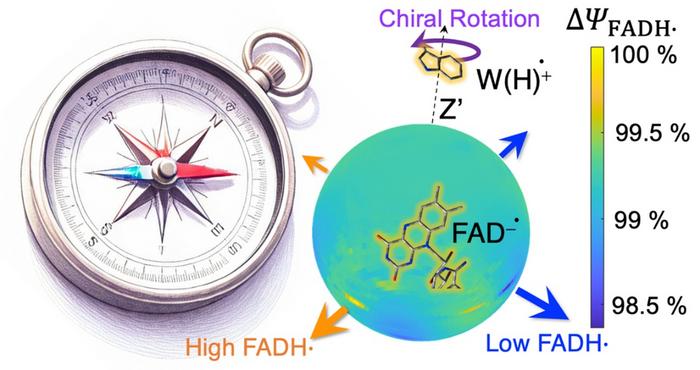
Time-resolved electron paramagnetic resonance spectroscopy of Xenopus cryptochrome-DASH reveals that chiral rotation of an oxidized tryptophan residue can drive chirality-induced spin selectivity, estimated at 8% in one charge-separated state, and shape electron-spin polarization in radical pairs.
Cornell researchers have redrawn the phase diagram of uranium ditelluride, showing the material can host two distinct flavors of superconductivity at once and that the two coexist and interact under pressure. The work settles years of uncertainty and positions uranium ditelluride as the leading candidate for a topological superconductor, a long-sought material that could unlock advances in quantum computing.
This week in nanotech
$13.6M raised
3 funding rounds · 20 deals tracked
New products
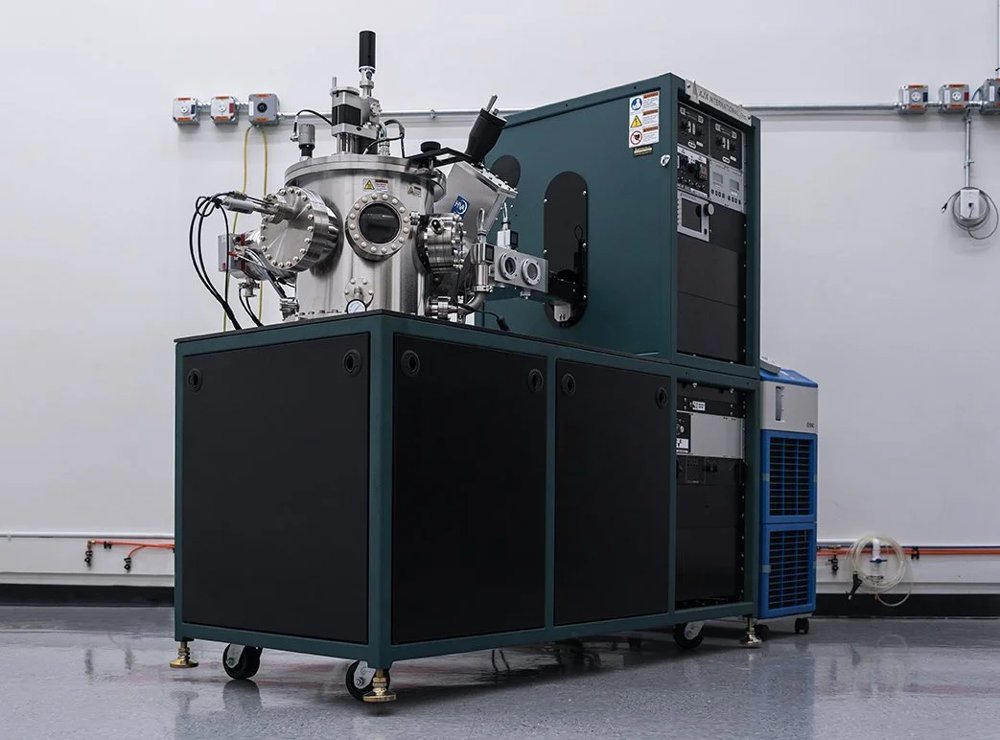 Orion Sputtering Deposition SystemsAJA International Featured
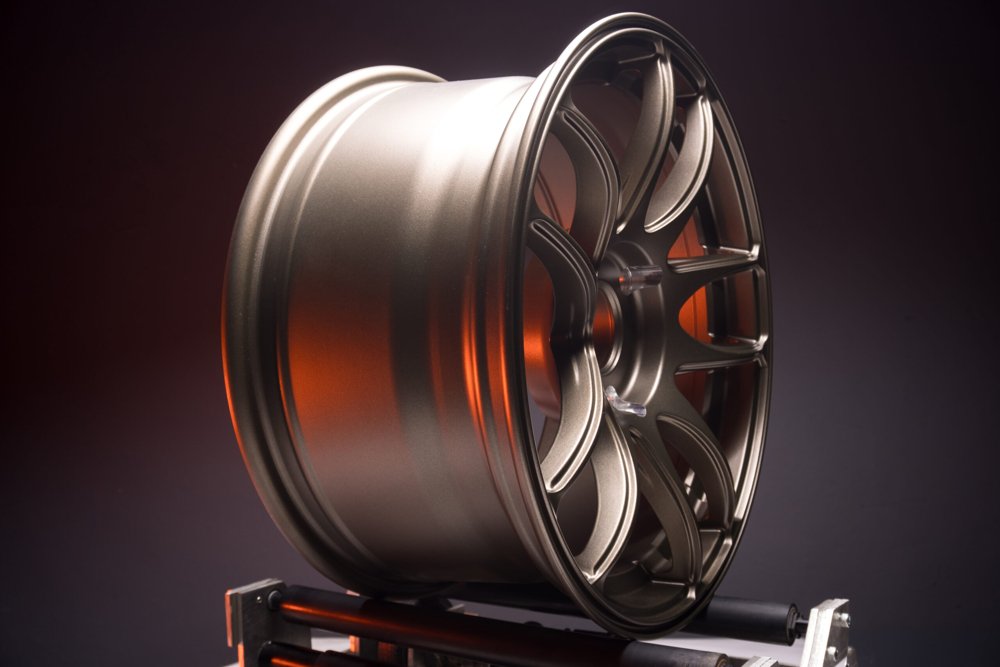 Ti-WCMBN Nanomaterialia Featured
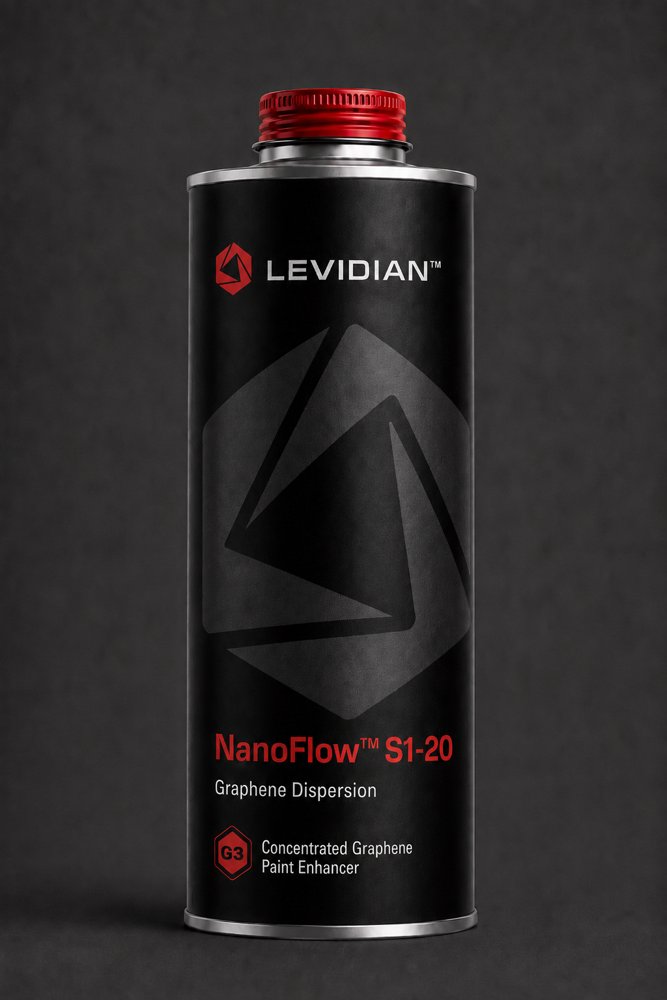 NanoFlow® S1-20Levidian
Market insights
Last 30 days: Quantum Technologies was the busiest vertical: 61 of 192 events (32%).
Money raised per month
Behind the deal
Who led Sandia National Laboratories’s $3.4M Grant?
See the investors with Insights Pro →